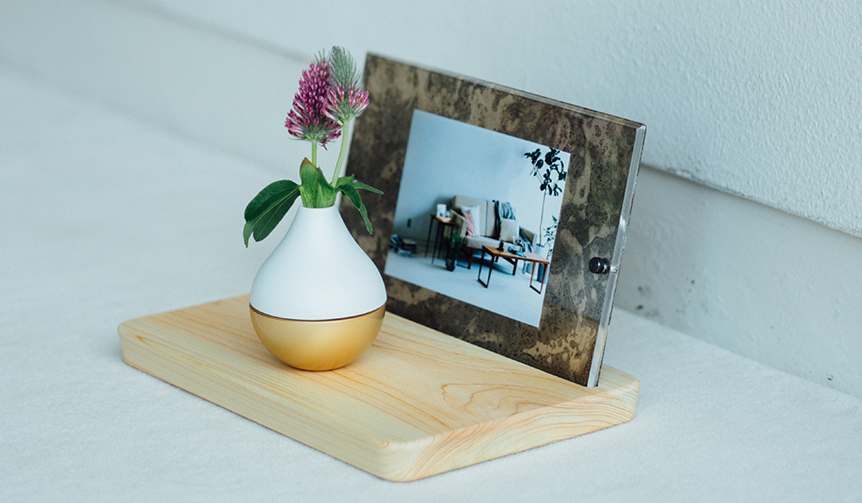
A form of 'prayer' that can be subtly placed in both Japanese and Western-style rooms. New ways of remembrance | Sotto
Sotto
Buddhist Furnishings 'Sotto' That Gently Coexist with Modern Life
To remember the departed, honor ancestors, and offer prayers daily. Times have changed from when a Japanese-style room with a Buddhist altar was the norm. Western-style rooms have become common, and living environments and family structures have evolved. 'Sotto' offers simple, space-saving Buddhist furnishings that can be discreetly placed even without room for a traditional altar. It preserves the spirit of prayer while gently fitting into modern life.
Text by TAE UMEMORI
Memorial Services: Praying for the Peace of Ancestors and Devoting One's Heart
The term 'kuyo' (memorial service) is an abbreviation of 'kyō-gū shiyō,' meaning 'to offer provisions and nourish.' 'Kyō-gū' signifies making offerings, while 'shiyō' means to nourish oneself with one's own heart, or 'motode' (capital). Originally, it referred to making offerings to the Three Jewels (Buddha, Dharma, Sangha) and nourishing them. This evolved to mean offering provisions to the deceased (spirits) and nourishing them. Praying for the peace of the departed and ancestors is not merely about offering material goods, but also about dedicating one's heart. Memorial services are not simply acts of mourning, but rather encompass the broader spectrum of human endeavor.
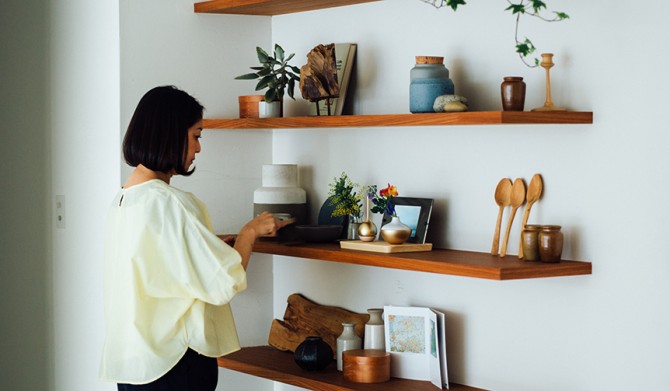
The Essential Buddhist Furnishings for a Humble Place of Prayer: 'Mitsu-gusoku' and 'Orin'
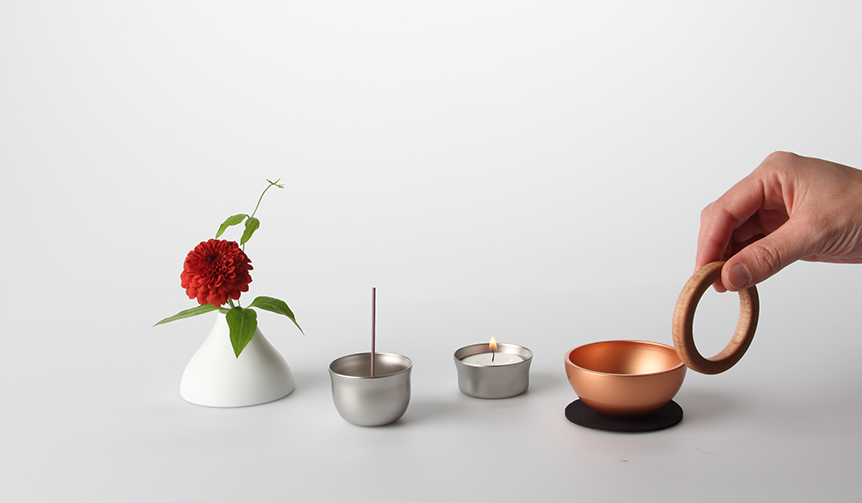
Buddhist furnishings are tools used in a place of prayer to honor Buddhas and ancestors, allowing for offerings such as light, incense, and flowers. Regardless of sect, the minimum required for memorial services are three items: a candle stand (hi-date), an incense stand (kō-date), and a flower vase (hana-date), collectively known as 'Mitsu-gusoku.' 'Gusoku' means to be fully equipped. The candle stand holds candles, the incense stand holds incense sticks, and the flower vase displays flowers. They are typically arranged with the incense stand in the center, the candle stand to the right, and the flower vase to the left. When a candle stand and incense stand are placed facing each other before the main image (Buddha), it is called 'Go-gusoku.'
And before offering prayers, one rings the 'orin' (bell). This is also a Buddhist furnishing used across all sects. It is said to dispel worldly desires with its clear sound and carry prayers on its resonance.
Creating a Space for Prayer Tailored to Your Space and Lifestyle
Previously, Buddhist furnishings often carried an image of solemnity and grandeur. However, the 'Sotto' series presents a modern aesthetic that blends seamlessly into contemporary living. By combining pieces according to one's space and lifestyle, various prayer spaces can be created.
From 'Potterin,' which includes the essential 'Mitsu-gusoku' and 'orin' in a single unit, to 'Chering,' which integrates the 'Mitsu-gusoku,' any combination offers a sense of unity and harmony. They are space-efficient, making prayer spaces more accessible.
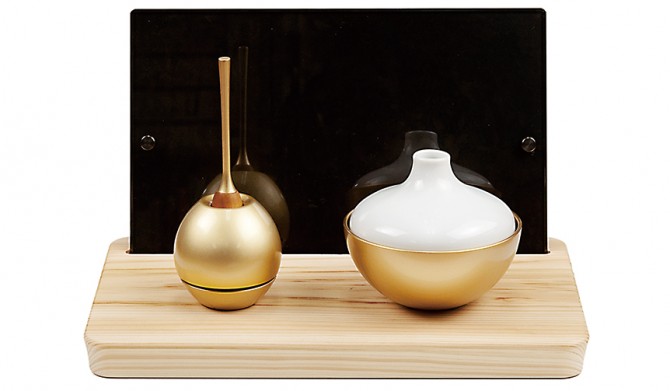
Chering + Cherin + Picstal
Includes the three Mitsu-gusoku items and an orin
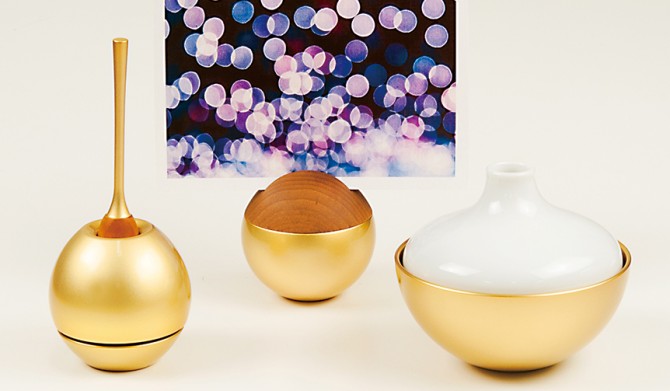
Chering + Cherin + Pictuary
As a special space filled with memories of the departed
Takaoka Copperware: Traditional Craftsmanship from Takaoka, a City Steeped in Metalworking History
The 'Sotto' series is crafted using 'Takaoka Copperware,' a traditional industry in Toyama Prefecture with over 400 years of history.
Metalworking in Takaoka boasts a history of approximately 400 years. It began in 1611 (Keichō 16) when Toshinaga Maeda, the first lord of the Kaga domain, invited seven skilled casters from Seibu Kanaya (now on the border of Tonami City and Takaoka City) to establish five casting workshops in Kanaya-cho, Takaoka City, to promote industry and foster the prosperity of the castle town.
Toshimaga passed away five years after entering Takaoka. The following year, the Tokugawa Shogunate established the 'One Castle Per Province' policy, forcing the Kaga domain to abolish Takaoka Castle. However, Lord Toshitsune, not wanting to see Takaoka, the site of Toshinaga's memorial temple, Zuiryū-ji, fall into ruin, took measures such as prohibiting townspeople from leaving Takaoka, which had seen a sharp population decline due to the relocation of samurai, to ensure its development as a center of commerce and industry. Thus, the foundation of Takaoka's casting industry was laid by the Kaga domain and the Maeda family about 400 years ago.
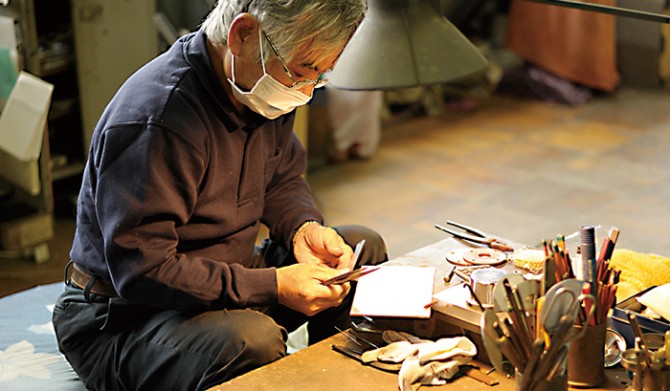
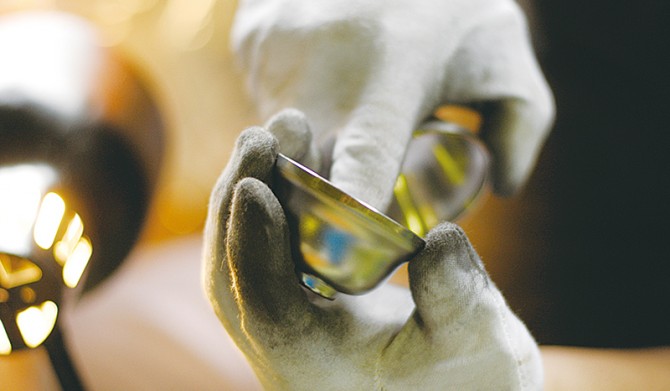
Initially, cast products primarily consisted of iron castings such as pots, kettles, and farming tools like plows and hoes, made from iron sand. By the mid-Edo period, copper casting also began. In the late Edo period, the production of temple bells, lanterns, and vases became more established. Towards the end of the Edo period, decorative Buddhist furnishings and vases were increasingly produced. During the Meiji and Taishō eras, the manufacturing of hibachi (charcoal braziers), tea ceremony utensils, and decorative objects flourished, leading to Takaoka Copperware gaining national recognition for its artistic value, transitioning from daily necessities to fine art crafts.
This marks the beginning of what is now designated as a traditional craft: 'Takaoka Copperware.' Today, approximately 95% of Japan's total copperware production originates from Takaoka City.
Internationally, Takaoka Copperware was showcased at the London World's Fair in 1862 and the Paris Exposition Universelle in 1867, establishing a firm global position due to its exquisite craftsmanship.
In 1975 (Shōwa 50), it received Japan's first designation as a traditional craft production area by the national government. As Japan's sole copper casting production center, it continues to develop new techniques and actively engages in creating craft and industrial designs.
Seo Manufacturing was founded in 1935 in Takaoka, a city with a long history of metalworking. Utilizing techniques honed since its inception, such as bending, welding, drawing, and forging, from metal sheets and rods, the company has evolved from producing copperware components, tea ceremony utensils, and Buddhist furnishings to a wide range of products including building materials and interior goods.
Previously, acquiring Buddhist furnishings often felt like a formal undertaking. However, upon seeing the modern design and accessible image of the 'Sotto' series, customers have expressed sentiments like, 'I didn't know such Buddhist furnishings existed,' and 'It's wonderful that it can be this simple.'
A new form of prayer, passed down to the present day. Why not create a more intimate prayer space with the 'Sotto' series, Buddhist furnishings that blend the技 (waza - skill) of artisans, backed by 400 years of history, with modern design?
Cherin: A Beautiful, Reverent, and Soul-Stirring Orin
With its charming cherry-like shape, Cherin resembles an objet d'art. It is an orin used to create sound when offering prayers while thinking of the departed. The hole at the top allows the bell stick to be stored upright, making it compact and space-saving. Even after striking, the lingering resonance continues for some time when the stick is returned.
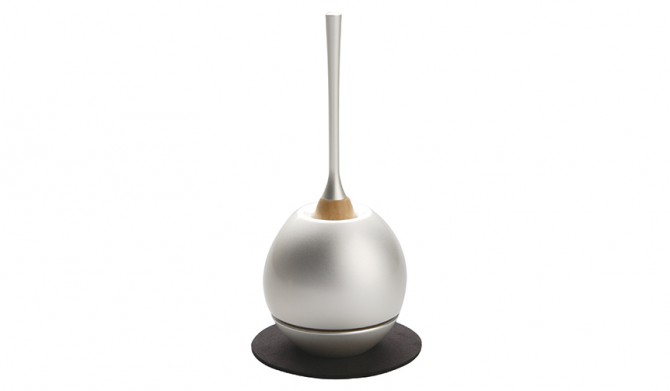
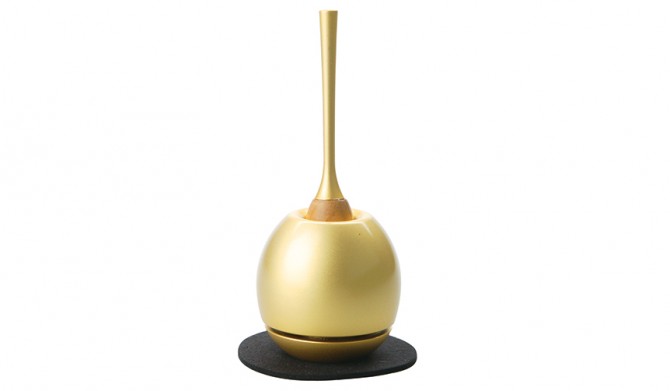
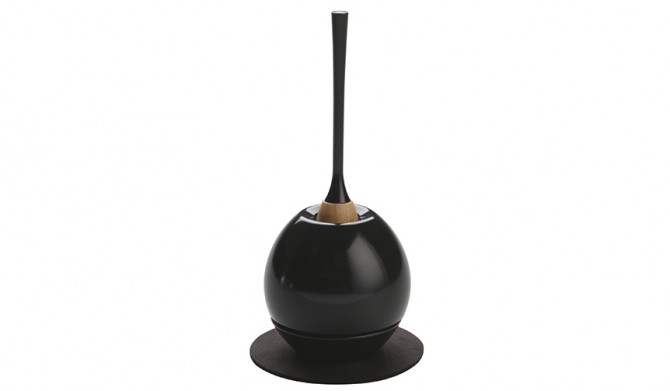
Price: ¥10,000 (excluding tax)
Size: φ55×H129mm (including bell stick)
Material: Brass, Natural Wood (Cherry)
Color: Gold, Silver, Black
Cherin mini: A Compact and Discreet Orin
While possessing the same beautiful, clear, and sustained sound as Cherin, the Cherin mini is more compact, producing a higher and more delicate tone. Its small size allows it to be discreetly placed in limited spaces and easily coordinated with other Buddhist furnishings.
Price: ¥9,500 (excluding tax)
Size: φ46×H110mm (including bell stick)
Material: Brass, Natural Wood (Cherry)
Color: Gold, Silver, Black
Cherin wood: A Simple Design with the Warmth of Wood
Similar in shape to Cherin, this version features natural wood at the base. The wooden part serves as a pedestal, eliminating the need for a separate mat. Its simple design, evoking the warmth of wood, blends well with wooden furniture. It can be naturally placed in living rooms, entryway spaces, or on study shelves.
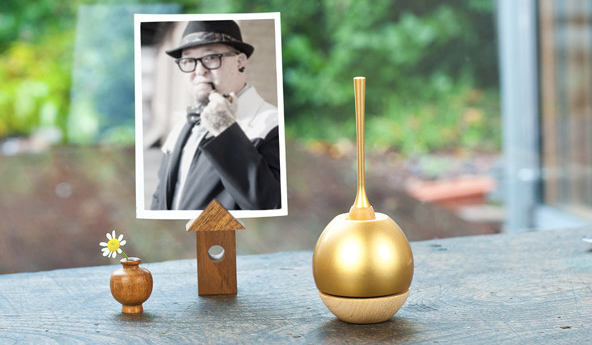
Price: ¥10,000 (excluding tax)
Size: φ55×H129mm (including bell stick)
Material: Brass, Natural Wood (Cherry, Maple)
Color: Gold, Silver
Chering: Integrating the Essential 'Mitsu-gusoku' into One Unit
Chering elegantly combines the three essential Buddhist furnishings—candle stand, incense stand, and flower vase—into a single, portable unit. When stacked, the ceramic and metal components function as a vase. For special occasions, the ceramic and metal parts can be separated, revealing a metal dish that serves as both an incense burner and a candle holder. When storing, the ceramic flower vase can be placed on the dish for a compact finish.
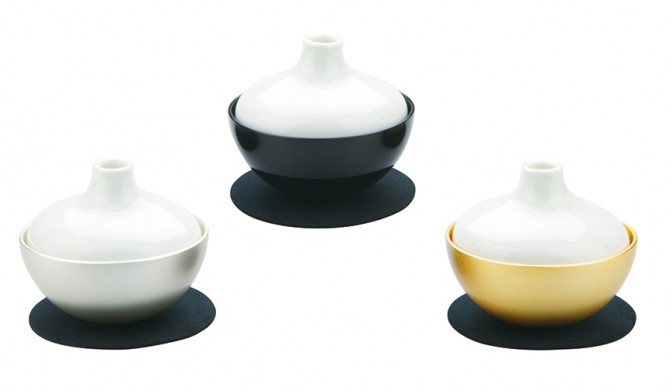
Price: ¥12,000 (excluding tax)
Size: φ90mm×H77mm
Material: Brass, Stainless Steel, Ceramic
Color: Gold, Silver, Black
Potterin: A Teardrop-Shaped Unit Containing 'Mitsu-gusoku' and Orin
The teardrop-shaped Potterin elegantly houses the Mitsu-gusoku (candle stand, incense stand, flower vase) and a circular bell stick. The base itself functions as the orin. Primarily used as a flower vase, it can be transformed into a complete prayer setting by removing the ceramic flower vase, revealing the candle stand, incense stand, and bell stick within, all contained in a space-saving design.
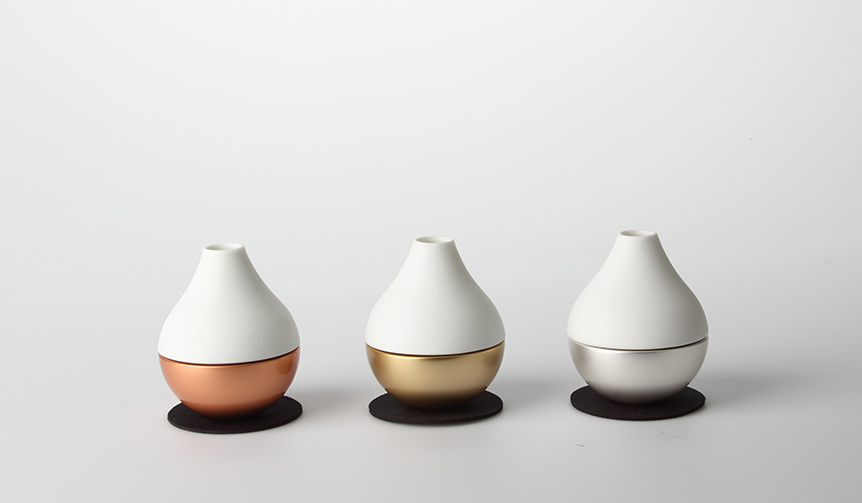
Price: ¥16,000 (excluding tax)
Size: φ68mm×H82mm
Material: Brass, Stainless Steel, Ceramic, Natural Wood (Maple)
Color: Gold, Silver, Pink Gold
Pictuary sphere: A Space to Keep Memories of the Departed
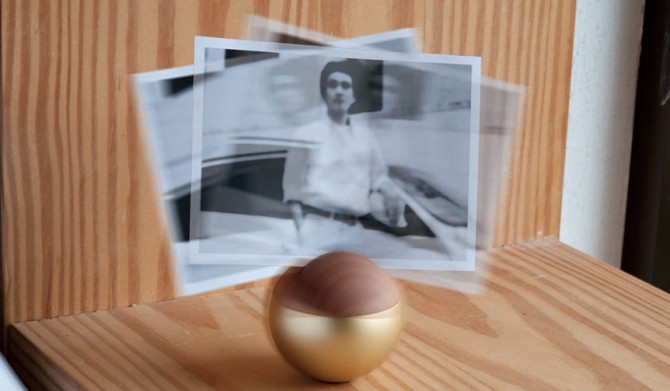
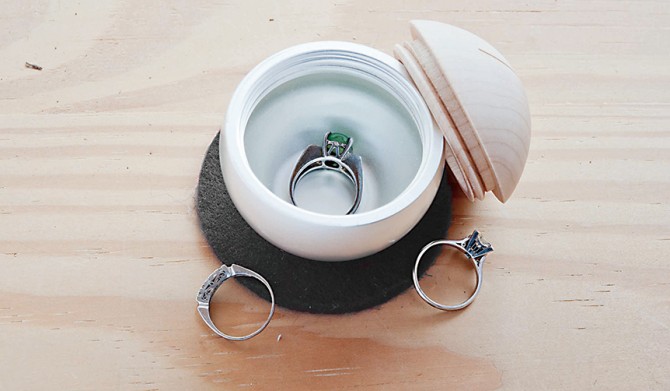
The wooden part features a groove for inserting a photograph. Opening the lid of the wooden section reveals a memorial box for storing cherished personal items of the departed, such as rings. Its spherical shape allows it to sway gently. Its compact size makes it ideal for keeping memories of a loved one close.
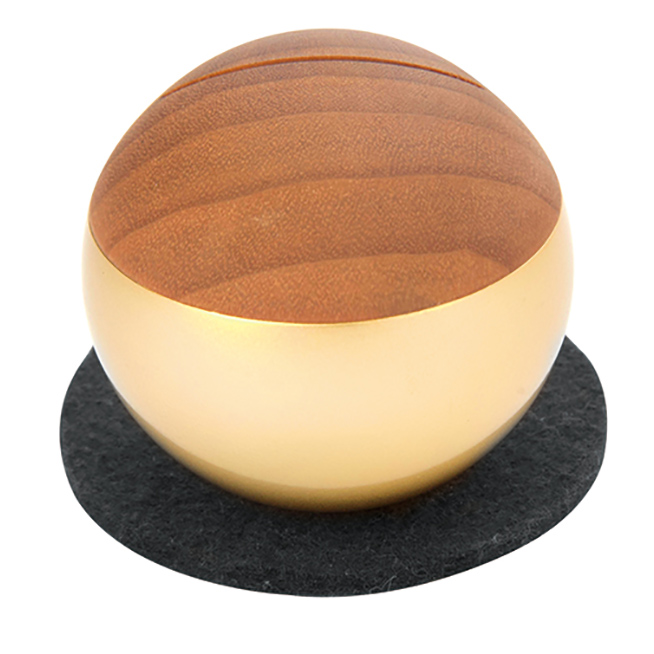
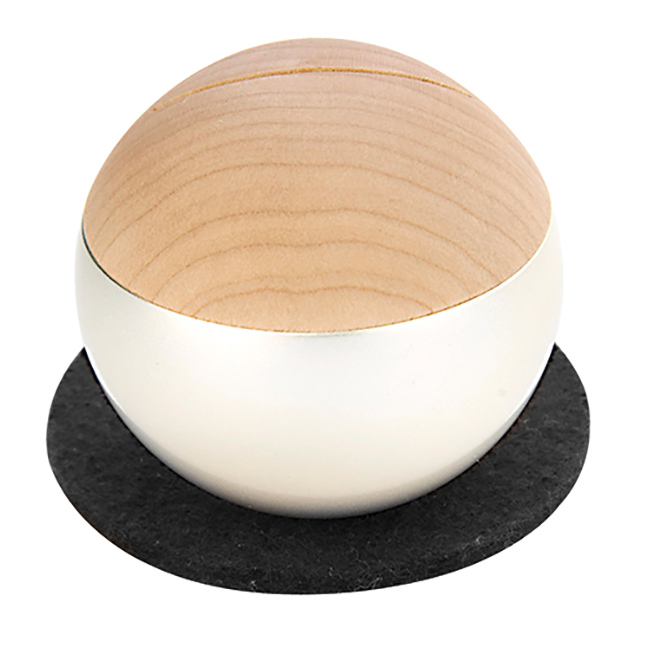
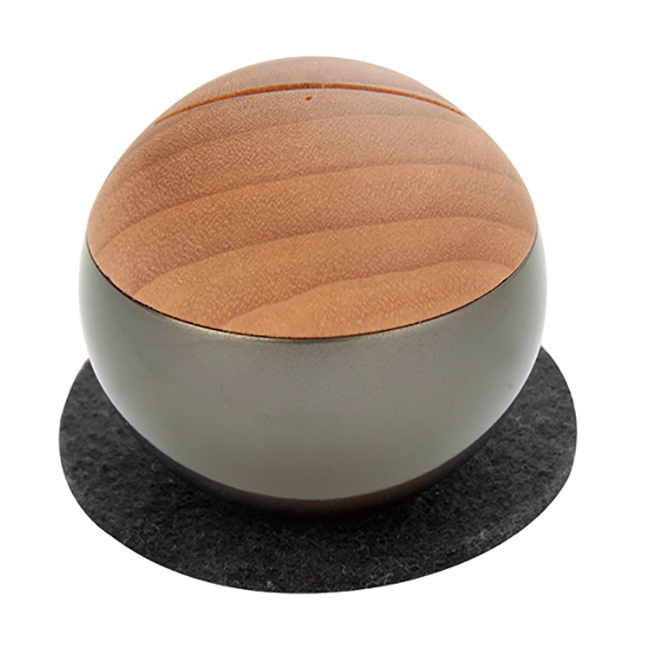
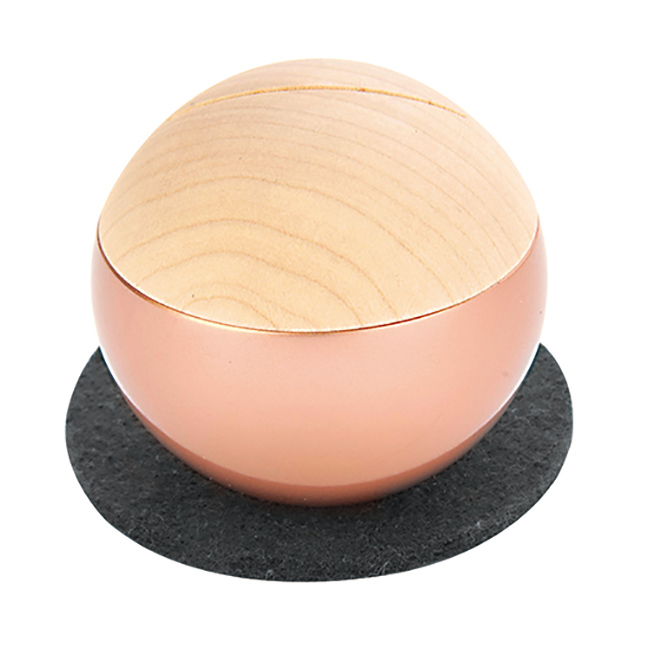
Price: ¥11,000 (excluding tax)
Size: φ54mm×H53mm
Material: Brass, Natural Wood
Color: Gold, Silver, Matte Black, Pink Gold
Pictuary cylinder: A Space to Keep Photos and Mementos Together
Similar in structure to the Pictuary sphere, this is a more compact memorial box. Its cylindrical shape features a wooden lid that doubles as a photo frame. Opening the lid reveals a cylindrical container for storing personal belongings or rings, and it can also serve as a small urn. Ideal for placing on a bedside table to feel the presence of a loved one nearby.
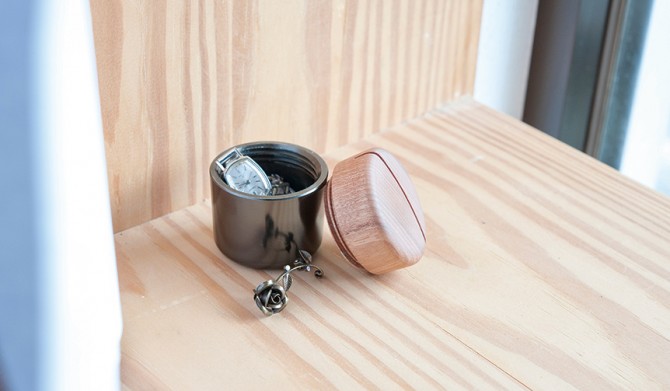
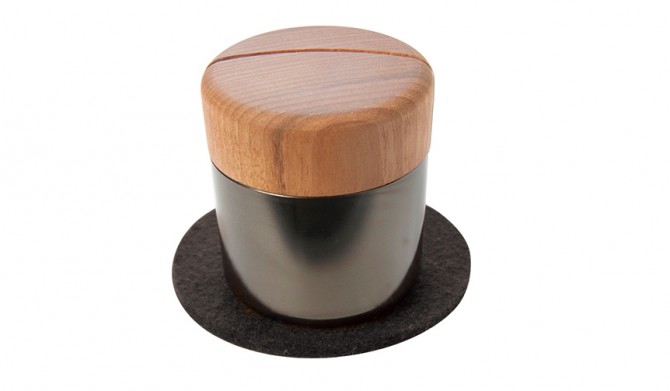
Price: ¥10,000 (excluding tax)
Size: φ46mm×H50mm
Material: Brass, Natural Wood
Color: Gold, Silver, Matte Black, Pink Gold
Picstal: A Photo Stand for Conversing with the Departed
A photo stand with a wooden base. When placed horizontally, it can hold two L-sized photos side-by-side. When placed vertically, it perfectly fits a 2L-sized photo. The base can also accommodate the Mitsu-gusoku, allowing for an unpretentious space to converse with the departed. It serves as a place to offer quiet prayers while gazing at cherished photographs.
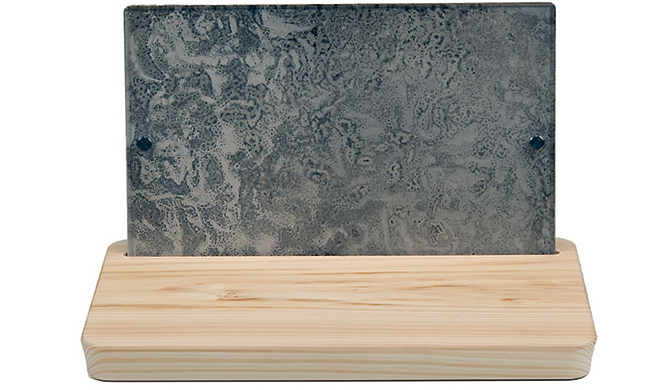
Price: ¥21,000 (excluding tax)
Size: W250×D160×H148 (horizontal) / 230 (vertical) mm
Material: Brass, Natural Wood, Stainless Steel, Acrylic
Color: Patterned Black Dye, Patterned Pure Silver
Caroma: A Simple Combination of Incense and Candle Holders
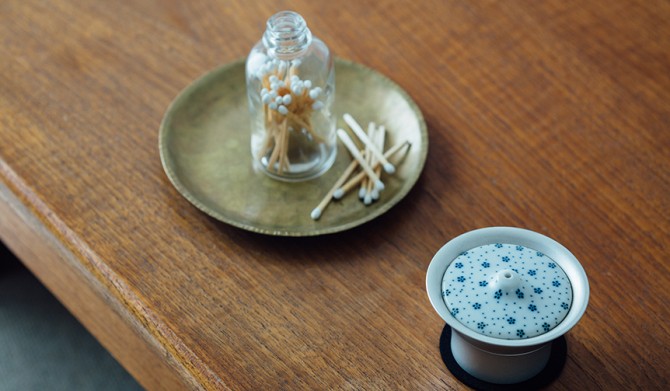
This set of incense and candle holders allows for easy lighting anytime. The ceramic lid serves as the incense holder, while the cup-shaped base holds a candle. The ceramic incense holder can be inverted to burn cone incense, functioning not only as a Buddhist furnishing but also as an incense burner for entertaining guests.
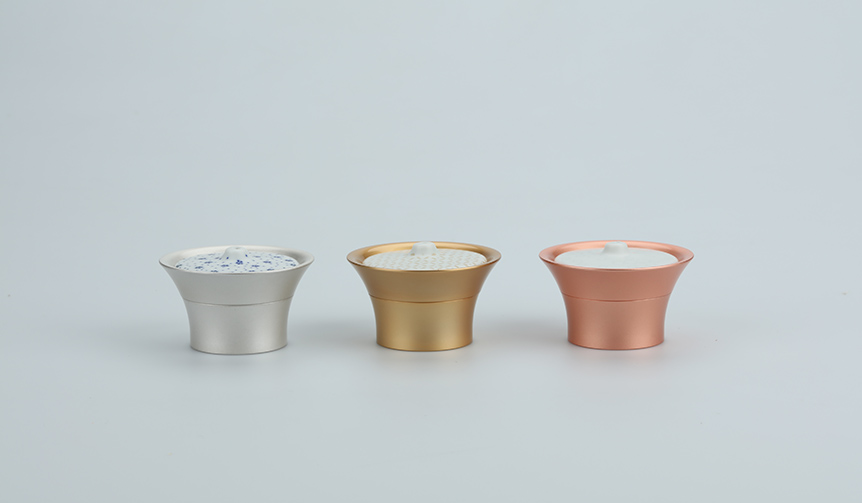
Price: ¥10,000 (excluding tax)
Size: φ72×H47mm
Material: Brass, Ceramic
Color: Gold, Silver, Pink Gold
Komon Patterns: Shippo, Umegama, Yukirinmon
Paddle: An Orin with a Paddle-Shaped Bell Stick and a Translucent Appearance
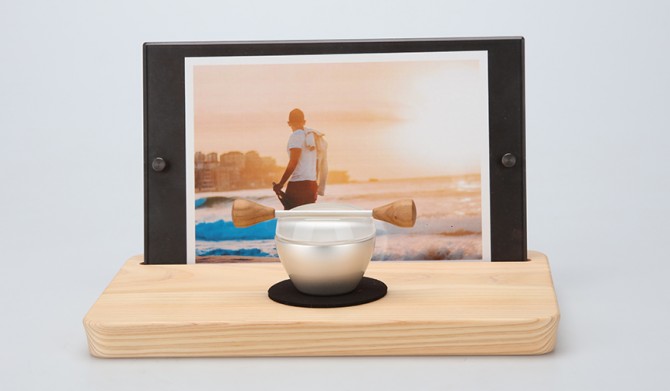
As its name suggests, this orin features a paddle-shaped bell stick placed on a transparent glass stand. Its clear sound resonates beautifully. The combination of the natural wood bell stick and the translucent appearance of the main body allows it to blend seamlessly into various interiors, from modern to natural styles. It can also be paired with Picstal.
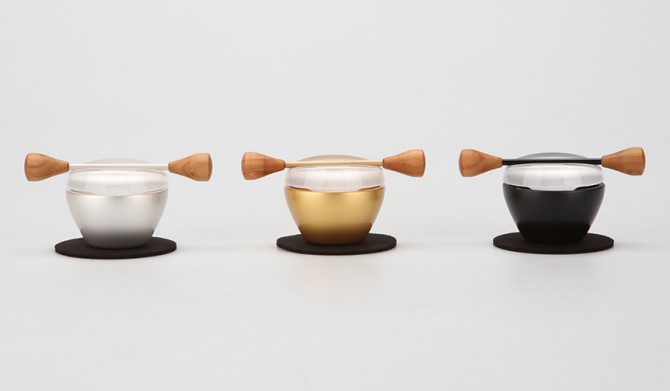
Price: ¥10,000 (excluding tax)
Size: φ55×H46mm, Bell stick length 100mm
Material: Brass, Glass, Natural Wood, Cherry (wooden tip of bell stick)
Color: Gold, Silver, Black