OPENERS Editorial Department's Design Tide Tokyo Summary
Close-Up! DESIGNTIDE TOKYO 2008 Photo Gallery
OPENERS Editorial Department's Summary of DESIGNTIDE TOKYO
This year marks the fourth iteration of Design Tide, Tokyo's design exposition. The title has also been changed to "DESIGNTIDE TOKYO," conveying a strong sense of ambition and pride in transmitting new, earnest design from the city of Tokyo. "DESIGNTIDE TOKYO" possesses two facets: one as a "show = design event" for the general public, and the other as a "fair = trade show" for business.
This year, the venue was moved to Roppongi, a new center for art in Tokyo, and the main venue was established within Tokyo Midtown, a commercial facility boasting one of the city's highest levels of trendsetting and visitor traffic. This move, along with the focus on high quality and rich content across all aspects, mirrors international design shows. Notably, the emphasis on information dissemination through the press was significant, facilitating smooth communication among media representatives, exhibitors, and business-oriented visitors, thereby strengthening the trade show aspect.
This year, attention was also paid to the music flowing through the space, creating an atmosphere that enveloped each artwork and the people gathered around it. This same sentiment can be applied to the spatial design, where "architecture" made of fabric gently partitioned and connected the various booths. Both elements felt imbued with a meticulous, Japanese sense of hospitality.
Thus, the newly reborn "DESIGNTIDE TOKYO 2008." For a month leading up to the event, OPENERS has been closely following "DESIGNTIDE TOKYO 2008," paying close attention to its developments. On the opening day, the OPENERS CASA editorial department gathered at the main venue. We aim to summarize this "DESIGNTIDE TOKYO 2008" by featuring designs and designers that capture the essence of Tokyo today from an OPENERS perspective.
Text by Takashi KatoPhoto by Jamandfix
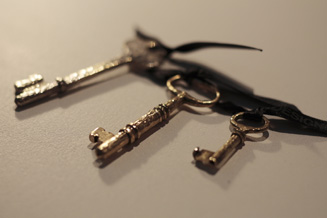
501 DESIGNSTUDIO
Breathing new life into existing objects through the power of traditional crafts and techniques. Creating new things from what already exists, rather than starting from scratch.
The changes that occur when a spoon or key is hammered with a mallet can be seen as a new methodology for engaging with existing objects.
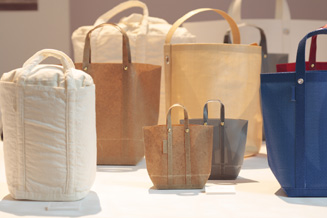
Hironori Inada / Stitch andソー
Stitch andソー proposed three bags with different materials. The inherent functions, strengths, and images of the materials are embodied in the bags. For example, the materials used are paper, industrial waste, and sheeting. Bags made from industrial waste are actually sewn in factories that produce sandbags and sheeting used to cover construction sites. They are suitable for daily use or for situations requiring exceptional strength.
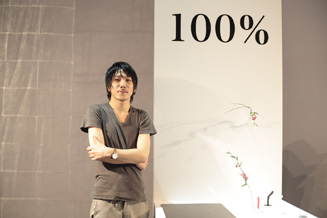
100% Hirohisa Tsuboi
Hirohisa Tsuboi of 100% presented six new works at this Design Tide. His product, which reimagines a common drinking straw as a vase, is an active flower base that utilizes the straw's ability to extend, bend, and hold its shape, allowing for dynamic arrangements.
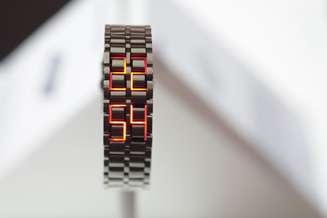
This wristwatch focuses on the characteristic of a metal band made entirely of links. A 7-segment LED is embedded in the approximately 0.7mm gap between each link to display the time. The harmony between the digital feel of the LEDs and the iconic metal band of an analog watch creates a delightful interaction with the product.
Akihiro Kumagai
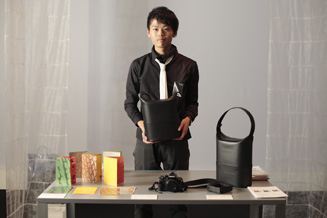
Camera bags often lack style. The camera bag developed by Akihiro Kumagai in collaboration with Olympus not only fully protects the camera but also possesses an aesthetic beauty akin to an objet d'art.
Kazutoyo Yamamoto
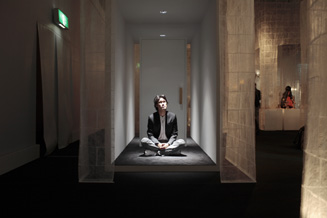
Kazutoyo Yamamoto presented an installation-like exhibition with the concept that the fixed notion of a hinged door locks the door itself. It is a passionate inquiry from the designer regarding the many things that our own consciousness locks away. It was a stimulating exhibition that suggested the potential of design extends to the human subconscious.
Teruhiro Yanagihara
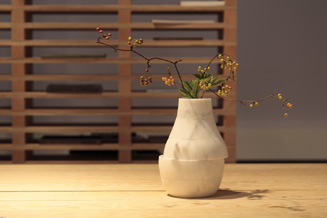
He presented a flower vase capable of adjusting its height and shape to accommodate flowers of varying lengths, allowing for arrangements of different heights and lengths within a single vase.
Another piece is a shelf shaped like a forklift pallet. Its form utilizes the inherent flexible functionality of the object itself. It can serve as a bookshelf, a bed base, or a bench as interior furniture. A single module can accommodate different uses.
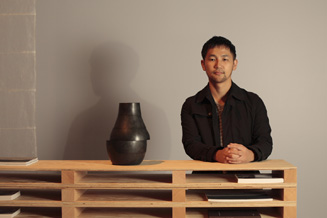
PILE/Module Furniture
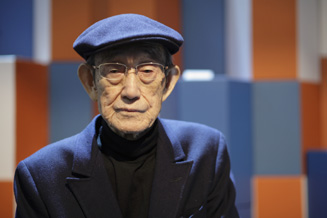
Riki Watanabe / METROCS
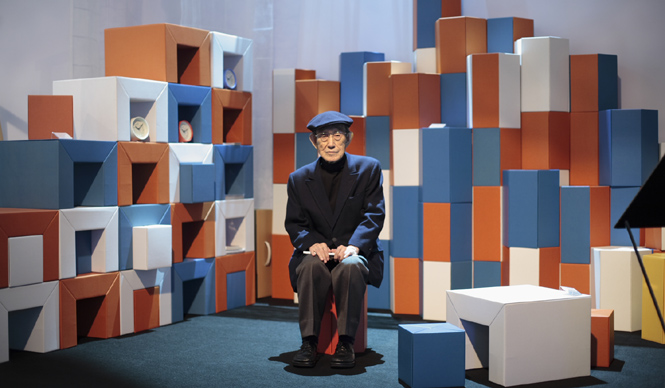
METROCS, also known for its reproductions of classic furniture that have been lost to time, exhibited assembled furniture made of cardboard, presented as a wall. The pieces displayed this time were "CFS Kids Set" and "CFS Stool," paper furniture designed by Riki Watanabe, a pioneer of Japanese industrial design. Mr. Watanabe himself, the designer, was present at the venue, observing with interest. The sight of this active designer, who turned 97 this year, left a strong impression.
Tendo Mokko PLY
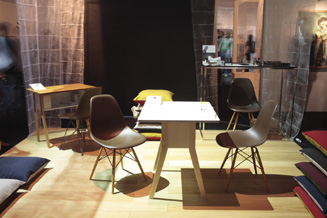
They presented shop-exclusive color Eames side chairs and "Yuka Zabuton" floor cushions, designed to accommodate the changing lifestyles of Japanese people who are increasingly living without tatami mats. Additionally, four new products from "Primario," a new series by product designer Michio Akita, were specially exhibited, drawing considerable attention.
Emmanuelle Moureaux
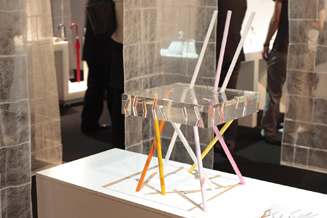
stick chair
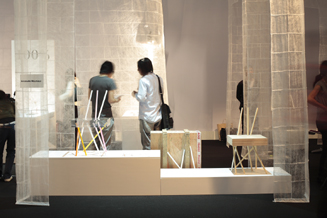
Emmanuelle Moureaux is known for her spatial designs for establishments such as ABC Cooking Studio.
The stick chair was inspired by Mikado, a popular toy in France made from bamboo sticks. Structurally, the chair supports a 20kg acrylic seat with incredibly thin wooden sticks. The sticks, inserted into the 9cm thick acrylic, appear as if they are piercing the surface of water. While the randomly inserted sticks might seem unstable, they fulfill the chair's function, presenting an architecturally inspired design.
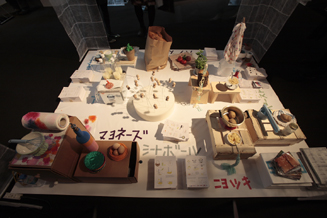
Arabeschi di Latte
A group of five female designers based in Florence, Italy. They organize "EATING EVENTS" with food as their theme in various locations. At Design Tide Tokyo, their booth was transformed into a picnic table, and their visually delightful installation became a focal point for the women visiting the venue.
Tomas Alonso
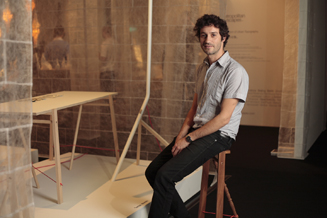
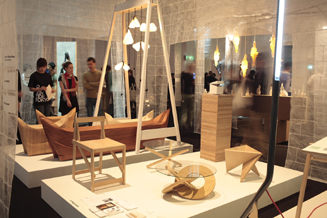
Tomas Alonso, a Spaniard, began his career as a product designer after graduating from the Royal College of Art (RCA). He is a designer who surprises us by looking at everyday materials with a fresh perspective and transforming them into functional, simple furniture. In 2006, he co-founded OKAYstudio with fellow RCA graduates.
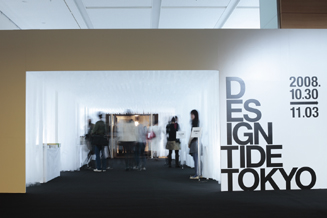
Main Venue Entrance
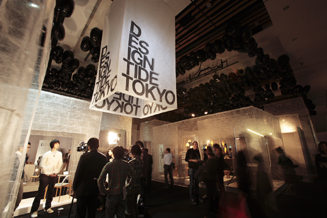
Interior View of Main Venue
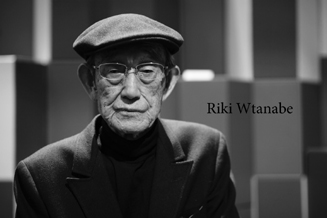
Mr. Riki Watanabe
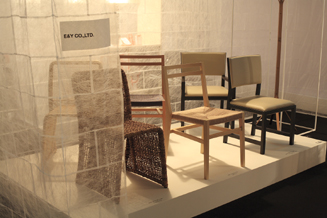
E&Y, Miki Astori, Richard Hutten, Tim Power
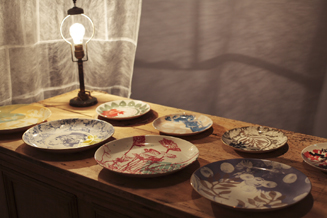
amabro
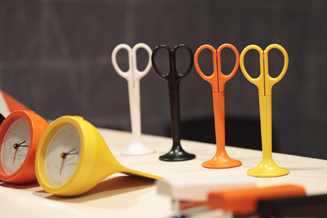
ANYTHING
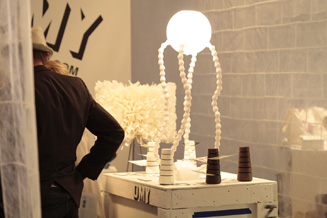
DMY Berlin
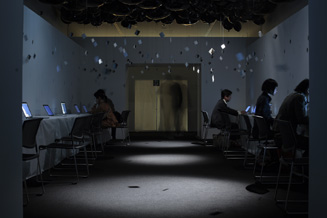
PC Booth