Feature: Bringing Permaculture Design into Daily Life
Sustainable Environmental Design Aligned with Nature and Life Systems
Bringing Permaculture Design into Daily Life (1)
A life that learns from nature and allows life to cycle. Shinji Yotsui, a permaculture designer, is proposing a reconfigured form of permaculture—a design system for creating sustainable environments born in Australia—that is suitable for Japan, through his practice at his home in Yamanashi. We explore the shape of sustainable living that he wishes to pass on to the next generation through the lifestyle he proposes.
Text by MINOWA Yayoi
A Home as a Miniature Earth
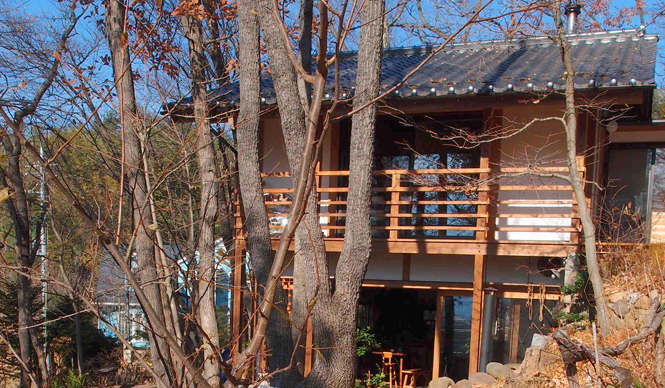
Shinji Yotsui's home is nestled within a forest in Hokuto City, Yamanashi Prefecture. Behind the house, broadleaf forests of konara and shide oaks stretch out, with the majestic Kai-Komagatake of the Southern Alps visible—a truly abundant natural setting. It's hard to imagine that this place is only an hour and a half by expressway from Tokyo.
In front of the fields, a cream-yellow hen named Banana is kept in a mobile coop. Those familiar with permaculture might recognize this as a "chicken tractor." It's a system that utilizes the cycles of nature: the chickens lay eggs, eat weeds in the fields, scratch for insects and till the soil, and their droppings fertilize the ground.
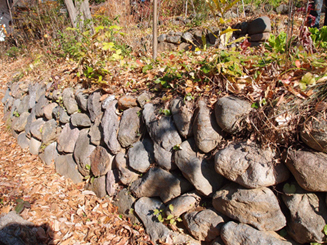
On the slope in front of the house is a "stone-tiered field" where Yotsui has stacked stones collected from construction sites. These stacked stones also hold various meanings, known as the "stone mulch method."
"Stones store the sun's heat during the day and retain warmth until night, stabilizing the environment for the crops. Conversely, at night, the stones cool down, creating morning dew and helping with water retention. The spaces between the stones become habitats for snakes and lizards, and when they begin to inhabit the area, it's proof that the ecosystem has become richer," says Yotsui. Even a single stone wall in the field utilizes various natural processes.
In this way, permaculture is rooted in observing and utilizing natural systems, and in the wisdom found in traditional agriculture and crafts. It involves utilizing the natural characteristics of a place and its structures to create life-sustaining systems, whether in urban or rural settings. This is why permaculture is called a "design system for creating sustainable environments for humans."
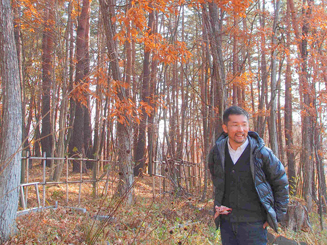
Shinji Yotsui moved to Hokuto City from Takato Town, Nagano Prefecture, in 2007, and has since cultivated and renovated the forest and house that were already there. He personally practices permaculture design, where "the natural environment and ecosystem of a place become richer through human habitation."
"My ideal is to create a system where the life of a single household cycles like a miniature Earth. While current Japanese lifestyles and culture are in disarray, by first following the Earth's principles and changing our immediate surroundings, we can lead to proposing future ways of living and culture," Yotsui states. True to his words, his home and its surroundings are filled with the permaculture designs he envisions integrated into daily life.
Culture Resides in Old Tools
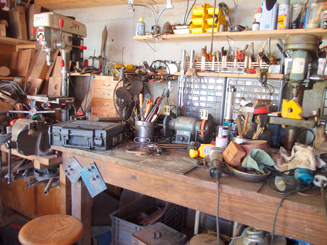
Throughout Yotsui's property, used farming equipment and household tools are placed here and there. Most of these are not mere decorations but are maintained and actively used.
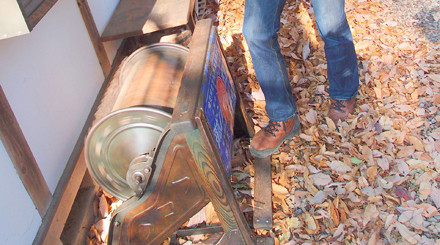
There's a treadle thresher, a machine for twisting straw into rope by foot power, a winnowing fan (tōmi) that uses wind to sort various grains, and various hoes and plows. Tools embody the society of their time, rooted in the local climate and customs. When these take form, they become culture. This is why Yotsui is fascinated by the idea that "tools are culture."
For example, in old farming households, large quantities of rope were needed for agricultural work, so making rope from straw was a major task during the farming off-season. A rope-making machine was invaluable as it allowed for the creation of rope without manual twisting. These are all ingenious tools that supported the lives of farmers, demonstrating wisdom and ingenuity. And they perform their tasks effectively without electricity. Yotsui is breathing new life into them.
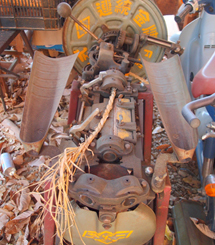
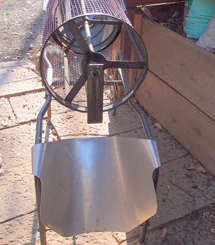
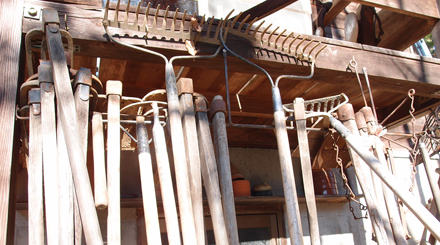
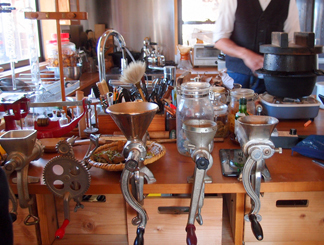
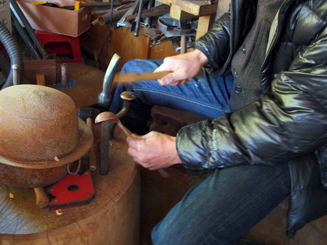
Yotsui looks at these tools with the eyes of a boy discovering treasure. Behind the house, there is a large workshop where various items necessary for daily life can be made or restored.
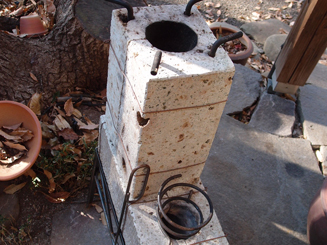
Some of the products born from this workshop are sold on "Soil Design," a website operated by Yotsui. For instance, there's a rocket stove made from stone. With many people now wanting to live off-grid without relying too much on electricity, the rocket stove, which can use fallen branches and waste materials as fuel, is a noteworthy item. It's useful for meals on small balconies or in gardens, and also in emergencies like power outages.
Sustainable Environmental Design Aligned with Nature and Life Systems
Bringing Permaculture Design into Daily Life (2)
A Composting Area Where Life is Recomposed and Water Cycles
Circularity is crucial when considering permaculture. It's about systems where water, waste, and refuse are effectively utilized within daily life and cycle back as resources.
At Yotsui's home, kitchen wastewater is purified by a simple filtration system filled with porous gravel, then flows through a waterway called a "biogeofilter" to a biotope.
A biogeofilter is a natural purification system that breaks down organic matter in wastewater into inorganic substances using microorganisms, and then plants absorb these inorganic substances through their roots to purify the water. Watercress and wasabi grow along the waterway of Yotsui's biogeofilter. These plants also serve as part of the purification system, and of course, they can be harvested and eaten. Nothing is wasted; it's a system that cycles without consuming energy.
And, arguably, one of the highlights here is the composting area.
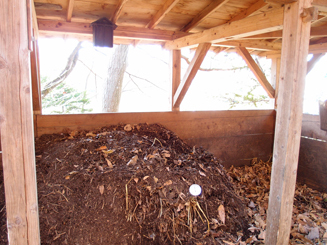
Organic matter from daily life—such as kitchen scraps, sawdust from crafting, fallen leaves, and the excrement of animals and the Yotsui family—is piled up, becomes compost, and returns to the fields.
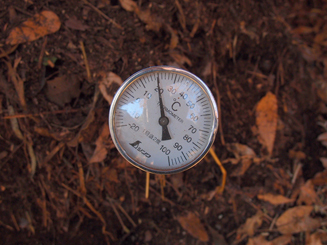
Earthworms and beetle larvae inhabit the compost, along with billions of microorganisms that carry out their work. As a result, the waste generates heat, and the compost itself becomes warm. There is no odor, and it is warm. At night, it also serves as a sleeping area for goats and chickens.
"This is where all life returns and becomes a new beginning," says Yotsui.
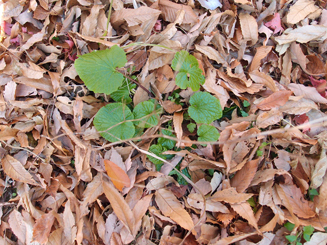
Perhaps a small altar is placed in the compost area because the mechanisms of life reside here. It is a place where one can truly feel that all living beings, including humans, are sustained within the cycle of life.
Lately, Yotsui feels it is essential for children to experience permaculture. This is because he believes that the inheritance of living skills and culture forms the foundation of education, and that formal schooling should merely supplement this.
To shape the future of living in Japan as Yotsui envisions, he believes it is necessary to systematically convey permaculture principles to the next generation. To this end, he and his colleagues are planning a "Permaculture Family Camp" for parents and children.
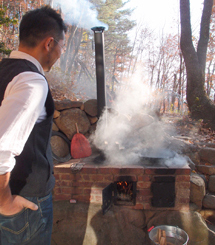
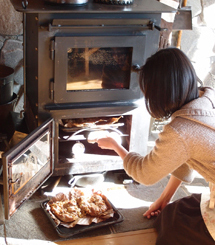
As a father of two sons himself, he is conscious of conveying experiences and mindsets to his children. He cherishes family time, sometimes cooking rice on a homemade outdoor stove or working together in the fields.
"Knowing the principles and thinking for oneself is important. When you can do that, freedom is born" (Yotsui). This feels essential not only for children but for all of us living today.
Soil Design
http://soildesign.jp/
Shinji Yotsui
Graduated from the Department of Forest Science, Faculty of Agriculture, Shinshu University. After working for a landscaping company, in agricultural management, and at an organic fertilizer company, he became independent in 2001.
He established Soil Design, focusing on soil management consulting and permaculture design,
and has been involved in projects such as designing the garden for Expo 2005 Aichi, Japan, and the revitalization project for a depopulated village on the Goto Islands in Nagasaki Prefecture.
As a permaculture designer proposing lifestyle systems that incorporate the inheritance of Japanese culture, he is active both domestically and internationally.
Yayoi Minowa
Environmental writer and director of the NPO "Sorabea Fund." She writes and plans environmental articles, and runs the green cafe "Fromae Café & Gallery" near Yanaka, Tokyo,Fromae Café & Gallerypromoting and practicing organic food, natural materials, and natural energy. Her books include "123 Tips for Saving Electricity and Energy" and "Recommendations for an Environmental Lifestyle" (Asuka Publishing).