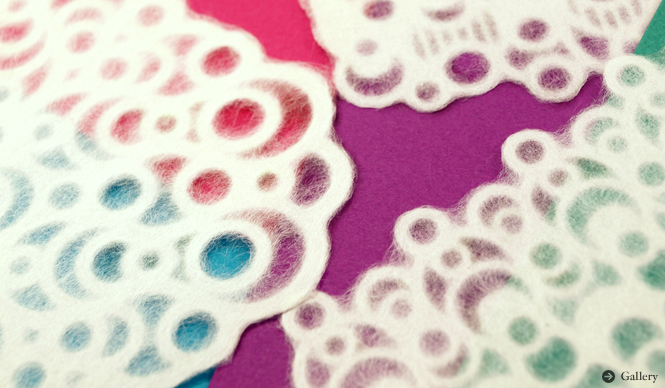
GREETING CARD│A greeting card that delivers the potential of Mino washi paper.
“ISETAN LIVING×HIROCOLEDGE”
GREETING CARD│
Greeting Cards Conveying the Potential of Mino Washi
For the ninth installment of the “ISETAN LIVING × HIROCOLEDGE” feature, Yuko Hattori, buyer for Isetan Living’s hobby goods, introduces cards focusing on handmade washi paper.
Portrait photography: Shiori KawamotoText: Yuko Hattori, Hobby Goods, Isetan Living Sales Department
A New Sensation in Cards: Combining Japanese Understatement with a Pop of Fun
In an era where email is commonplace, those who insist on handwriting consider letters not merely as a "formal act or means of communication," but as a "way to express oneself," mindful that the recipient will invariably picture the sender. For this reason, they carefully select not only the stationery and envelopes, but even the ink color.
Now, with Western paper made from wood pulp being the mainstream, we wanted to offer cards that focus on the world-renowned tradition of "handmade washi paper," passed down in Japan for over 1300 years, to such discerning customers.
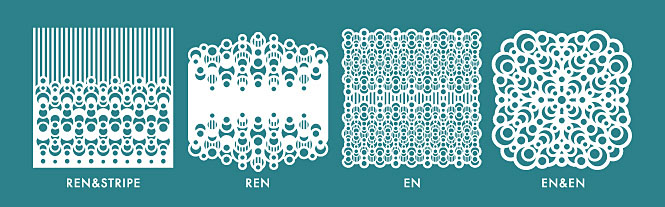
However, washi paper tends to carry a traditional Japanese image, and we wanted to break away from that. By asking Riko to design them this time, we were able to create cards with an unprecedented sensibility, blending Japanese understatement with a pop of fun.
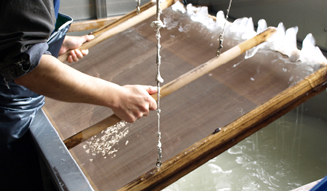
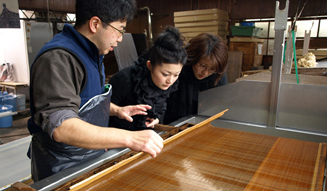
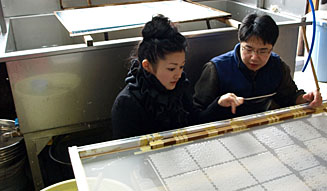
In this initiative, we collaborated with Kameda Paper Manufacturing Co., Ltd., using a handmade technique born from combining traditional Mino washi paper craftsmanship with the latest technology.
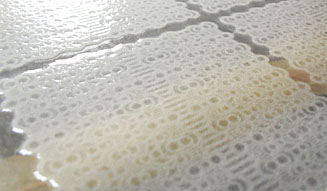
Riko's designs feature intricate patterns that require precision. These could not be achieved with standard Mino kozo (paper mulberry); after trial and error, including changing the material to Nasu kozo with its shorter fibers, we completed this washi paper, a testament to the artisans' dedication. Furthermore, to give the cards a certain thickness, multiple sheets were layered, varying in number depending on the pattern, embodying numerous meticulous details.
And, aiming for a synergistic effect with the watermark, we paired the washi paper with envelopes in vibrant colors, unusual for such combinations, resulting in greeting cards that fully leverage the charm of washi paper while offering a fresh impression.
Cards That Will Capture the Interest of Younger Generations with a "So Cute!" Reaction

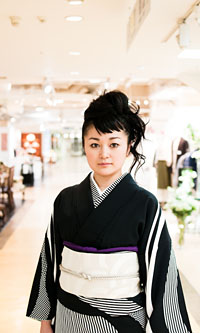
Yuko Hattori
—What are your impressions of Riko Takahashi's work?
I find her approach remarkable: she doesn't simply prioritize what she wants to create. Instead, she first grasps what Isetan requires, the fundamental values each item must possess, and the skills and sentiments of the artisans involved, before designing. I deeply admire this.
In this project as well, I believe it's truly wonderful that Riko's patterns and colors have enabled us to create cards that, as Isetan intended and the region hoped, will attract younger generations with a "So cute!" reaction to traditional materials and techniques like washi paper.
—Regarding this “ISETAN LIVING × HIROCOLEDGE” project
While each buyer has undertaken various initiatives individually in the past, this is the first time that the buyers from the Living floor have collaborated as one on a single theme.
The ability to present a unified vision with such a wide range of items and scale is unprecedented in the living goods industry. I believe it will appeal to customers who haven't typically visited the fifth-floor Living area.
—Sales will begin on Wednesday, March 4th.
This is a project that we at Isetan have undertaken with new challenges and through trial and error. I am incredibly excited and looking forward to seeing it displayed in stores and for customers to experience it. We will further refine the presentation and other aspects to convey the passion of the buyers, the creators, and Riko to our customers to the fullest.
I traveled to Mino and witnessed the process of these cards being made.
Washi paper, made from locally grown materials, requires time and human effort but can be produced with minimal energy.
While heat energy is needed to extract fibers from the kozo (mulberry bark), the rest of the process relies solely on water, sunlight, and human power. I witnessed firsthand a form of Japanese craftsmanship that coexists with nature and has adapted to the changing seasons.
Though these are delicate, small products that allow light to pass through, they carry an immense, untold story behind them.
I would be delighted if many people could hold them and feel the charm of washi paper.
