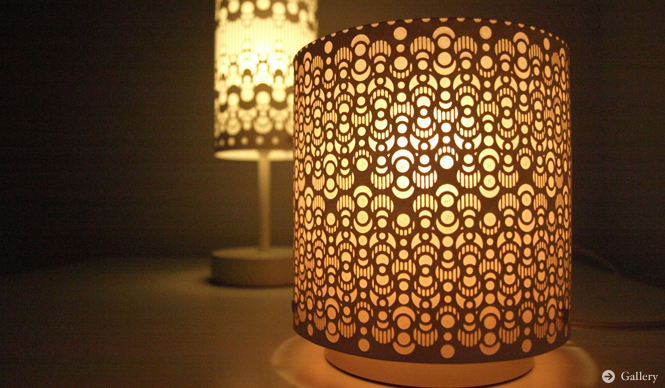
“ISETAN LIVING × HIROCOLEDGE” LIGHT | A gentle presence, like a candle.
ISETAN LIVING×HIROCOLEDGE
LIGHT│A Gentle Presence, Like a Candle
The second installment of the "ISETAN LIVING×HIROCOLEDGE" feature delves into the creation of the product.
Hidetoshi Soma, the buyer responsible for lighting at Isetan Living, introduces a table light made with a special paper material called "Pachica."
Portrait photography by Shiori KawamotoText by Hidetoshi Soma, Lighting Buyer, Isetan Living Sales Department
Realizing the Importance of Balance Between Design and Technology
For this "Only I" feature, in collaboration with Riko Kashiwagi, we are proposing a table light crafted from a unique paper material known as "Pachica."
The key was to utilize the latest paper technology, consider structural aspects like safety for lighting fixtures, and embody a delightful design within an accessible price range for our customers.
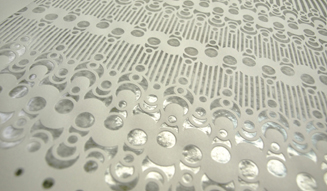
There is only one previous example of lighting using Pachica for its shade, and the intricate, fine pattern applied across the entire surface in this project presented an exceptionally high level of processing difficulty.
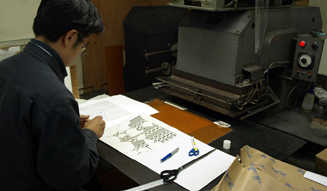
The processing of Pachica was carried out at a foil stamping factory in the old downtown area of Tokyo. When applying pressure to a design over a wide area, factors such as imperceptible mold distortion, variations in paper thickness, and the condition of the machinery can have an impact.
Through repeated, minute adjustments, such as placing a thin sheet of paper beneath a metal plate, a uniformly diffused pattern emerges. Furthermore, Ms. Kashiwagi's design is not only delicate and beautiful but also incorporates a clever arrangement of patterns at regular intervals to maintain the cylindrical shape of the shade, minimizing distortion of the Pachica after processing.
I truly felt the importance of balancing design and technology.
The Base: A Commitment to the "Herashibori" Technique
Additionally, for this project, we explored incorporating color into the light.
At the only factory capable of printing on Pachica, we meticulously adjusted the colors of the light filtering through the paper, resulting in "Sakura" and "Pistachio" – two hues developed with careful consideration for balance with other items.
The light's stand was designed with stability as a lighting fixture in mind, incorporating safety features, resulting in a product of exceptional completeness.
Even the highly precise base, which might appear to be easily manufactured by machine, is meticulously crafted one by one by a "Herashibori" artisan in Osaka. Prioritizing safety, while also focusing on its form and the design that unlocks Pachica's potential, I felt a profound sense of professionalism from everyone involved in its creation.
Beyond the inherent safety of a lighting fixture, and while pursuing a design that leverages Pachica's unique properties, one of my key considerations as a buyer was the retail price.
We wanted to convey the value of Ms. Kashiwagi's dedication to craftsmanship, all while maintaining a price point accessible to our customers.
Although it may have been a demanding request for those directly involved in the manufacturing, we were able to create a table light that offers maximum quality and exceptional design at an optimal price for our customers.
And it is precisely because of my collaboration with Ms. Kashiwagi that we could pursue such high quality in this project and create a truly Japanese product.
A Collaborative Creation: Designer, Manufacturer, and Buyer United
—What are your impressions of Riko Kashiwagi's work?
The first time I encountered Ms. Kashiwagi's designs was at a furniture exhibition in Hida Takayama.
Amidst furniture that often incorporated traditional or Japanese elements, the furniture series developed with Mr. Enzo Mari stood out with a distinct aura.
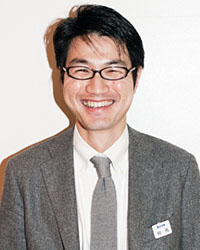
Hidetoshi Soma
It possessed a Nordic sensibility, making one wonder if it were designed by a European, yet it also conveyed a distinctly Japanese aesthetic. The balance of color tones, the contrast between large and small patterns, and the harmony within the smaller patterns nested inside the larger ones were truly remarkable.
As I researched further, I learned that she is a Japanese woman and that she engages in a wide range of creative activities, including designing kimonos and tabi (traditional Japanese socks).
Her tabi designs, which feature patterns on the sole of the foot, are one of my favorite items, embodying a witty, Japanese sensibility akin to Kyoto's ceramic tableware designs – like a maple leaf appearing on the inside of a lid when opened, or characters revealed at the bottom after a meal. Such Japanese nuances are wonderful.
—Regarding this "ISETAN LIVING×HIROCOLEDGE" project
This project, encompassing such a wide range of collaborations, was a first for us. The fact that the designer, manufacturer, and buyer could unite in the creation process was immensely significant.
This initiative was unprecedented, and I believe it holds great importance that the buyers, who are closest to our customers (and who are on the sales floor on weekends), were deeply involved in creating products that would resonate with them.
This project was also based on the theme of "living surrounded by things we love" and "using good quality items for a long time." Rather than aiming for customers to purchase every single item, our hope is that they will "discover at least one item they truly cherish."
—Sales begin on Wednesday, March 4th.
Each piece is a creation born from the collective efforts of all the buyers, incorporating every consideration. We sincerely hope our customers will experience and appreciate their quality firsthand.
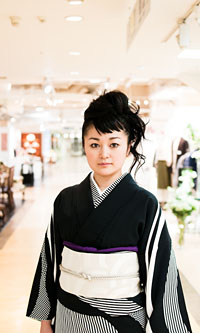
Regarding the lighting fixture with Buyer Soma (Riko Kashiwagi)
Using Pachica, which, when heat-embossed, becomes translucent and emits a soft light akin to shoji screens, we aimed to create a light with a gentle presence, like a candle.
The charm of Pachica also lies in the significant difference in material texture between the translucent and opaque areas on a single sheet of paper, making the contrast between its appearance when lit and unlit a key feature.
As a lighting fixture, we wanted to maximize the area through which light could pass. However, there were limitations to the processing area due to the need for pulp to escape when compressed by the copper plate. This was a challenge, as there was no precedent for processing such a large area. We were able to achieve it by finding a balance between design and processing technology.
Feature│Isetan and Riko Kashiwagi Collaborate on "Only I" for Spring 2009, Updated Every Friday!