Barber Osgerby | The Secret Behind the "Olympic Torch Design"
Barber & Osgerby: The Designers Behind the Olympic Flame Torch
The Secret Behind the Flame Design
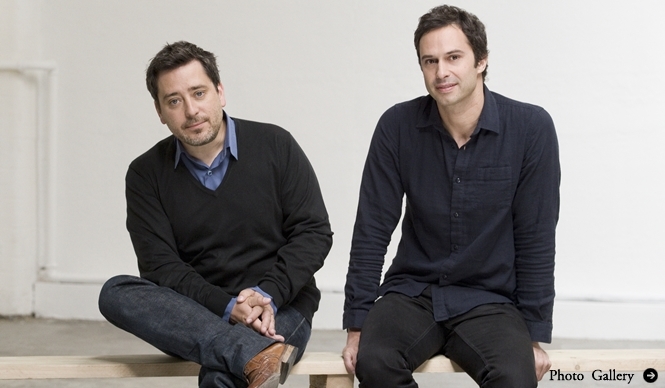
The British design duo Barber & Osgerby, who gained instant recognition for designing the 2012 London Olympics torch, are Edward Barber and Jay Osgerby. On a fine October day, as the Olympic fervor began to cool, they spoke about the torch's design and their collaborative creative process.
Text by Junko Tanaka & Winsome Li (OPENERS)Photographs by Linda Brownlee (Portraits) & Barber Osgerby studio
Reinterpreting Olympic History
Where did the inspiration for the torch's design originate? Barber and Osgerby delved into the history of the Olympics, translating their findings into the design. What did they discover? A series of episodes connected to the number 'three'.
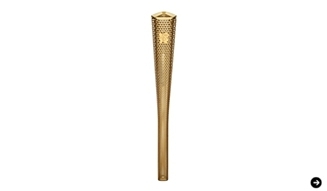
“When we started thinking about the design, several 'three'-related episodes from Olympic history came to mind. The first was the Olympic motto: 'Citius, Altius, Fortius' – faster, higher, stronger. The second was the three Olympic values: respect, excellence, and friendship. And the third was that this was the third time the Olympics were coming to London. Naturally, the triangular pyramid shape of the torch was inspired by these three themes.”
While the history of the Olympics was an indispensable element in the torch's design, they went a step further, aiming to incorporate the full extent of Britain's contemporary capabilities – from cutting-edge design to engineering – into the final product.
A Torch That Ran 8,000 Miles
What made Barber & Osgerby's torch stand out among the numerous entries? It excelled not only in design but also in functionality and cost-effectiveness.
“The torch is a complex piece of industrial design; every technology was needed to ensure its durability and safety. Furthermore, we had to produce 8,000 torches. We also had to consider the cost for mass production.”
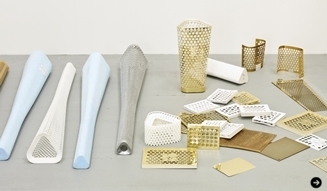
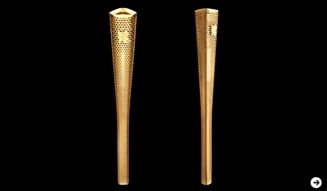
The torch is made of two layers of aluminum welded by laser. The 8,000 holes across its surface symbolically represent the 8,000 runners in the torch relay and the 8,000-mile distance covered. To complete the drilling of 64 million holes by the deadline, they employed the world's fastest laser-cutting machinery. These perforations made the torch exceptionally light, ensuring it would be easy for runners of all ages, from 12 to 100, to hold.
These 'holes' served another crucial purpose. They allowed the heat from the Olympic flame to dissipate, preventing it from transferring to the runner's hand. Previously, torches had limited air vents at the top, which could cause the flame to extinguish due to insufficient oxygen when runners moved. By creating holes along the entire side, the design facilitated airflow throughout the torch, ensuring a steady supply of oxygen to keep the flame burning. This structure enabled the torch to withstand various challenging conditions, such as high altitudes, strong winds, and freezing temperatures.
The Creative Process of a Perfect Duo
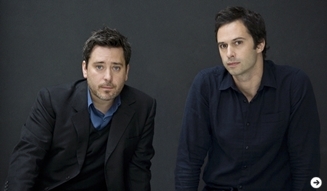
Barber and Osgerby met in the architecture department at the Royal College of Art, a prestigious institution in the UK. Hitting it off from day one, they established Barber & Osgerby in 1996 and began their careers as a design duo, working together on every project since – without exception. What is their collaborative process like?
“We work on every project together. Neither of us takes charge of a specific phase. We’ll sit opposite each other at a table and have a frank discussion about the project we’re about to undertake. Then, one of us will start sketching. The other will look at the sketch from their side and offer a different perspective. Through this exchange, ideas begin to take shape. We don’t always agree, but working with two distinct viewpoints suits us. By the time it’s realized, it’s so imbued with both of us that you can’t tell whose original idea it was.”
The Greatest Joy of Their Design Careers
The Olympic torch project can be considered the highlight of their 16-year career. For designers, the greatest joy likely comes from seeing their work appreciated by many. The Olympics, an event watched by people worldwide, not just sports enthusiasts, offers an unparalleled platform. Barber and Osgerby clearly relished this once-in-a-lifetime opportunity.
“When we found out we were designing the torch? It was the best feeling! It was a once-in-a-lifetime chance to design something for our country. At the same time, we felt an unprecedented level of pressure. It was our first experience designing a symbol that would be seen by so many people. But looking back at the 18 months we spent on it, every moment was fulfilling, and I can’t think of a project that felt more worthwhile.”
Having tackled projects ranging from massive buildings to small electronic devices, Barber and Osgerby have now cemented their reputation with the creation of a remarkably modern and functional Olympic torch. The design world, and indeed the globe, eagerly awaits their next creations.