CASIO Privia PX-S1000 × mesm Tokyo, Autograph Collection: Creators Resonating with "TOKYO WAVES" Vol. 3 | CASIO
CASIO
Influenced Even After My Stay — Calligrapher Kisui Nakazawa
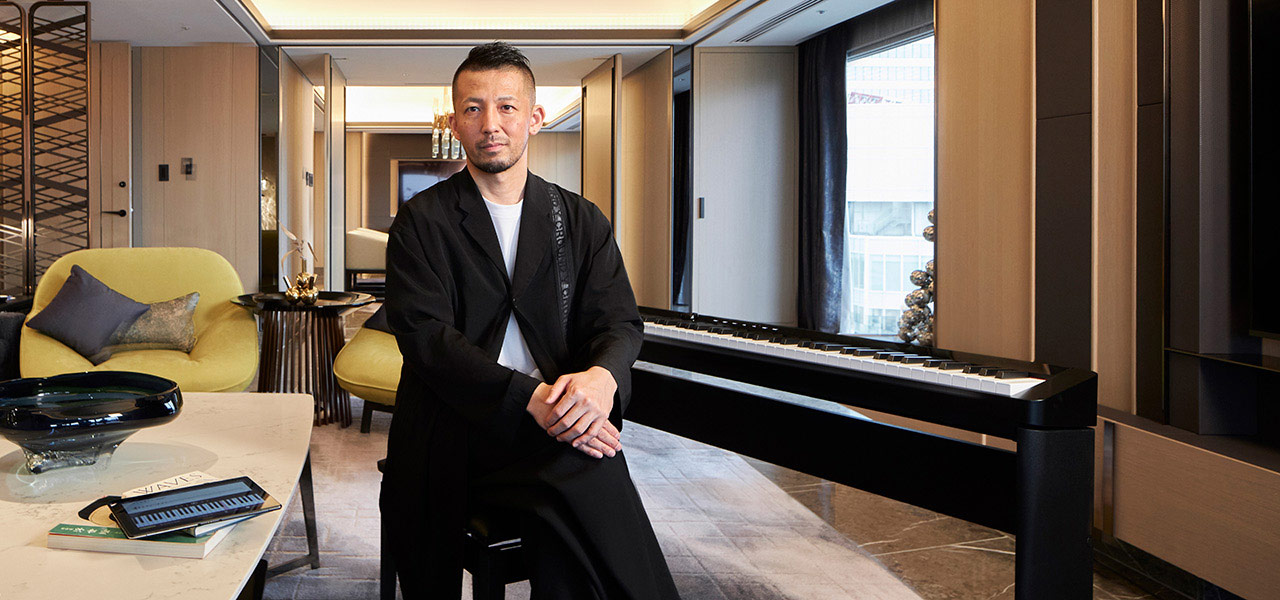
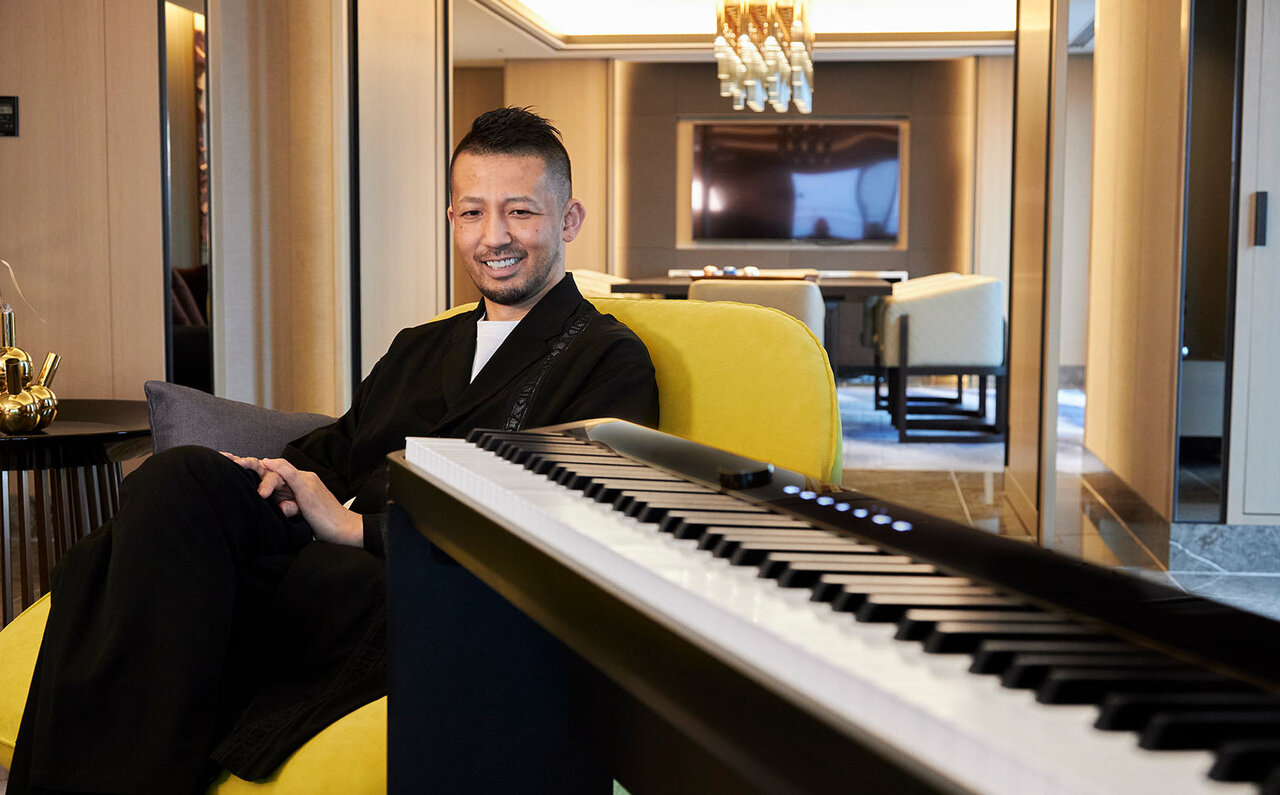
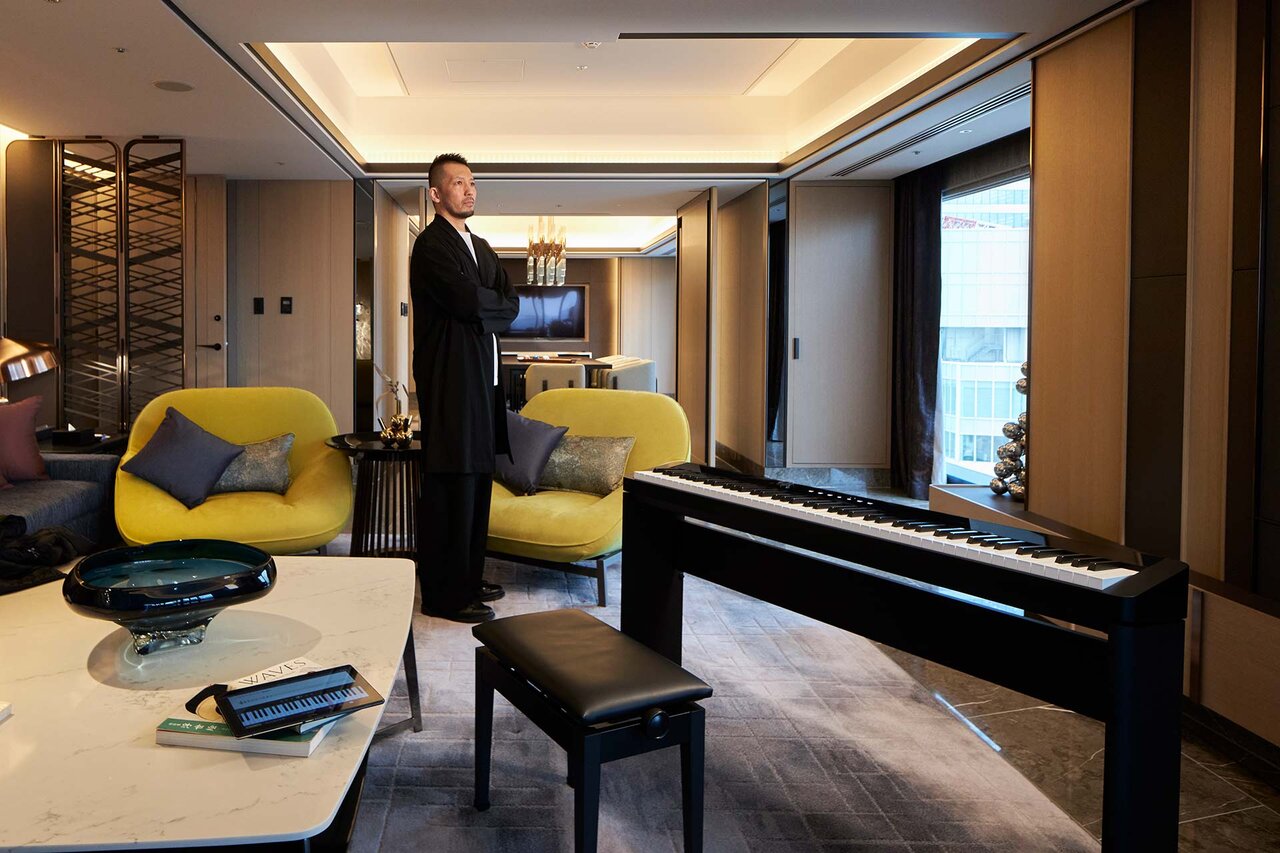
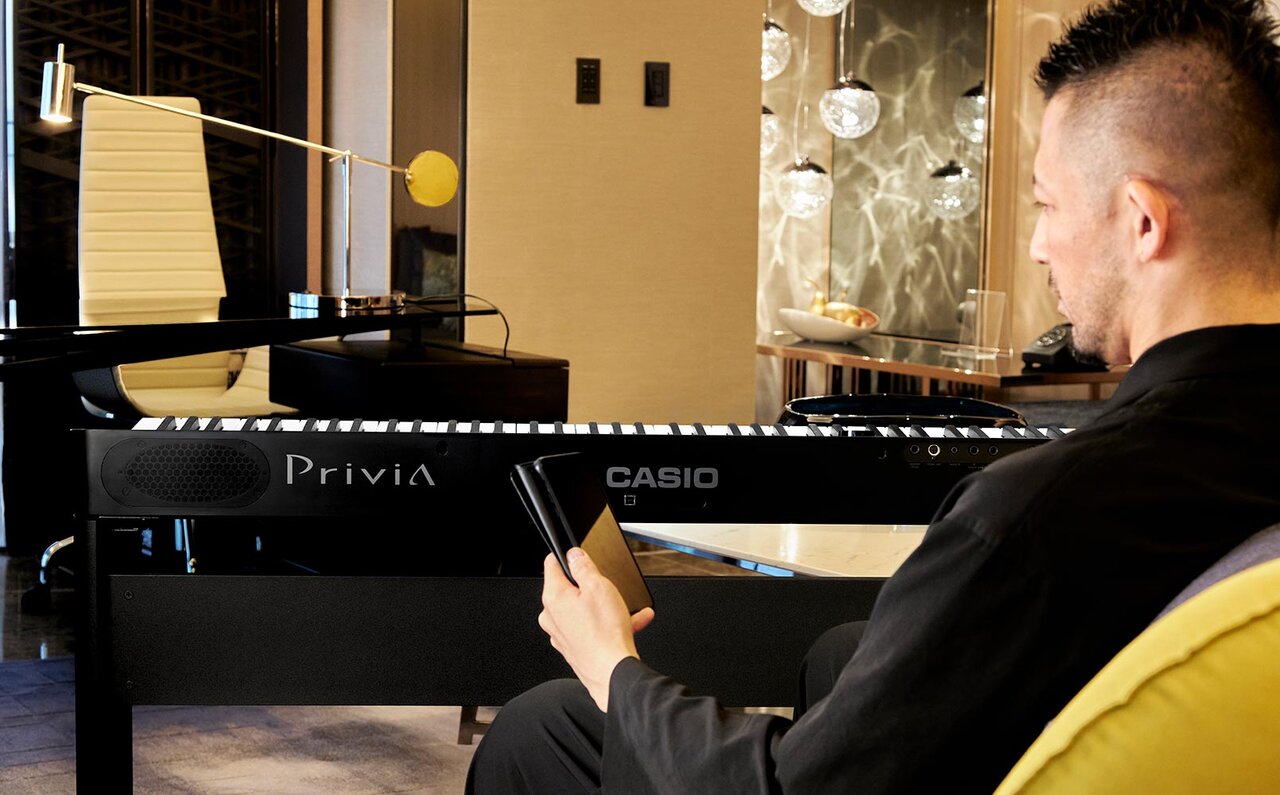
In April 2020, a luxury hotel, "mesm Tokyo, Autograph Collection" (hereafter, mesm Tokyo), opened in the Takeshiba area of Tokyo. "Autograph Collection" is the name of a collection line developed by Marriott International, bestowed upon unique hotels with exceptional individuality. While this distinctiveness is evident throughout, a particularly notable feature is that all 265 guest rooms are equipped with Casio's latest digital piano, the "Privia PX-S1000." Here, calligrapher Kisui Nakazawa, who experienced this space, shares the appeal of Privia × mesm Tokyo.
Photographs by Kaku Ohtaki | Text by Yoko Koizumi | Edit by Takashi Tsuchida
Studied Under an Idol Since Junior High
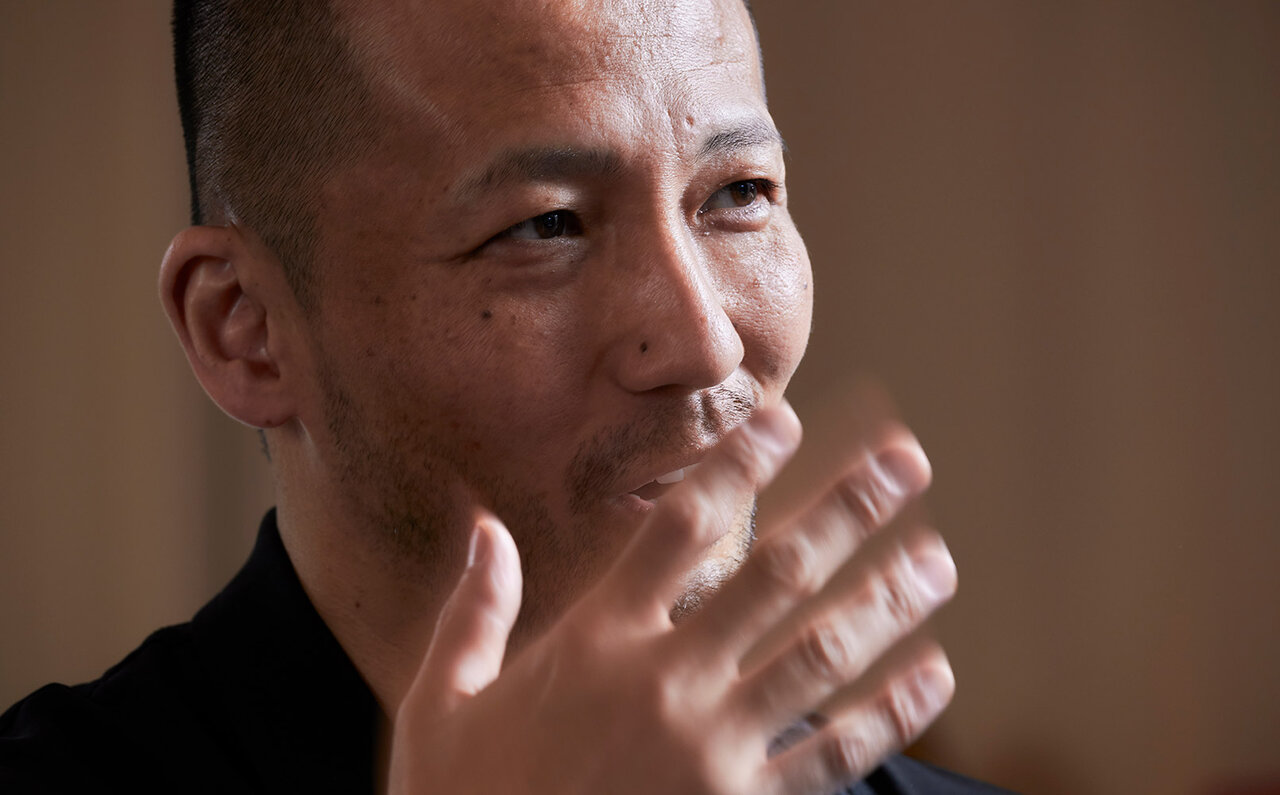
“Both my parents are calligraphers. People often assume I received an elite education because of my upbringing, but my parents were largely hands-off. They’d say, ‘We’ll teach you if you want to learn…’ But in the end, I became a calligrapher, so I suppose they raised me well (laughs).”
While he received instruction from his father from the age of three until graduating high school, it was precisely the image people often associate with calligraphy: sitting seiza, back straight… What made Nakazawa find enjoyment in the fundamental practice that children often find tedious?
“I think it’s similar to learning a musical instrument. At first, you can’t imagine the music when you see the score, but with practice, you can play it. It’s the same with characters; the joy of being able to write them is something only you can experience. And then you want to feel it again, so you work harder. Students at my calligraphy class ask me, ‘How can I get better?’ There’s no other way to improve than to continue with the tedious practice.”
Upon entering university, he moved from Hamamatsu City, Shizuoka Prefecture, to Tokyo, and at the same time, he sought tutelage from a leading figure in the calligraphy world,
Eizan Naruse (1920-2007)his master.
“At the time, my teacher was 76 years old, and he refused my apprenticeship, citing his age. Still, I persistently pleaded, ‘Just let me stay!’ and finally received his permission.”
He recalls that Eizan Naruse had been an idol of his since junior high school. He was captivated not only by the calligraphy itself but also by the "atmosphere" that his works exuded.
“I would think, ‘I want to write characters like this,’ and ‘How can I create works with this kind of atmosphere?’ To do that, I had to be by his side, to know what he was looking at, what books he was reading, and what kind of training he was doing. Fortunately, I was his last disciple, so I was always at the bottom rung. That allowed me to observe everything he did, from his writing to his daily chores, up close until the very end. My most treasured asset even now is having witnessed him actually writing. That image is burned into my mind like a film.”
This life of shedding all personal ego to absorb everything related to calligraphy from his master continued for 12 years until Naruse's passing. Nakazawa was then 30 years old.
Choosing to Forge Ahead Without a Safety Net
“What made me who I am as Kisui Nakazawa are the circumstances of having calligrapher parents, being able to study under Master Eizan Naruse, and his passing.”
When he lost the guiding figure he had followed at the age of 30, he couldn't immediately decide on his future path as a calligrapher.
“I am a second-generation artist, and my teacher was a leading figure in the calligraphy world. Therefore, if I had continued in the same vein, my path would have been secure. However, considering the current era and the future, I questioned whether that was the right approach.”
He decided that it was also his role to present younger generations aspiring to be calligraphers in their teens and twenties with alternative paths, thereby creating choices. Choosing to be a freelance calligrapher, not affiliated with any established calligraphy circle, meant losing his support system and facing the challenge head-on. This new way of life became Nakazawa's "way of calligraphy."
“Study and practice are important, just as they have always been. But one’s way of life is reflected in their calligraphy. The atmosphere that Master Naruse possessed was what drew me in, precisely because of his way of life. After parting with him, I keenly felt that living a good life is the path to writing good characters. This applies not only to calligraphy but to refining one's very existence as an individual. Since realizing this, my calligraphy has become even more enjoyable.”
In any field, the effort put in when no one is watching is crucial for achieving anything. This forms the "core strength" and "basic physical fitness" upon which "individuality" can finally be built. Nakazawa, too, pursued a single line relentlessly. In 2014, at the age of 36, he received the 9th Teshima Ukekyo Award for his work "LOVE."
“With that piece, I broke all the established theories in calligraphy, or rather, I incorporated elements that are considered taboo. The fact that it was evaluated and I felt ‘understood’ brought me great joy.”
This implies that because it was a taboo broken on a foundation of solid technique, it was accepted as individuality. A mere trick would not have resulted in a work of art.
He feels a similar sentiment towards Casio regarding their pioneering spirit.
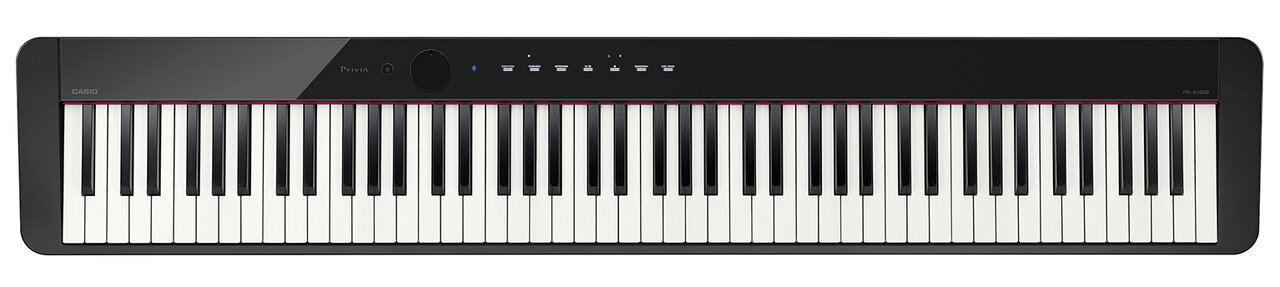
“'G-SHOCK' also transcended the conventional theories of watches, and 'Privia' has changed my perception of pianos. As you can see, it's stylish, portable, and can be placed anywhere (laughs). Creating value that seamlessly integrates into modern life is remarkable.”
The Adult Play of Engaging with Words
When confronting words, Nakazawa repeatedly breaks them down from every angle and reassembles them. Then, while considering the imagery associated with the words and his artistic style, he creates the calligraphy.
“The time spent playing with words is becoming increasingly enjoyable. As one gets older, one can delve deeper, and ideas for breaking down and reassembling words come more readily. For me, it has the excitement of playing with all my might. And since it all happens in my head, it doesn’t require physical strength and can go on forever (laughs). Being here at mesm Tokyo, I sense that they too have repeatedly broken down and reassembled the elements that constitute a hotel, such as ‘staying’ and ‘service.’ That’s why there are discoveries to be made everywhere. Such discoveries are what truly influence you after your stay.”
In August 2020, he returned to his hometown of Hamamatsu, having lived in Tokyo since moving there at the age of 18.
“The differences between what can be done in Tokyo and what can be done in my hometown became completely clear. At my age, I now appreciate the comfort of my hometown. There’s also plenty of nature. It’s a very good situation. However, for instance, in my hometown, I can’t get the surge of emotion from the view at mesm Tokyo, and given my profession, I want to visit art museums. Tokyo remains equally attractive, and I would feel lonely if I were to completely exclude it from my life.”
"TOKYO WAVES" is born precisely from Tokyo, a place of powerful chaos where information floods in. The time people spend observing Tokyo from a slight distance also creates waves.
“Tokyo is a place that runs amidst a civilization moving at tremendous speed, but the world I inhabit is one of culture, which progresses at a seemingly slow pace, like calligraphy.”
In an era where tablets suffice, Nakazawa spends two hours grinding ink. While environmentalism is advocated, he consumes vast amounts of paper. What kind of calligraphy will emerge when he reconciles these contrasts?
“Master Naruse continued to write until he passed away at the age of 87. I am now 42. With the concept of a 100-year lifespan, even by simple calculation, I have less than 60 years left to write. I wonder how my characters will change if I continue to train my technique and spirit as always, while living a good life. Yes, I’m looking forward to it myself.”
Model Name | Privia PX-S1000BK
- Dimensions | Width 1322 × Depth 232 × Height 102mm
- Weight | 11.2kg
- Number of Tones | 18
- Price | Open
mesm Tokyo, Autograph Collection
- Address | 1-10-30 Kaigan, Minato-ku, Tokyo 105-0022, Waters Takeshiba Tower Building 4F and 16F–26F
- Number of Rooms | 265 rooms (Guest room floors 17F–26F)
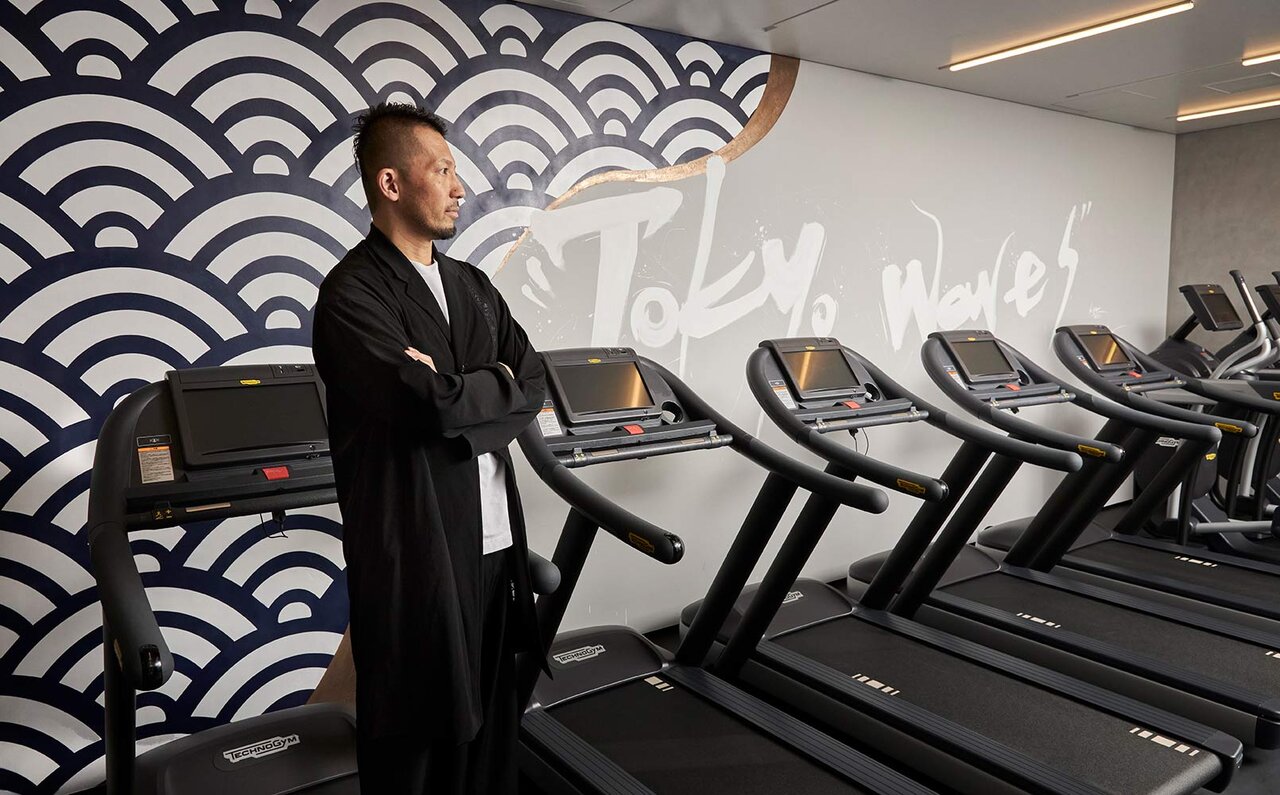
- Facilities | Restaurant "Chef's Theatre," Bar & Lounge "Whisk," Banquet Hall "The Banquet," Club Lounge "Club mesm," Fitness
- Rates | From ¥65,527 (per room for 2 people, including breakfast, tax, and service charge)
- Tel. | 03-5777-1111
- URL |https://www.mesm.jp
- Access | 6-minute walk from JR Yamanote Line, Keihin-Tohoku Line / Tokyo Monorail Hamamatsucho Station; 3-minute walk from New Transit Yurikamome Line Takeshiba Station