Yuki Tsukada | Tactile Botany, Episode 5: On Greenhouses
Yukiya Tsukada | The Tactile Study of Greenery
Part 5: On Greenhouses
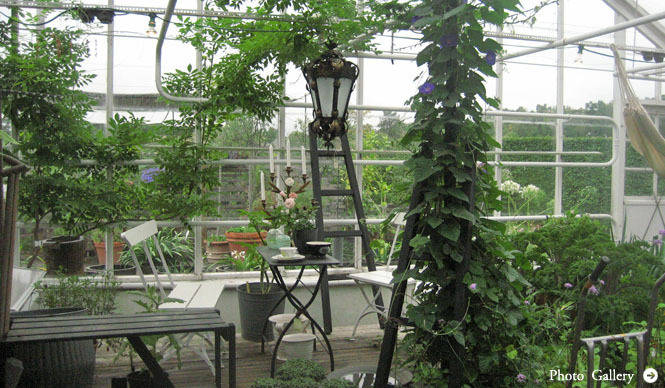
Greenhouses. They were always filled with the scent of foreign lands.
The moment you step inside, you're enveloped in a wave of green. The dense breath of plants. If there were water, birds and butterflies flying, and the calls of monkeys or small animals echoing, you might mistake it for paradise.
Text and Photos by Yukiya Tsukada (Representative, Onshitsu Co., Ltd.)
The Longing for "Somewhere Else" Gave Birth to the Greenhouse
The "Orangerie," the precursor to the greenhouse, emerged around the end of the era known as the Age of Discovery. Originally, the "Orangerie" was a shelter to protect citrus trees from the cold during winter, and it eventually became a place where people gathered, enjoying the warm sunlight within. In Europe, with its harsh winters, citrus fruits like oranges and lemons, with their vibrant green leaves, were symbols of the sun and fire.
In Japan too, from the tangerines of the bellows festival to the yuzu of the winter solstice and the daidai oranges of New Year's, these brightly colored winter fruits have symbolized various meanings. Whether East or West, the desire for a warm spring remains unchanged. And the wish for the sun's return on the winter solstice, when its power is weakest, is also constant.
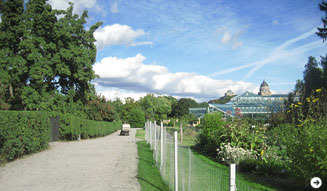
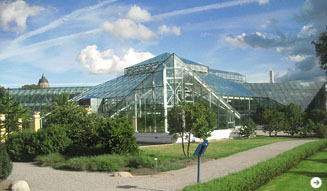
Through the Industrial Revolution and beyond, as buildings made of steel frames and glass became possible, the Orangerie evolved into enormous greenhouses (Palm House). The natural history boom of the late Age of Discovery led to the collection of various plants in these vast greenhouses.
Greenhouses evoke a sense of paradise, reminiscent of the Garden of Eden, Utopia, or Shangri-La. And the passion for natural history was, in itself, a thirst for knowledge and a spirit of adventure towards the unknown. It might be said that the longing for "somewhere else" gave birth to the greenhouse.


How to Connect Japan's "Forest" and "Greenhouses" with Sustainability
Since January 30th (Friday), "BMW Studio ONE," for which Green has overseen the design, has been open in Jingumae. For one month until February 28th (Sunday), new models of the "BMW Gran Turismo" are being exhibited in a greenhouse filled with greenery. Talks and markets are being held with sustainability as the theme, and one can also relax at the organic cafe within the greenhouse.
The client's request was to create a "forest." Specifically, a Japanese forest, not a jungle. However, Japanese trees are not suited for greenhouses. The challenge was how to evoke the atmosphere of a Japanese forest using conventional houseplants. How to connect Japan's "forest" and "greenhouses" with the theme of sustainability? And in the heart of the city, no less. What is BMW's vision for the future?—
While overseeing Green's design, I found myself reconsidering the "role of the modern greenhouse."
One of the modern roles of the "greenhouse" is perhaps to teach us about the "diversity" and "dignity" of life. We marvel at the diversity of exotic plants and their differences from native species, realizing the vastness of the world and the wonders of evolution. There are interactions with local flora and fauna unique to their environments. It offers the pleasure of imagining distant peoples, their lives, and cultures. Various creatures live out their lives on this planet, flying through space on this celestial body. Diverse life forms coexist vibrantly.
A "journey of knowledge" begins with a single plant name, and deepening our understanding of the relationship between humans and plants leads to a sense of the "dignity of life" of all living things. Plants as medicine, as raw materials, as sources of life through food, as sources of color, the ingenuity of breeding and crafts, the structural marvels of plants, plants as objects of worship, and so on. For billions of years, plants have been supplying us with oxygen. The blessings they bestow upon us are almost beyond imagination. They likely hold many secrets beyond human comprehension.
Eating, decorating, arranging, smelling, growing, listening to the rustling leaves—engaging with plants on a deeper, physical level should also lead to a sense of the dignity of other lives.
Places That Evoke Longing for "Somewhere Else" Are Necessary in the City
In rural village life, over-harvesting or attempting to monopolize resources was taboo. There was a deep understanding that such actions would deplete the natural bounty meant to be passed on to future generations. Whether hunting, fishing, gathering, or cultivating rice and vegetables, one could not push nature too hard. There was a "philosophy of seasonality." Traditions dictated the best times to cut trees for tools, or the optimal moon phases for sowing seeds and harvesting. Harvesting during the right season ensured tools and building materials lasted longer, were easier to process, and had a richer aroma. This was true "sustainability." Nature is not wasteful. It was about the user approaching nature with respect, aligning with its rational order.
Greenhouses evoke a fantasy of a southern paradise, holding both nostalgia and longing. I feel that places evoking a longing for "somewhere else" are essential in the city. In the cold winter, a greenhouse filled with sunlight and the scent of plants can become a new place of vitality where people gather in the urban landscape. Here too, greenery creates and connects bonds, enveloping aspirations and illuminating the human world.
Incidentally, my company's name is "Onshitsu" (Greenhouse).
Through this project, I feel I've come to understand the meaning of naming my company "Onshitsu" "post hoc." I aspire to create places—gardens, indoor greenery, wedding decorations, flower arrangements, workshop venues, etc.—that are as comfortable and full of adventurous spirit as a greenhouse, vibrant and alive. I hope that the ancient and modern, the East and West, will always be organically connected in these spaces.

