
December 11, 2014
Ultrabooks: A Statement of Substance
Expanding Mobile Devices
Ultrabooks: A Definitive Statement
Ultrabooks, mobile devices that various companies have been enthusiastically developing since last year, are characterized by their slim and light chassis, setting them apart from conventional laptops. With Ultrabooks running Windows 8 prominently displayed at the forefront of PC sections in electronics retailers, it's clear this is the area where companies are currently focusing their efforts. Here, we introduce five distinct and innovative new Ultrabooks developed by Japan's leading manufacturers.
Text by Shu Sugiura (OPENERS)
Photographs by JAMANDFIX
The New Standard for Next-Generation Laptops: PCs for Both Business and Pleasure
Over the past year or so, men have been increasingly seen on the streets carrying clutch bags without straps or handles tucked under their arms. Major fashion houses in Paris and Milan have also been unveiling this type of item. What are they carrying in these bags, which resemble the "second bags" once associated with older gentlemen? Tablets and mobile PCs.
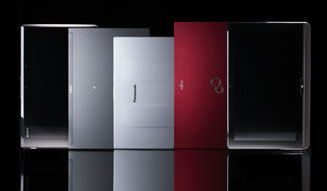
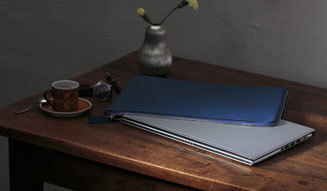
Among the rapidly evolving mobile devices, Ultrabooks equipped with Intel's 2nd generation or later ultra-low voltage CPUs are currently drawing significant attention. Strictly speaking, to be called an "Ultrabook," a device must have a thickness of around 18mm, be equipped with an Intel 2nd generation or later ultra-low voltage CPU, offer a battery life of over 5 hours, and resume from hibernation in under 7 seconds.
Now, thin, light, and beautifully designed models are being released one after another by various manufacturers. Ultrabooks compatible with Windows 8 come in a diverse lineup, including models where the keyboard transforms into a touch panel or where the display flips to become a tablet. This single device allows for versatile use, from keyboard-intensive tasks like document creation and emailing to entertainment experiences using the touch panel, adapting to different scenarios.
Ultrabooks from Each Manufacturer, Showcasing Their Unique Personalities
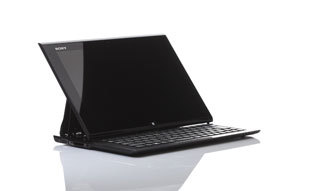
SONY | VAIO Duo 11
With Sony's unique interpretation, switching between tablet and keyboard modes is achieved in a single action. The included Digital Stylus Pen senses pressure, enabling authentic handwriting input. Bundled with dedicated image editing software, it's also fully capable for graphic processing.
W319.9×D199×H17.85mm
Approx. 1305g
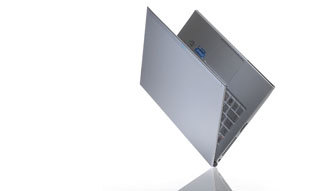
NEC | LaVie Z
Among Ultrabooks that pursue thinness and lightness, this product achieves the lightest weight in laptop PC history at just approximately 875g. With its long battery life of about 8.1 hours, rapid battery charging, fast startup, and data sharing capabilities with home PCs, it's an impeccable choice for a mobile lifestyle.
W313×D209×H14.9mm
Approx. 875g
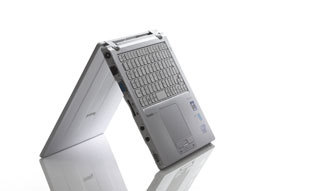
Panasonic | Let'snote AX
The long-awaited Let's Note version of the Ultrabook. Leveraging its expertise cultivated in mobile computing, it achieves mode transformation between laptop PC and tablet through a 360° rotating display. Its renowned Panasonic durability and toughness are, of course, also a major appeal.
W288×D194×H18~19mm
Approx. 1140g
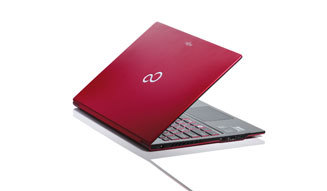
Fujitsu | LIFEBOOK UH Series
Fujitsu introduces the first "Red" model for Ultrabooks. Available also in a satin silver version, these attractive color variations are suitable for both women and men. The detailed design, such as the edging on each key, is also superb.
W327×D225×H9.0 ~15.6mm
Approx. 1440g
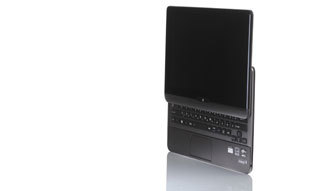
TOSHIBA | dynabook R822
Toshiba, which heralded the dawn of the Ultrabook, now presents a new convertible Ultrabook that achieves three distinct styles. The transformation from tablet to flat mode to laptop is intriguing. Pay attention to the nuanced textures of each part, such as the rubber-coated finish.
W326.5×D213×H19.9mm
Approx. 1490g