From the Tokyo Motor Show 2009: Will Electric Cars Change the Future?! (Part 3)
Urgent Meeting: Three Sharp Automotive Journalists
From the Tokyo Motor Show 2009: Electric Cars Will Change the Future?! (Part 3)
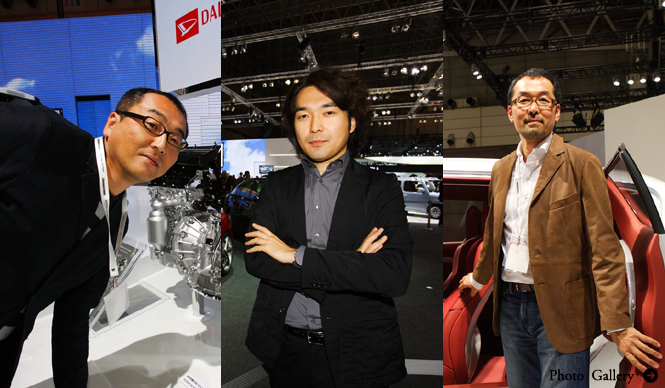
The 41st Tokyo Motor Show 2009 was impacted by the global recession, with only two foreign manufacturers exhibiting and total attendance dropping 43% from the previous show to 614,400 visitors. However, in reality, each company was diligently showcasing next-generation vehicles and offering many proposals for the future. Where are cars headed in this era of upheaval? Three sharp automotive journalists—Fumio Ogawa, Yasuhisa Shimashita, and Toshifumi Watanabe—cut through the present and future of the automotive world through the lens of the Tokyo Motor Show.
Text by OPENERSPhoto by MASAYUKI ARAKAWA
Alpina: One of the Few Imported Brands
OPENERSMr. Ogawa, were there any cars that caught your eye?
OgawaThe Alpina D3 BiTurbo. It's one of the few imported cars on display, and even setting that aside, it's an interesting car right now.
ShimashitaOriginally,BMWdiesel engines are good, aren't they?
WatanabeWhat's interesting is that Honda's diesel has its own unique flavor, and Alfa Romeo's diesel retains its characteristic taste. BMW's diesel has that distinct BMW sound and rev feel.
OgawaIt's a really good car. Alpina apparently started tuning diesel engines in 1999, and they've really managed to leverage its characteristics. By choosing a small unit like the 2-liter four-cylinder engine and adding a turbo, they achieve 450 Nm of torque at 2000 rpm – comparable to a V8 gasoline engine. In today's climate, I think this is a viable solution for high-performance cars.
OPENERSIn Europe, diesel fuel prices soared due to its widespread use, leading to a trend away from diesel. How is it now?
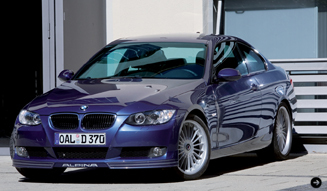
BMW Alpina "D3 BiTurbo"
ShimashitaEuropean manufacturers seem to be thinking, 'It really should be diesel after all.' Diesel engines also have the advantage of being compatible with biofuels, and even if diesel prices fluctuate, they are versatile.
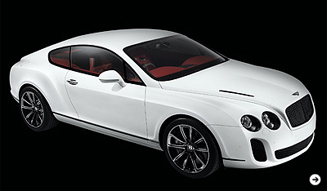
Bentley's Continental Supersports
OgawaTechnologies like diesel, forced induction, and dual-clutch systems are contributing to improved fuel efficiency in European cars. Although I haven't experienced it myself, the Bentley Continental Supersports, while boasting the title of Bentley's fastest ever, is said to be compatible with E85, a fuel blend with 85% ethanol. I feel Japanese manufacturers are lagging in this regard. I hope that temporary tax incentives aren't stifling the development drive on the ground.
WatanabeThere are many technologies that originated in Japan and are now in practical use in Europe. During the bubble economy, Japanese automakers made various upfront investments and poured money into development, but for the past 20 years, their choices have conspicuously avoided areas that don't seem profitable.
OgawaLooking at current European cars, you can see where Japanese technology and manufacturers stand. Returning to the topic of the motor show, it's disappointing that it didn't serve as a venue to view the automotive landscape from a global perspective. For example, the Golf, even without being a hybrid, is fuel-efficient, quiet, and fun to drive—it's exceptionally well-made.
WatanabeThe differences are particularly clear in the A to C segment classes.
OPENERSWhy does this happen?
WatanabePerhaps it's due to Japanese automakers' cost-centric approach and a lack of meticulous attention to detail in their craftsmanship. Beyond being fuel-efficient and affordable with low costs, there's a visible lack of effort to provide drivers with satisfaction.
ShimashitaFor instance, European manufacturers seem to operate on the logic of 'let's make good, enjoyable cars affordably.' Japanese manufacturers, however, start with 'let's make affordable cars.' Unless that order is reversed, I don't think truly great cars will emerge.
WatanabeThe fact that they fundamentally see cost as their biggest competitive advantage is fatal.
ShimashitaToyota should reconsider its approach with the success of the Prius. The Prius proved that people will pay for value. I wish they would focus on that.
OgawaThe eco-car tax breaks are a bit questionable. The mood of wanting to buy a car eligible for these breaks is problematic. That won't lead to the creation of great cars.
ShimashitaFurthermore, under the current eco-car tax break criteria, heavier cars are often more advantageous. In essence, they become 'good fuel economy for their weight.' The Toyota Alphard, for example, isn't eligible for the tax break in its 2WD configuration, but the heavier, less fuel-efficient 4WD version is. Meanwhile, the Subaru Legacy, which genuinely focused on weight reduction, doesn't qualify as an eco-car.
WatanabeMercedes-BenzE-Class also added 100 kg through larger tires, aero parts, and a sunroof to qualify for the applicable tax bracket.
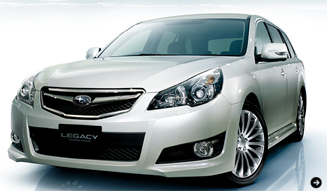
Subaru "Legacy"
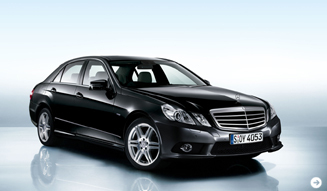
Mercedes-Benz "E250 CGI BlueEfficiency Avantgarde"
Regarding the Frankfurt Motor Show
OPENERSNow, if we could shift the conversation to the Frankfurt Motor Show, held in September prior to the Tokyo Motor Show.
WatanabePersonally, I really liked the new Mercedes sports car, the SLS AMG. It has a long nose and better proportions than the SLR.
OPENERSI believe the Mercedes concept car, the Vision S 500 Plug-in Hybrid, was only displayed on the first day, wasn't it?
ShimashitaIts performance is astonishing, but I suspect they decided to remove it midway because the exterior resembled the previous model. Mercedes showcased three types: fuel cell, electric, and plug-in hybrid. Perhaps the thinking among European manufacturers is that ultimately, it won't be just one type. The highlight this time was the 'E-Cell Plus,' which has a motor in the front, while the engine acts as a range extender and is located under the rear floor. Compared to the 'E-Cell,' which runs only 100 km on a full charge, this model can travel 600 km with power generated by a 1-liter engine.
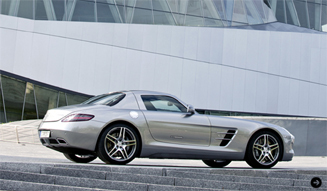
Mercedes-Benz "SLS AMG"
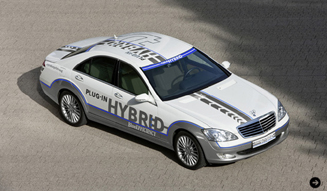
Mercedes-Benz "Vision S 500 Plug-in Hybrid"
OPENERSVolkswagen exhibited the 'L1 concept,' which they claim achieves the world's best environmental performance.
OgawaThe 'L1' means it can travel 100 km on 1 liter of fuel, right?
WatanabeThat's right. It's impressive that they've publicly stated it will go into production in 2013.
ShimashitaHowever, I don't think they can sell it in its current form. In that sense, the 'E-Up' is more realistic.
OPENERSAre they also focusing on EV initiatives in Germany?
ShimashitaAll manufacturers are starting to.
WatanabeHowever, they are currently buying electricity from France. Considering only the situation within Germany, I don't think they intend to fully commit to a pure EV direction.
ShimashitaTheir future projection is that electric vehicle production won't reach the current Polo level until 2020 at the earliest. They still consider TDI and TSI to be important high-efficiency technologies.
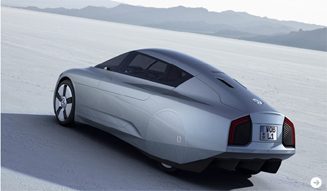
Volkswagen "L1 concept"
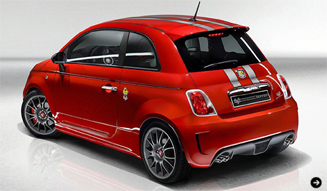
Fiat "Abarth 695 TributoFerrari"
OPENERSBy the way, what do you think of the Abarth 695 Tributo Ferrari?
WatanabeIt's an interesting product strategy for Ferrari to release it under Fiat to help reduce CO2 emissions on a manufacturer-wide basis. I have a feeling similar projects might emerge from other manufacturers. Speaking of Ferrari, the 458 Italia was a truly groundbreaking Ferrari after a long time. It boasts the highest output in the world while also considering environmental impact.
Anticipation for the 2011 Tokyo Motor Show
OPENERSFinally, a word from each of you regarding the Tokyo Motor Show in two years.
WatanabeEach company needs to seriously brainstorm ideas and improve the content. At the very least, they should move the venue back to Tokyo from Makuhari.
OgawaFor example, information dissemination hubs could be their own dealerships, as they are located throughout the country. They could use screens there, or distribute information to mobile phones and TVs using one-seg technology. Perhaps they could even guide visitors to these 'venues' via car navigation systems. The era of massive exhibition halls is over. They need to re-examine the purpose of holding a motor show.
ShimashitaI agree. Although many things happened this time, I see it as a good opportunity for a wake-up call and view it positively. Visitors who found it boring should also voice their opinions.
OgawaWhether this show was a success or failure, and how the organizers summarize it, I don't know. But rather than attributing the decrease in participants and visitors solely to the poor economic conditions, I hope they will strive for a more effective format next time.
ShimashitaNow is an era where individuals can freely share information through blogs and other platforms. If manufacturers lack ideas, they should seek them from the public and collectively create a new kind of motor show.
AllThank you for your hard work!
OGAWA Fumio
Freelance journalist. He previously served as editor-in-chief of car magazines "NAVI" and "Motor Magazine." Currently, he writes automotive columns for "OPENERS," "GQ," "Nikkei Otona no OFF," and "EDGE," among others. He personally drives a Porsche 993 Carrera but also finds electric and hybrid cars interesting from a vehicular perspective. He hopes that the novelty of EVs and HVs will be recognized for their appeal as cars, not just for tax benefits. He contemplates these matters these days.
SHIMASHITA Yasuhisa
Motor journalist. His writing covers a wide range of automotive-related social phenomena, including driving performance, advanced environmental and safety technologies, brand theory, and driving techniques. He also gives lectures on eco & safety driving and works as an instructor. He was a juror for the 2009-2010 Car of the Year Japan. His recent publications include "Gokuraku Hybrid Car Driving Techniques" and "Gokuraku Gasoline Diet" (both published by Nigen-sha). Blog: "Blog Named Desire" http://minkara.carview.co.jp/userid/362328/blog/13360020/
WATANABE Toshifumi
After gaining experience in editing 2- and 4-wheel magazines at Kikaku Shitsu Neko (now Neko Publishing), he became an independent freelance writer. He excels at explaining automotive concepts, performance, and technical details across various genres, and actively writes from a user's perspective to explore the ideal form of automobiles demanded by the times. In addition to automotive magazines, he also writes for numerous general interest publications such as "MEN'S EX" and "UOMO," where he has gained popularity.