Ford Focus Sport Long-Term Report Final Installment | Ford
Ford Focus Sport Long-Term Report
Final Report: A Life with Focus
We introduced the "Ford Focus" as the fifth long-term test car for OPENERS magazine. Having driven it 13,678 km, from local assignments to a long drive to Kanazawa, this is finally our last report. We'd like to summarize the appeal of the third-generation Focus, a best-selling model that holds the No. 1 sales record for a single car name.
Text by SAKURAI KenichiPhotographs by MOCHIZUKI Hirohiko / TSUKAHARA Takaaki
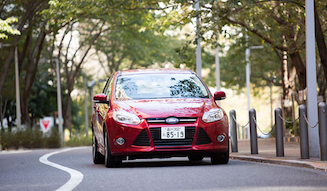
Test Car
Ford Focus Sport
Ford Focus Sport
Introduction: August 2013
Purchase Price: ¥2.93 million
Total Distance Driven: 13,678 km
Fuel Economy This Period: 12.6 km/ℓ
Overall Average Fuel Economy: 12.7 km/ℓ
Upgrading the Image of the Focus
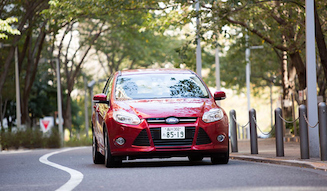
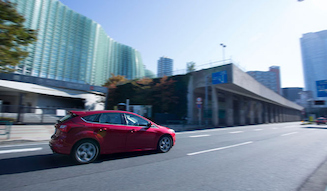
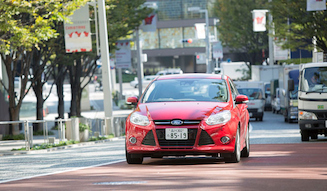
The current "Focus," embodying the new generation's Kinetic Design and appearing as the third-generation model,Focus" was released in Japan in April 2013.It was released in Japan in April 2013.About a year later, its presence has become more noticeable around town. The model chosen by our editorial department for the long-term test was a striking example in Candy Red. The Japanese market model was exclusively the "Focus Sport," equipped with a 2.0-liter inline four-cylinder engine producing 125kW (170ps) paired with a 6-speed DCT, so there was no need to agonize over trim levels.
When you think of the Focus, its impressive performance in the popular European rally, WRC, is unforgettable. Competing in the WRC since 1999, it achieved victory in its debut year with Colin McRae at the wheel, a feat that remains vivid in memory. Many car enthusiasts still immediately associate the Focus with the WRC.
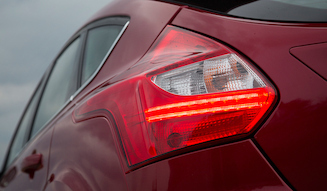
The sharp form of the first-generation Focus, which debuted in 1998 and served as the base for that rally machine, was a masterpiece in automotive history. Its innovative design, featuring taillights positioned on the left and right above the tailgate and fenders that emphasized the tires, along with its WRC-honed driving dynamics, garnered significant popularity in Japan. Personally, I have friends who still drive the first-generation Focus, making it a familiar model.
The second generation, which took over in 2005, saw the high-performance "Focus ST" become a legend. Equipped with a 2.5-liter turbo engine producing a maximum output of 165kW (225ps), the ST was immensely popular in Europe as the best-handling hot hatch in the C-segment.
When it comes to C-segment hatchbacks, the Volkswagen "Golf" is so mainstream it's considered the benchmark, but when it comes to sporty hot hatches, the Focus was arguably a step above. The orange-bodied ST, which was also released in Japan, remains an aspirational model for me, high on my personal wishlist.
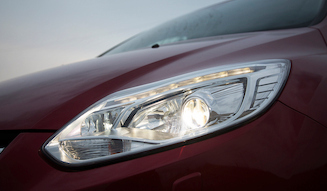
And now, the third-generation current model, launched in Japan with great anticipation, showcases a more refined design and uncompromisingly honed driving performance. It has truly become a worthy successor, capable of upgrading everyone's existing image of the Focus.
Ford Focus Sport|フォード フォーカス・スポーツ
Final Report: A Life with Focus (2)
High Straight-Line Stability and Sharp Handling
Ford is currently developing a global vehicle strategy called "One Ford," which involves developing common vehicles worldwide and delivering them from production bases closest to each market. The current model is a global product manufactured in seven countries and sold in over 120 countries. It's easy to imagine that this strategy is a driving force behind the Focus's status as a best-selling model with the No. 1 sales record for a single car name, as mentioned earlier.
The Focus introduced to the OPENERS editorial department has been active in various situations, fromlocal assignmentstolong drives exceeding 400 km one way.Given its sporty appearance with factory-fitted aero parts, I was curious about its appeal to women, but in thethird report, we were able to include comments from a female perspective.
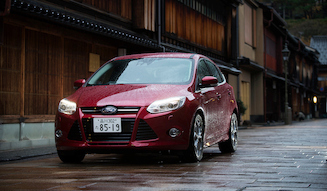
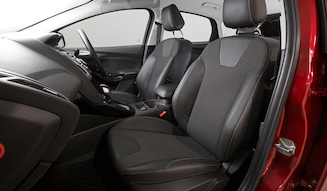
Her opinion was positive, stating, "The assertive design seems like it would suit women too." This included the ergonomically designed interior. Furthermore, she praised the surprisingly spacious interior, which belied its exterior dimensions, and the practical luggage space.
The quietness of the cabin once underway was particularly impressive, approaching that of luxury cars, and became her favorite feature. For male users with families or partners, this is a strong point to leverage when choosing a car.
If I were to list the strengths of the Focus after several months as a daily partner, its driving performance would undoubtedly be at the top. While there are rivals with more power than the Focus, its responsiveness to the accelerator and the direct, readily available engine power made it feel like a natural extension of my body. Its high straight-line stability combined with enjoyable, sharp handling is also a major draw.
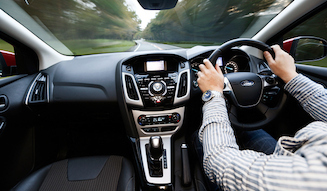
Many cars tend to mistake nervous steering feel for quickness, but with the Focus, when you turn the steering wheel gently, it responds without being overly eager, and during sharp corrections, the body follows precisely without delay. The car moves and responds in accordance with the driver's intentions, which is described as "controllable at will," and the Focus's handling is precisely that.
Ford Focus Sport|フォード フォーカス・スポーツ
Final Report: A Life with Focus (3)
Requests for the Focus
Surprisingly, the Sony-made audio system with 9 speakers is quite well-executed. Using the standard "SYNC" voice recognition and connectivity technology, I could easily connect my smartphone via Bluetooth and enjoy my favorite music. This proved very useful on long drives.
While I did get the occasional "Oh, you like this kind of music? (laughs)," it was appreciated that most operations could be performed intuitively without needing to read the manual. Of course, hands-free calling was also easy to operate. Incidentally, the hands-free calling can also be safely operated using the steering wheel controls without taking your hands off the wheel, which is very convenient.
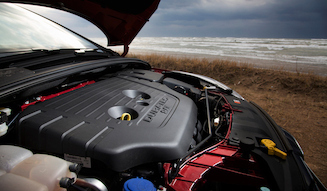
However, there are also requests. For example, power. If you've driven a Focus ST in the past, this is a natural request, but a bit more power would be welcome. The ample torque from the 225ps turbo engine in the second-generation Focus ST made daily driving effortless and provided exhilarating acceleration.
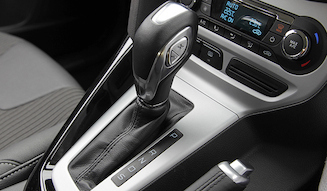
Another point is the desire for paddle shifters when manually operating the gears. While the gear changes using the switch on top of the shift knob in the Focus's "SelectShift Mode" are manageable once you get used to them, paddle shifters would be more appropriate for enjoying the responsiveness of the naturally aspirated engine.
Given the engine's good response and the sharp shifts of the 6-speed "PowerShift" dual-clutch transmission, adopting paddle shifters would surely not be a wasted effort.
Ford Focus Sport|フォード フォーカス・スポーツ
Final Report: A Life with Focus (4)
Intensive Time Together
Fortunately, during the reporting period, we did not need to utilize the "Active City Stop" automatic braking system, which is standard on the Focus and uses radar sensors to detect and avoid collisions with vehicles ahead in traffic jams or at low speeds in urban areas. Safety devices like these are only truly appreciated in emergencies, so we hope you understand that our inability to report on their effectiveness is a testament to our commitment to safe driving.
Incidentally, the Active City Stop system in the Focus can avoid collisions at speeds below 15 km/h and reduce damage at speeds below 30 km/h, depending on the conditions. While it's best not to need it, it is undoubtedly a reassuring safety feature to have.
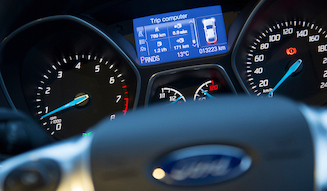
Finally, the average fuel economy of the Focus during the reporting period was 12.7 km per liter. Considering that this figure was achieved by an unspecified number of editors driving as much as they wanted without particular concern for fuel economy, unlike a typical owner, it can be considered quite respectable. Of course, this includes instances where we drove it enthusiastically on winding roads in Hakone for testing purposes, needless to say.
We hope that this series of reports has been of some help in your car selection process. The time we spent with the Focus was intensive. Now, it's your turn to enjoy a life with a Focus.

Ford Focus Sport
Body Dimensions: Length 4,370 x Width 1,810 x Height 1,480 mm
Wheelbase: 2,650 mm
Tread Front/Rear: 1,555 / 1,545 mm
Minimum Ground Clearance: 130 mm
Weight: 1,380 kg
Engine: 1,998cc Inline-4 Direct Injection DOHC
Bore x Stroke: 87.5 x 83.1 mm
Max. Output: 125kW (170ps) / 6,600 rpm
Max. Torque: 202Nm (20.6kgm) / 4,450 rpm
Transmission: 6-speed Automatic (Dual Clutch)
Gear Ratios: 1st 3.917
2nd 2.429
3rd 1.436
4th 1.021
5th 0.867
6th 0.702
Final Drive Ratio: 3.850 (1,2,5,6th) / 4.278 (3,4th, Reverse)
Drivetrain: FF
Suspension Front: MacPherson Strut
Suspension Rear: Multi-link
Tires: 215/50R17
Brakes Front/Rear: Ventilated Disc / Disc
Fuel Tank Capacity: 55 ℓ
Minimum Turning Radius: 6 m
Price: ¥2.93 million
Ford Customer Service Center
 0120-125-175
http://www.ford.co.jp