Ford Focus Sport Long-Term Report: Part 1 | Ford
Ford Focus Sport Long-Term Report|Ford
Part 1: Introducing the Ford Focus
Since its debut in 1998, the Focus has sold over 10 million units worldwide. We've decided to introduce the latest model as the fifth long-term test car for OPENERS editorial department. The current model, now in its third generation, launched in Japan in April and is a bestseller that held the No. 1 sales record for a single model name in 2012. In this first installment of our highly anticipated series, we aim to explore the appeal of the Focus by examining why it has become such a bestseller.
Text by SAKURAI KenichiPhotographs by MOCHIZUKI Hirohiko
Car No. 5
Ford Focus Sport
Ford Focus Sport
Introduction Date: August 2013
Purchase Price: ¥2.93 million
Total Mileage: 9,852 km
A Familiar Feel the Moment You Sit Down
What image comes to mind when you think of the Ford brand? Perhaps sports cars like the Mustang or Thunderbird? Or maybe SUVs such as the Explorer or Escape? Those familiar with racing might recall the intense battles between the Ford GT andFerrariof yesteryear.
For those who follow the popular European rally, WRC, the sight of the Focus competing fiercely against French marques like Peugeot and Citroën should be fresh in your memory. Introduced in 1998, the Focus entered the WRC in 1999 and, driven by the legendary Colin McRae, secured victories from its very first year. Its innovative design and aggressive performance left a lasting impression, both in memory and in the record books.
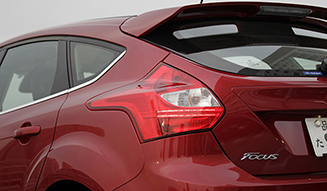
Until then, C-segment models often struggled to escape the shadow of the great Volkswagen Golf, with many adopting a Golf-like design, for better or worse. However, the Focus captured the hearts of enthusiasts with its distinctive design, emphasizing the fender arches and uniquely mounting the taillights at the top of the D-pillars. The overfender design, which accentuates the tires, and its unprecedented rear view would go on to inspire numerous imitators, as history has shown.
While that might have been a bit of a lengthy trip down memory lane, the point is that the Focus was an epoch-making model that redefined the C-segment. The current, third-generation model is a global product manufactured in seven countries and slated for sale in over 120 nations.
Ford is currently developing a system called "One Ford," which involves creating vehicles with global specifications and delivering them worldwide from production bases closest to each market. It's easy to mistakenly distinguish models as American Ford or European Ford based on their development origins, but going forward, all Fords will be "Global Fords" under the blue oval emblem.
As part of this initiative, vehicles produced in Thailand will be introduced to Japan. The factory in Rayong, Thailand, is equipped with state-of-the-art automated production facilities, representing an investment of approximately 40 billion yen, and also serves as a pilot base for Ford's global production system. Thailand, like Japan, drives on the left. While not directly related, the turn signal on the right-hand drive Focus is positioned on the right side, just like in Japanese domestic cars. This design ensures a seamless transition for drivers switching from a Japanese car.
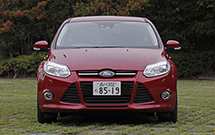
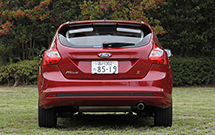
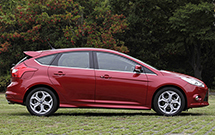
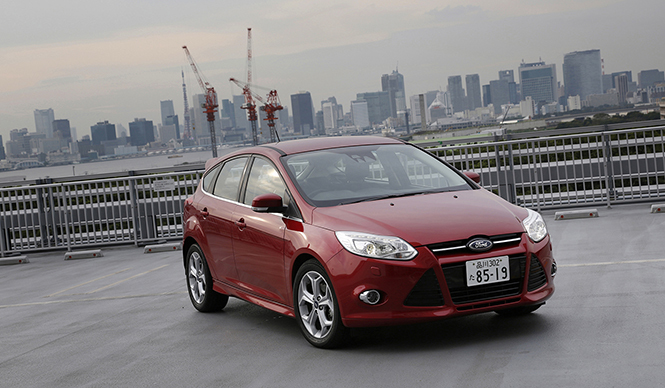
One cannot help but notice the stylish exterior design, which feels rich and sculpted as if carved from a single block. Similar to the "Kuga," a compact SUV launched in Japan in July, Ford calls this design motif "Kinetic Design." It features dynamic and three-dimensional forms, with a trapezoidal motif defining the front grille.
The Japanese model is offered in a single, high-grade "Sport" trim for the 5-door hatchback, which comes standard with a dedicated body kit and 17-inch wheels. While it might appear slightly flashy, it effectively conveys a sense of youthful energy and sportiness, and we can honestly say it looks cool.
Ford Focus Sport Long-Term Report
Part 1: Introducing the Ford Focus (2)
User-Friendly Operation
The size is also perfect. With a total length of 4,370mm, it's a compact size that's easy to handle even in congested urban areas. The height of 1,480mm means it can fit into most multi-story car parks without issue. Visibility to the rear is also excellent, which is a welcome feature when parking in street spaces. Its compact dimensions are essential for nimble city driving. Furthermore, it's not just small; its assertive design ensures the Focus stands out in the urban landscape.
The interior reflects the Kinetic Design language of the exterior, with the trapezoid also serving as a design motif here. The three-dimensional and distinctive design imparts a sense of advanced technology. Everything is intuitively placed, allowing for immediate operation without needing detailed instructions. While one should ideally read the manual thoroughly beforehand, the fact that I haven't and am not struggling with the controls is a testament to its user-friendliness.
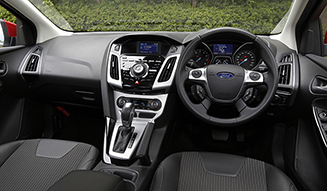
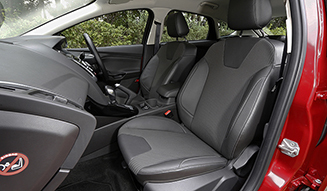
The clear labeling of the shift lever, the placement of the parking brake, and the turn signal stalk on the right side – everything is meticulously designed for right-hand drive. This isn't a half-hearted Japanese version with just the steering wheel swapped; it's evident that it has been genuinely engineered.
Although the car has just arrived at our office and we haven't experienced any long-distance driving yet, the quality of the seats is immediately apparent. The driving position feels remarkably natural. It's rare to find a car where the position feels so instinctively right from the very first contact, almost as if you've driven it before. The support, height, and cushioning are all perfect. With seats like these, long journeys should be comfortable.
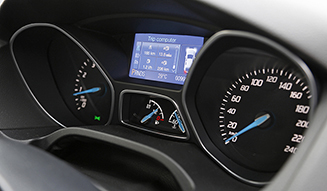
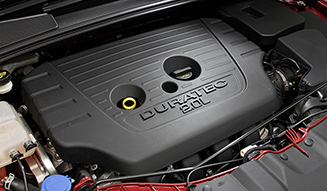
The engine is a 2.0-liter direct-injection inline-4, producing a maximum output of 170ps and peak torque of 20.6kgm, paired with a 6-speed DCT (Dual Clutch Transmission) called PowerShift. The official fuel economy is rated at 12.0 km/L under the JC08 mode, and we will report on its real-world performance later.
Finally, another notable feature of the new Focus is the "Active City Stop" automatic braking system, which uses radar sensors to detect and avoid collisions with vehicles ahead in traffic jams or at low speeds in urban areas.
In simple terms, the Focus is also a "car that avoids collisions." Of course, we won't be intentionally testing this feature during our long-term test, but knowing it's there provides a great sense of security. If this system proves helpful during everyday driving, I'll be embarrassed to admit my own lack of skill, but I intend to report on it thoroughly.

Ford Focus Sport
Body Dimensions: 4,370mm (L) x 1,810mm (W) x 1,480mm (H)
Wheelbase: 2,650 mm
Tread (Front/Rear): 1,555 / 1,545 mm
Minimum Ground Clearance: 130 mm
Weight: 1,380 kg
Engine: 1,998cc Inline-4 Direct Injection DOHC
Bore x Stroke: 87.5 x 83.1 mm
Max Output: 125kW (170ps) / 6,600 rpm
Max Torque: 202Nm (20.6kgm) / 4,450 rpm
Transmission: 6-speed Automatic (Dual Clutch)
Gear Ratios: 1st 3.917
2nd 2.429
3rd 1.436
4th 1.021
5th 0.867
6th 0.702
Final Drive Ratio: 3.850 (1st, 2nd, 5th, 6th gear) / 4.278 (3rd, 4th gear, Reverse)
Drivetrain: FF
Front Suspension: MacPherson Strut
Rear Suspension: Multi-link
Tires: 215/50R17
Brakes (Front/Rear): Ventilated Disc / Disc
Fuel Tank Capacity: 55 L
Minimum Turning Radius: 6 m
Price: ¥2.93 million
Ford Customer Service Center0120-125-175
http://www.ford.co.jp