
A Drive of the Jaguar XKR|Jaguar
Jaguar XKR | Jaguar XKR
Jaguar Returns to Its Sports Car Roots
Test Drive the Jaguar XKR
Recently, Jaguar has made a significant shift in direction with all of its models undergoing facelifts. For example, theXJno longer follows the traditional quad round headlights, and the elegant grand tourer, the "XK," has adopted a more aggressive, sportier design. Has Jaguar abandoned its heritage, or has it reclaimed it? Tatsuya Kushima discusses this through Jaguar's current high-performance sports model, the "XKR."traditional quad round headlightshas been abandoned, and the elegant grand tourer, the "XK," has adopted a more aggressive, sportier design. Has Jaguar abandoned its heritage, or has it reclaimed it? Tatsuya Kushima discusses this through Jaguar's current high-performance sports model, the "XKR."
Text by KUSHIMA Tatsuya
Photographs by NAITO Takahito
Wanting to Erase the Past
The newRange Roverhas been announced. While significant improvements have been made, such as an aluminum frame, the exterior remains largely the same. If you weren't particularly interested in the previous model, you might not notice the changes.
In contrast, the current Jaguar "XJ," from the same company, has dramatically changed its appearance. The design icons, such as the quad round headlights that have been a signature since the first "XJ" released in 1968, are gone. While the details carry over the lineage, the overall impression is entirely different.
The goal was to completely change the market's perception. The "XJ" design, loved by customers for years, had gradually become dated and lost its freshness. Coupled with an aging customer base, it was only a matter of time before concerns about a shrinking market began to surface.
This trend was particularly strong in the American market, Jaguar's primary focus. The brand, once renowned as a sports car manufacturer, had somehow become a car for retired gentlemen.
The current model was born to break this cycle. While some media outlets questioned, "Is this really a Jaguar?" the market has generally received it well. It's characterized by its aggressive styling, despite being a luxury sedan.
Jaguar XKR | Jaguar XKR
Jaguar Returns to Its Sports Car Roots
Test Drive the Jaguar XKR (2)
Back to the Sports Car Path
The design was handled byIan Callum, a designer renowned for the Aston Martin "Vanquish." In other words, he is an extreme sports car enthusiast. It's only natural that the "XJ" would be "aggressive" as a result of his dedicated work.
The aging of the large sedan market isn't unique to Jaguar. Mercedes and BMW faced similar situations. However, they reacted quickly. Mercedes, in particular, aimed to rejuvenate the "S-Class" market. The current model is the result of this effort. Compared to its predecessor, the fenders are more pronounced, giving it a more muscular image. In essence, the overall car image has become sportier and more aggressive, appealing to a younger demographic.
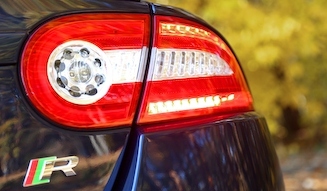
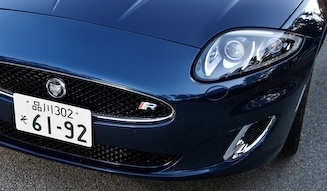
This preamble has been lengthy, but what I want to convey is that Jaguar is once again embarking on a sports car path. This is true for the flagship "XJ," and the "XK" series introduced here is certainly worthy of that designation.
So, what kind of legacy has Jaguar left as a sports car brand?
Jaguar XKR | Jaguar XKR
Jaguar Returns to Its Sports Car Roots
Test Drive the Jaguar XKR (3)
It's Bound to Be Sporty
Looking back at Jaguar's history, the brand can truly be called a sports car manufacturer, or even a racing car manufacturer. A symbol of this is the 24 Hours of Le Mans in the 1950s, where they achieved five victories in a short period. The cars were the "Type XK120C (C-Type)" and the "D-Type." They engaged in fierce battles with Mercedes and Ferrari. It's also famously known that Stirling Moss was one of their drivers.
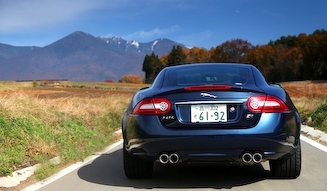
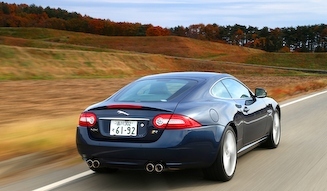
Born from such a history, the XK series is undoubtedly sporty. The flowing lines of the two-door coupe are brimming with a sporting spirit. Take the engine, for instance. The proud 5-liter V8 DOHC is supercharged, reaching a maximum output of 510 ps. The maximum torque is 625 Nm, delivered from 2,500 rpm.
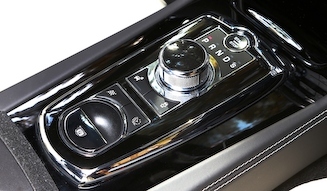
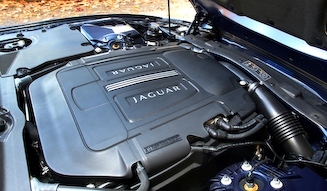
Even the Porsche "911 Turbo" has 500 ps, making this engine highly competitive. For comparison, the naturally aspirated unit produces 385 ps and 515 Nm. While that alone is more than sufficient, Jaguar's pride demanded a model that surpassed it.
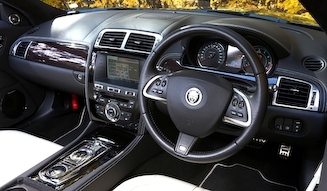
Let's start the engine. First, press the starter button with your finger, which blinks in response to the engine's pulse. Then, with a crisp "phoon!" sound, the machine awakens. It goes without saying that this is quite attention-grabbing. People turn around, wondering, "What is that?" And once you start driving, the power is immense. The acceleration, a powerful "dooon," pushes you back into the seat. It's like a solo drag race. Then, as you approach a corner, the car lightens and turns precisely in response to the steering.
In continuous corners and winding roads, it transforms into a true handling machine, making it incredibly fun. The chassis and steering characteristics respond instantly and linearly to your input, remaining perfectly neutral, allowing you to carve through corners with exhilarating precision. However, if you push too hard, it tends towards slight oversteer. Whether this is intentional tuning or a deliberate touch of playfulness is debatable, but rest assured, electronic aids are there to intervene if needed. Ultimately, the refined nature of British cars ensures it remains well-behaved.
Jaguar XKR | Jaguar XKR
Jaguar Returns to Its Sports Car Roots
Test Drive the Jaguar XKR (4)
The Suspension Tuning is Exquisite
These driving characteristics stem from the car's light weight. The now-familiar aluminum body contributes to weight reduction, enabling these traits. This is one of the reasons why the car's handling is so enjoyable. Through its racing heritage, Jaguar understood the advantages of lightweight construction and has consistently embodied it in its vehicles.
Jaguar's suspension is sometimes referred to as "cat's legs."
If you think about it, the suspension has more travel than you'd expect and feels remarkably resilient, much like a cat's legs.
The phrase "feeling the road with its claws" might also describe the cat's legs. The XKR exhibits such agility. Its footwork is incredibly nimble. Regardless of the descriptive terms, there's no doubt that this is a car that makes steering a joy.
Jaguar's suspension tuning is exquisite.
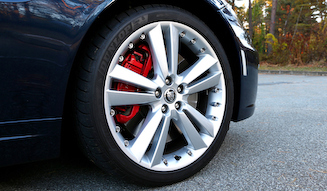
Furthermore, the front double-wishbone and rear multi-link suspension maintain a comfortable ride. The "Active Dynamics" electronic control dampers manage this adjustment, and they are truly superb. In corners, the car grips the road as if glued, and over bumps, they absorb the impact below the wheels, preventing unpleasant vibrations from reaching the occupants. This is precisely what you'd call a setting that caters to every need.
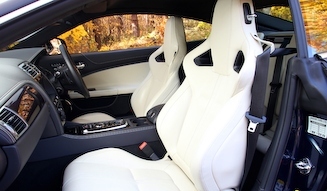
This year, a new model will be added to Jaguar's sports lineup: theF-TYPE. This is a true sports car. The difference from the XK series is that it's a complete two-seater, meaning its packaging prioritizes driving over cargo space or passenger comfort.
The 2+2 XKR, while a sports car, also serves as a grand tourer. In that sense, it's a sports car that an adult can own and still look good in. The 510 ps engine allows for both fast driving and leisurely cruising on the highway. After all, the torque is incredibly substantial. This is also a key appeal of the XKR, exuding a sense of mature confidence.

Jaguar XKR Coupe | Jaguar XKR Coupe
Body Size | Length 4,790 x Width 1,915 x Height 1,320 mm
Wheelbase | 2,750 mm
Tread Front/Rear | 1,560 / 1,600 mm
Minimum Ground Clearance | 120 mm
Minimum Turning Radius | 5.3 meters
Trunk Capacity (VDA) | 300 Liters
Weight | 1,810 kg
Engine | 4,999cc V8 Direct Injection DOHC Supercharged
Bore x Stroke | 92.5 x 93 mm
Maximum Output | 375kW (510ps) / 6,000 - 6,500 rpm
Maximum Torque | 625Nm / 2,000-5,500 rpm
Transmission | 6-speed Automatic
Drivetrain | FR
Suspension Front/Rear | Double Wishbone / Multi-link
Tires Front/Rear | 255/35ZR20 / 285/30R20
Fuel Economy (JC08 Mode) | 6.6 km/ℓ
Price | 15,300,000 yen