October 18, 2017
Volkswagen CC | Test Drive the New CC in the South of France
Volkswagen CC | Test Drive the New CC in the South of France
Rivals: C-Class and 3 Series
Test Drive the New CC in the South of France
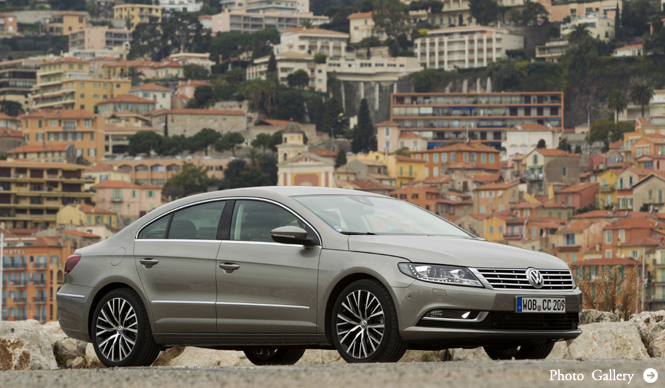
Volkswagen's premium personal car, the Passat CC, has been renamed the "CC." We test-drove this elegant four-door coupe, set to arrive in Japan in the summer of 2012, in Nice.
Text by OGAWA Fumio
Photo by Volkswagen
Sharper Styling
The Volkswagen CC is a premium model that Volkswagen confidently promotes as "a unique model that drivers can enjoy, offering comfort like that of a business class." Launched in 2008, it has sold over 320,000 units worldwide.
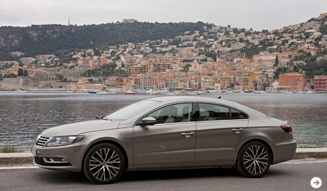
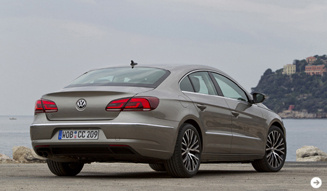
It has been particularly well-received in the US market, with sales equivalent to those in all of Europe. In Japan, despite a price tag nearing 5 million yen, it has carved out a unique position with its blend of elegance and sportiness.
In line with Volkswagen's philosophy that "standing still is not evolving," this update not only sharpens the styling but also enhances safety with the introduction of a lane-keeping system, a first for the company.
Volkswagen CC
Rivals: C-Class and 3 Series
Test Drive the New CC in the South of France (2)
To Achieve a New Premium Image
Volkswagen chose the resort town of Nice, known for its mild climate even in winter, as the venue for the test drive. Journalists arriving by plane were to pick up their cars at a special venue adjacent to the Côte d'Azur Airport and enjoy a drive to a hotel in the elegant seaside resort of Saint-Jean-Cap-Ferrat.
When asked about the reason for renaming the Passat CC to just CC, Henrik Svenson, head of product marketing, explained during lunch at a Nice hotel, "We aimed to differentiate the image to attract customers from the Passat who are moving upmarket. At the same time, we determined that a new premium image was necessary to compete in the market against rivals like the Mercedes-Benz C-Class and BMW 3 Series."
Interior Described as "Like Business Class"
The exterior dimensions of the Volkswagen CC are virtually unchanged from its predecessor. However, the front end has been given a slightly more aggressive design for the grille and headlamps, as stated by Felix Manuel Scher, head of exterior design, "to emphasize the family identity," with added detail in the bumper area.
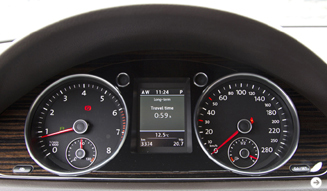
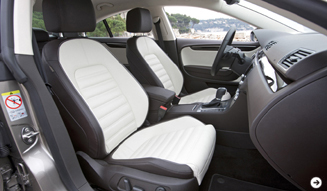
Opening the doors reveals an interior that Volkswagen describes as "business class," exuding an "inviting" atmosphere that makes you want to settle in. The test cars were all equipped with optional two-tone leather seats, which offered good support and felt comfortable immediately. The design of the slightly low dashboard also contributes to a clean aesthetic, feeling less like a driver's workspace and more like comfortable modern furniture for occupants.
Volkswagen CC
Rivals: C-Class and 3 Series
Test Drive the New CC in the South of France (3)
1.8-liter with 7-speed DSG Planned for Japan
The Volkswagen CC offers a wide range of engine options. These include the 1.8-liter TSI (160 ps), 2.0-liter TSI (210 ps), 3.6-liter V6 (300 ps), and diesel options: the 2.0-liter TDI (140 ps and 170 ps variants), and the 2.0-liter "Blue" TDI (140 ps) that complies with Euro 6 regulations. In Japan, the planned introduction for this summer is a combination of the 1.8-liter engine with a 7-speed DSG transmission. While the 4MOTION all-wheel-drive version is popular in the US, Japan will only receive front-wheel-drive models.
In line with Volkswagen's downsizing concept, the introduction of the 1.8-liter engine for the CC is Volkswagen Japan's strategy. This approach seems sound, as it delivers a nimble driving experience. Despite the turbocharger, its operation is smooth, and the turbo's engagement is so subtle that it's barely perceptible.
1.8-liter Engine Proves Sufficient
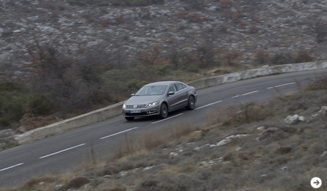
The dual-clutch transmission is also finely tuned, shifting gears responsively to accelerator input, ensuring the engine consistently operates within its optimal torque band. This makes the 1.8-liter displacement feel more than adequate for a vehicle measuring 4.8 meters in length. During the test drive, which covered various conditions between Nice and Monaco—including winding roads, city driving, and highways—the CC provided a light and agile driving experience, even with frequent acceleration and deceleration due to heavy traffic.
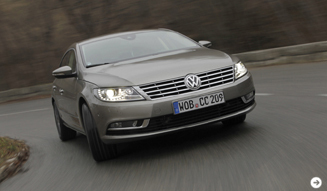
Even the 1.8-liter offers excellent acceleration, making the car feel smaller than it is. While there are differences in output, the 1.8-liter did not feel inferior to the 2.0-liter in terms of acceleration up to 130 km/h. At 100 km/h in top gear (7th), the engine speed is 2,000 rpm, suggesting it's geared for cruising. Even a slight increase in pressure on the accelerator pedal instantly downshifts to 6th gear, preparing the car for acceleration.
Volkswagen CC
Rivals: C-Class and 3 Series
Test Drive the New CC in the South of France (4)
Newly Adopted "Side Assist Plus"
Another notable aspect of the Volkswagen CC, according to Svenson, head of product marketing, is "safety and comfort." He added, "Car safety has improved over the past decade through the use of electronic technology. Electronic systems have also played a significant role in body structure and driving stability."
A key feature is the "Side Assist Plus" driving assistance system, making its debut in a Volkswagen. This system comprises "Lane Assist," which prevents lane departure, and "Side Assist," which monitors adjacent lanes. For instance, if a vehicle in the next lane approaches within 70 meters, the radar detects its presence and alerts the driver with an LED flash. If the driver attempts to change lanes, the steering will resist the maneuver.
Lane Assist is a system where the computer actively intervenes with the steering to keep the vehicle within its lane. In extreme cases, it's even possible for the car to navigate curves automatically by steering. When the vehicle starts to drift out of its lane, you can feel the steering wheel gently move on its own within your lightly held grip. However, you can only take your hands off the wheel for about 5 seconds before a warning sound is triggered.
"Of course, it can be set to allow driving without hands for extended periods, but Volkswagen's philosophy is that the driver remains responsible for driving, so we are not moving towards automated driving," stated Ralf Flurt, who oversees technical aspects.
Driving Assistance Systems Hint at the Future of Luxury Cars
The brakes also automatically engage to prevent rear-end collisions with vehicles ahead. Furthermore, safety is enhanced by systems that prompt the driver to take a break if the car detects fatigue through steering inputs. While not expected to be adopted in Japan anytime soon, features like a system that reads traffic signs and displays speed limits to the driver showcase the remarkable expansion of electronic driving assistance systems. These point towards the future direction of luxury vehicles.
The cabin is also very quiet, with wind noise kept to a minimum. In some units, road noise intrusion from the front wheel area felt slightly more pronounced, though other vehicles did not exhibit this issue. This is not uncommon for pre-production models, and the problem is likely to be resolved across all units soon.
Volkswagen CC
Rivals: C-Class and 3 Series
Test Drive the New CC in the South of France (5)
Advantages Over Rivals
When asked about the CC's advantages over the Mercedes C-Class and BMW 3 Series, Flurt, who oversees technology, immediately replied, "The high quality." He elaborated on the precise surfacing of the body panels, the distinct character lines creating highlights and shadows, and the rich materials and meticulous assembly of parts throughout the interior.
This suggests that Volkswagen's rigorous quality control, often referred to as "Volkswagen Quality," enhances the CC's presence. Upon seeing the car in person, it's impossible not to agree. As designer Scher put it, "In the interior, the luxurious use of various materials and the refined surface treatments clearly distinguish the CC from other products."
A Quiet Yet Distinct Presence
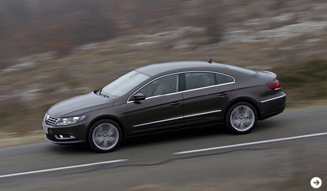
The body styling was meticulously crafted to blend elegance and sportiness. It's understandable that during its initial release, before the Lehman shock, businessmen on Wall Street were drawn to the predecessor's elegant and somewhat luxurious appearance. However, times have changed, and market preferences may have shifted towards something more grounded. What are your thoughts on this?
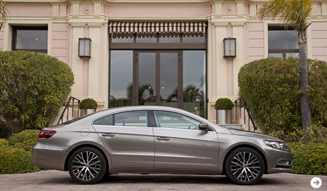
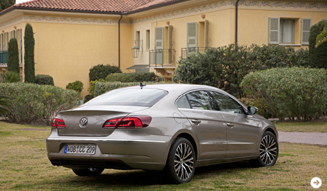
"Indeed, the market has changed. It's true that some competing models are struggling to adapt. However, the CC is not a car that ostentatiously demands attention. In English terms, it's not loud. It has a quiet, yet undeniable presence. That is the CC today," Scher, the designer, confidently stated while glancing at a CC parked by the pool during a presentation at the luxurious Hotel Royal Riviera in Nice. The CC may represent the ideal form of the new upper-middle-class car.
As mentioned, the car is scheduled for release in Japan in the summer of 2012. While pricing is yet to be determined, considering the current Passat CC 2.0 TSI is sold for 4.97 million yen, Volkswagen Japan is working to "adjust the pricing to avoid an increase while incorporating the latest equipment, similar to other VW models."

Volkswagen CC
Body Dimensions | Length 4802 x Width 1821 x Height 1417 mm
Wheelbase | 2,711 mm
Engine | 1.8L Inline 4-cylinder DOHC + Turbocharger
Max Output | 118 kW (160 ps) / 4,500–6,200 rpm
Max Torque | 250 Nm / 1500–4200 rpm
Fuel Economy | 5.6–9.6 L/100 km
CO2 Emissions | 167 g/km
Transmission | 7-speed DSG
Drivetrain | Front-wheel drive
Price | Undetermined (Scheduled for release in Japan, Summer 2012)