The Universal 'Aesthetic Sensibility' Revealed Through Japan's Traditional Calligraphy Culture
Presented by PORSCHEPORSCHE
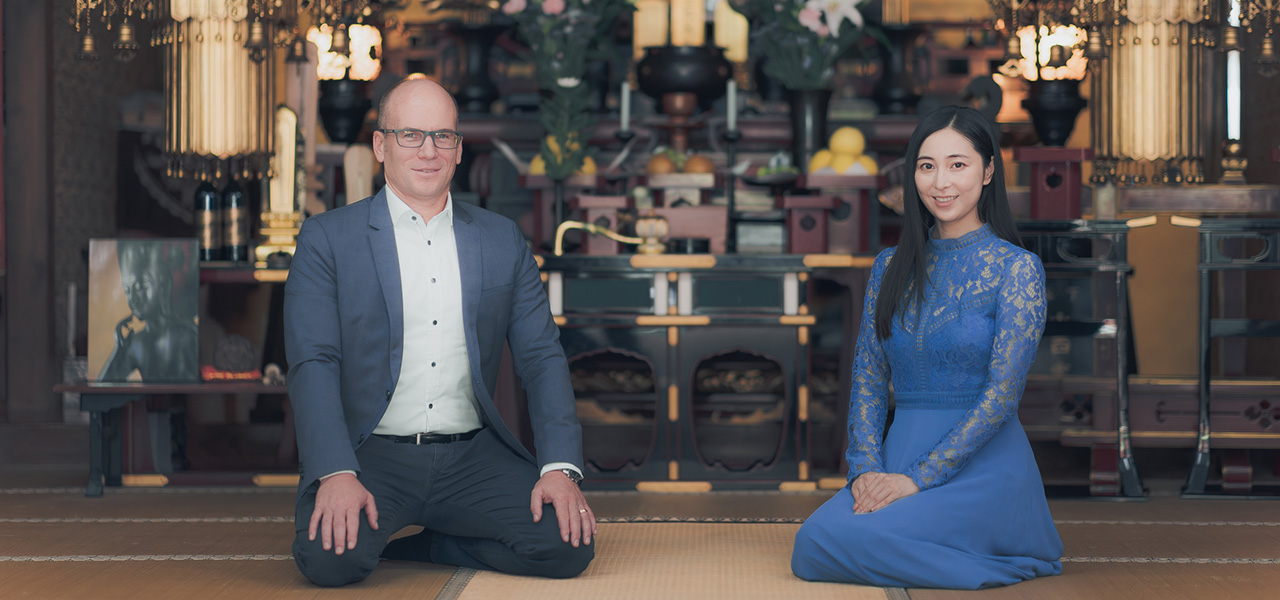
A Conversation: Philipp von Witzendorff, President of Porsche Japan, and Yuna Okanishi, Calligrapher and Artist
A cross-interview to explore what Porsche Japan President Philipp von Witzendorff is seeing and thinking about now. This time, he discusses aesthetics with calligrapher and artist Yuna Okanishi. In preparation for the conversation, President von Witzendorff was asked for his favorite word in advance, and Ms. Okanishi created a piece of art based on it at the beginning of the discussion. What unfolded from this surprise cross-interview?
Text by AOYAMA Tsuzumi, Photographs by FUJII Yui Edit by MAEDA Yoichiro
From the Meaning of the Written Word: "Kyōmei"
The location chosen for President von Witzendorff's visit was the main hall of Eiryu-in temple in Minato-ku, Tokyo. This is a space Ms. Okanishi often borrows for her work, finding it conducive to mental focus. Despite being in the heart of the city, it is filled with tranquility. For President von Witzendorff's arrival, a low writing desk was already set up in the hall, with an inkstone with freshly ground ink, Japanese paper, and brushes laid out on it.
Without much ado after the initial greetings, Ms. Okanishi began.
“Shall we begin?”
“Shall we begin?”
Seated in front of the main image, Ms. Okanishi bowed deeply, then turned to the writing desk and began to meditate with her hands clasped. President von Witzendorff watched with eyes sparkling with curiosity. After a moment of silence, Ms. Okanishi picked up a brush and started to write.
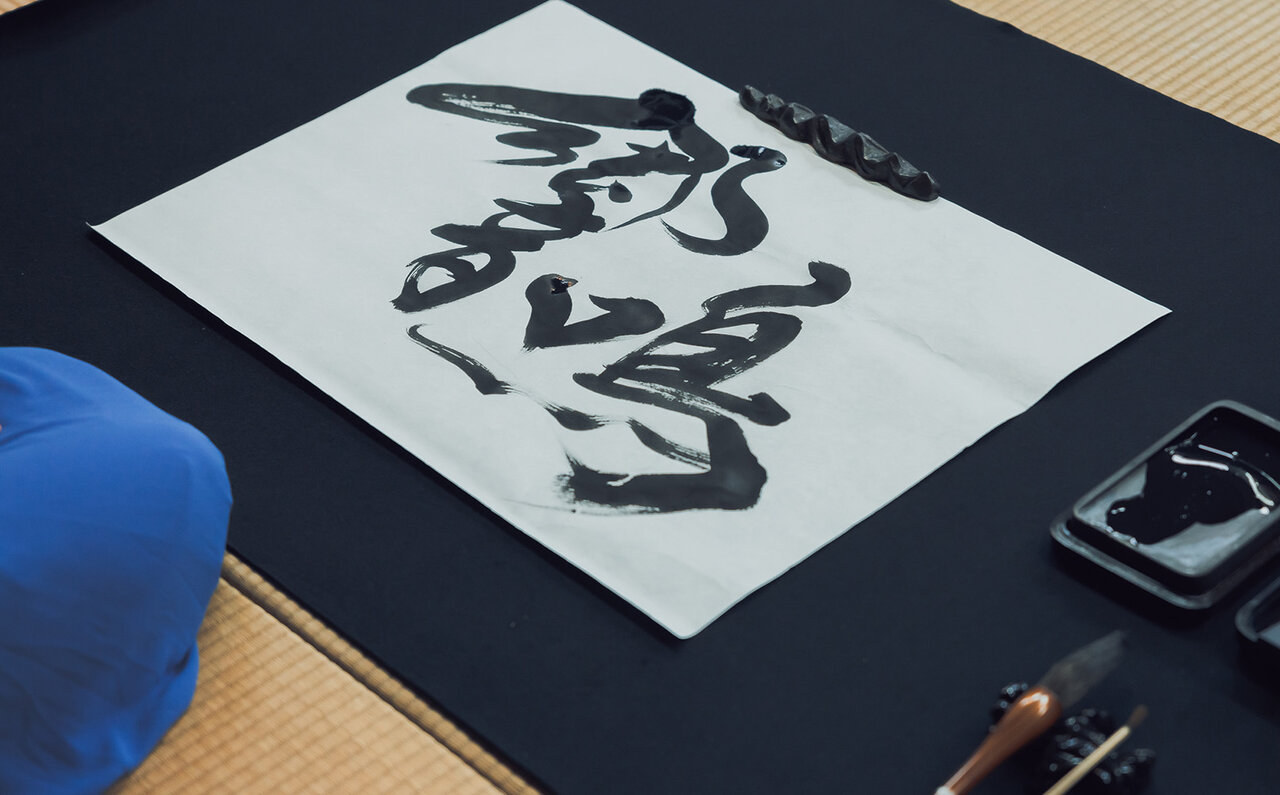
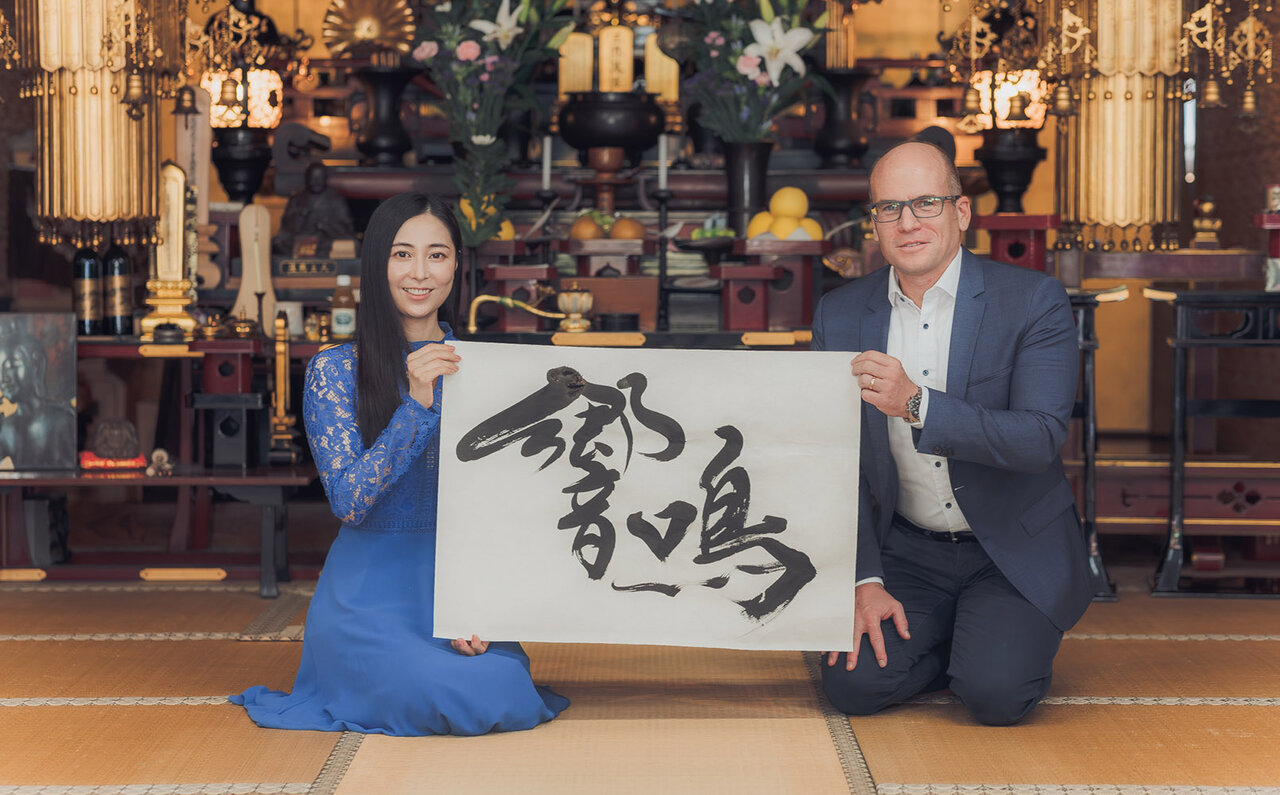
The brush moved across the white paper, forming the characters "響鳴" (Kyōmei).
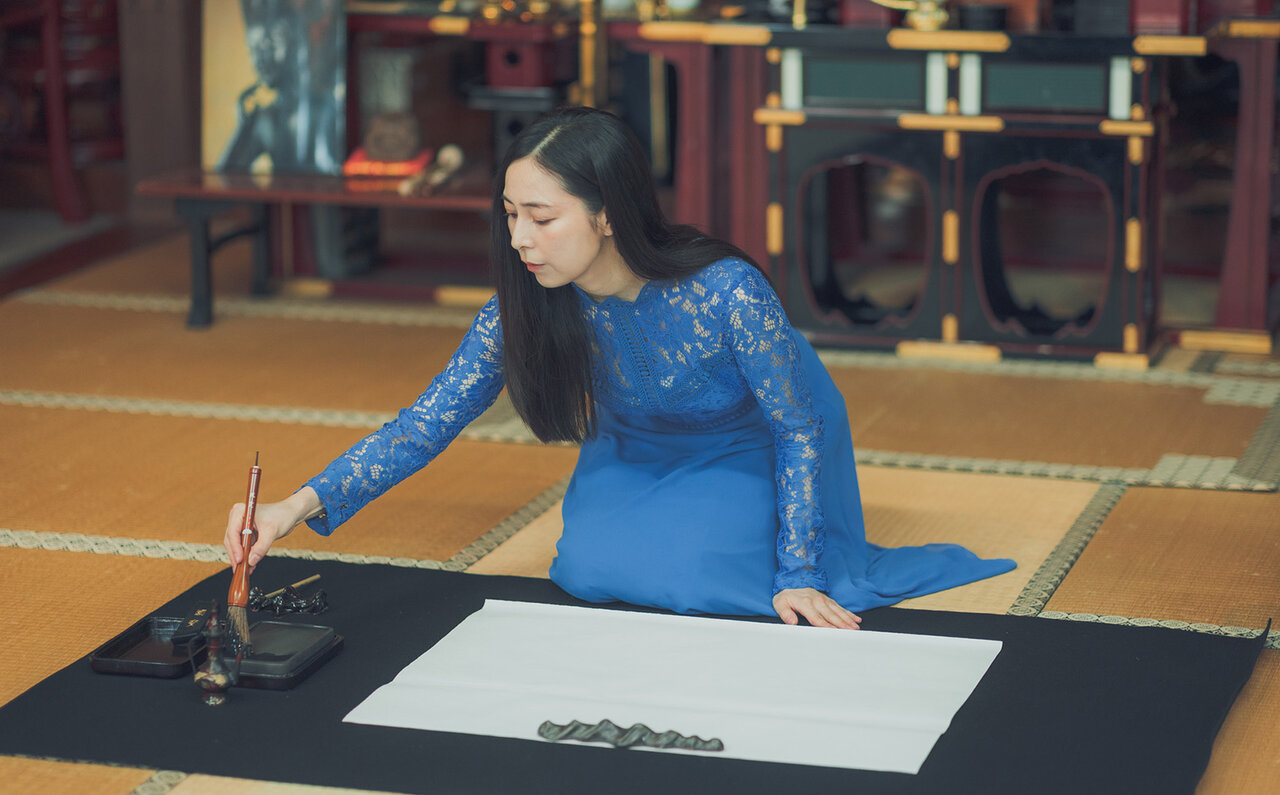
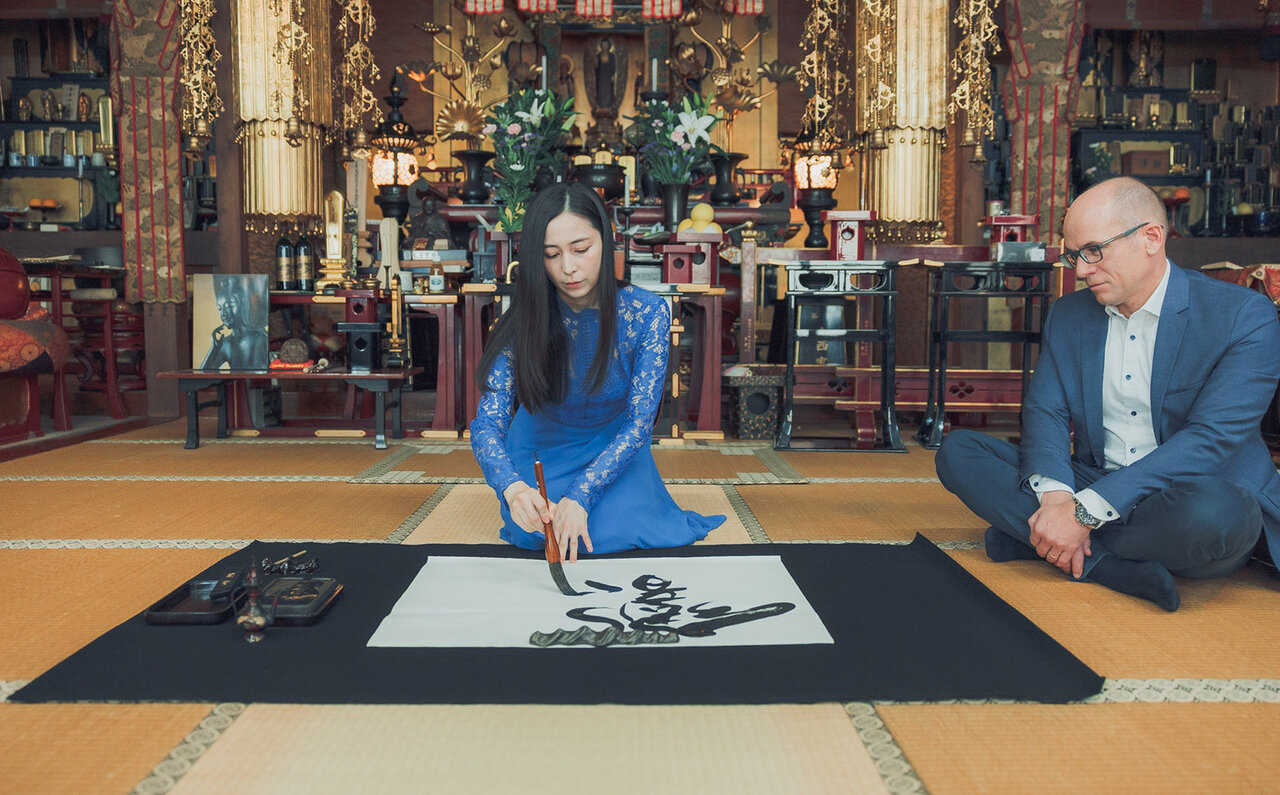
It was President von Witzendorff's first time entering a temple hall, and he was captivated by Ms. Okanishi's brushwork.
<Ms. Okanishi>
“I wrote the word '響鳴' (Kyōmei), which means 'to resonate' and 'to sound.' '響鳴' is a neologism I created for President von Witzendorff. The direct translation of 'empathy' is 'kyōkan' or 'kyōmei' in Japanese, but I feel people often use these words superficially. I thought about what word could convey a deep connection, not just a surface-level one, and arrived at '響鳴'.”
“'Kyōkan' refers to the way humans feel things, while 'kyōmei' means the resonance of sounds, like the calls of animals or vibrations. By deliberately changing the common character '共' (kyō) to '響' (kyō), I believe I was able to express a state where mutual feelings resonate with each other, leading to a deeper connection.”
“I wrote the word '響鳴' (Kyōmei), which means 'to resonate' and 'to sound.' '響鳴' is a neologism I created for President von Witzendorff. The direct translation of 'empathy' is 'kyōkan' or 'kyōmei' in Japanese, but I feel people often use these words superficially. I thought about what word could convey a deep connection, not just a surface-level one, and arrived at '響鳴'.”
“'Kyōkan' refers to the way humans feel things, while 'kyōmei' means the resonance of sounds, like the calls of animals or vibrations. By deliberately changing the common character '共' (kyō) to '響' (kyō), I believe I was able to express a state where mutual feelings resonate with each other, leading to a deeper connection.”
<President von Witzendorff>
“Thank you. I felt a wonderful presence. Of course, I couldn't tell what you were writing as you were doing it, but I was completely mesmerized by the flowing movement of your brush. It wasn't just the brush moving; there were pauses, lifts, and various accents as you moved to the next line. I was deeply impressed by the beauty of that entire flow.”
“Thank you. I felt a wonderful presence. Of course, I couldn't tell what you were writing as you were doing it, but I was completely mesmerized by the flowing movement of your brush. It wasn't just the brush moving; there were pauses, lifts, and various accents as you moved to the next line. I was deeply impressed by the beauty of that entire flow.”
When President von Witzendorff asked, “How long did you spend contemplating the concept?” Ms. Okanishi replied with a smile, “I’ve been thinking about it ever since you gave me the theme, right up until we met today.” She explained that the word "響鳴" came to her from an anecdote President von Witzendorff shared in a past interview about valuing time with his family, and she ultimately decided on this word upon meeting him.
Every Time I Drive My Macan, I Feel a Rush of Excitement

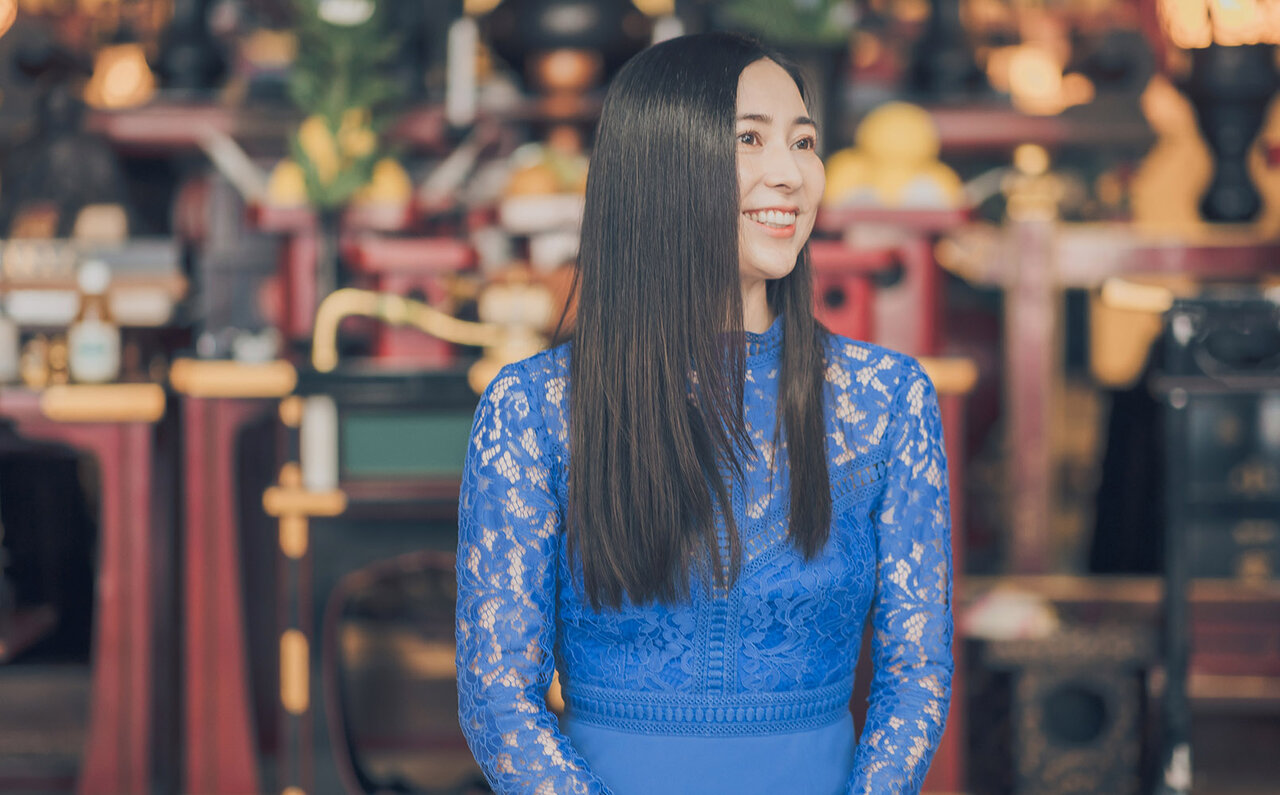
The curves of a Porsche, the curves of calligraphy. Though the mediums of expression differ, the origin of beauty is the same, they say.
Ms. Okanishi revealed that she has owned a Porsche Macan for two years. What continues to captivate her as a calligrapher and artist is the "balance between curves and straight lines."
<Ms. Okanishi>
“Most things in nature are characterized by curves. I want to trace and depict the beauty of these curves found in the natural world. The reason I wanted a Macan was precisely because I was captivated by its beautiful curves throughout the vehicle. This hasn't changed even after two years; seeing the Macan's stunning silhouette still fills me with excitement to drive it.”
“Most things in nature are characterized by curves. I want to trace and depict the beauty of these curves found in the natural world. The reason I wanted a Macan was precisely because I was captivated by its beautiful curves throughout the vehicle. This hasn't changed even after two years; seeing the Macan's stunning silhouette still fills me with excitement to drive it.”
<President von Witzendorff>
“When discussing Porsche design, I could talk endlessly about its merits. As you mentioned, the curves and straight lines work together in a very effective and balanced way. The curves that form the streamlined silhouette express smoothness and approachability, while the straight lines represent the inherent strength and power of the Macan.”
“When discussing Porsche design, I could talk endlessly about its merits. As you mentioned, the curves and straight lines work together in a very effective and balanced way. The curves that form the streamlined silhouette express smoothness and approachability, while the straight lines represent the inherent strength and power of the Macan.”
Feeling Japan in the Spirit and Technique of Calligraphy
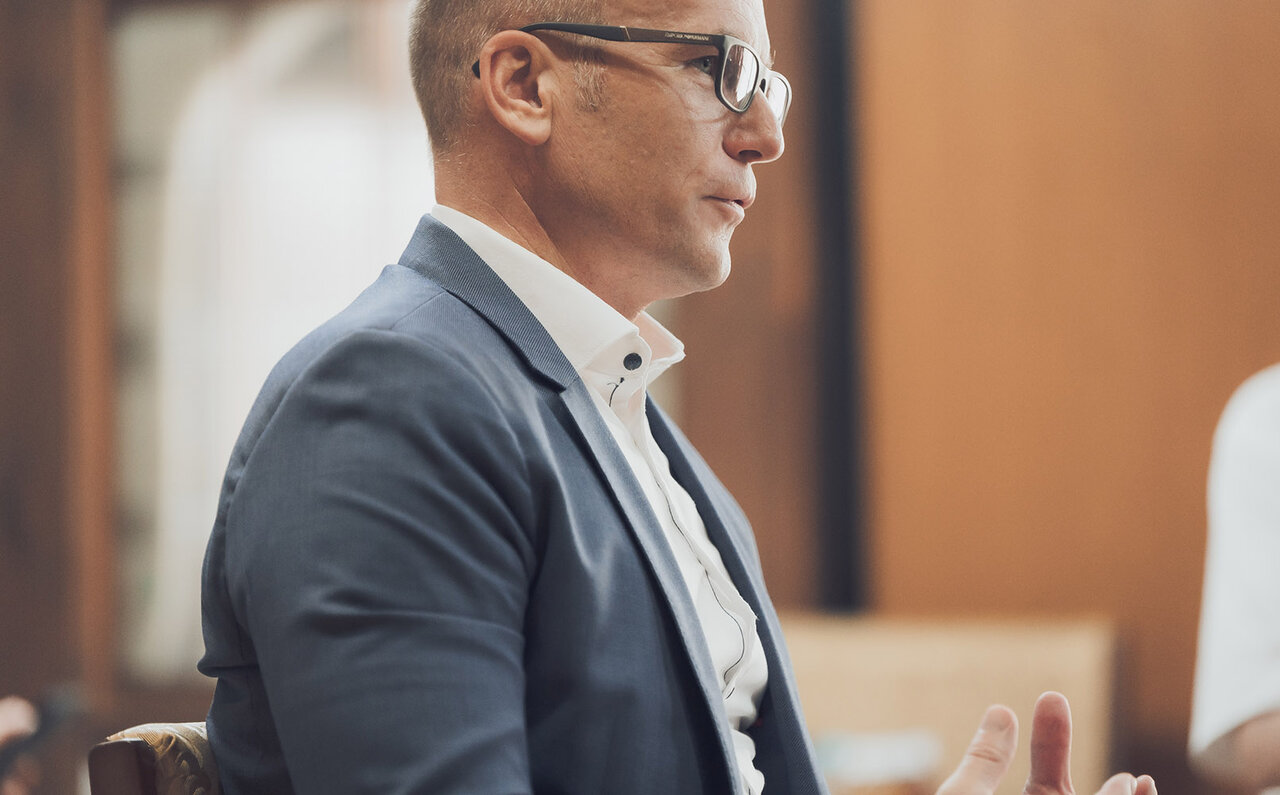
If one were to find a parallel in Germany to the graphical expression of characters through a combination of straight and curved lines, it would be calligraphy. President von Witzendorff noted that the calligraphy used in book covers from the 1800s possesses a beauty entirely different from that found in contemporary publications.
<President von Witzendorff>
“However, what Ms. Okanishi just performed is entirely different from German calligraphy. Ms. Okanishi took the word 'empathy' that I conveyed, contemplated it in various ways, and chose her words based on deep thought. Then, she selected the characters and considered the style in which to render them. Ms. Okanishi mentioned she started calligraphy at the age of six, and she executed it with skills honed over many years. This entire creative process is completely different from calligraphy, which merely focuses on drawing beautiful characters.”
“However, what Ms. Okanishi just performed is entirely different from German calligraphy. Ms. Okanishi took the word 'empathy' that I conveyed, contemplated it in various ways, and chose her words based on deep thought. Then, she selected the characters and considered the style in which to render them. Ms. Okanishi mentioned she started calligraphy at the age of six, and she executed it with skills honed over many years. This entire creative process is completely different from calligraphy, which merely focuses on drawing beautiful characters.”
Having said this, President von Witzendorff asked Ms. Okanishi, “What is the significance of the meditation you performed before picking up the brush?”
<Ms. Okanishi>
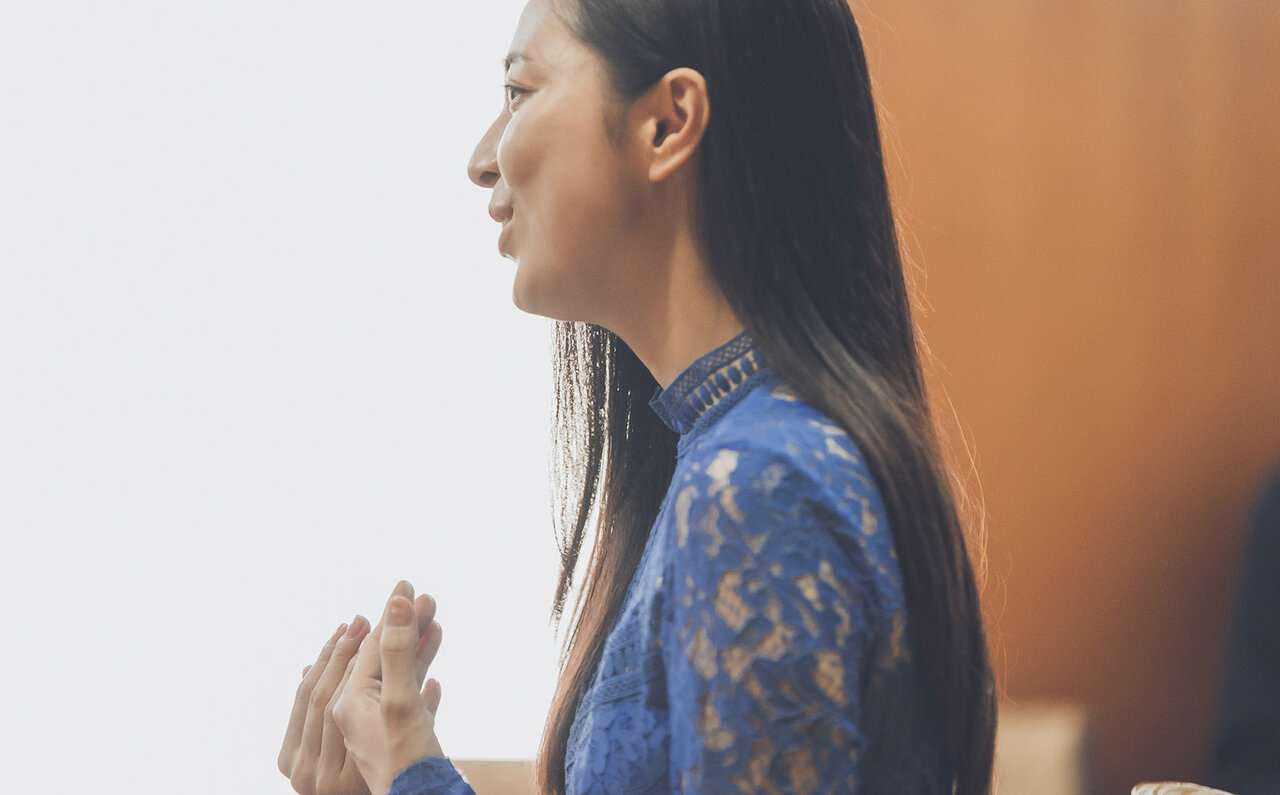
“I always meditate before writing. The idea is to empty myself, to make my mind a blank slate. Living in Tokyo, the constant buzz of daily life inevitably occupies my mind, and that state of mind can be projected onto my work. Therefore, before I write, I need to first cleanse my own mind.”
“I always meditate before writing. The idea is to empty myself, to make my mind a blank slate. Living in Tokyo, the constant buzz of daily life inevitably occupies my mind, and that state of mind can be projected onto my work. Therefore, before I write, I need to first cleanse my own mind.”
<President von Witzendorff>
“Your posture during meditation was very impressive. It’s been over a year since I came to Japan, and I continue to have new experiences here every day, making my days exciting. This space, the main hall of this temple, is also a first for me, and Ms. Okanishi's calligraphy is a fresh experience. I feel that Japan has a great many traditional cultures, and I was deeply moved to be able to experience one of them today.”
“Your posture during meditation was very impressive. It’s been over a year since I came to Japan, and I continue to have new experiences here every day, making my days exciting. This space, the main hall of this temple, is also a first for me, and Ms. Okanishi's calligraphy is a fresh experience. I feel that Japan has a great many traditional cultures, and I was deeply moved to be able to experience one of them today.”
President von Witzendorff's Impressions of His First Calligraphy Experience
<President von Witzendorff>
“Actually, before 'empathy,' I had thought of the word 'Respect.' I felt it was wonderful how many Japanese people show respect towards others and maintain that attitude consistently. However, I felt the expression was too direct, so I chose a different word. While I admire Japan's national character and its strong traditions, I also hope the country will move forward with even more innovation and speed, while preserving those traditions.”
“Actually, before 'empathy,' I had thought of the word 'Respect.' I felt it was wonderful how many Japanese people show respect towards others and maintain that attitude consistently. However, I felt the expression was too direct, so I chose a different word. While I admire Japan's national character and its strong traditions, I also hope the country will move forward with even more innovation and speed, while preserving those traditions.”
In addition to Ms. Okanishi's calligraphy demonstration, this conversation also involved President von Witzendorff actually picking up a brush and trying his hand at calligraphy. The kanji character he chose was "合" (gō), also inspired by the concept of 'empathy.'
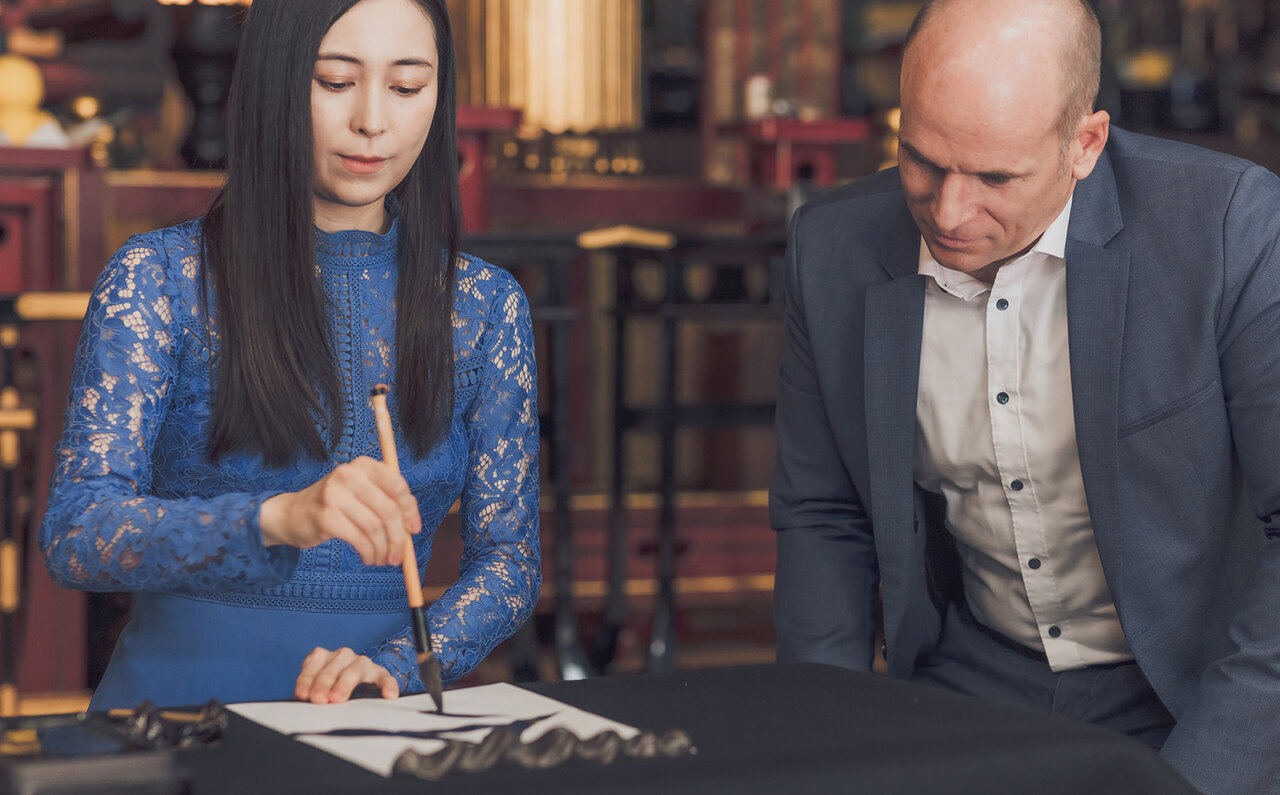
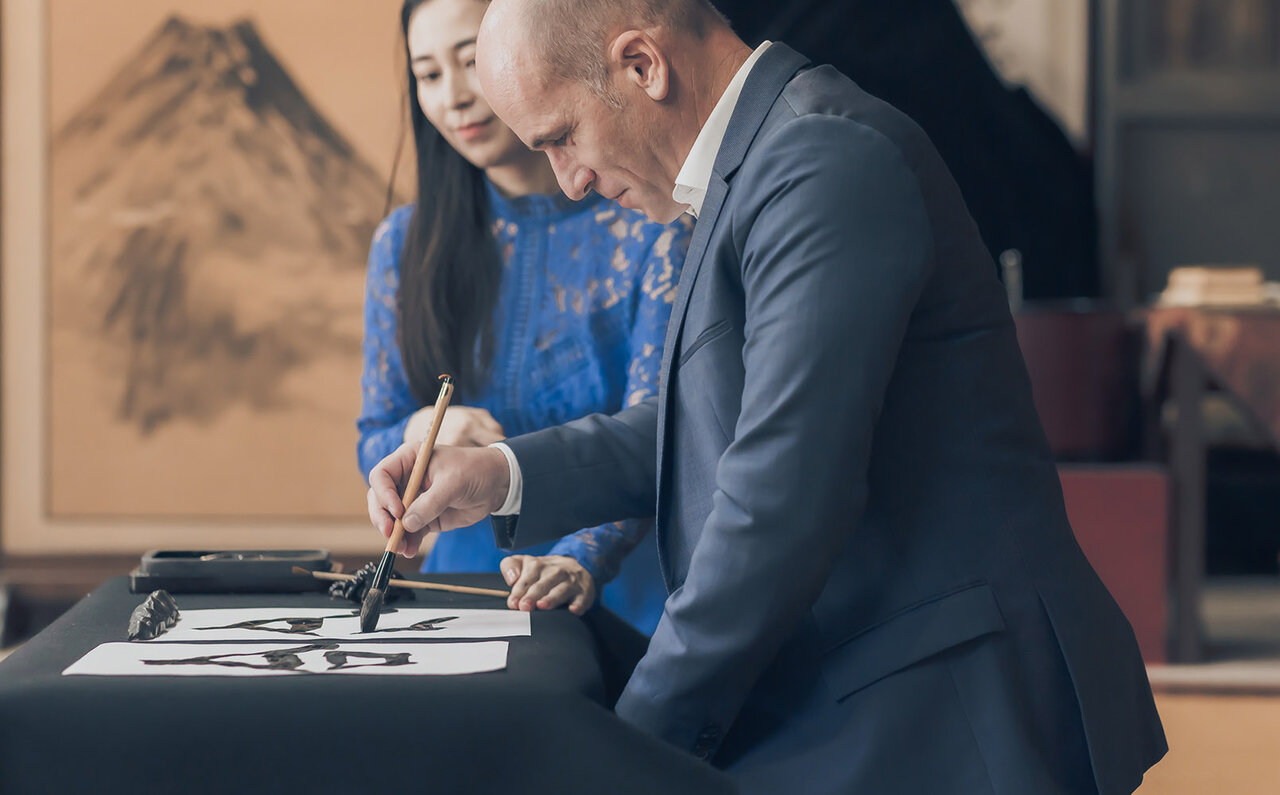
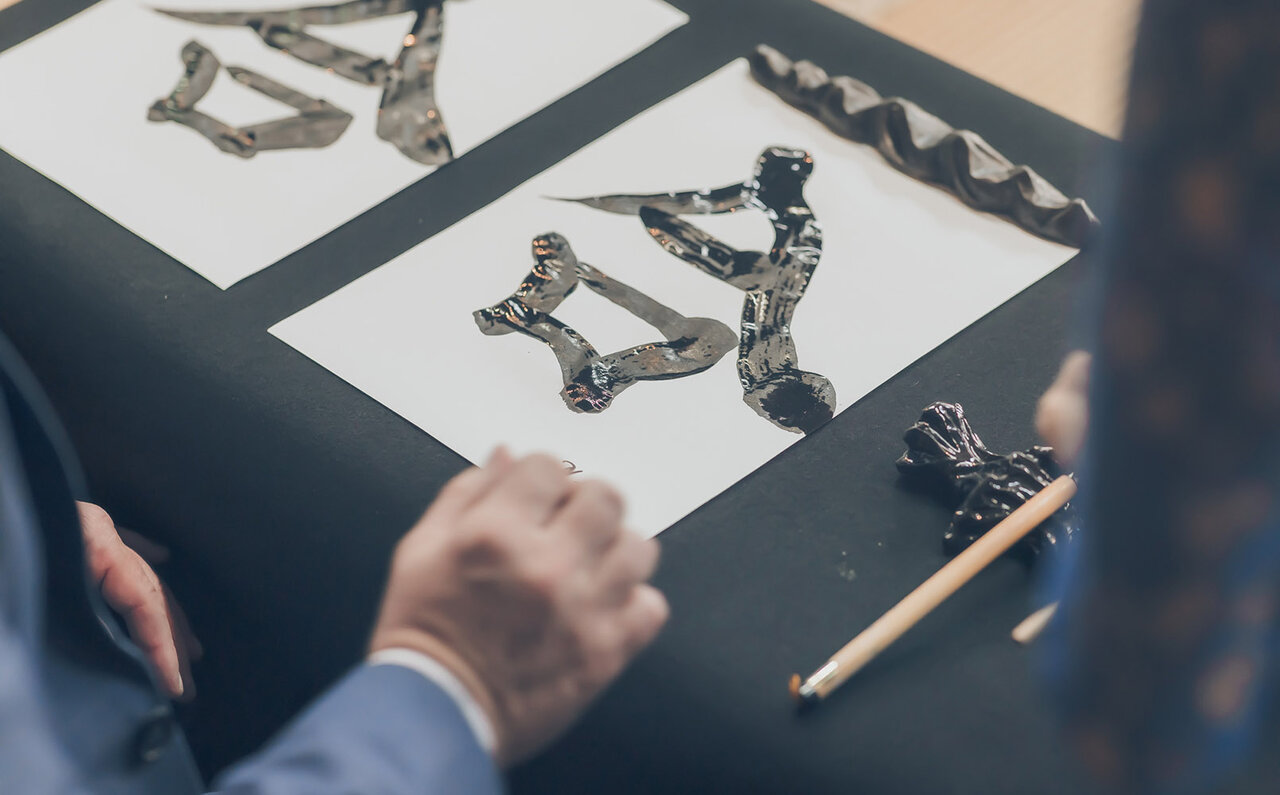
He actually took up the brush himself to try writing the character "合" (gō). Despite finding the "harai" (flick of the brush) challenging, he completed a well-balanced "合."
<Ms. Okanishi>
“Just as the essence of things can be difficult to see in everyday life, I feel that in calligraphy, expression comes not from the black ink, but from the white space. President von Witzendorff's writing conveyed a sense of awareness of that white space. His concentration was also remarkable. Calligraphy enhances concentration with its white paper, which is one of its joys, and I believe President von Witzendorff was able to experience that.”
“Just as the essence of things can be difficult to see in everyday life, I feel that in calligraphy, expression comes not from the black ink, but from the white space. President von Witzendorff's writing conveyed a sense of awareness of that white space. His concentration was also remarkable. Calligraphy enhances concentration with its white paper, which is one of its joys, and I believe President von Witzendorff was able to experience that.”
What Kanji Character Represents the Macan?
<President von Witzendorff>
“When I started to put the brush to the paper, I felt a great sense of concentration. I was so focused that my body tensed up. Perhaps I should have had a couple of beers first (laughs). Of course, it was my first time doing calligraphy, but it was a wonderful experience. Earlier, we discussed how calligraphy has straight and curved lines, and how the Macan also has straight and curved lines. Perhaps, just perhaps, Ms. Okanishi has a kanji character in mind that represents the Macan?”
“When I started to put the brush to the paper, I felt a great sense of concentration. I was so focused that my body tensed up. Perhaps I should have had a couple of beers first (laughs). Of course, it was my first time doing calligraphy, but it was a wonderful experience. Earlier, we discussed how calligraphy has straight and curved lines, and how the Macan also has straight and curved lines. Perhaps, just perhaps, Ms. Okanishi has a kanji character in mind that represents the Macan?”
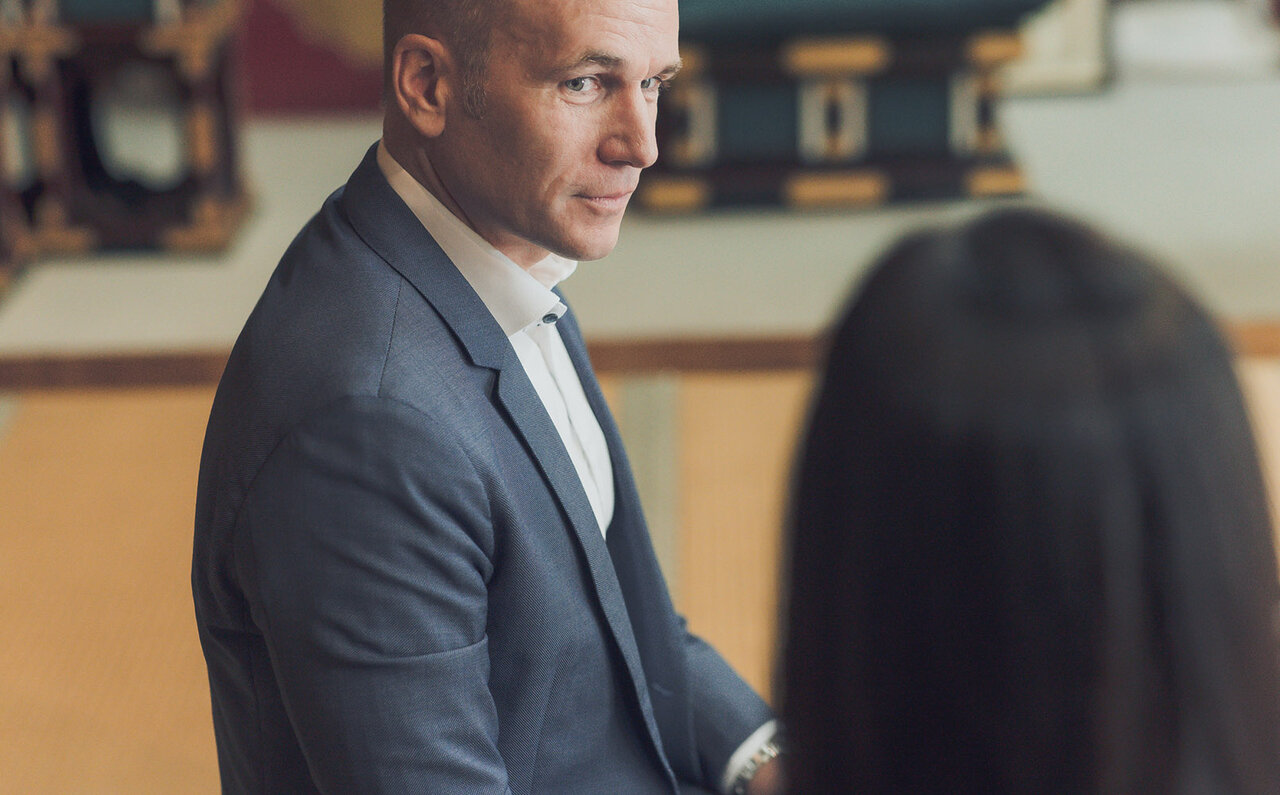
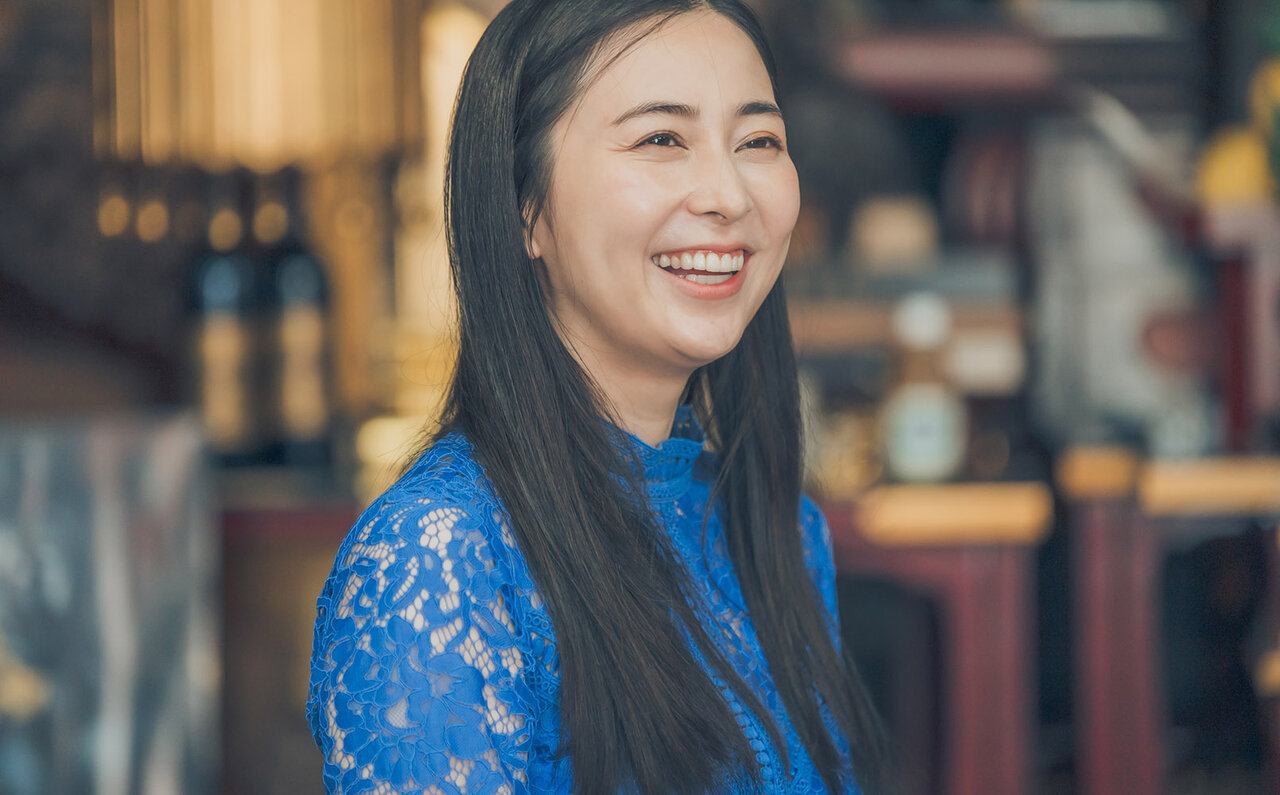
What would happen if Porsche's various models were rendered in calligraphy? The conversation about new interpretations of calligraphy continued.
President von Witzendorff let out an exaggerated sigh and put on a playful expression, then made a proposal to Ms. Okanishi.
He suggested that, in return for her experiencing calligraphy for the first time, he would invite Ms. Okanishi to the Porsche Experience Center Tokyo (PEC Tokyo) in Kisarazu City, Chiba Prefecture, allow her to experience driving the latest Porsche, and then create a piece of calligraphy inspired by that experience to be exhibited alongside the car.
This would be a reciprocal experience: President von Witzendorff, having experienced Japan's traditional culture, would offer an experience of Porsche, a traditional German brand. What kind of characters would be created from Ms. Okanishi's inspiration at PEC Tokyo, where she could fully unleash the car's performance? If this comes to fruition, a report article must be prepared once again.
Philipp von Witzendorff
President and CEO of Porsche Japan. After holding management positions at Mercedes-Benz in Canada, Germany, and other overseas markets, he served as a board member at Porsche Retail Hamburg from April 2019. He assumed his current role on July 1, 2022.
President and CEO of Porsche Japan. After holding management positions at Mercedes-Benz in Canada, Germany, and other overseas markets, he served as a board member at Porsche Retail Hamburg from April 2019. He assumed his current role on July 1, 2022.
Yuna Okanishi
Calligrapher and Artist. Began studying calligraphy at age six under Shunkō Tochigi. Obtained her master's certification while in high school. Studied ink wash painting under Gyokusē Sekizawa. As a calligrapher, she breathes life into characters, expressing her unique sense of rhythm and inner world, and has received numerous awards both domestically and internationally. She pursues the "beauty of curves" in nature through her calligraphy, guided by the belief that "self and other are one, all in harmony," and that the harmony between nature, humanity, and all things contributes to world peace. She has organized the "Art Project Shingon" since 2019. She has exhibited and performed at the Nihonbashi Mitsui Tower and Tōdai-ji Temple in Nara, dedicating her works and actively engaging in environmental awareness activities. Her art collection is titled "The Beauty of Lines" (Seigensha, 2019).
Calligrapher and Artist. Began studying calligraphy at age six under Shunkō Tochigi. Obtained her master's certification while in high school. Studied ink wash painting under Gyokusē Sekizawa. As a calligrapher, she breathes life into characters, expressing her unique sense of rhythm and inner world, and has received numerous awards both domestically and internationally. She pursues the "beauty of curves" in nature through her calligraphy, guided by the belief that "self and other are one, all in harmony," and that the harmony between nature, humanity, and all things contributes to world peace. She has organized the "Art Project Shingon" since 2019. She has exhibited and performed at the Nihonbashi Mitsui Tower and Tōdai-ji Temple in Nara, dedicating her works and actively engaging in environmental awareness activities. Her art collection is titled "The Beauty of Lines" (Seigensha, 2019).