2008-2009: Three pundits dissect the automotive world (Part 2)
2008-2009: Three Auto Industry Commentators Dissect the Automotive World (Part 2)
Hybrids, Pure EVs, and Fuel Cells—
A global economic crisis, described as a once-in-a-century event, and escalating environmental concerns—In this era of upheaval, where are cars headed, and what is the future of the automotive society? Three sharp minds in the auto industry offer their perspectives on 2009.
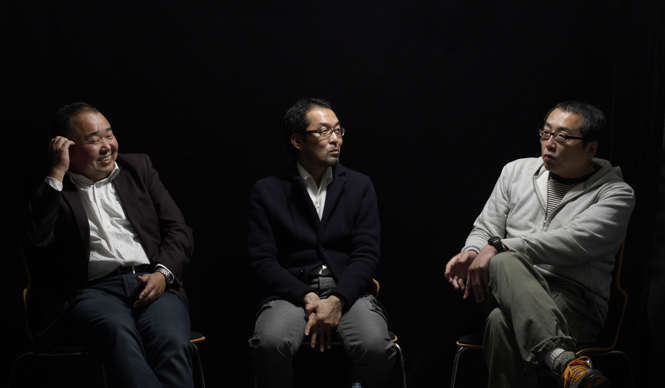
In Conversation: Fumio OgawaMasashi TakiToshifumi WatanabePhotography: Kenta Yoshizawa (Portraits)Compiled by: OPENERS
The Relationship Between CO2 and Ecology
—Now, I'd like to shift our focus to looking ahead from 2009. First, I believe it's impossible to discuss the current automotive landscape without considering the global economic downturn and environmental issues.
Watanabe—The media has pointed to the Big Three in America (GM, Ford, Chrysler) falling into dire straits because they primarily sold large, fuel-inefficient vehicles. While that's certainly a contributing factor, I don't think it's the whole story.
Ogawa—So, it's about the complex relationship between ecology and the decline of the auto industry?
Watanabe—One thing is clear: ecology alone is not dictating the entirety of the current automotive business. For instance, the recent situation with the Big Three is also significantly influenced by the subprime crisis, which caused a rapid depreciation of assets for companies heavily reliant on finance.
Taki—I heard that at the EU summit in Brussels in December, a comprehensive legislative proposal was agreed upon to reduce greenhouse gas emissions by more than 20% compared to 1990 levels by 2020, in order to combat global warming.
Ogawa—On the other hand, there are also arguments that CO2 is not a major cause of global warming.
Taki—We need to re-examine the question of what exactly constitutes 'eco.' Is it solely about not emitting CO2? What truly is ecological?
Watanabe—It feels as though CO2 has become like a new currency. If you look at it cynically, it might involve new business opportunities and vested interests.
—As a groundbreaking initiative, Audi and Nissan are offering sales with carbon offsets.
Taki—They are likely aiming to raise user awareness about carbon offsetting.
Watanabe—Indeed, in European society, there's a movement towards collective CO2 reduction. In countries like the UK and France, there's discussion about adjusting vehicle acquisition costs based on CO2 emissions.
Ogawa—To reiterate, why does everyone focus on CO2 when talking about ecology? There are many other factors involved.
Watanabe—In the EU, countries like the Netherlands, which are at sea level, face a fundamental existential threat from rising sea levels due to global warming, potentially submerging their land.
Taki—Regarding air pollution, a very clear example is the destruction of German forests due to acid rain. In the early 1980s, forests visibly declined.
Watanabe—And the ozone hole is geographically close to those areas.
Ferrari Also Features Idling Stop!?
Ogawa—On the other hand, there's a current trend towards larger and more powerful engines. What are your thoughts on that?
Watanabe—I feel that trend has fundamentally ended.
Ogawa—We haven't reached the point where it's over yet. Consider the Ferrari 430 Scuderia, a derivative model, or the SL65 AMG Black Series with its 612 hp 6-liter V12, or the Lamborghini Gallardo LP560-4 boasting 516 hp from its V10.
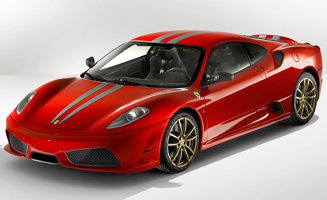
FERRARI 430 SCUDERIA
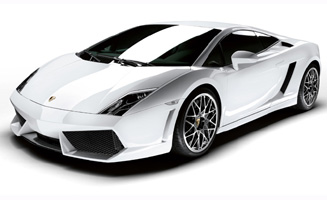
LAMBORGHINI GALLARDO LP560-4
Watanabe—It's unlikely that Ferrari will increase displacement further in future models. Porsche's flat-six engines in the 911 and Boxster are designed not to exceed 4 liters. Rumor has it the next Boxster might feature a turbocharged 4-cylinder. So, I believe there is a trend towards downsizing engines and using forced induction to compensate for any power reduction.
Taki—For example, Audi will reduce the displacement in the next S4 from a 4.2-liter V8 to a 3-liter V6 twin-turbo.
Ogawa—Volkswagen has also developed a 1.4-liter direct-injection twin-charged unit for the Golf GT TSI, aiming for fuel efficiency comparable to a 1.4-liter engine and output similar to a 2-liter.
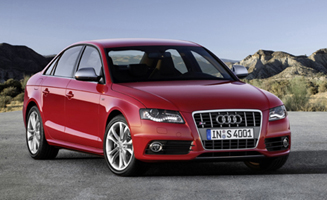
New AUDI S4
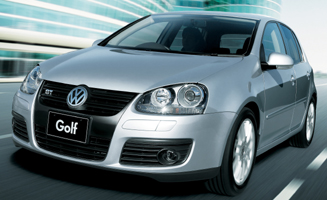
Volkswagen Golf GT TSI
Taki—Perhaps engine downsizing is an engineering direction for the Porsche, Volkswagen, and Audi group.
Ogawa—That seems like a natural progression.
Watanabe—Recently, at a test drive event for the Ferrari California and AMG, I spoke with an engineer who mentioned that AMG aims to improve the average fuel economy across their model lineup by 30% by 2012. Ferrari, they said, aims for a 40% improvement by 2015. This will be achieved through measures like direct injection and adopting idling stop systems on existing engines. Ferrari with idling stop, can you believe it? (laughs) They'll also utilize regenerative systems, similar to those used in F1.
Ogawa—However, the effectiveness of idling stop might be debatable given Japan's traffic conditions. For the Smart car, it's said that if the idling stops for more than five seconds, it's more economical than restarting the engine.
Taki—So, restarting the engine consumes about five seconds' worth of fuel.
Ogawa—If it's being fitted to a Smart, I think it would be beneficial to equip other cars with it as well.
Taki—They're probably positioning the Smart as a symbol of eco-friendliness.
The Hybrid Trend Reaches Europe
—In Japan, hybrids, led by Toyota, have pioneered eco-cars. In Europe, diesels have been the norm, but recently, the Volkswagen Group, including Porsche, has been developing hybrids, and Mercedes and BMW have also entered the hybrid market.
Watanabe—Europe's shift towards diesel began in the mid-1990s, which I believe was a major factor in establishing the current diesel-dominated market. It's unlikely they would have conceived of creating hybrid vehicles like Toyota's, and they probably thought diesel was equally efficient given European traffic conditions. However, as they've had to adapt cars to various traffic environments, they likely realized they couldn't ignore the hybrid option. Plus, European cities experience severe traffic congestion.
Ogawa—Meanwhile, regarding ecology, each manufacturer is pursuing development through various approaches. For example, hybrid cars led by Toyota, pure EVs (electric vehicles), and hydrogen cars developed by BMW. However, in this financially challenging environment, how will R&D spending evolve for each manufacturer?
Watanabe—Currently, most manufacturers are cutting back on R&D expenses.
Ogawa—Does that include eco-cars as well?
Watanabe—The impact seems less severe on the development of next-generation powertrains, especially for European manufacturers.
Ogawa—That speaks to Europe's underlying strength. Even in difficult economic times, they are looking towards the future.
—Specifically, which manufacturers stand out?
Watanabe—It's all European manufacturers. Due to EU regulations, by 2012, the average fuel economy for each manufacturer—meaning the total CO2 emissions divided by the total sales volume—is expected to be regulated at 130g/km, and they are working towards this.
—There are also various related developments, such as rumors that manufacturers producing fewer than 10,000 vehicles annually, like Ferrari, might be exempt from these regulations. There are also whispers of hefty acquisition taxes being imposed on manufacturers unable to meet the targets. In essence, cars from manufacturers lagging in their eco-initiatives might become unsellable. While not fully decided, this is the general direction being discussed.
—For example, Porsche is planning to incorporate hybrid technology into its upcoming models, like the Panamera. Do you believe hybrids will remain a viable option for next-generation powertrains?
Watanabe—They are viable, and perhaps there's a judgment that they will be used for a surprisingly long time. Incidentally, their system is considerably simpler to control than Toyota's. In an extreme view, the idea is that if it can achieve idling stop and operate on electric power even for just 20-30 km/h, such as in parking lots or during initial acceleration, that's sufficient.
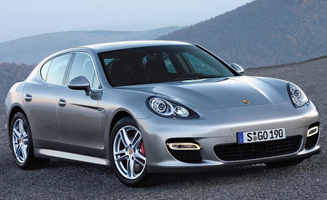
PORSCHE PANAMERA
Ogawa—That's related to the overall fuel economy regulations we discussed earlier, isn't it? Hybrids help improve fuel efficiency.
Watanabe—Also, in Europe, with the increasing number of diesel vehicles, the tide is beginning to turn. There's no inherent tax advantage for diesel fuel, and they are at a disadvantage regarding NOx emissions compared to gasoline engines.
—Aren't they meeting the regulatory standards?
Watanabe—Of course, they meet European regulations, but Japanese and North American regulations for NOx are significantly stricter. It's said that Euro 6, which will be implemented in 2014, will bring them closer to Japanese and US levels, but Euro 6 is not yet finalized.
—What kind of regulations are in effect in the United States?
Watanabe—It's called 'TIER2BIN5.' Japan has the 'Post New Long-Term Regulations.' Both are comprehensive regulations, but there are slight differences by country. Japan and the US are particularly strict on NOx due to issues with photochemical smog.
—Speaking of which, there were reports in December that Germany is on track to meet its Kyoto Protocol targets.
Watanabe—Germany doesn't even use nuclear power, so how are they managing to curb CO2 emissions so effectively? It wouldn't be surprising if a significant amount of CO2 were emitted from power generation.
—Could offsets be a factor?
Watanabe—They are likely counted. However, I believe thermal power generation emits more CO2 than automobiles. In that sense, a society with electric vehicles might be difficult to achieve without nuclear power as a prerequisite.
Ogawa—By the way, hybrid technology is technically challenging, isn't it? Though perhaps simpler than fuel cell vehicles. Some might consider developing hybrids a detour.
Watanabe—However, I think there's a judgment that this 'detour' period is likely to last longer than initially predicted. There's also talk that fuel cell vehicles won't become widespread for another 20 years. Realistically, considering the cost issues, some believe it will take that long for them to become affordable for the average consumer.
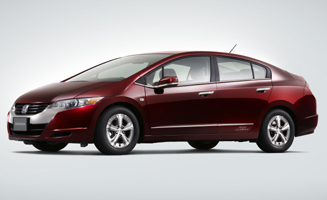
HONDA FCX CLARITY
Ogawa—Incidentally, in 2008, Honda began leasing the fuel cell vehicle FCX Clarity in the US and Japan. In Japan, it's available to government agencies and corporations, not individual consumers.
Watanabe—It will likely take a considerable amount of time before the Clarity becomes available for purchase at a price point like two million yen.
Taki—Have you driven the Clarity?
Watanabe—Yes. It drives like a regular electric car. It's surprisingly nimble and perfectly adequate for daily use.
Ogawa—In terms of being powered by a motor, it's no different from a pure EV (electric vehicle).
—As a next-generation mobility solution, what are your thoughts on the Clarity?
Watanabe—If the fuel cell system becomes more compact, simpler, and lower cost, it would be remarkable. At that point, the very shape of the car might undergo significant changes.
Ogawa—Will they start looking like those old sci-fi drawings? Perhaps shaped like bowls? (laughs) But cars have a certain aesthetic, a beautiful form, like the golden ratio, so that might be a delicate balance.
Toyota Prius vs. Honda Insight
—Let's bring the conversation back to the near future. In 2009, new models of the Toyota Prius and Honda Insight, pioneers of hybrid technology, are set to debut.
Watanabe—According to rumors, the previous Prius model will also continue to be sold alongside the new one.
Ogawa—Why would that be?
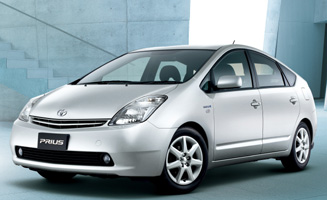
TOYOTA PRIUS
Watanabe—The new model will likely have a displacement of around 1.8 liters, but its price is also expected to increase. This might make it difficult to compete with the Insight, which debuts in January with a price around two million yen. This is just a rumor, so the truth is unknown.
—Why would the price increase?
Watanabe—The Prius is driven by a diverse range of people with various demands, necessitating an improvement in its product appeal. Consequently, the price might end up in the high two-million-yen range.
Ogawa—What about Lexus for the future?
Watanabe—There are plans to introduce a hybrid model in Japan next year.
—This refers to the RX, the successor to the Harrier. It will combine a 3.5-liter V6 with an electric motor. I believe its debut is scheduled for around March.
Watanabe—A dedicated hybrid model will debut at the Detroit Motor Show in January. Toyota is positioning the next-generation Prius and the Lexus hybrid as their key offerings in the American market.
—The Honda Insight also debuts in January.
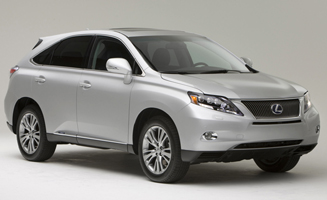
LEXUS RX450h
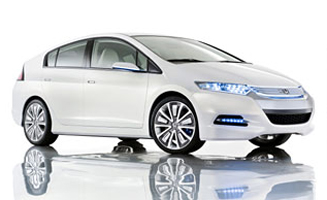
HONDA INSIGHT
Watanabe—Finally, Honda will release a model that is both affordable and clearly identifiable as a hybrid. It's also practical as a four-door vehicle.
—Incidentally, I hear that in Japan, hybrids will receive tax incentives starting around May.
Watanabe—Yes, I believe it involves reducing the automobile acquisition tax. The government is also reportedly allocating around 200 billion yen. This is still at the proposal stage within the Liberal Democratic Party.
—In that sense, hybrids will continue to have favorable conditions. Nissan also plans to fully introduce hybrids in 2010.
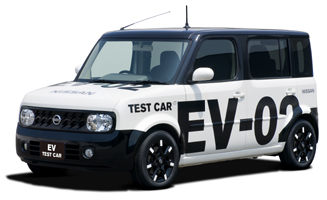
NISSAN EV-02

MINI E
Watanabe—They also plan to introduce a pure EV based on the Cube. Nissan has already developed a test vehicle called EV-02 using the previous generation Cube.
—Looking at Europe, Porsche and Audi seem to be strongly focused on hybrids, but for example,
—BMW, for instance, remains committed to engines, developing hydrogen engines, while also releasing the Mini EV. Mercedes is developing an engine that injects gasoline at high pressure and ignites it without a spark plug, essentially a gasoline version of a diesel engine.
Watanabe—It's called 'DiesOtto.' While Mercedes' exact intentions are unclear, they are likely planning to develop an engine with extremely low CO2 emissions by combining it with biofuels.
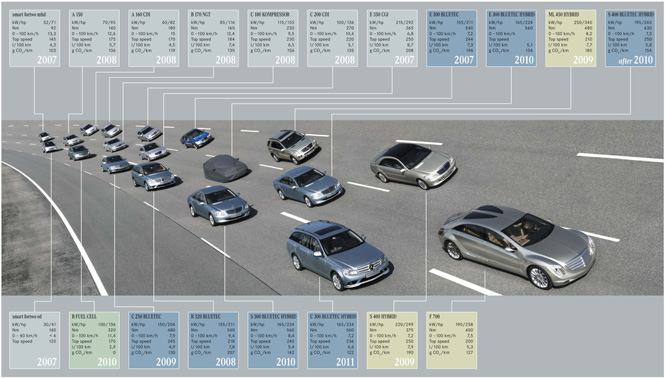
Mercedes-Benz's presentation at the 2007 Frankfurt Motor Show showcased the current state and near future of ecological vehicles. Various initiatives, including BlueTec diesel, hybrid, and fuel cell technologies, are evident. Leading the display is the F700, equipped with a 1.8-liter inline-4 unit named DiesOtto. It achieves a maximum output of 258 ps while delivering impressive environmental performance with a fuel efficiency of 18.9 km/l and CO2 emissions of 127 g/km.
—Ultimately, is the final goal still fuel cells?
Watanabe—If EVs evolve dramatically, the CO2 issue is resolved, and charging takes only five minutes at a gas station, then EVs would likely become mainstream. However, a conclusion hasn't been reached yet.
—So, that's still a ways off?
Watanabe—We're talking about 10 to 20 years from now. That's why companies like Volkswagen and Mercedes are researching all potentially viable technologies. Of course, Toyota, Nissan, and Honda are likely conducting similar research, even if it's not publicly disclosed.
—And BMW?
Watanabe—They are researching hybrids and hydrogen engines behind the scenes, but they seem to be exploring whether internal combustion engines can still go further. By refining existing technologies, they believe they can create even more efficient power units. BMW's current lineup already boasts high thermal efficiency, and their catalog CO2 emissions are notably lower than those of Benz and Audi. I suspect they believe there's still room for improvement as an engine manufacturer.
—It seems there are still many uncertainties regarding the future of automotive design.
Watanabe—No one knows for sure which environmental technologies will ultimately prevail. It's possible that factors beyond the automotive industry itself—politics, national policies, or investment institutions—will play a decisive role, perhaps even influencing decisions beyond the industry's reach.
Ogawa—Cars are being swayed by various political currents.
Taki—Given that environmental issues are intrinsically linked, it's an unavoidable consequence.
Ogawa—In that case, it becomes difficult for us to dream about cars. It's precisely at times like these that we must emphasize that cars are, in a positive sense, emotional beings, rather than getting bogged down in technicalities. We need to convey the fundamental appeal of cars, keywords like 'interesting lifestyles' and 'journeys,' in a way that resonates.

OGAWA Fumio
Worked for approximately 20 years at the editorial department of the automotive magazine 'NAVI.' Was involved in the launch of the automotive website 'WebCG' (http://www.webcg.net/WEBCG/). Currently works as a freelance journalist, contributing to automotive content for platforms such as 'DHC Oyaji Club' (http://www.oyaji-club.jp/) and 'Nikkei BPtv' (http://bptv.nikkeibp.co.jp/), as well as covering a wide range of lifestyle topics including gourmet (e.g., 'Shukan Post,' 'Departures') and goods (e.g., 'Shukan Asahi').
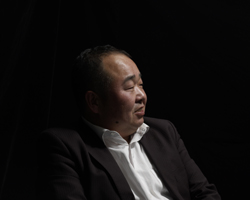
TAKI Masashi
Born in Shizuoka Prefecture in 1961. After working for a magazine editing production company and the production department of an advertising agency, became a freelance writer based in Hayama Town, Kanagawa Prefecture. Contributed articles on cars and travel to publications such as 'Esquire Japan.' Served as Editor-in-Chief of 'Audi Magazine Japan Edition' for four years starting in 2003. Currently enjoys weekday onsen (hot spring) tours on his '79 KAWASAKI Z650LTD.

WATANABE Toshifumi
Born in Fukuoka Prefecture in 1967. After working in the motorcycle and automobile editorial departments at Kikaku Shitsu Neko (now Neko Publishing), became a freelancer. His serialized feature 'Car Nabe' in 'Shukan Bunshun' is highly popular among female readers as a witty commentary on society and life through the lens of automobiles. In addition to specialized automotive magazines, he also writes for numerous general interest publications such as 'MEN'S EX' and 'UOMO,' gaining considerable popularity.