The 2020 Problem and the Frankfurt Motor Show | IAA 2015
66th Frankfurt International Motor Show|IAA 2015
The 2020 Problem and the Frankfurt Show
The "auto show" held every two years in Frankfurt, Germany,the 66th Frankfurt Motor Show (IAA) 2015began this month on the 15th. The show, themed "Environment," was packed with new models. What is the "2020 Problem" that automakers are currently grappling with? Fumio Ogawa reports from the scene.
Text by OGAWA Fumio
German Carmakers' Eco-Car Strategy
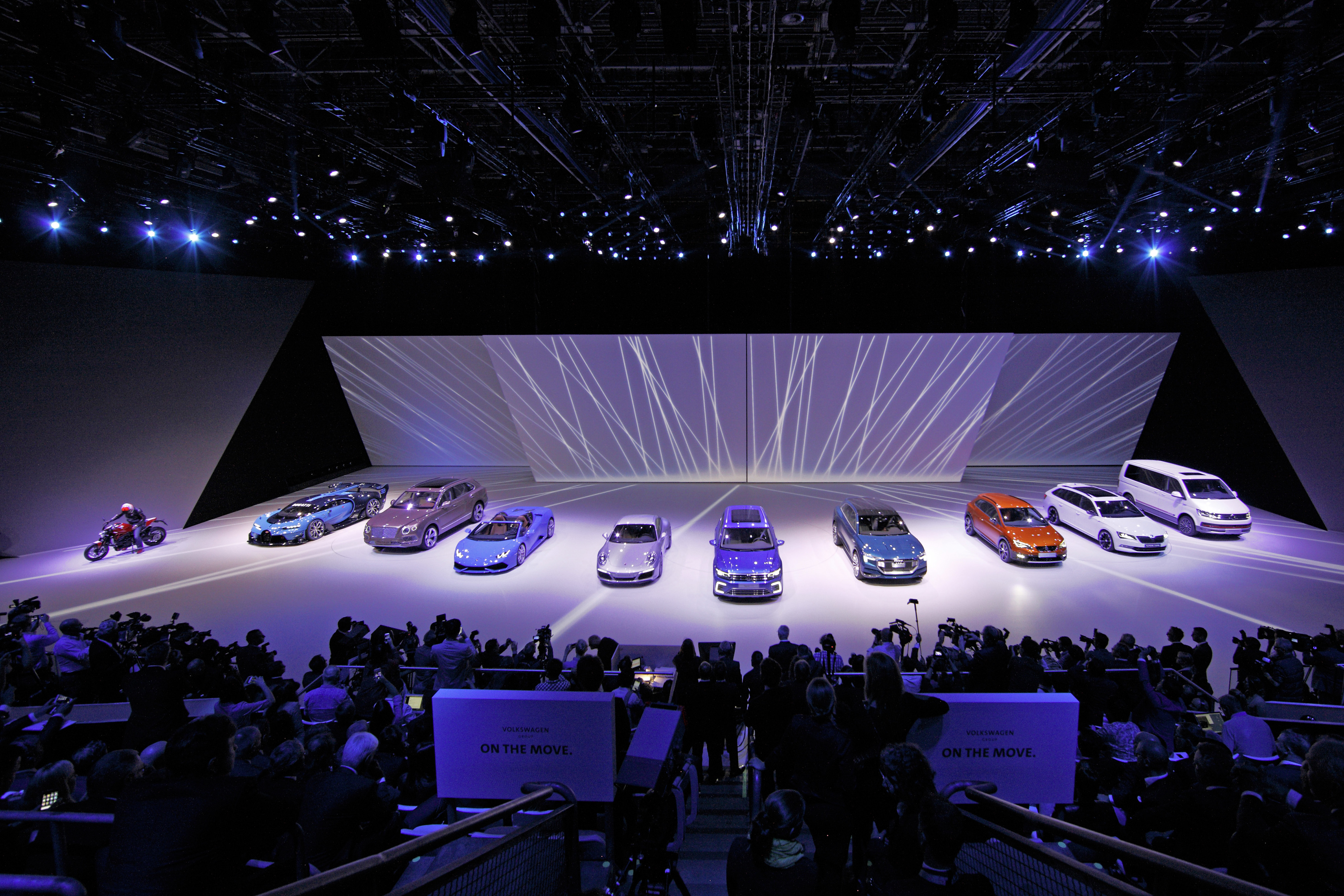
The auto show held in Frankfurt, Germany, in September 2015, commonly known as the Frankfurt Show, was, in a word, an "eco-car parade." Starting with Porsche's electric vehicle, Audi, Volkswagen, Mercedes-Benz, and BMW all exhibited numerous electric and plug-in hybrid vehicles.
The reason for this is the "2020 Problem" that automakers are currently struggling with. Readers may already be aware, but the European Commission has mandated that the CO2 emissions from vehicles sold in the European market be reduced to an average of 95g per kilometer. This regulation is set to take effect in 2020, and exceeding this limit will result in substantial fines.
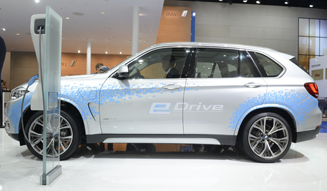
BMW X5 xDrive40e
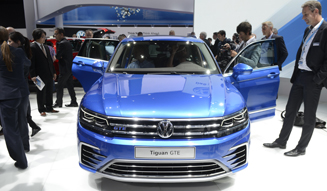
Volkswagen Tiguan GTE concept
For automakers, who are conscious of their social responsibility and for whom environmental compliance is a must for investor relations, finding a solution by 2020 is imperative. Consequently, plug-in hybrids (PHVs), which can be charged and where the electric motor plays a larger role than the engine, are currently drawing significant attention.
Not long ago, PHVs were considered a luxury. They were expensive, and owners existed in a somewhat peculiar dual state, conscious of their social responsibility while also displaying their privileged position in society. That dynamic has shifted dramatically. In Germany, the prices of plug-in hybrids have been strategically lowered, and models are now appearing that are priced comparably to gasoline-powered cars.
"With plug-in hybrids, we can achieve under 90 grams per kilometer. We want to popularize as many as possible to avoid falling afoul of the regulations." A spokesperson for a manufacturer based in Munich explained the situation at the show.
Volkswagen and Audi, in particular, are pursuing their eco-car strategies, including PHVs, with a strong lineup.
66th Frankfurt International Motor Show|IAA 2015
The 2020 Problem and the Frankfurt Show (2)
SUVs Remain Highly Popular
"Our newly developed 2-liter, 4-cylinder gasoline engine is more fuel-efficient than the previous 1.4-liter, meaning lower CO2 emissions," stated Dr. Ulrich Hackenberg, head of technical development at Audi AG, proudly at the Frankfurt Motor Show where the new Audi A4 was unveiled.
The new A4's 4-cylinder engine utilizes the Miller cycle, rather than the conventional Otto cycle. Toyota Motor Corporation is also actively pursuing this technology. Simply put, it offers advantages in combustion efficiency by adjusting the closing timing of the intake valves, which guide the air-fuel mixture (which ignites to move the pistons), making the expansion ratio larger than the compression ratio.
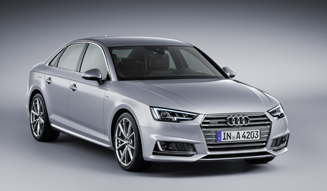
Audi A4
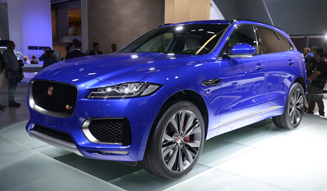
Jaguar F-PACE
"Society is moving towards greater energy conservation and CO2 reduction. In this context, urbanization (transportation suited for city travel) will increasingly steer towards intelligent solutions," stated Dr. Martin Winterkorn, Chairman of the Board of Management of the Volkswagen Group.
"Intelligent" is a trendy keyword in the automotive world today, signifying the use of electronic assistance to improve fuel efficiency. This encompasses everything from engine combustion control to autonomous driving systems that enable more fuel-efficient driving than a human can achieve.
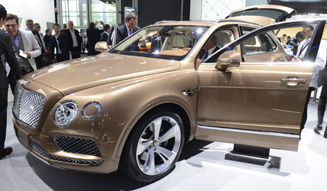
Bentley Bentayga
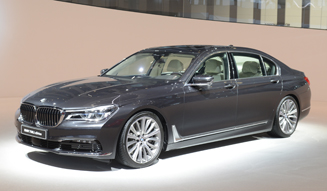
BMW 7-Series
SUVs continue to be globally popular, and at this show, Bentley unveiled theBentayga, and Jaguar unveiled theF-PACE, showcasing a lineup of exciting new models. Volkswagen announced a new Tiguan, with the plug-in hybrid model called "GTE" being a particular highlight. This large SUV can travel 50km on electric power alone, and its large roof is notably fitted with integrated solar panels.
BMW's centerpiece at the show was the completely redesigned7 Series, with particular emphasis placed on the plug-in hybrid model, the 740e. Achieving nearly 50km per liter and emitting only 49 grams of CO2 per kilometer, it certainly warrants the declaration, "This is the benchmark for the future of luxury sedans." Furthermore, plug-in hybrid models, designated with an "e" after the model number, were also introduced for theX5, 3 Series, and 2 Series.
66th Frankfurt International Motor Show|IAA 2015
The 2020 Problem and the Frankfurt Show (2)
Creating Sports Cars with Pure EVs
"Sports cars and EVs have been seen as oil and water, but we have succeeded in merging them." With these words from Porsche AG President Matthias Müller, the veil was lifted at the show on a four-door concept model namedMission E.
"I believe it will serve as an example of what happens when you create a sports car with a pure EV," Müller stated. The car boasts performance comparable to a supercar, accelerating from a standstill to 100 km/h in 3.5 seconds. Charging takes only 15 minutes, and emphasis was placed on its usability for everyday Porsche driving. However, the Mission E, with its suicide doors and distinctive curved paneling, is currently a concept model.
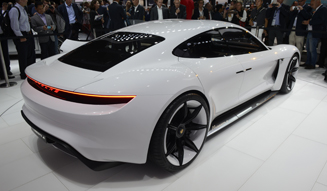
Porsche Mission E
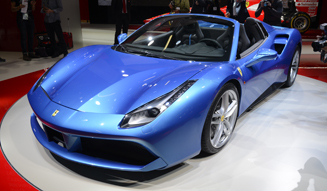
Ferrari 488 Spider
While the rumored 4-cylinder model of the 911 did not appear, Müller emphasized that the future direction for the 911 will involve utilizing efficient turbo technology to increase torque from low RPMs, thereby improving fuel economy.
"We understand that efficiency is very important," said Automobili Lamborghini CEO Stefano Domenicali.
"However, we will not immediately equip the 'Aventador' or 'Huracan' with turbocharged V6 engines, as our fans do not expect that. But we will likely use a turbo engine in the SUV we will announce soon (reportedly named 'Urus' and planned for a 2018 release). Although it will be based on a platform developed by Audi (within the same group), it will be a model that fully embodies Lamborghini's unique character."
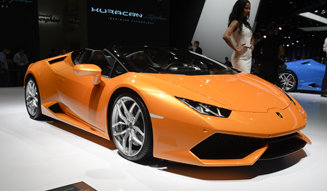
Lamborghini Huracan LP610-4 Spider
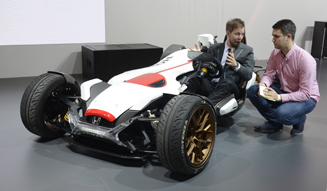
Honda Project 2&4
Lamborghini, which unveiled theHuracan LP610-4 Spiderat the Frankfurt Motor Show, may also be at a crossroads towards a new era.
Rival Ferrari was the first to adopt turbocharging, and at this show, the488 Spiderwas unveiled. While still popular, what personally left a strong impression was Honda's concept model,Project 2&4. This four-wheeled vehicle is equipped with the 1-liter V4 engine from the RC213V racing motorcycle and has a handmade feel, with only a minimal body covering. The paintwork evokes Honda's F1 cars from the 1960s. While it was disappointing that there was no environmental statement, it was a model that inspired anticipation for the future.