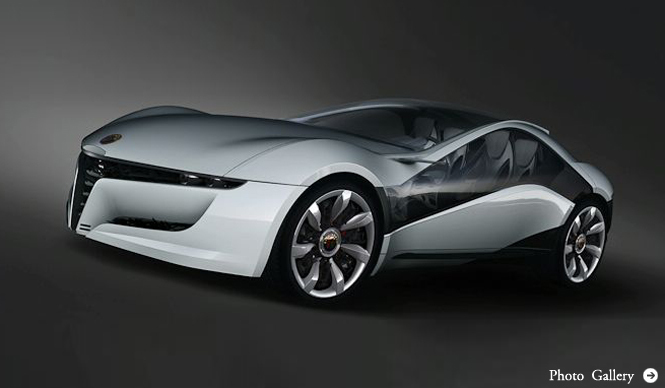
ALFA ROMEO PANDION | The Pinnacle of Italian Design
ALFA ROMEO PANDION | THE PINNACLE OF ITALIAN DESIGN
The Pinnacle of Italian Design
Bertone, renowned as an Italian design house, crafted a concept car to commemorate Alfa Romeo's 100th anniversary. The model's name is "PANDION." Its unveiling at the Geneva Motor Show has now revealed its specifications.
Text by Giraffe
A Car of the Future
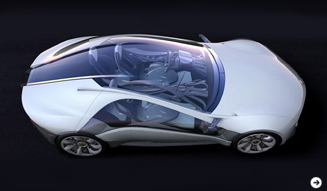
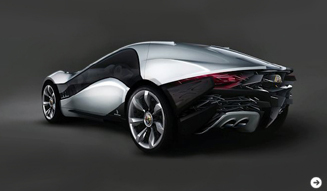
While the Pandion's design, with its traditional Alfa shield grille at the front, is just recognizable as an Alfa Romeo, its large glass areas, body shape, and complex rear section exude an aura of a true car of the future.
Alfa Romeo is exhibiting concept cars for the successors to the "159," "Brera," and "Spider" at this year's Geneva Motor Show, and this Pandion can be seen as hinting at the direction for the Brera's successor.
Based on the 8C Competizione
According to current information, most of the mechanical components are expected to be borrowed from the "8C Competizione," with a 4.7-liter V8 engine planned for its powerplant.
Additionally, Italdesign is responsible for the four-door sedan concept car that will succeed the 159, while Pininfarina is designing the successor to the Spider.
The Alfa Romeo booth at this year's Geneva Motor Show is a must-see, not just for Alfisti.
BRAND HISTORY
From sedans to open-top sports cars, ALFA ROMEO boasts immense popularity in Japan, thanks to its stylish Italian design and sporty performance. The company was founded in 1910 when Italian entrepreneurs purchased a car assembly plant in Milan from the French company Darracq, establishing A.L.F.A. The name A.L.F.A. is an acronym for "Anonima Lombarda Fabbrica Automobil," meaning "Lombard Automobile Manufacturing Company."
A.L.F.A. quickly introduced its own model, the "24HP," and began to make a name for itself as a sports car manufacturer through its racing participation. However, its financial situation was not robust, leading to a significant change in management in 1915. At this juncture, industrialist Nicola Romeo took the helm. In 1918, the company name was changed to Nicola Romeo & Co., and in 1920, after World War I, the first model bearing the Alfa Romeo emblem, the "Torpedo 20-30," was released.
In 1922, the company launched the "RL," a full-fledged sports model. A one-two finish at the 1923 Targa Florio brought the Alfa Romeo name to prominence. In the same year, 1923, the racing car "P1" was developed, featuring a DOHC in its 1990cc 6-cylinder engine, a technology that would come to characterize Alfa Romeo. However, the P1 itself was a failure. Consequently, Alfa Romeo recruited the brilliant engineer Vittorio Jano from Fiat to develop the Grand Prix car "P2," which would leave a brilliant mark on racing history.
After World War II, the company transitioned to mass-producing cars, releasing iconic Alfa Romeo models such as the "Giulietta Sprint" in 1954 and the "Giulia" in 1962. After being acquired by Fiat in 1986, models like the "Alfa 156," "Alfa 145," and "Alfa 147" became hits in Japan, further increasing Alfa Romeo's popularity.