
BUGATTI 16C GALIBIER CONCEPT | A Four-Door Saloon at the Pinnacle of the World
BUGATTI 16C GALIBIER CONCEPT | BUGATTI 16C GALIBIER CONCEPT
A Four-Door Saloon at the Pinnacle of the Automotive World
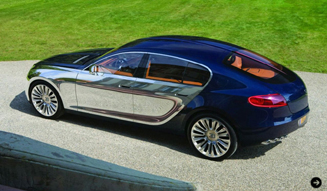
Bugatti unveiled the "16C Galibier Concept" at a ceremony celebrating its centenary.
By Giraffe
0-100 km/h in 2.5 Seconds, Top Speed of 407 km/h: Unrivaled Performance
Bugatti announced that the 16C Galibier Concept was developed as the world's most exclusive, elegant, and powerful luxury four-door saloon, with a high likelihood of reaching production.
While official specifications have not been released, the powertrain is said to be an 8-liter W16 engine with four superchargers, producing a maximum output of 1001 hp and 127.5 kgm of torque. Combined with a 7-speed DSG and full-time 4WD, the performance figures are a 0-100 km/h acceleration of 2.5 seconds and a top speed of 407 km/h.
Notably, this model can run on ethanol as well as gasoline. It features a newly developed suspension system and is equipped with ceramic brakes.
The Watch: Parmigiani "Reverso Tourbillon"
The exterior design is unmistakably Bugatti. Its signature horseshoe grille and rounded LED headlamps are quintessential Bugatti. The body panels are crafted from carbon fiber and finished in dark blue.
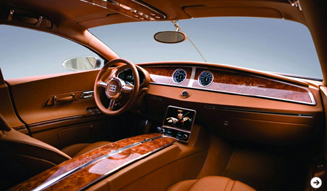
The interior also boasts a distinctive design, with a console that runs through the front and rear. Two meters are centrally located on the dashboard, with a detachable Parmigiani "Reverso Tourbillon" positioned below them. When fitted with its leather strap, it can be used as a wristwatch.
Named after "Galibier," a notoriously difficult mountain pass on the Tour de France, this new model is undoubtedly a four-door saloon that stands at the pinnacle of the automotive world, presenting an insurmountable challenge to its rivals.
Bugatti's unwavering confidence is palpable in its decision to forgo the Frankfurt Motor Show and instead unveil the car at its centenary celebration in Molsheim, France.
BRAND HISTORY
The fusion of art and technology. This spirit permeates the many legendary cars created by BUGATTI.
It is a spirit inherited directly from its founder, Ettore Bugatti. Born in Milan in 1881, Ettore came from a lineage of artists: his grandfather, Giovanni, was an architect and sculptor, and his father, Carlo, was an industrial designer. Ettore possessed both the artistic sensibility and engineering acumen characteristic of the Bugatti family. Despite lacking formal engineering education, by the age of nineteen, he was already designing and building three-wheeled vehicles with engines at the tricycle factory where he worked, soon completing his first automobile and earning early recognition as an automotive engineer.
Noticed by an Alsatian nobleman, Ettore was invited to become the technical director of an automobile company. After leaving, and a stint with a German car manufacturer, he established his own brand. In 1909, he introduced the landmark "Bugatti Type 10" to the world.
Back in Alsace, Ettore developed a succession of luxury and racing cars. Achieving success in races like the 24 Hours of Le Mans in 1920, as well as in Formula 1 and the Targa Florio. However, after World War II and Ettore's passing, automobile production ceased. The brand was revived in the late 1980s by Romano Artioli, who launched the "EB110," but this venture was short-lived.
It was Volkswagen that breathed new life into this ill-fated luxury sports car marque. In 1998, the company acquired the Bugatti brand and established Bugatti Automobiles S.A.S. the following year. After presenting several concept cars at major motor shows, the production of the Veyron, a supersports model, was announced in 2001. Finally, at the 2005 Tokyo Motor Show, the production version of the Veyron was unveiled.