Wisdom from Tokyo's Eco-Homes - Photo - Web Magazine OPENERS

OPENERS

Today
OPENERS
  • Fashion
  • Beauty
  • Car
  • Watch & Jewelry
  • Design
  • Lounge
  • News Board
  • About
  • Log in
  • 日本語
  • English

today
Wisdom from Tokyo's Eco-Homes - Photo
Gallery

Wisdom from Tokyo's Eco-Homes - Photo

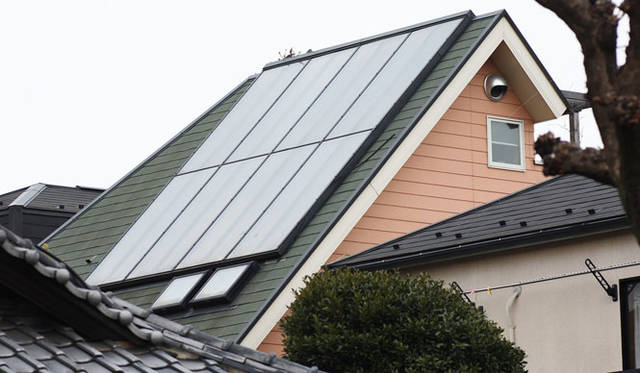
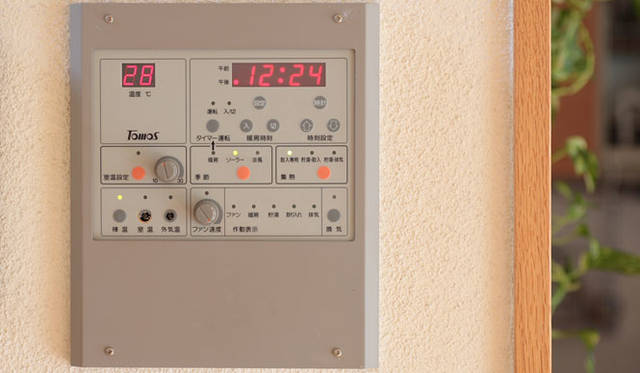
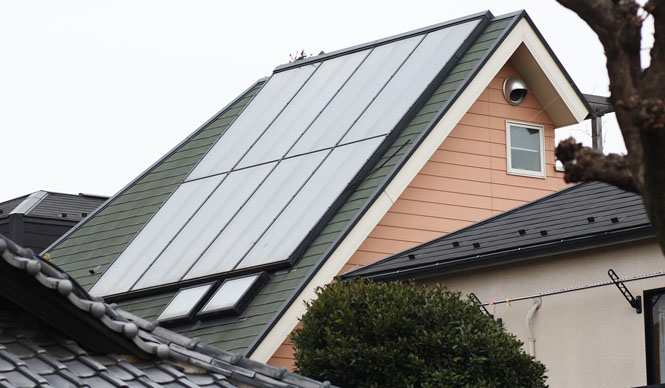
Passive solar systems are technologies and mechanisms that incorporate and utilize natural energy sources like the sun and wind in architecture. The "OM Solar" system, introduced by Minowa, is one such passive solar method that collects and uses solar heat from the roof. The initial cost at the time of construction was 2 million yen, with a 1 million yen subsidy available for its installation.
Among solar systems, those that concentrate solar heat with special devices like collectors or convert it to electricity are called "active solar." "Passive solar" refers to methods of utilizing solar energy through architectural design and ingenuity. Because it warms and circulates air, its key advantage is that it provides heating and ventilation simultaneously. The hot water used in summer is reportedly heated almost entirely by sunlight.
The cylindrical object visible on the right is the duct for OM Solar. It draws in outside air from the roof, warms it, and sends it underground through the duct. In essence, it transfers solar heat to the air for use.
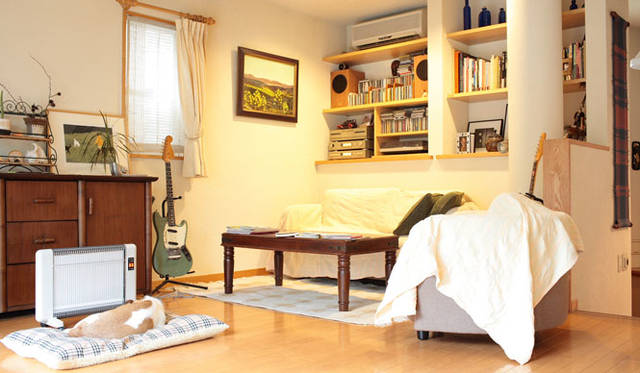
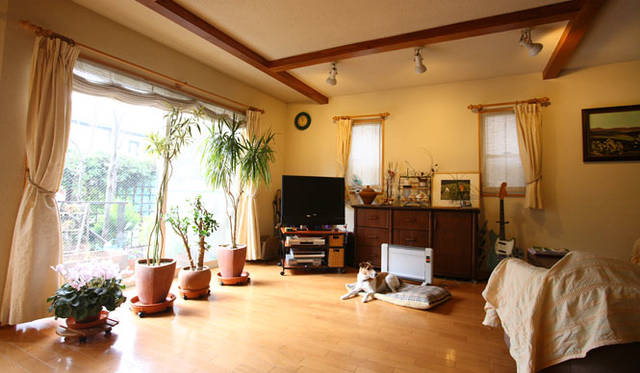
The walls are specified to be made of diatomaceous earth, known for its excellent humidity-regulating properties. This feature keeps the interior dry and comfortable even during the rainy season and prevents dirt from easily adhering due to its non-static surface. Living with their dog, Apollo, and two cats, the family hardly notices any odors. Diatomaceous earth is also a "circular material" that returns to the soil when discarded.
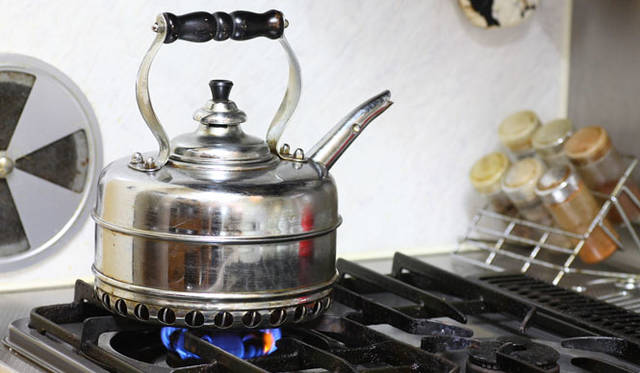
This handmade British kettle, "Simplex," is described as boiling water very quickly due to its high thermal conductivity, thanks to the copper coil wrapped around its base.
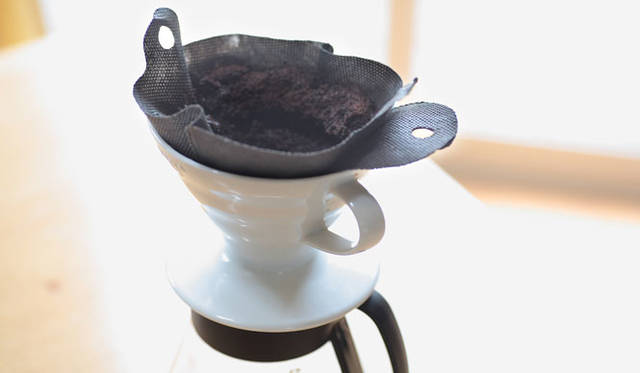
A reusable coffee filter made in Denmark, designed to be used 1000 times. It's a detail worth focusing on for an item used daily.
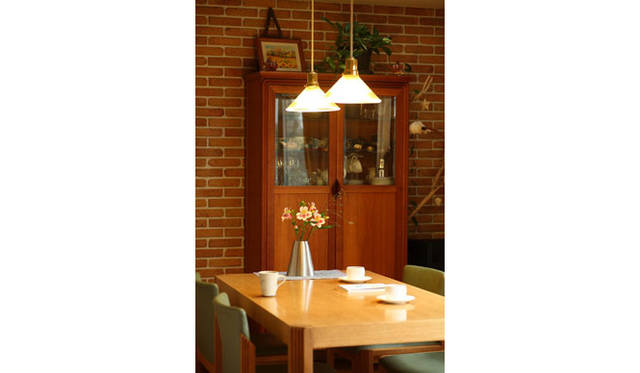
"We used to have incandescent bulbs only over the dining table, but we switched to long-life compact fluorescent lamps that have a similar warm hue." These consume about one-fifth the power. It's said that if all households in Japan replaced their incandescent bulbs with five of these, it would achieve 25% of the household sector's CO2 reduction target for the Kyoto Protocol.
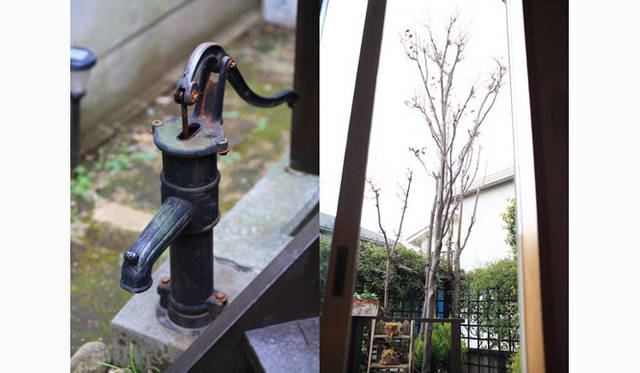
On the left is a pump for "rainwater." Rainwater collected on the roof flows through gutters into an underground tank. Utilizing rainwater for watering plants and as toilet water during water outages is part of their eco-friendly approach. On the right is a deciduous tree, chosen to block the sun in summer and allow sunlight in during winter when its leaves fall, illustrating passive solar design through landscaping.
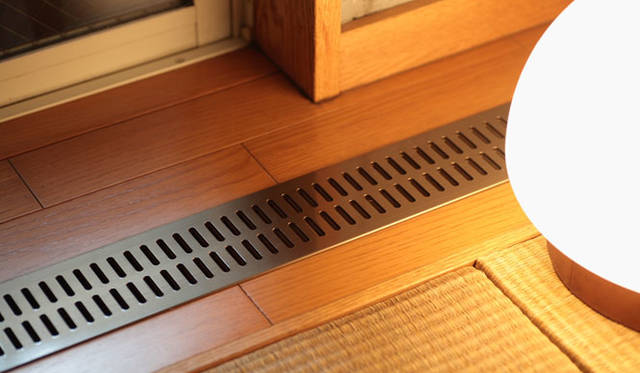
The floor vent in the Japanese-style room in the semi-basement. OM Solar, which stores heat by circulating air beneath the floor, pairs well with the principle of "warm air rising," allowing air to flow gently from the floor vents (OM Solar Association | http://omsolar.jp/)
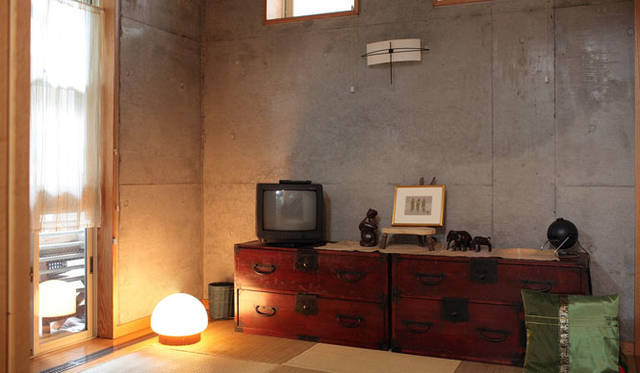
Although not visible in the photo, the concrete-finished Japanese-style room features wallpaper made from the stalks of Getto, an Okinawan plant. This washi paper is resistant to discoloration from UV rays, durable, and breathable, gently diffusing light.
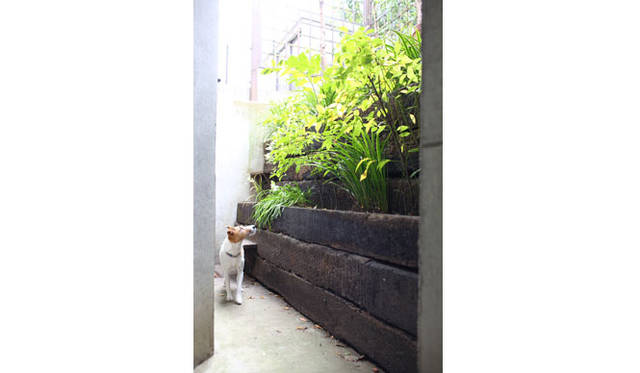
Outside the semi-basement SOHO space, old railway sleepers have been repurposed as retaining walls.
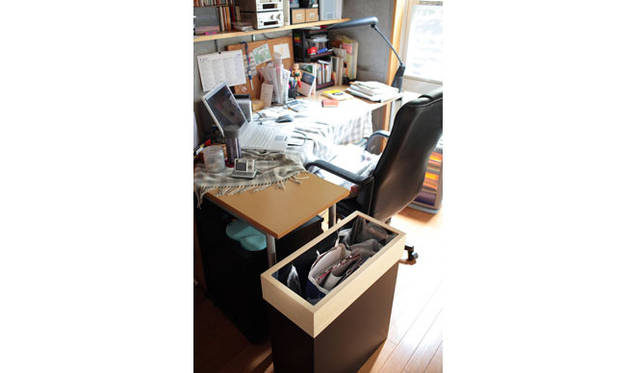
The trash can in the SOHO space is designed to separate waste into four categories: vinyl, recycled, resource, and paper.
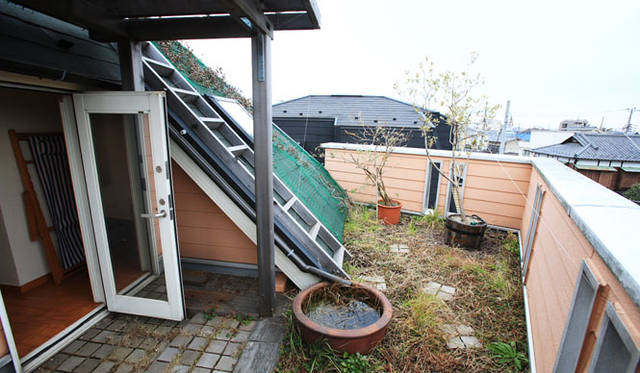
The rooftop garden, designed with a "bio-garden" concept, primarily uses native species. Soil was transplanted from a nearby housing complex slated for demolition. The vertical garden provides insulation, hosts medaka fish, and creates a true biotope—a space where life (Bios) meets place (Topos).
The author, Yayoi Minowa, is also involved in promoting renewable energy, such as solar power, through the environmental NPO "Ecology Online."
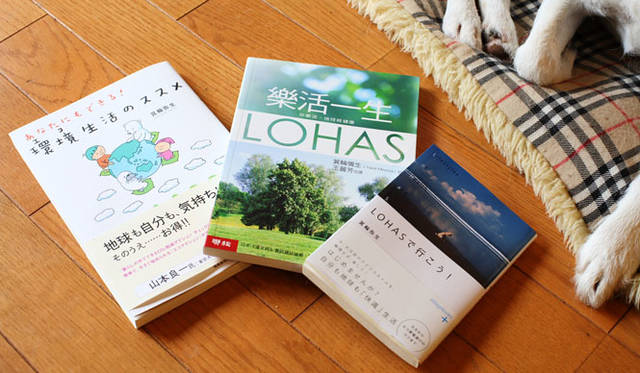
The book on the left, "Susume: Your Guide to an Eco-Friendly Life," uses "3.9 Paper," a system that actively incorporates wood produced in Japan as chips for paper products. This also contributes to carbon offsetting. Retail price: 1680 yen (Asahi Shimbun Publications Inc. / ISBN978-4-87031-833-5)
/

Wisdom of "Eco-Houses" Living in Tokyo - Photos
  • Share
  • Tweet
BRAND
  • HOME
  • Gallery
  • Wisdom from Tokyo's Eco-Homes - Photo
TOP BRAND INDEX
Follow us
Get the latest information from OPENERS official account
PAGE TOP
Web Magazine OPENERS
  • Fashion
    • MEN
    • WOMEN
    • NEWS
    • COLLECTION
    • FEATURES
    • CELEBRITY SNAP
    • BRAND INDEX
  • Beauty
    • NEWS
    • MEN
    • FEATURES
    • THE EXPERTS
    • BRAND INDEX
  • Car
    • NEWS
    • FEATURES
    • MOTOR SHOW
    • LONG TERM REPORT
    • IMPRESSION
    • BRAND INDEX
  • Watch & Jewelry
    • WATCH NEWS
    • JEWELRY NEWS
    • FEATURES
    • SIHH&BASEL
    • BRAND INDEX
  • Design
    • FEATURES
    • INTERIOR
    • PRODUCT
    • ARCHITECTURE
    • DIGITAL
    • BRAND INDEX
  • Lounge
    • TRAVEL
    • EAT
    • MOVIE
    • ART
    • MUSIC
    • BOOK
    • FEATURES
  • News Board
  • Login
  • Company Profile
  • Site Policy
  • Privacy Policy
  • Advertising Inquiries
  • Feedback
  • Careers
  • 日本語
  • English
Unauthorized reproduction of articles and photographs published in web magazine "OPENERS" is prohibited. copyright 2006-2026 ContrappuntoNippon Inc.