Why Is Saudi Arabia So Dazzling?
Marvels of Saudi Orchestra
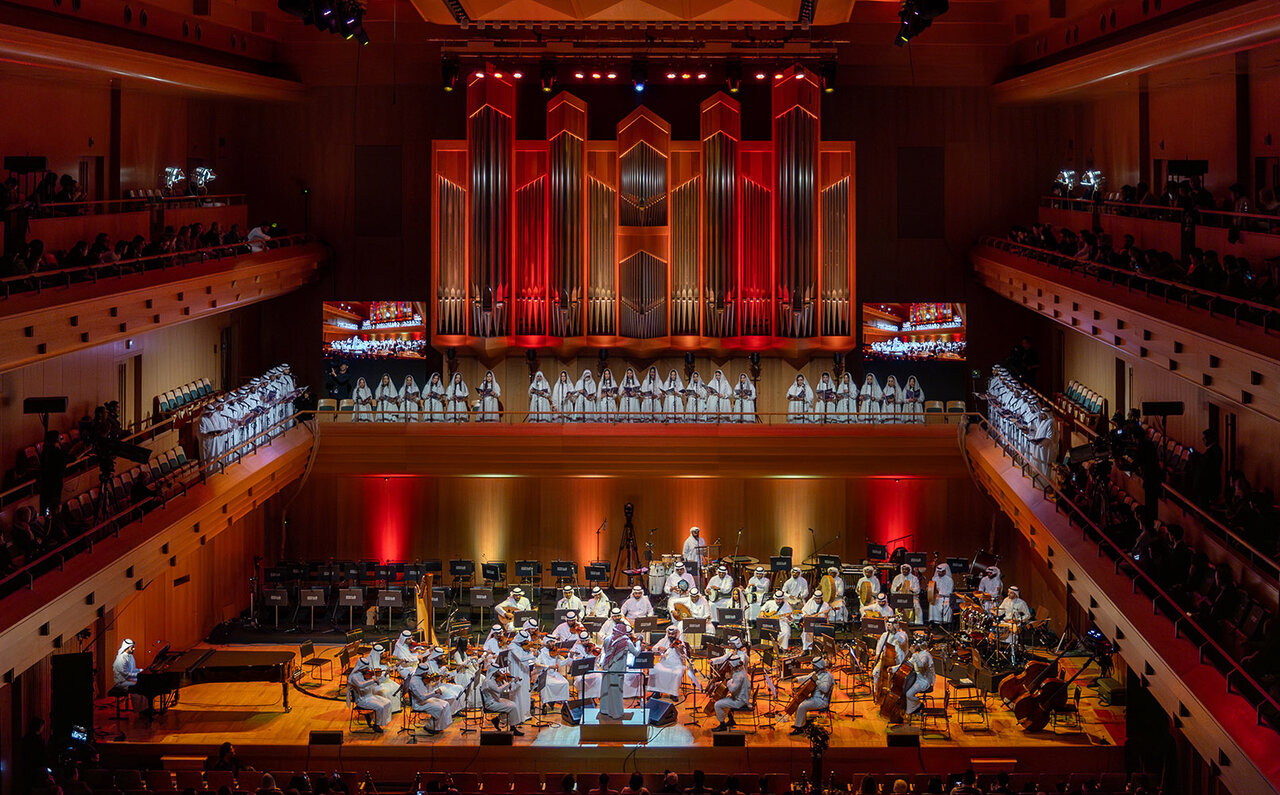
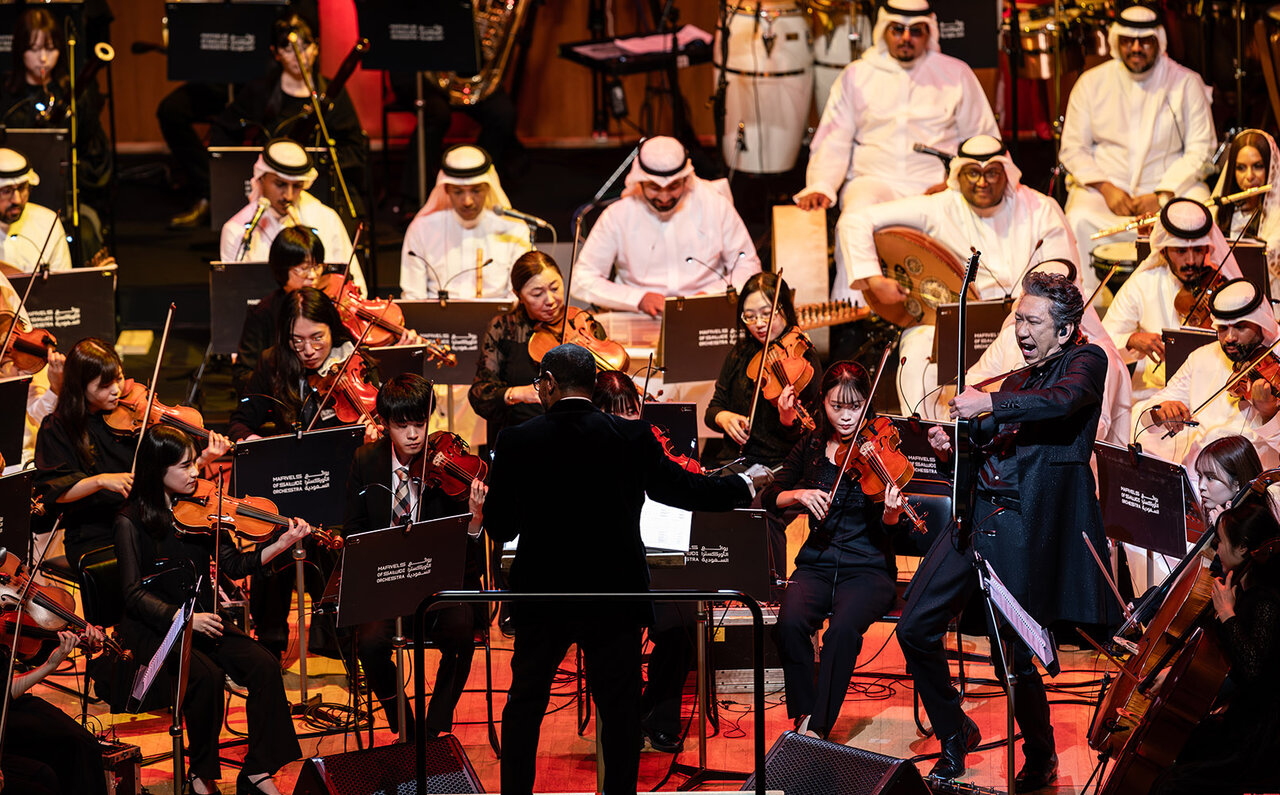
On November 22, 2024, Saudi Arabia's own orchestra, "Marvels of Saudi
Orchestra," held a one-night-only concert at Tokyo Opera City, featuring a collaboration with Japan's Gagaku orchestra (Imperial Household Agency Music Department), the Tokyo University of the Arts Orchestra Academy, and Tomoyasu Hotei.
Maestro Hiro
We already know well how ideologies and beliefs can sometimes run wild, leading to a tragic chain of events. But does a life devoid of ideology and belief truly possess beauty? As I spoke with conductor Hiroshi Yoshida, whom I met for the first time, I found myself pondering this very question.
"Isn't it time we consider what might be called healthy nationalism?"
I posed this question, or rather, a statement. Yoshida responded in this manner:
"That's patriotism, not nationalism. While I agree that 'music knows no borders,' I don't think that phrase should be used so lightly. Both people and music have a homeland. They have an identity."
Given the brevity of our exchange, this must be a natural sentiment for the maestro.
"Musicians have an identity. After all, simply imitating someone else isn't interesting, is it?"
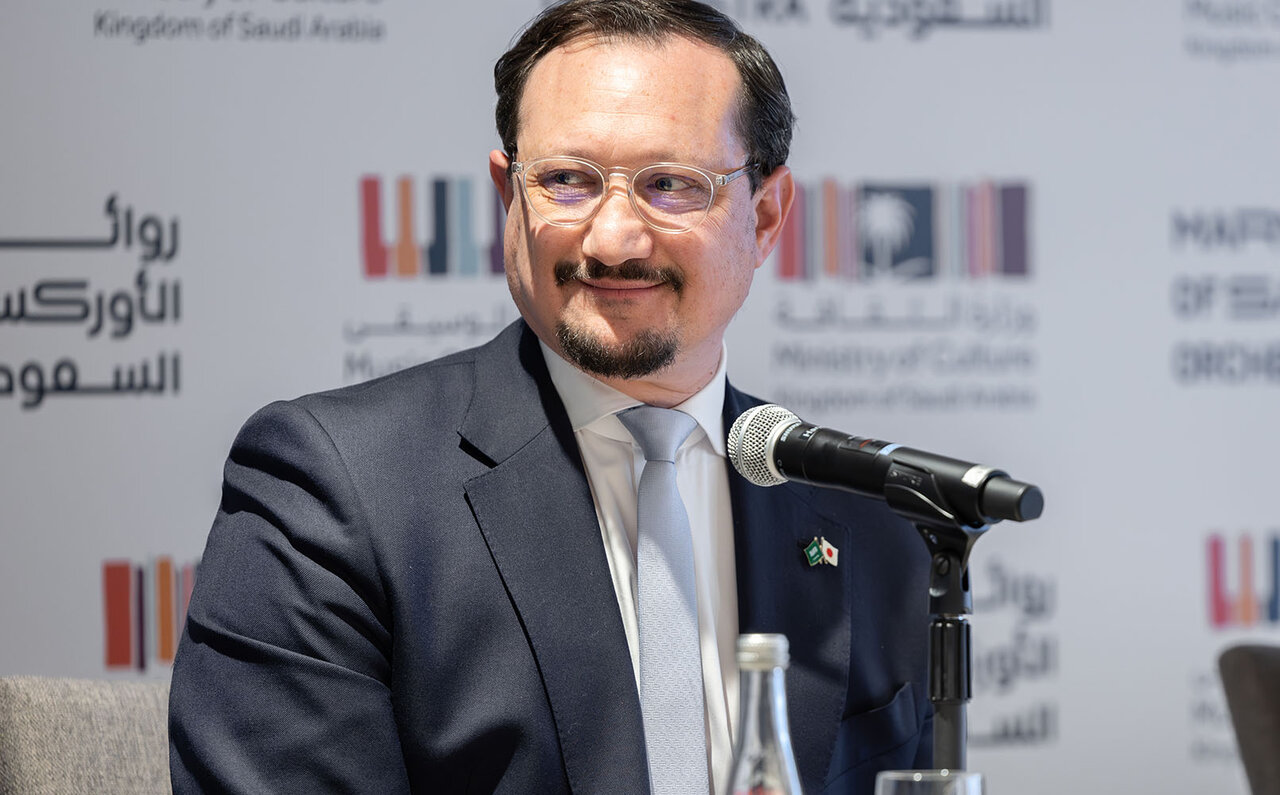
So, what was this all about? Towards the end of November, at Tokyo's Opera City, I had the opportunity for a brief interview with Hiroshi Yoshida, who was instrumental in making the concert "Marvels of Saudi Orchestra" a reality. This event, a one-time, three-part performance celebrating musical exchange between Saudi Arabia and Japan, was realized in just about six months, in commemoration of the 70th anniversary of diplomatic relations in 2025. Yoshida was the key figure on the Japanese side who embraced this rapid timeline.
"My relationship with Saudi Arabia began in 2017 when I conducted an orchestral concert there. At first... honestly, I was scared."
For a long time, entertainment like musical events, whether classical or punk, was prohibited in Saudi Arabia, a country that is home to Mecca.
It was around that time that a movement emerged to reform this situation, liberate culture, and build the nation through cross-cultural exchange. In 2016, a strategic framework called "Saudi Vision 2030" was born, aligning with the vision of Crown Prince and Prime Minister Mohammed bin Salman. The concert by the great Japanese maestro was also invited to Saudi Arabia within this context. However, Yoshida seemed aware that the nation's new directives might not be welcomed by its deeply rooted religion and culture.
"But you know, it's incredible. The thirst for music, for culture. The audience stood up during our orchestra's performance, cheering and whistling. Does that happen at classical music concerts? I had never experienced anything like it."
The Saudi National Orchestra and Choir was established two years later, in 2019. In just a few years, this young ensemble has performed internationally in Paris, Mexico City, New York, and London, with local musicians joining them, and Tokyo was their fifth stop. It's an astonishing momentum. Consider this: musicians who represent a nation are typically trained from childhood. For instance, would a world-class violinist emerge in just about five years? Yet, Yoshida
"I think this might have been what the Meiji Restoration felt like."
he said, his eyes shining.
"Japan has the longest history of Western classical music in Asia. Over 100 years ago, the first Japanese people to encounter Western classical music must have eagerly pursued the authentic. They were determined to catch up and surpass it. But perhaps that fervor eventually cooled, leading to the creation of domestic rules, methods, and styles? Has a double standard emerged, where the world is one thing and Japan is another?"
Yoshida further questioned whether the same could be said for Italy, a bastion of opera. When I countered that such a situation might be called a "mature market," he
"It may be mature, but does that make it the best in the world? I don't think so. Are you giving up just because it's mature?"
"Furthermore, if you're talking about a market, Saudi Arabia is precisely that. For Japanese people, classical music is still something learned from abroad, something to be emulated. We should consider the place of learning and our own market separately. We are sought after by Saudi Arabia. Just as Japan invited many foreigners during the Meiji Restoration to learn technology and culture."
Fly, Grendizer!
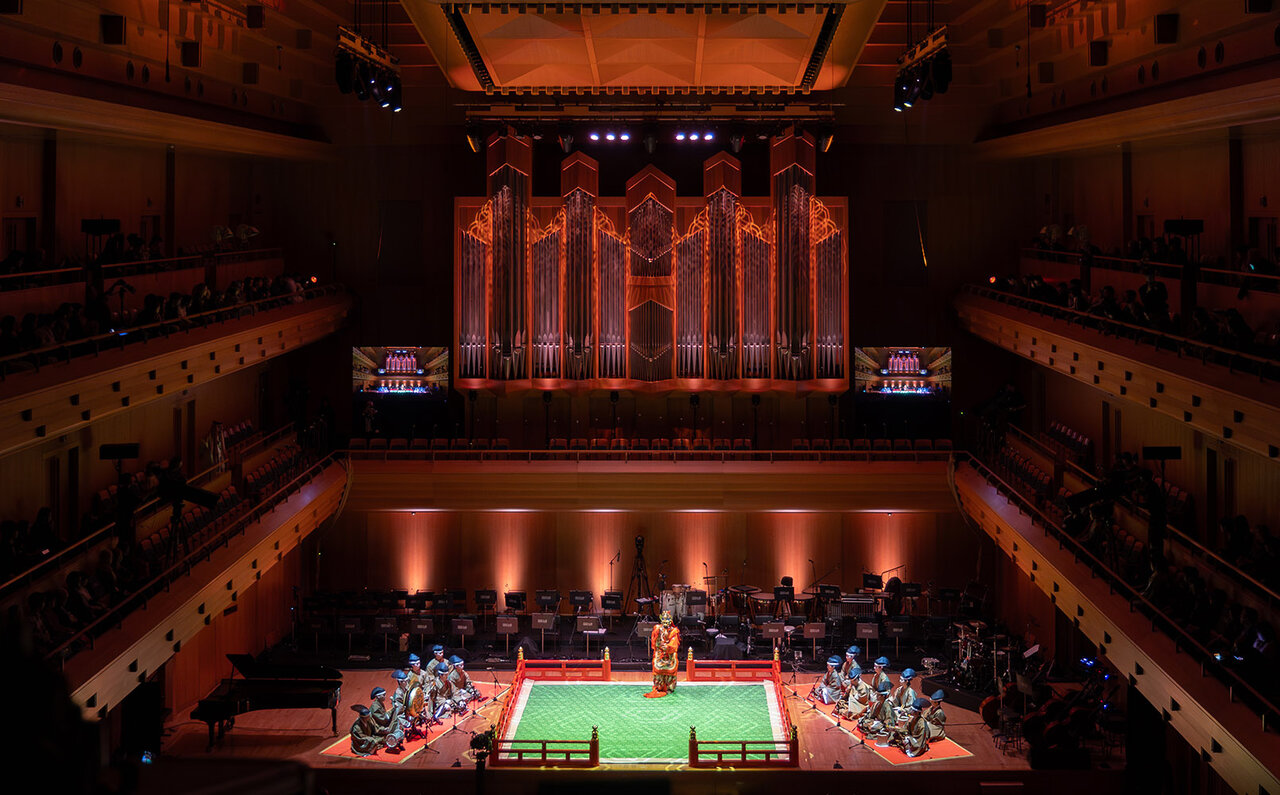
Two days after my conversation with Yoshida, on the day of the concert, my heart, ignited by the maestro's passion, still smoldered. The first part featured Gagaku, a program close to the maestro's heart. He explained to the Saudi side that this was not an art form dead for centuries, and to the Japanese side, the significance of performing it here and now, thus bringing it to fruition.
What was interesting here was that some of the audience members, presumably from Saudi Arabia, were quite vocal. Is listening quietly and attentively to music not considered that important in Saudi Arabia?
This intriguing phenomenon became even more pronounced during the second part, performed by the Saudi National Orchestra and Choir.
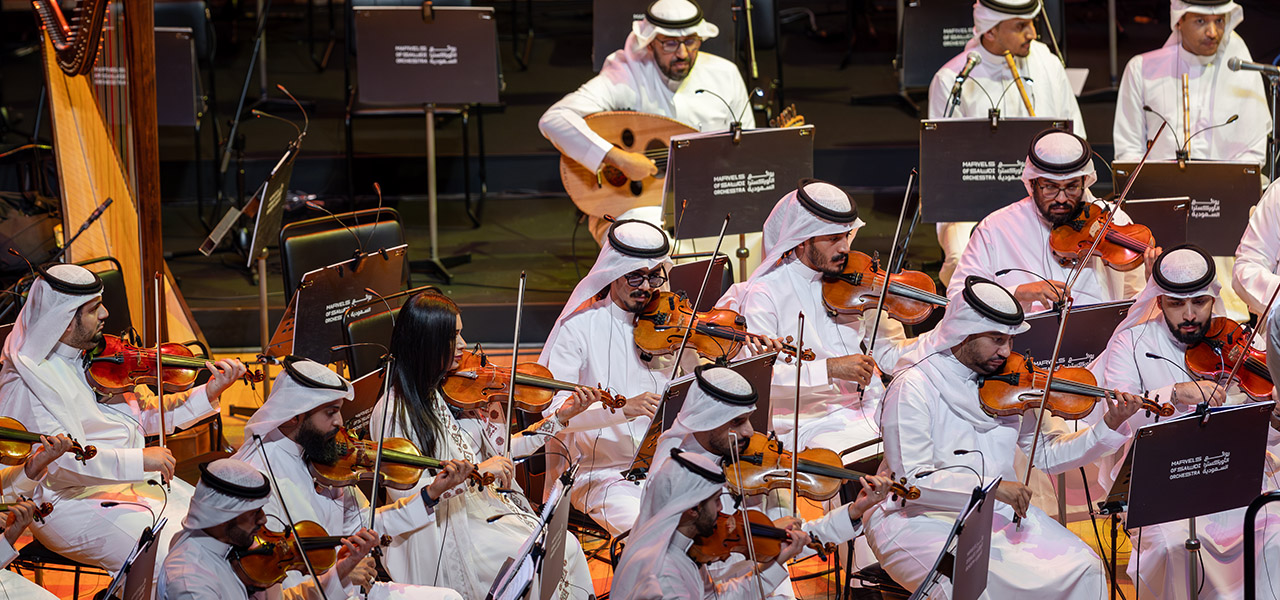
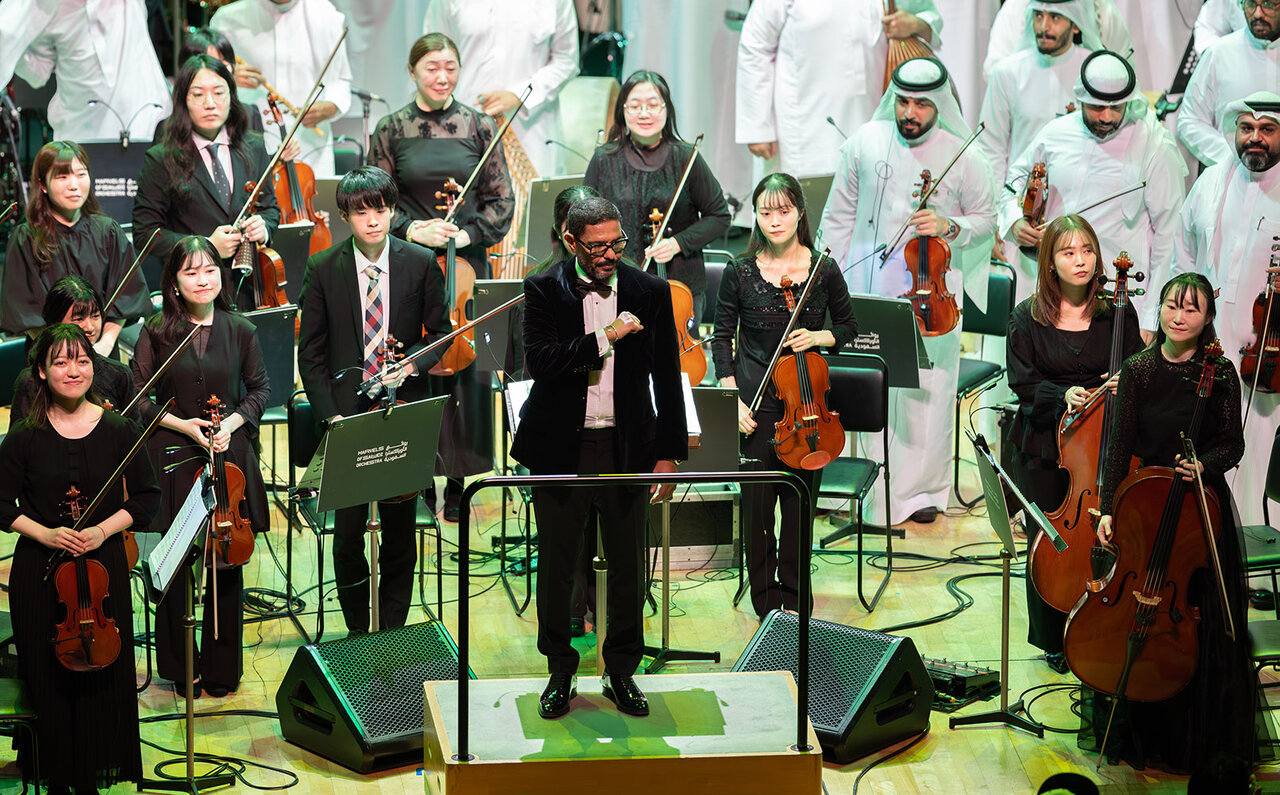
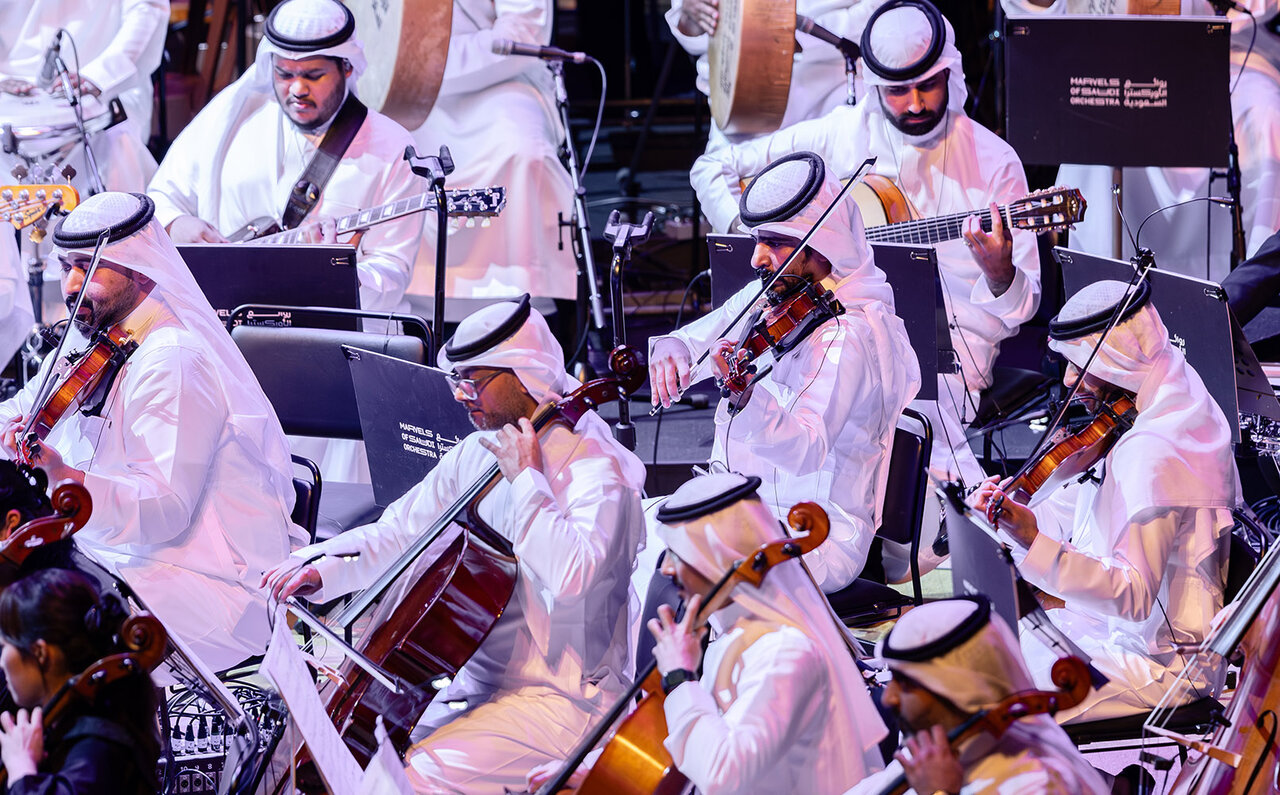
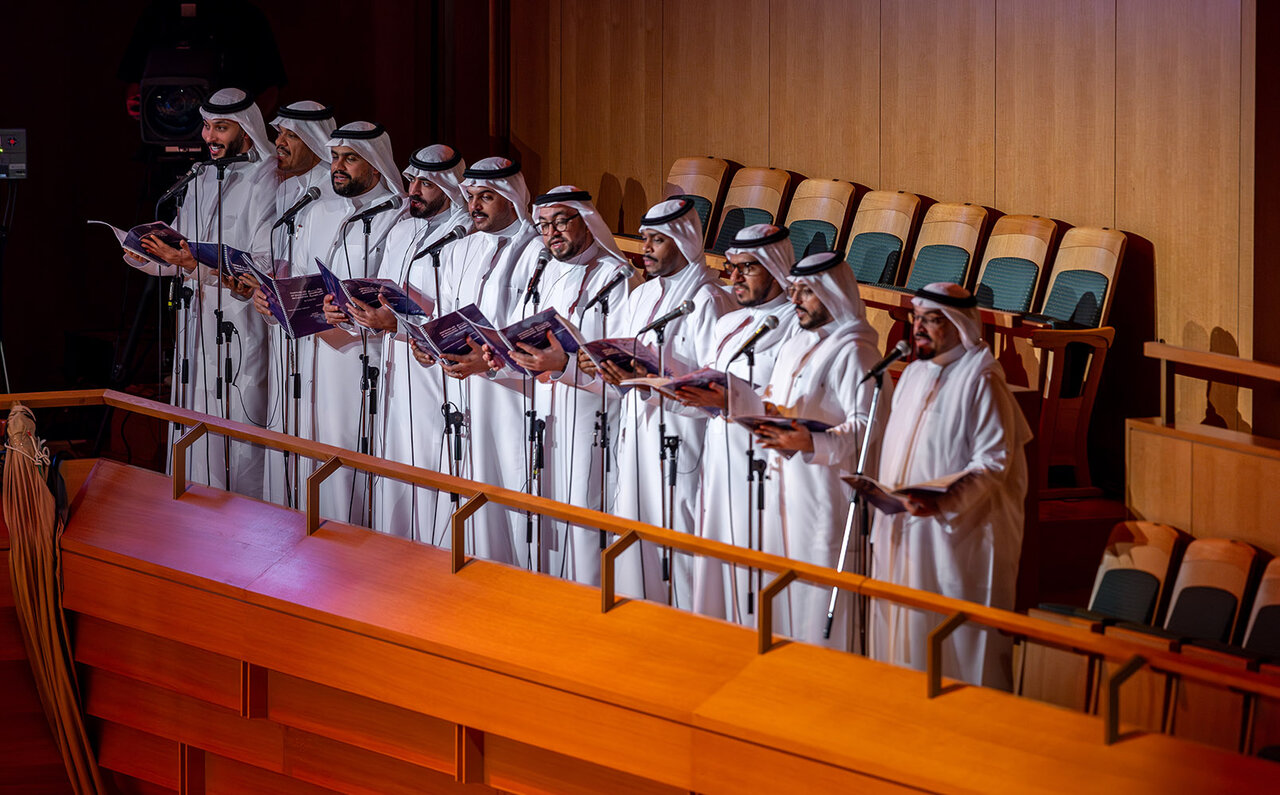
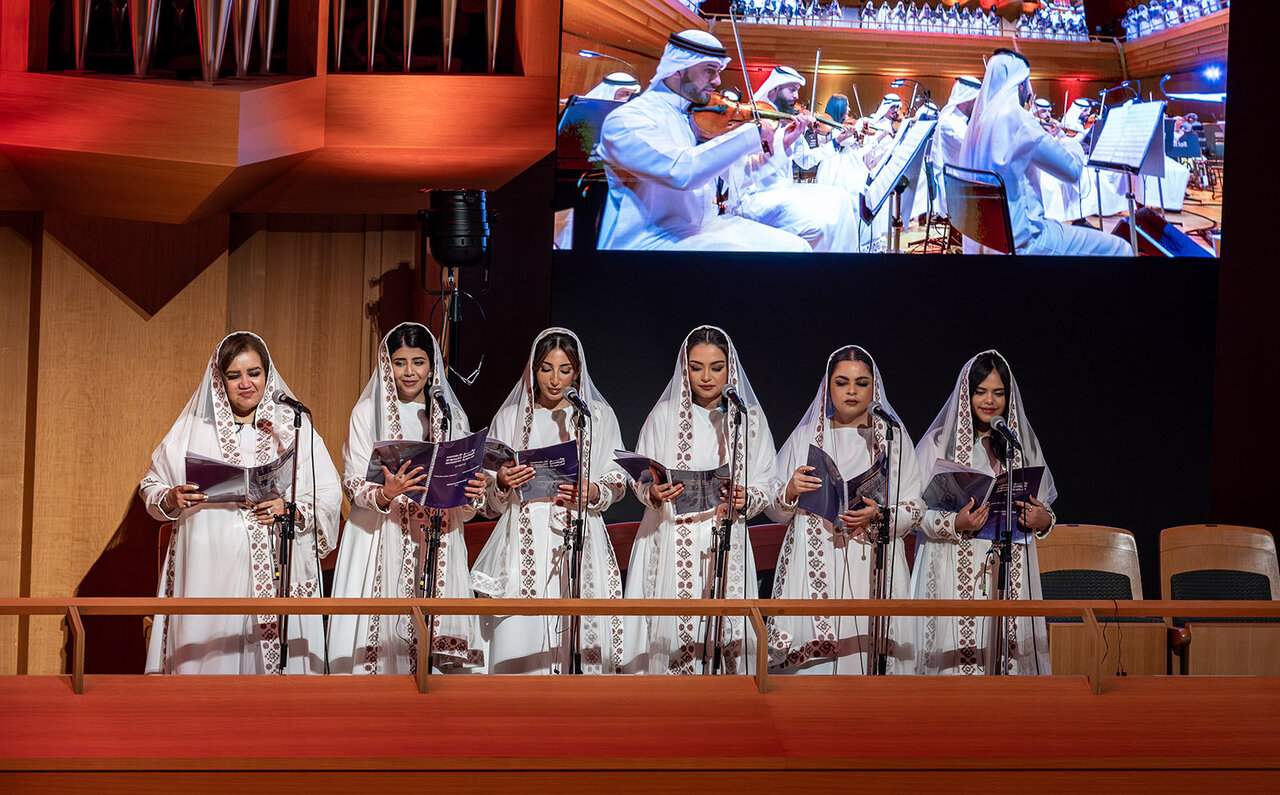
Dressed in formal attire of white robes and turbans, a sight rarely seen elsewhere, the performers played both Western instruments like violins and cellos, and traditional Arabic instruments such as the oud, qanun, nay, and riq. While the musicians' expressions were solemn, the music itself was incredibly vibrant.
The performance and singing seemed to leave no room for silence or emptiness, as if maintaining the absolute volume of sound at its maximum. The audience grew increasingly restless and noisy.
As I encountered unfamiliar instruments, unknown rhythms, and what felt like a barrage of hymns, though I couldn't understand the words,
"Go, go, Duke Fleed! Fly, fly, Grendizer!"
A familiar phrase emerged, carried by an Arabian rhythm. Ah, I see! I had heard that the anime "Grendizer," which began airing in Japan in 1975, was popular in Saudi Arabia. If they're bringing that up, then as a Japanese person, I can't stay silent. Let's sing together to praise the hero, Duke Fleed!
For a while afterward, Japanese anime songs continued. Then, after a shout of "Pokémon! Pokémon!", the music returned to that of their own country.
The Tokyo University of the Arts Orchestra Academy joined the Saudi National Orchestra and Choir, and the concert entered its third part.
As I had felt since the second part, each musical unit in all the pieces was short. They were presented as a series of musical segments, each about three to five minutes long, much like anime songs or game music.
The third part began with a mood reminiscent of a heroic saga's overture, then shifted and flowed, as if narrating a hero's journey. When the program moved to a segment called "Medley of Famous Saudi Arabian Songs," not only those on stage but also members of the audience began to sing along to familiar tunes, just as I had sung Grendizer earlier.
Next, Tomoyasu Hotei appeared and performed "BATTLE WITHOUT HONOR OR HUMANITY" from the film "Kill Bill." The concert then concluded with a performance of the Saudi national anthem, "Azz Al Wafaa" (or "Azz Al Wafaa" as it is known in Arabic).
The Frenzy of the 21st Century
"Civilizations that had fermented and matured locally suddenly blossomed with the arrival of the 'black ships.'"
After the concert, I recalled the words of a world-renowned anime film director I had interviewed previously. Yoshida spoke of the Meiji Restoration, but I felt this was more akin to the opening of the country.
It seemed to me that Saudi Arabia had been in a state of cultural isolation. Within it, traditional music of the homeland, Western classical music, rock, Japanese anime songs, game music, and even non-musical elements, had all gathered before a dam, compressed and concentrated, desperately trying to prevent a breach. What happens when that dam breaks? Everything should be released as a unified, torrential flow. Old and new, genres and categories, would lose their meaning. It is all about the here, the now, this moment. That is how it felt.
What undeniably shook the hearts of Yoshida, myself, and the audience was, in essence, fervor. A fervor for culture, for liberation, for foreign lands. And isn't fervor at the very root of music, art, and culture?
This intensity may eventually fade. Perhaps the Saudi audience will one day sit quietly in their seats and listen to music with composure. Perhaps they will admonish those who stand up and shout. Perhaps the music played will begin to depict silence. But that time is not yet here. The musicians of Saudi Arabia, like a blazing flame, are melting ice and causing vegetation to sprout on barren land. It is even possible that Saudi Arabia will become the cultural capital of the 21st century. That is how I felt.