Toshio Matsuura: A One-Night Sonic Journey into the Ultimate Analog Play
MUSIC | MUSIC FOR LIFE
A special edition of MUSIC FOR LIFE. On October 7th, the lingering heat of summer in Fukuoka. A report from a one-night-only ultimate analog play event held at a teppanyaki restaurant with thirteen counter seats. Normally, the sound of meat sizzling on the iron plate fills the air, but that night, turntables were placed upon it, and music was played.
Text by Toshio Matsuura
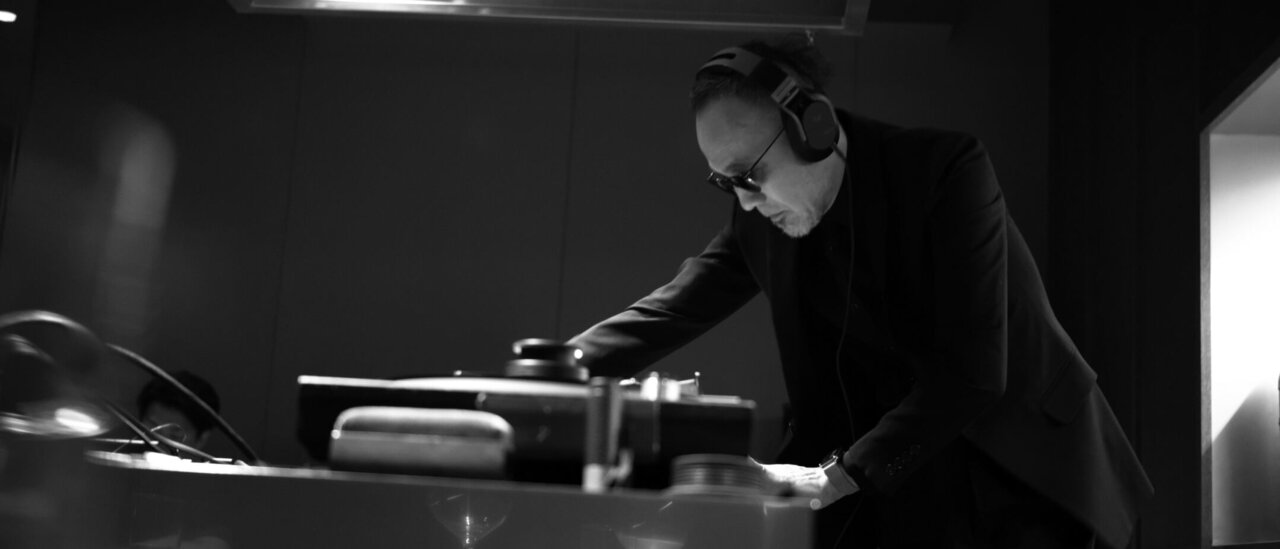
My greatest challenge this year: somewhere in Japan. A one-night-only sonic journey, an attempt at the ultimate analog play, in a space that was neither club nor bar. The stage was Fukuoka, Kyushu. At the thirteen-seat teppanyaki restaurant "Samejima Seikaten," run by my local friend Taichi Samejima. Normally, the sound of meat sizzling on the iron plate fills the air, but tonight, turntables were placed upon it, and music was played.
The idea had taken shape about a year earlier.
My regular event at Bar stereo in Takadanobaba, "A Live Concert Using Records."
In the charged silence, I drop the needle fearlessly onto the next record.
The music begins, the air trembles slightly, and I move forward, note by note.
Before long, as if breaking the silence, cheers erupt, and warmth spreads through the room.
Surely, new horizons will appear. Believing this, I shifted from music that makes people dance to music that makes their hearts dance.
As that feeling became established night after night, I began to strongly wish to play in this style outside of Tokyo. When I thought of realizing it in Fukuoka, a city I have been connected with since the 1980s, the image of Samejima cooking meat on the iron plate — his movements overlapping with those of a DJ — came back vividly to me.
For the sound system, I enlisted Norihide Masuo, founder of the record shop Lighthouse Records, who is also involved in event organization, DJing, and music production. He brought the system into the empty space, building it from nothing.
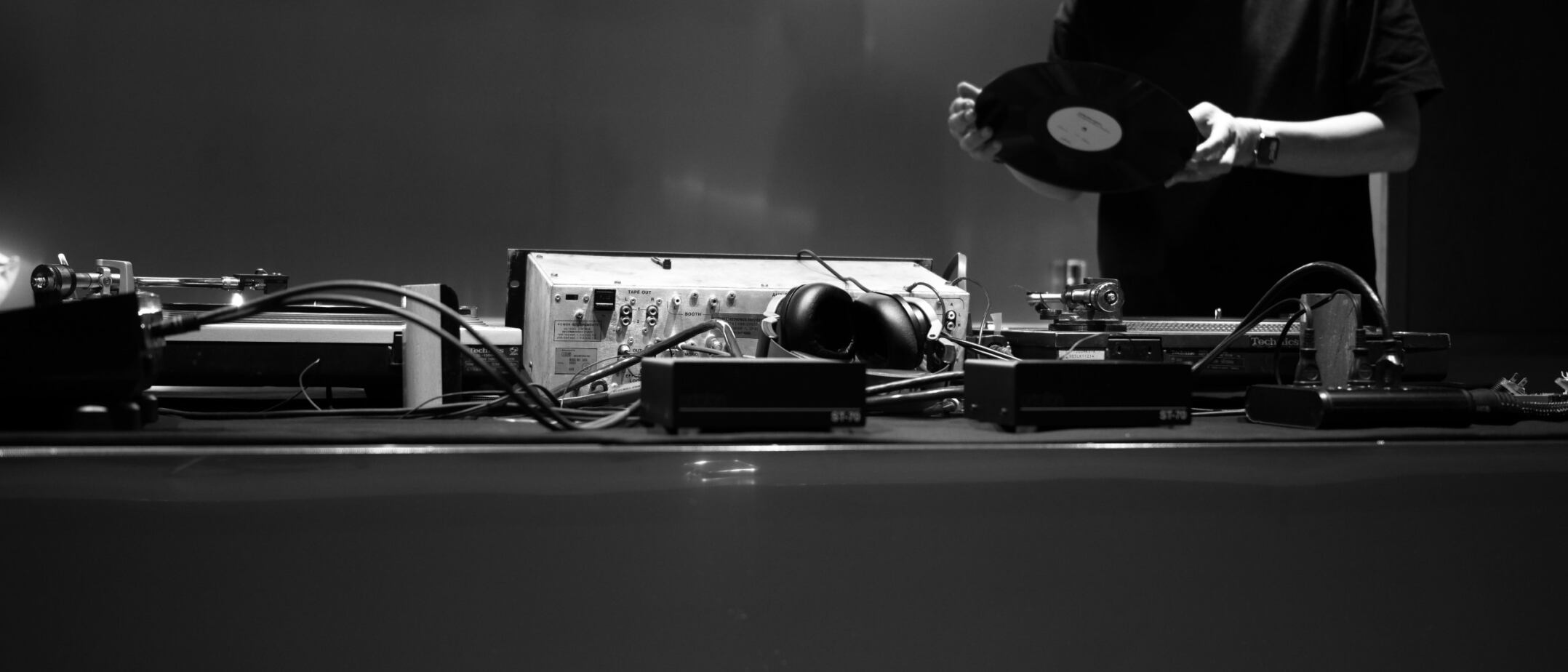
The loudspeakers were Klipschorn. The sound, as if blown from behind the horns, made the air tremble, giving even the smallest sound a sense of life.
It felt as though an entire concert hall had been transplanted into the room.
The cartridge was Ortofon’s MC X40. From its clear, open high range to its solid low end, it vividly traced the very core of the music. With superior transparency, imaging, speed, and dynamics, it brought the music vibrantly to life.
This night was both an experiment and an adventure. Profit was never the aim.
Yet the costs of staging the event and hiring the equipment were not insignificant, and the result was a price that could hardly be called casual. Choosing quality over quantity, I worried whether anyone would come — but within days of the announcement, every seat was filled. People who truly believed in sound gathered from across the country.
In this case, I feel it would be more fitting to call them kindred listeners rather than participants.
Once the announcement began, only those who showed interest were told the city name, and the venue itself remained undisclosed until the very last moment.
I wanted it to be a journey where people came not to a specific place, but solely for the sound.
Fukuoka in October still carried the lingering warmth of summer. After lunch, I went to oversee the installation of the equipment.
When the speakers were finally in place and the first notes sounded, I was convinced this had been the right choice.
The acoustic reflections that Masuo had been concerned about were not an issue. Back at the hotel, the shower’s water quietly cooled my heated body.
It was to be my greatest challenge this year,
a one night music journey, an attempt at the ultimate analogue play,
in a space that was neither club nor bar, but somewhere else entirely.
The setting was Fukuoka, Kyushu. My friend Taichi Samejima runs Samejima Meat Shop, a teppanyaki restaurant with only thirteen counter seats. Normally the air there is filled with the sound of meat sizzling on the iron plate, but tonight the turntables were placed upon it, and the sound would come from vinyl instead.
The idea had taken shape about a year earlier.
At my regular event in Takadanobaba, A Live Concert Using Records, I drop the needle fearlessly into the silence charged with heat. The music begins, the air trembles slightly, and I move forward, note by note.
Before long, the stillness breaks — voices rise, and warmth spreads through the room.
Believing that new horizons would appear, I shifted from music that makes people dance to music that makes their hearts dance.
As that feeling became established night after night, I began to wish to take this style beyond Tokyo.
When I thought of bringing it to Fukuoka, a city I have been connected with since the 1980s, the image of Samejima cooking meat on the iron plate — his movements overlapping with those of a DJ — came back vividly to me.
I asked Norihide Masuo, founder of the record shop Lighthouse Records and a man deeply involved in event organisation, DJing, and music production, to handle the sound.
He brought in the entire system, building it from nothing within the space.
The loudspeakers were Klipschorn — horns that breathe, sending air into motion, giving even the smallest sound a sense of life.
It felt as though an entire concert hall had been transplanted into the room.
The cartridge was Ortofon’s MC X40, its clear, open high range and solid low end tracing the very core of the music.
With remarkable transparency, imaging, speed and dynamics, it brought the sound vividly to life.
That night was both an experiment and an adventure. Profit was never the aim.
Yet the costs of staging the event and hirering the equipment were not insignificant, and the result was a price that could hardly be called casual.
Choosing quality over quantity, I worried whether anyone would come — but within days of the announcement every seat was filled.
People who truly believed in sound gathered from across the country.
In this case, it felt more fitting to call them kindred listeners rather than participants.
Only those who showed real interest were told the city; the venue itself remained undisclosed until the very last moment.
I wanted it to be a journey where people came not to a place, but to sound itself.
Fukuoka in October still carried the lingering warmth of summer.
After lunch, I went to oversee the installation of the equipment.
When the speakers were finally in place and the first notes sounded, I knew this had been the right choice. The acoustic reflections Masuo had worried about proved no problem at all.
Back at the hotel, the shower’s water quietly cooled my heated body.
The idea had taken shape about a year earlier.
My regular event at Bar stereo in Takadanobaba, "A Live Concert Using Records."
In the charged silence, I drop the needle fearlessly onto the next record.
The music begins, the air trembles slightly, and I move forward, note by note.
Before long, as if breaking the silence, cheers erupt, and warmth spreads through the room.
Surely, new horizons will appear. Believing this, I shifted from music that makes people dance to music that makes their hearts dance.
As that feeling became established night after night, I began to strongly wish to play in this style outside of Tokyo. When I thought of realizing it in Fukuoka, a city I have been connected with since the 1980s, the image of Samejima cooking meat on the iron plate — his movements overlapping with those of a DJ — came back vividly to me.
For the sound system, I enlisted Norihide Masuo, founder of the record shop Lighthouse Records, who is also involved in event organization, DJing, and music production. He brought the system into the empty space, building it from nothing.
The loudspeakers were Klipschorn. The sound, as if blown from behind the horns, made the air tremble, giving even the smallest sound a sense of life.
It felt as though an entire concert hall had been transplanted into the room.
The cartridge was Ortofon’s MC X40. From its clear, open high range to its solid low end, it vividly traced the very core of the music. With superior transparency, imaging, speed, and dynamics, it brought the music vibrantly to life.
This night was both an experiment and an adventure. Profit was never the aim.
Yet the costs of staging the event and hiring the equipment were not insignificant, and the result was a price that could hardly be called casual. Choosing quality over quantity, I worried whether anyone would come — but within days of the announcement, every seat was filled. People who truly believed in sound gathered from across the country.
In this case, I feel it would be more fitting to call them kindred listeners rather than participants.
Once the announcement began, only those who showed interest were told the city name, and the venue itself remained undisclosed until the very last moment.
I wanted it to be a journey where people came not to a specific place, but solely for the sound.
Fukuoka in October still carried the lingering warmth of summer. After lunch, I went to oversee the installation of the equipment.
When the speakers were finally in place and the first notes sounded, I was convinced this had been the right choice.
The acoustic reflections that Masuo had been concerned about were not an issue. Back at the hotel, the shower’s water quietly cooled my heated body.
It was to be my greatest challenge this year,
a one night music journey, an attempt at the ultimate analogue play,
in a space that was neither club nor bar, but somewhere else entirely.
The setting was Fukuoka, Kyushu. My friend Taichi Samejima runs Samejima Meat Shop, a teppanyaki restaurant with only thirteen counter seats. Normally the air there is filled with the sound of meat sizzling on the iron plate, but tonight the turntables were placed upon it, and the sound would come from vinyl instead.
The idea had taken shape about a year earlier.
At my regular event in Takadanobaba, A Live Concert Using Records, I drop the needle fearlessly into the silence charged with heat. The music begins, the air trembles slightly, and I move forward, note by note.
Before long, the stillness breaks — voices rise, and warmth spreads through the room.
Believing that new horizons would appear, I shifted from music that makes people dance to music that makes their hearts dance.
As that feeling became established night after night, I began to wish to take this style beyond Tokyo.
When I thought of bringing it to Fukuoka, a city I have been connected with since the 1980s, the image of Samejima cooking meat on the iron plate — his movements overlapping with those of a DJ — came back vividly to me.
I asked Norihide Masuo, founder of the record shop Lighthouse Records and a man deeply involved in event organisation, DJing, and music production, to handle the sound.
He brought in the entire system, building it from nothing within the space.
The loudspeakers were Klipschorn — horns that breathe, sending air into motion, giving even the smallest sound a sense of life.
It felt as though an entire concert hall had been transplanted into the room.
The cartridge was Ortofon’s MC X40, its clear, open high range and solid low end tracing the very core of the music.
With remarkable transparency, imaging, speed and dynamics, it brought the sound vividly to life.
That night was both an experiment and an adventure. Profit was never the aim.
Yet the costs of staging the event and hirering the equipment were not insignificant, and the result was a price that could hardly be called casual.
Choosing quality over quantity, I worried whether anyone would come — but within days of the announcement every seat was filled.
People who truly believed in sound gathered from across the country.
In this case, it felt more fitting to call them kindred listeners rather than participants.
Only those who showed real interest were told the city; the venue itself remained undisclosed until the very last moment.
I wanted it to be a journey where people came not to a place, but to sound itself.
Fukuoka in October still carried the lingering warmth of summer.
After lunch, I went to oversee the installation of the equipment.
When the speakers were finally in place and the first notes sounded, I knew this had been the right choice. The acoustic reflections Masuo had worried about proved no problem at all.
Back at the hotel, the shower’s water quietly cooled my heated body.
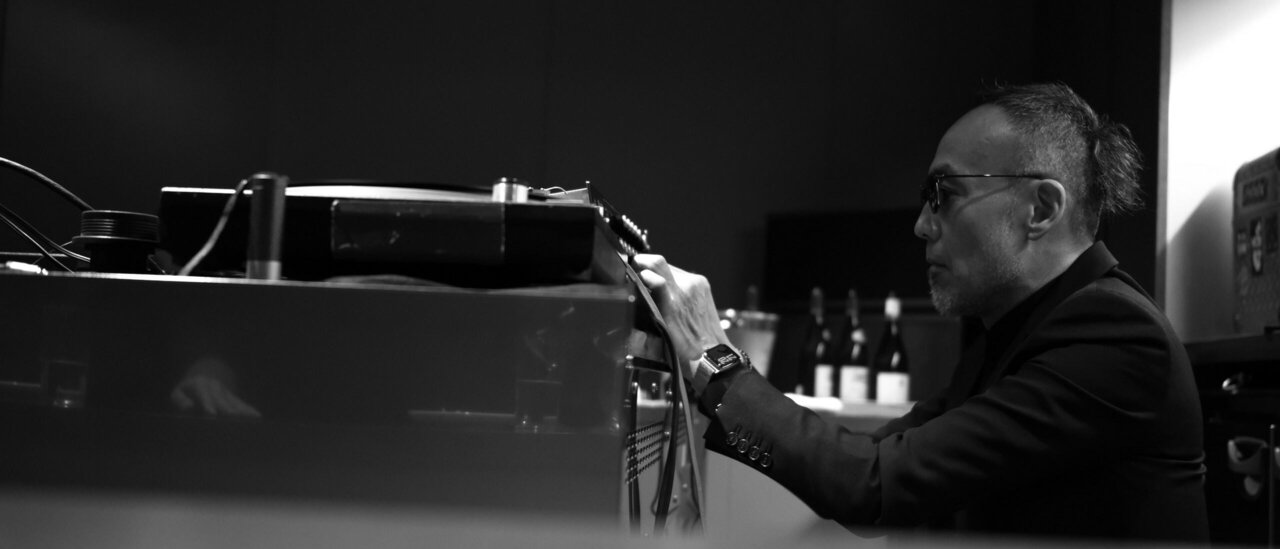
As a thirty-minute composition played, I welcomed those who shared this vision. When it ended, I began my set almost exactly on time.
The brass of Kenny Wheeler and the voice of Norma Winstone floated like mist, gently blurring the outlines of the sound.
The DJ mixer, a Urei 1620, was left flat; back-spins were kept to a minimum.
This was both to protect the stylus and to preserve the purity of the sound.
I felt again the same tension I had known months earlier in Sapporo, when I had faced the Koetsu cartridge.
The air-conditioned room was cool, yet sweat ran down my skin, though I hadn't had a drink.
Jazz, soundtracks, minimal, alternative.
Time seemed to stop, yet rush forward all at once.
Playing safely would have meant nothing. Repeating this to myself, I continued the journey through sound. Applause and voices of encouragement carried me through. The final track was my own self-made vinyl cut of “Afro Blue”.
Amid smiles and applause, the voice of the late Jeffery Smith filled the space.
Passing the baton, Samejima cooled the heat of the moment, and Masuo brought the night to a gentle close with a mellow track.
Looking back now, I realise that what I want is to stay true to my conviction — to deliver music with heart and intention.
That focus was only possible because everyone around me supported the challenge.
Once again, I want to express my gratitude to Samejima, Masuo, Ortofon Japan, and to all who shared in the experience.
Within the lingering resonance, the connections between people, and the trust and gratitude carried by sound, quietly remain.
I wonder where I might next have the chance to let the music play.
October 2025, Fukuoka
photo : K.Sakata
As a thirty-minute composition played, I welcomed those who shared this vision.
When it ended, I began my set almost exactly on time.
The brass of Kenny Wheeler and the voice of Norma Winstone floated like mist, gently blurring the outlines of the sound.
The DJ mixer, a Urei 1620, was left flat; back-spins were kept to a minimum — to protect the stylus, and to preserve the purity of the sound.
I felt again the same tension I had known months earlier in Sapporo, when I had faced the Koetsu cartridge.
The air-conditioned room was cool, yet sweat ran down my skin.
Jazz, soundtracks, minimal, alternative.
Time seemed to stop, yet rush forward all at once.
Playing safely would have meant nothing.
I told myself that again and again, and went on with the journey through sound.
Applause and voices of encouragement carried me through.
The final track was my own self-made vinyl cut of “Afro Blue”.
Amid smiles and applause, the voice of the late Jeffery Smith filled the space with light.
Passing the baton, Samejima cooled the heat of the moment, and Masuo brought the night to a gentle close.
Looking back now, I realise that what I want is to stay true to my conviction — to deliver music with heart and intention.
That focus was only possible because everyone around me supported the challenge.
Once again, I want to express my gratitude to Samejima, Masuo, Ortofon Japan, and to all who shared in the experience.
Within the lingering silence, the connections between people, and the trust and gratitude carried by sound, quietly remain.
I wonder where I might next have the chance to let the music play.
The brass of Kenny Wheeler and the voice of Norma Winstone floated like mist, gently blurring the outlines of the sound.
The DJ mixer, a Urei 1620, was left flat; back-spins were kept to a minimum.
This was both to protect the stylus and to preserve the purity of the sound.
I felt again the same tension I had known months earlier in Sapporo, when I had faced the Koetsu cartridge.
The air-conditioned room was cool, yet sweat ran down my skin, though I hadn't had a drink.
Jazz, soundtracks, minimal, alternative.
Time seemed to stop, yet rush forward all at once.
Playing safely would have meant nothing. Repeating this to myself, I continued the journey through sound. Applause and voices of encouragement carried me through. The final track was my own self-made vinyl cut of “Afro Blue”.
Amid smiles and applause, the voice of the late Jeffery Smith filled the space.
Passing the baton, Samejima cooled the heat of the moment, and Masuo brought the night to a gentle close with a mellow track.
Looking back now, I realise that what I want is to stay true to my conviction — to deliver music with heart and intention.
That focus was only possible because everyone around me supported the challenge.
Once again, I want to express my gratitude to Samejima, Masuo, Ortofon Japan, and to all who shared in the experience.
Within the lingering resonance, the connections between people, and the trust and gratitude carried by sound, quietly remain.
I wonder where I might next have the chance to let the music play.
October 2025, Fukuoka
photo : K.Sakata
As a thirty-minute composition played, I welcomed those who shared this vision.
When it ended, I began my set almost exactly on time.
The brass of Kenny Wheeler and the voice of Norma Winstone floated like mist, gently blurring the outlines of the sound.
The DJ mixer, a Urei 1620, was left flat; back-spins were kept to a minimum — to protect the stylus, and to preserve the purity of the sound.
I felt again the same tension I had known months earlier in Sapporo, when I had faced the Koetsu cartridge.
The air-conditioned room was cool, yet sweat ran down my skin.
Jazz, soundtracks, minimal, alternative.
Time seemed to stop, yet rush forward all at once.
Playing safely would have meant nothing.
I told myself that again and again, and went on with the journey through sound.
Applause and voices of encouragement carried me through.
The final track was my own self-made vinyl cut of “Afro Blue”.
Amid smiles and applause, the voice of the late Jeffery Smith filled the space with light.
Passing the baton, Samejima cooled the heat of the moment, and Masuo brought the night to a gentle close.
Looking back now, I realise that what I want is to stay true to my conviction — to deliver music with heart and intention.
That focus was only possible because everyone around me supported the challenge.
Once again, I want to express my gratitude to Samejima, Masuo, Ortofon Japan, and to all who shared in the experience.
Within the lingering silence, the connections between people, and the trust and gratitude carried by sound, quietly remain.
I wonder where I might next have the chance to let the music play.