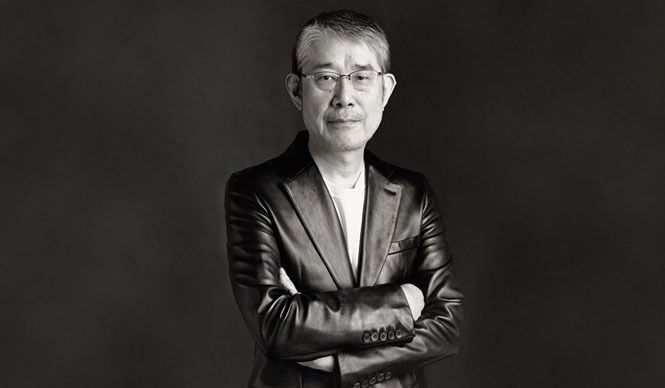
Akira Shimada | Life is Edit. #023 Learning the Weight of Words and Adulthood from Takashi Matsumoto
Akira Shimada | Life is Edit.
#023 Learning from Takashi Matsumoto: The Weight of Words and Adulthood (1)
Something new, spun and born from an encounter with a person.
Something new, drawn out and born from a single object.
An editor's job is precisely to create such "encounters."
And life itself is precisely editing.
──Editor Akira Shimada introduces the moving encounters with people, objects, and events he has experienced.
By Akira Shimada
For a long time, I've had a habit of keeping a "role model" in my mind.
This could be someone I've never met, appearing on a cathode-ray tube screen, or someone close to me.
Moments when I'm shown a grand, beautiful scale—a measuring stick clearly different from my own—thinking, "This way of thinking is wonderful!" or "This sense is amazing!" still move me to tears.
And then, on these rare occasions, I think, why not adopt that measuring stick as my own, and if I can ultimately become closer to that role model, I begin my editor-like? efforts.
I believe the sustained continuation of such strong aspirations has shaped my character and brought me this far.
In a sense, you could say I've edited the good parts of many people to enrich and nourish myself.
That's why I've had many wonderful encounters and am surrounded by many fantastic friends—that's something I can proudly boast about. And I believe that's precisely why this series, "Life is Edit." in OPENERS, has continued for two long years.
I've met another such person who makes my heart tremble.
That person is the lyricist, Takashi Matsumoto.
—Poetry Everyone Knows
When you mention Takashi Matsumoto, you think of song lyrics.
The lyrics created by Matsumoto were imprinted in my mind as vivid images during my sensitive boyhood, and they remain in the depths of my senses even now.
When I was in the lower grades of elementary school, there was Hiromi Ohta's "Yūwaku no Hanafuda," my idol at the time.
I heard her family ran a sushi restaurant in Kasukabe, so I took the train by myself, went all the way there just to see the restaurant (of course, I couldn't go inside and cried).
In high school, during the sweltering summer heat, I listened to Happy End's "Natsu Nan Desu" at a friend's house where we were hanging out. Afterwards, I got into YMO, thinking that inorganic was cool, and I was the first in my high school to get a techno haircut.
In college, I didn't like it at all, but because my girlfriend at the time was a fan, I was forced to listen to Seiko Matsuda's "Akai Sweet Pea" on the car's cassette deck, much to my chagrin.
Also in college, a friend had a dinghy on the Miura Peninsula, and using that as an excuse to invite girls, I listened to Eiichi Ohtaki's "Kimi wa Tennen-iro" in my newly purchased car.
Like me, many people probably share the world of lyrics painted by Takashi Matsumoto with certain landscapes.
I hear he has 52 songs that reached number one on the charts.
That's apparently a Guinness-level record, the highest in history.
It's safe to say that there isn't a single person in Japan who hasn't, at some point in their youth, borrowed strength from the lyrics written by Takashi Matsumoto.
When you think about it, it's incredible.
Akira Shimada | Life is Edit.
#023 Learning from Takashi Matsumoto: The Weight of Words and Adulthood (2)
— "Am I really allowed to write this?!"
My encounter with such a Takashi Matsumoto happened in the feature interview for the February issue of "UOMO" magazine, released last December, titled "Things That Will Become Vintage in 10 Years."
Introduced by Kozo Fujimoto of Hermès Japon, known as a connoisseur of contemporary art and whose movements I always follow, the project's premise was that the criteria for selecting items by stylish people might actually be looking 10 years into the future.
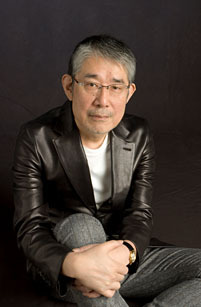
I initially asked Matsumoto, who has also written the novel "Binetsu Shonen" in addition to his lyrics, to write about his own criteria for selecting items. However, his manager, Yamazaki-san, replied, "Writing lyrics and writing prose are different, so I would like Shimada-san to write the article."
But could I, of all people, truly capture and present to the world the beautiful and profound words of Takashi Matsumoto, who manipulates the Japanese language so delicately and freely, influencing so many people... Honestly, I worried and was a little intimidated (laughs).
But I'm someone with a strong fighting spirit. I thought, "Oh well. This is a good opportunity to raise the bar as an editor. I must challenge myself." So, I boldly conducted the interview and decided to compile Takashi Matsumoto's words.
A few days later, I nervously emailed my draft to Yamazaki-san and waited for several days. Yamazaki-san's reply was concise and brought tears to my eyes with its joy.
"This is a message from Matsumoto.
Thank you for compiling it with such powerful and beautiful words."
To be praised for my words by Takashi Matsumoto, a man who cherishes words. Even if they weren't my own words, receiving this evaluation for how I compiled them made me feel, as an editor, that I had grown a little, that I had been recognized.
With each meeting, I am captivated by Matsumoto's words, which stem from deep consideration, rich experience, and beautiful resonance. At the same time, the sophisticated, adult aura that Takashi Matsumoto exudes gives off a unique vibe that only true, stylish adults, rarely seen these days, possess.
Akira Shimada | Life is Edit.
#023 Learning from Takashi Matsumoto: The Weight of Words and Adulthood (3)
— About Shigeomi Muto, who created Cassina
The genuine adult aura I feel from Takashi Matsumoto reminds me of someone I met over 20 years ago.
That was Shigeomi Muto, the president of Cassina, who passed away in 2006.
When I was just starting out as a magazine editor at 25, I was introduced to President Takamichi Tanaka, who produced many historic venues like Liquid Room, and through him, I occasionally spent time with Muto-san. Through these times, at the shops he took me to, and at Muto-san's home, he introduced me to and taught me about the real works of Le Corbusier and Mario Bellini, which at the time were owned only by a select few wealthy or enthusiast individuals.
Muto-san was a man of few words, and I have almost no memory of conversations with him, but I still vividly remember the adult aura that surrounded him.
Ever since then, that stylish, urban, composed, thoughtful, and delicate adult aura. Now, Takashi Matsumoto embodies the direction and standards that adults should aspire to.
A series by Takashi Matsumoto will begin in the July issue of "UOMO" magazine, where I work (on sale May 24th).
The title is "Keshiki ga Yoroshii" (The Scenery is Fine).
I want to carefully pick up each and every word by Takashi Matsumoto and write about them with all my might. And through that endeavor, I hope to become an adult like Takashi Matsumoto, whom I have always admired.
I would be delighted if you would pick up "UOMO" and read this series.
Akira Shimada | Life is Edit.
#023 Learning from Takashi Matsumoto: The Weight of Words and Adulthood (4)
Takashi Matsumoto Lyricist 40th Anniversary "Kazemachi Gala Concert" to be Held
Takashi Matsumoto boasts a record of 52 songs that reached number one on the charts (the highest for a lyricist in history) and a total single sales of 49.48 million copies (second only to Yu Aku among lyricists), making him a monumental figure in the Japanese music scene. To commemorate Mr. Matsumoto's 40th anniversary as a lyricist, a one-night-only special concert featuring artists connected to his works, transcending genres, will be held on Sunday, May 16th, at Bunkamura Orchard Hall.
Thelma Aoyama, Yoshio Inoue, Hiromi Ohta, Otona Mode, Kumiko, Sara Kobayashi, Yuki Saito feat. Satoshi Takebe, Shigeru Suzuki, Motohiro Hata x Tomita Lab, Kaori Mochida, Yukio Yokoyama, and others [Performers (in Japanese alphabetical order)]
Date | Sunday, May 16th
[Doors Open] 16:30 / [Performance Starts] 17:00
Price | All seats reserved ¥7,500
Inquiries | Sunrise Promotion Tokyo
0570-00-3337
On May 12th, preceding the special concert, "Tribute to Takashi Matsumoto - Kazemachi DNA -" was released by Universal Music.
"Tribute to Takashi Matsumoto - Kazemachi DNA -"
¥3,000 (UPCH-1775)
1. Candy / Thelma Aoyama (Original Artist: Shinji Harada) *New Recording
2. Ruby no Yubiwa / Masaharu Fukuyama (Original Artist: Satoshi Terao)
3. Sora-iro no Kureyon / Kaori Mochida (Original Artist: Happy End) *New Recording
4. Akai Sweet Pea / Haruka Ayase (Original Artist: Seiko Matsuda) *New Recording
5. Yūwaku no Hanafuda / Chikuzen Sato (Original Artist: Hiromi Ohta) *New Recording
6. Slow ni Shitekure (I want you) / CHEMISTRY (Original Artist: Yoshitaka Minami) *New Recording
7. Romantic ga Tomaranai / Narumi Tamaki (Original Artist: C-C-B) *New Recording
8. Hakka Candy / Otona Mode (Original Artist: Kinki Kids) *New Recording
9. Hitomi wa Diamond / Hideaki Tokunaga (Original Artist: Seiko Matsuda)
10. Kaze wo Atsumete / My Little Lover (Original Artist: Happy End)
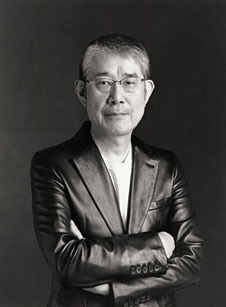
Takashi Matsumoto
Lyricist. Born in Aoyama in 1949. In '69, he joined April Fool as a drummer (writing lyrics for 4 songs on the album "APRIL FOOL").
In '70, he formed Happy End with Haruomi Hosono, Eiichi Ohtaki, and Shigeru Suzuki. In addition to drums, he also wrote many lyrics. Although their active period was less than three years, their three original albums, "Happy End" (70), "Kazemachi Roman" (71), and "HAPPY END" (73), led the Japanese rock scene and greatly influenced subsequent musicians.
After Happy End disbanded, he produced Yoshitaka Minami's "Matenro no Heroine" (73) and Mori Masaki's "Aaa Mujou (Les Misérables)" (74).
Then, he "temporarily moved to the enka world" (his own words). Since then, he began writing hit songs that would later be sung as classics, such as Agnes Chan's "Pocket Ippai no Himitsu" (74) and Hiromi Ohta's "Yūwaku no Hanafuda" (75).
In the 1980s, he recommended Eiichi Ohtaki ("Kaze Tachinu," '81, etc.), Kureta Keiho a.k.a. Yumi Arai/Matsutoya ("Akai Sweet Pea," '82, etc.), and Haruomi Hosono ("Tengoku no Kiss," '83, etc.) as composers for Seiko Matsuda. He also engaged in lyric writing that extended into the realm of production, writing all songs for albums such as "Pineapple" (82) and "Candy" (82).
Furthermore, with the massive hit of the debut single "High School Lullaby" (81) by Imakin Trio, composed by Haruomi Hosono, and Eiichi Ohtaki's solo album "A LONG VACATION" (81), his lyric writing activities can be seen as recreating a virtual "Happy End" or "Kazemachi" world within the popular music scene.
From the late 1980s to the early 1990s, he temporarily stepped away from being a regular hit-chart lyricist and began seriously studying classical music and Kabuki.
Afterward, he became actively involved in writing hit songs again, such as KinKi Kids' "Garasha no Shonen" (97) and Mika Nakashima's "CRESCENT MOON" (02).
In '99, the CD BOX "Kazemachi Zukan" (7 CDs + 2 Books) commemorating his 30th anniversary as a lyricist, and the concert "Kazemachi Meeting" were well-received.
In the 2000s, he continued to write works that delighted discerning music fans, such as Kumiko's "AURA" (00) and Tomita Lab's "Nemuri no Mori feat. Hanaregumi" (03).
In December '09, he released the CD BOX "Shin Kazemachi Zukan" (2 CDs + 1 Book) to commemorate his 40th anniversary as a lyricist. It includes Seiko Matsuda's "Ruri-iro no Chikyu," which has become a standard for mothers' choirs. It also features Seiko Matsuda's "SUNSET BEACH," which boasts overwhelming playback counts on platforms like YouTube and Niconico Douga and is enthusiastically supported by younger generations. It also includes Takuro Yoshida's "Byakuya," which has gained presence through live performances. The selection reflects songs that, despite being album tracks, have become classics beyond the lyricist's control, through the efforts of listeners, artists, and audiences.
In May '10, V.A. "Tribute to Takashi Matsumoto - Kazemachi DNA -" was released by artists who deeply admire Matsumoto's work, and the "Kazemachi Gala Concert" was held.
Takashi Matsumoto Official Website "Kazemachi Sabo"
http://www.kazemachi.com/