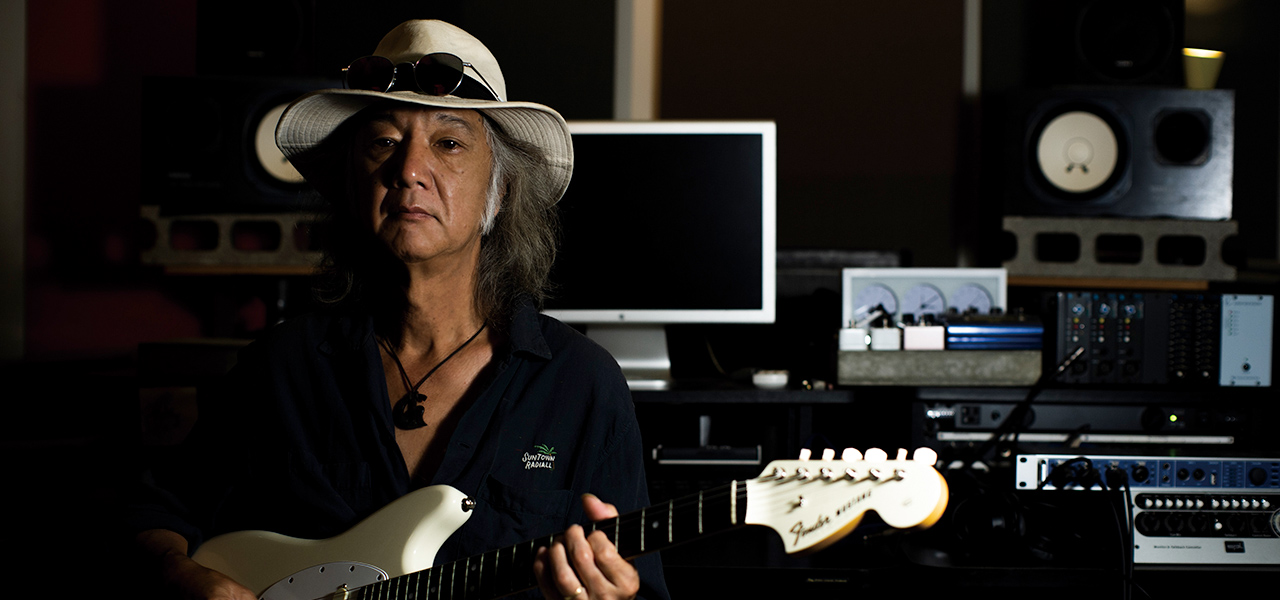
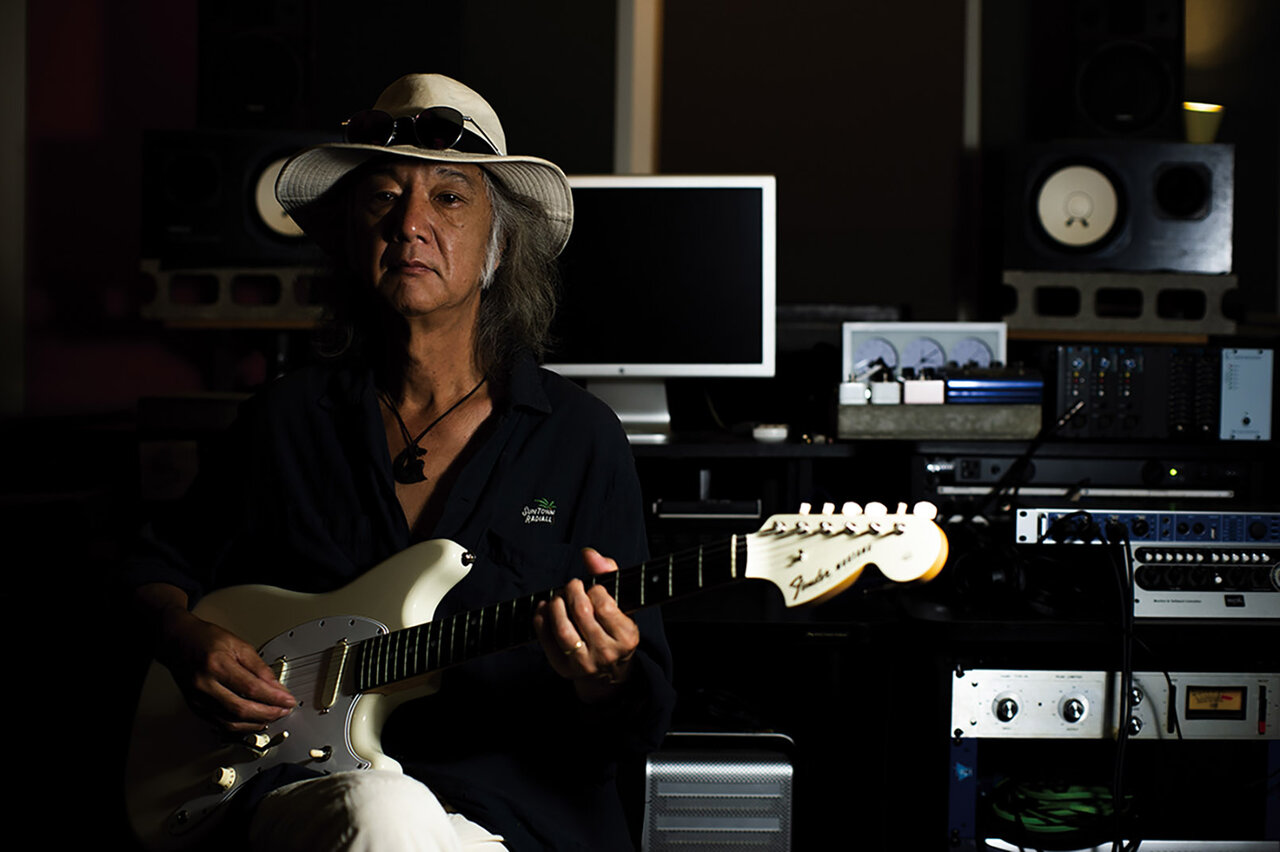
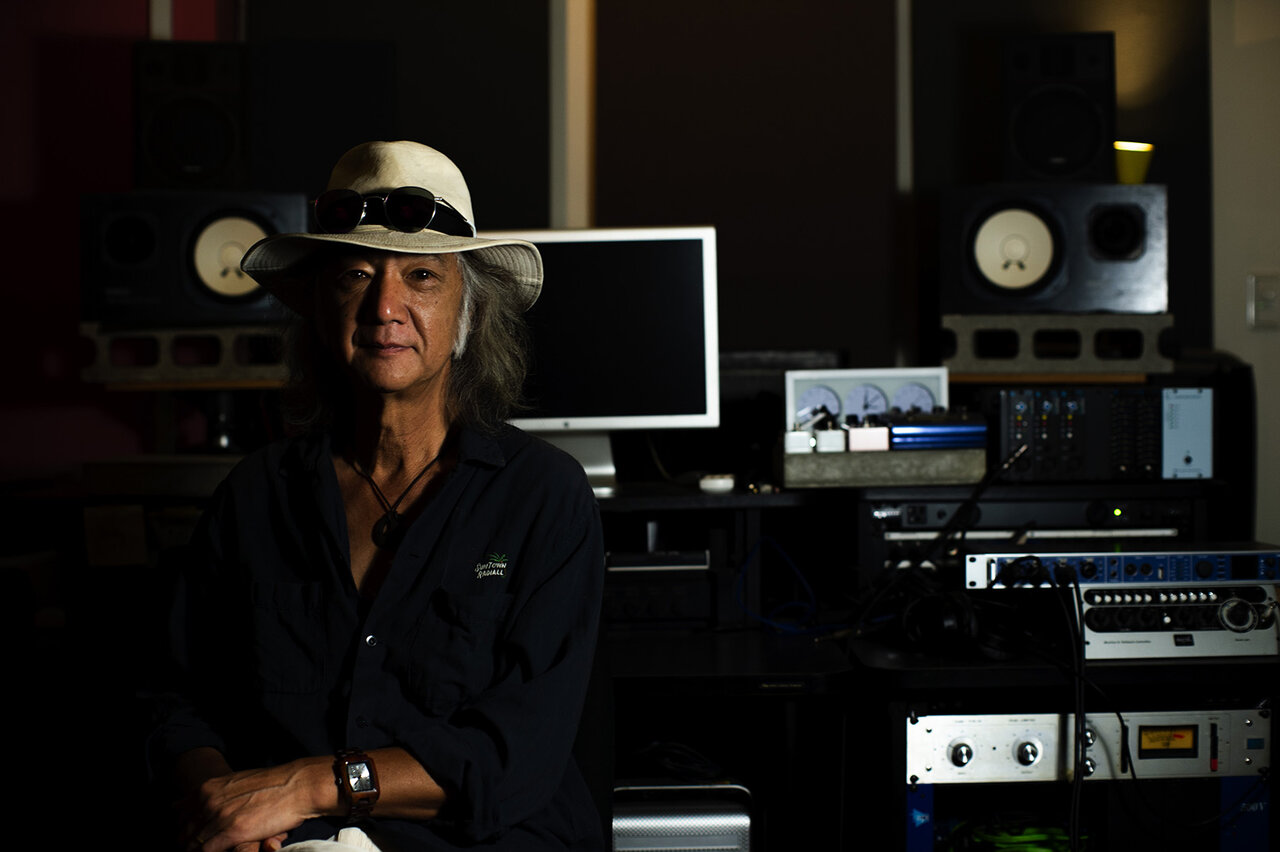
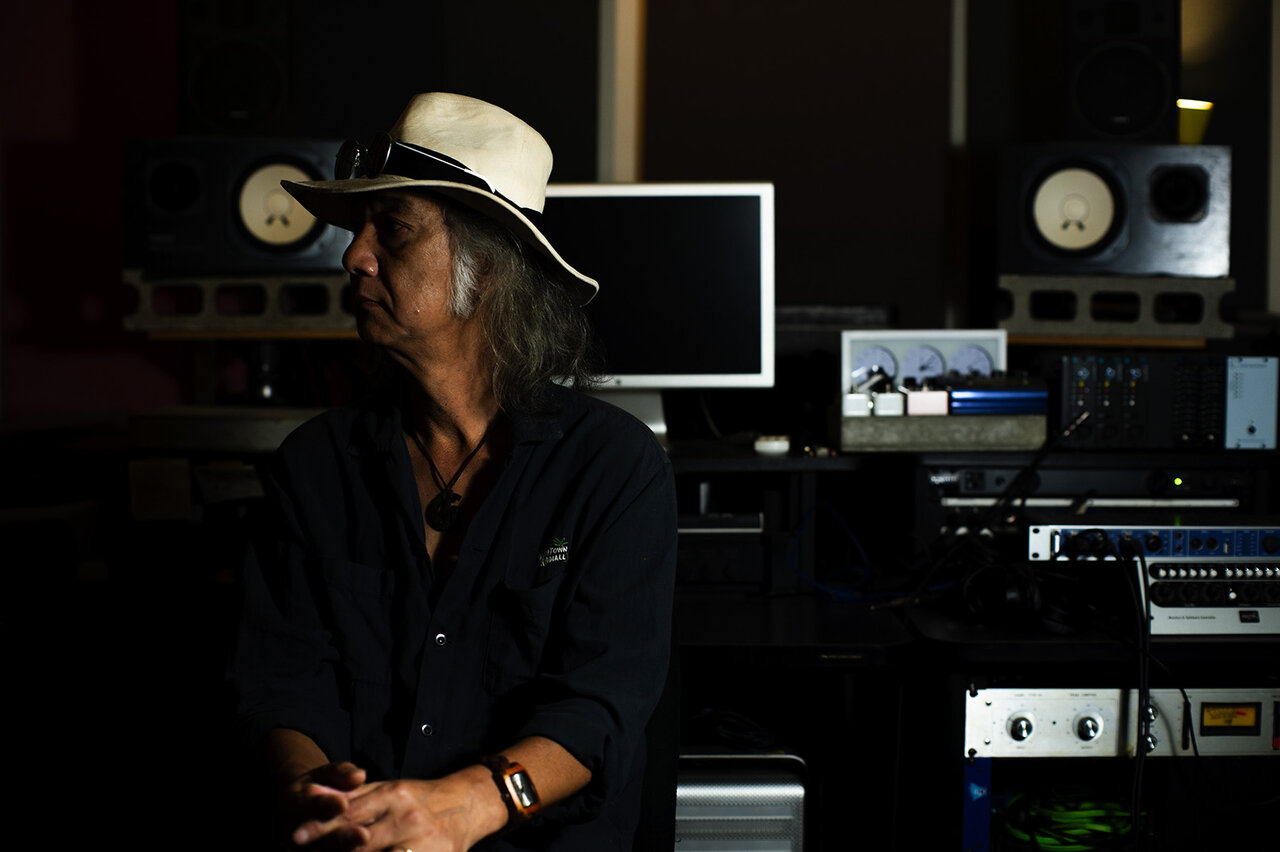
We spoke at length with Char, who celebrated his 45th anniversary, about his unpretentious present.
The shock of 45 years ago is still etched in our hearts. And that sound still resonates, unchanged. Char, who ignited the passion of guitar enthusiasts across Japan. We delved into his feelings as he approaches his 45th anniversary and looked back on those four and a half decades!
45th Anniversary! Char
photography, text KITAHARA Toru
Forty-five years ago, it’s likely that rock boys all over Japan harbored a fervent admiration for his image. "Has someone like this emerged in the Japanese rock scene!?" we must have thought. His appearance and sound, which seemed to embody rock itself, were utterly astonishing. Time has passed since then, but Char remains unchanged. It's a vague impression, but I feel there isn't much difference between the Char I first saw on television and the Char I'm speaking with now. Of course, I understand he has aged over time, but I still believe he is someone who hasn't changed.
Celebrating his 45th anniversary unchanged, and with a new album "Fret to Fret" released, we conducted an interview!
"It went by in a flash. It's my 45th anniversary since my debut single, but if we count from when I started my professional music career, it's about 50 years. What's changed? The things I've been doing are the same. In the sense that I'm playing the same songs now as I was 45 years ago, it's amazing how music doesn't age."
Music doesn't age! Indeed, these 45 years have been a journey walked alongside music. Is that why Char doesn't seem to have aged? Still, haven't things changed between 45 years ago and now?
"Back then, we were working with analog equipment, which was overwhelmingly limited compared to today. That has changed, with the shift to digital. Nowadays, you can create music digitally even if you can't play an instrument; the music environment has changed. Simply put, analog channels started at four, then became eight, then sixteen, and finally reached thirty-two channels. With fewer channels, it depended on how you played and how you recorded when doing a live take. It depended not only on the performance but also on the engineer's skill. The engineers and players alike would come up with ideas, and it was a true battle of wits. Even with so much music being made with digital equipment, we remain the same as before. Ultimately, we are players, so we just have to play our instruments."
When you think about it in terms of photography, the possibilities with digital have expanded. Post-processing, known as retouching, has also become possible. I felt it was similar to the discussion of how to approach photography in relation to the expansion of technical capabilities.
The player performs, and their individuality becomes the music.
"Whether the lasting record is digital data or analog tape, the player's performance remains the same. It comes down to how you express it with quality. If you don't have the imagination to produce the sound you want, no amount of later processing will make it good. Especially in a band, where multiple people are involved, each instrument has a different role. Something can only be created through the imagination of each person playing their instrument. That hasn't changed, whether it was 45 years ago or with the new album. We just get into the studio as a group of four and play it all at once. With digital technology and its infinite channels, it's not as simple as placing 100 microphones. It's more about where the engineer places the microphones; the sound changes completely depending on the position of a single microphone. Ultimately, if you capture a good sound in your head, you don't need to do much else. But getting there is the hard part; drums, for instance, take time because they are acoustic. The engineer is like another musician; it all depends on the microphone placement and adjustments. In fact, Robert Brill, who played drums 45 years ago, is still with us, and he hasn't changed, even in the fine details (laughs)."
It makes one realize anew that music is created by humans. Valuing individuality is essential in this process.
"Suppose you asked an AI to create music as Char. Even if you input everything about my personality and music, I believe it could only produce something that sounds like me, without going beyond that. Any great music or art, or anything else, has a three-dimensional quality, where you can perceive something behind it or hear it. What remains are things that allow the listener or viewer to expand their own imagination. When I create music alone on piano or guitar, and then drums, bass, or keyboards are added, the music I imagined in my head expands. The process of incorporating sounds that come from the drawers within me – 'this sound here, that sound there' – is what I find most enjoyable about making music."
While he sometimes creates a song alone, there is a reason he remains committed to recording with a band.
"There's a depth that's different from creating alone; the character of each individual human emerges. Painting or photography might be completed by one person. However, a band is interesting precisely because it cannot be completed by one person. The differences in ideas stemming from daily life, the differences in ideas emerging from individuals – these differences become a breadth that leads to good music. That's entirely different from layering sampled sounds."
It becomes clear that his commitment to bands and his meticulous approach to sound creation are the reasons he has remained at the forefront for 45 years. The 45-year journey, with all its twists and turns, must not have been an easy one.
"I don't consciously think about anniversaries, but since I'm doing the same thing, it feels like punctuation marks have been added to a sentence that had none. It's also a time to pause and reflect. My guitar playing 45 years ago was good, but I feel my current guitar playing is also good. Surprisingly, I sometimes feel I can't quite surpass my 45-year-old self; the energy was incredible. I think, 'This song is good.' Music, like fashion, has trends. I used to imitate the trends of the time, and there were songs I imitated, but now there are no songs I want to imitate. That's why if I don't practice the guitar diligently, I risk losing my own identity."
Char's words about not being able to neglect practice struck a chord. Perhaps the difficulty of continuing lies precisely in such a simple statement. Here was a figure who continued, who kept running for 45 years.
Within the world of the LP
A new album was made.
He also touched briefly on his younger days.
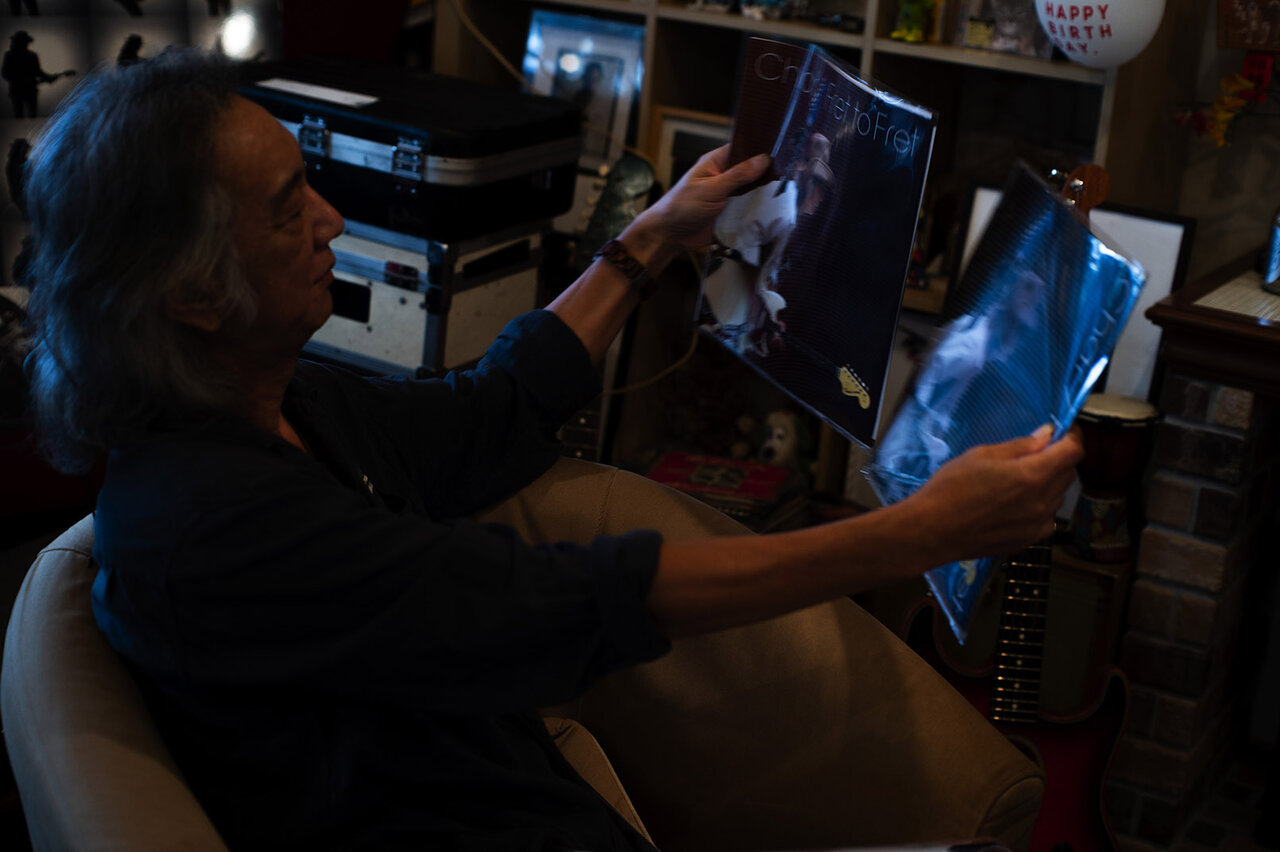
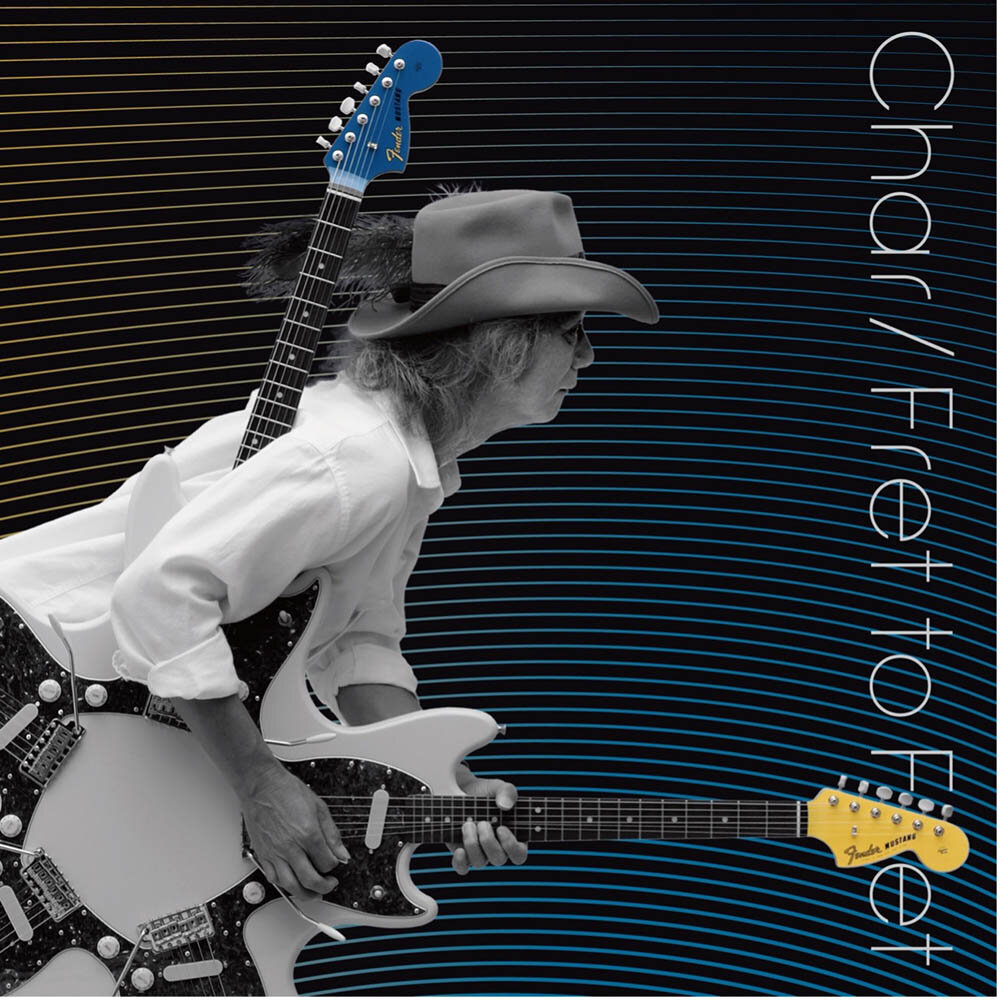
"In the 70s, around 15 or 16, I started going out from Togoshi Ginza to Shibuya, then Harajuku, learned about having fun, went to Akasaka, and eventually to London, Paris, and LA, meeting more people. That recklessness was youth. It was a kind of fearlessness. Now, I meet fewer people and am inspired less. This album might be very compact, free from the pressure of needing to be a certain way as a rock musician or guitarist. CDs are 70 minutes long, but an LP is about 23 minutes per side, so just under 50 minutes total, with pauses between Side A and Side B. Therefore, making an LP feels like packing things tightly. I agonize over the first and last songs on Side A, and the first and last songs on Side B. These are happy problems. There are songs that can't fit in 50 minutes, but with CDs, you can include many, so you have to include even good but not exceptional tracks. This can prevent you from crafting each song meticulously. This time, since it's an album, I also enjoyed the process of creating the album jacket. I want to pay attention to it, as it's viewed from a distance. When you see the visual, you should be able to hear the music inside. I'm happy to have returned here (to LPs) after 45 years. Don't you think CDs feel small and lack a certain emotional weight? There are many albums in the world where the design itself makes you wonder if they spent that much on it. Still, I feel I can't surpass my first album, 'Char,' with me in a white suit against a Mt. Fuji backdrop. 'I will be number one in Japan,' hence Mt. Fuji; I remember going with the photographer and just the two of us in the car, with the suit. I also recall the tension of it being a significant undertaking, different from a single, when I received the offer to release an album after talking about recording. I'm glad my debut album allows me to recall so many different scenes. I wanted the first album to be one I could listen to my whole life, so there was that level of tension and accomplishment. Even now, if asked which is my best, I would say the first album."
The words of a pioneer of Japanese rock guitarists, who still feels he cannot surpass his first album, are truly profound. It was an album filled with emotion. We felt the rock in "Smoky" from that album, and it seems like yesterday that we thought his unconventional song structure, his appearance, everything about him was cool. The first track on the new album "Fret to Fret" is "Stylist." As a fashion magazine, "PLEASE," this is also of particular interest.
Occupation: Guitarist.
"In the 70s, from 16 to 20, there was a Harajuku where I experienced both hardship and joy. There was Yasuko Takahashi (nicknamed 'Yakko-san'), who was the first stylist in Japan. Yakko-san was like a mother-in-law to a friend of mine. She was also someone who brought the profession of styling from overseas. That friend was also a guitarist, but he passed away, and we had drifted apart. Then, Non Nakamura, Yakko-san's first assistant, reconnected us, and I was able to speak with her again after a long time. In the last 10 years or so, I've also worked with Yakko-san. It's amusing that it was for a golf equipment company; it's interesting to meet someone who was at the forefront of fashion and a former Harajuku rock boy on the set of a golf video. Nevertheless, having people in professions like stylists around me since 45 years ago is important, and it wasn't that I decided from the start that this song would be called 'Stylist.' After it was completed, Yakko-san came to see it, and I thought it should be a song about someone in the styling profession. It wasn't a planned concept; it evolved from 'stylish' to 'stylist' to Yakko-san, and then I was able to write the lyrics all at once."
This song, too, may have been written by time.
"I wouldn't have thought of it 45 years ago, but there are scenes from over 45 years ago. Around Aoyama and Harajuku, there was a woman carrying a large bag. Back then, people in the background roles were much more prominent. This is a song about such a stylist."
This song was possible precisely because Char was there during the dawn of Japanese fashion, when stylish people were just beginning to gather in the streets of Harajuku.
"While I'm not a stylist like Yakko-san, being called a guitarist is thanks to that first album, 'Char.' I sometimes think, 'What kind of profession is a guitarist anyway?' (laughs). But I'm happy. It's a bit embarrassing, but I'm happy when people call me 'Char-san, the guitarist,' even though I never asked them to. I think this is also something that 45 years have created."
Occupation: Guitarist. For 45 years, Char, who has captivated us with his coolness, is a proper adult yet retains a boyish playfulness. And there's a hint of rebelliousness about him. Perhaps cool adults are, in the end, still 'children.'
Announcing the album "Fret to Fret"!
Char, who reached the milestone of his 45th anniversary since his debut in 1976, will release his first new album in 16 years, "Fret to Fret," on Wednesday, September 29th. Jun Sato (keyboards) and Robert Brill (drums), who participated in his initial three works, are also featured on the recording. Char himself describes it as "the fourth album, following the first three works since my debut," making it a highly anticipated release. As an artist whose expression is constantly evolving, isn't Char at his peak right now? This album allows us to fully appreciate the latest expressions of a musician who has pursued his own form of expression as a top runner for nearly half a century since encountering the electric guitar.
The interview is from "PLEASE 16."