
INTERVIEW | The Allure of Highland Park, a Spirit That Weaves Stories (Part 1) | HIGHLAND PARK
INTERVIEW | The Rich Aroma of Peat, a Gift of Nature Born from Orkney's Harsh Climate
Highland Park: The Charms of a Whisky That Weaves Stories (Part 1)
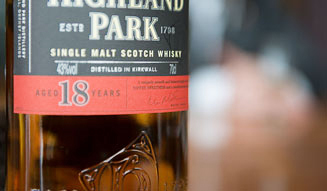
Distilled in a distillery on the northernmost edge of Scotland, "HIGHLAND PARK" is a whisky born from a challenging environment. The "Highland Park 18 Year Old" poured by Daryl Haldane, the brand's Global Brand Advocate, filled my mouth with a wonderfully gentle, full-bodied aroma and fruity taste, bringing an involuntary smile to my face. What kind of land, people, and methods give birth to Highland Park, a whisky admired by malt fans? Daryl Haldane began to quietly tell the "story of a journey through Highland Park."
Text by KAJII Makoto (OPENERS)
Photographs by SUZUKI Shimpei (INTERVIEW)
Whisky Born at 58°59′ North Latitude
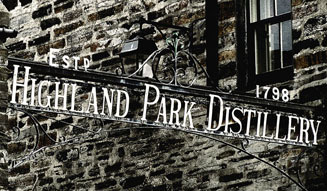
Orkadians (people of Orkney) take as much pride in their whisky as they do in their history. Highland Park was founded in 1798 on the "Orkney Islands," where Norse and Scottish cultures intersect. Since then, Highland Park has become a part of Orkney's heritage, and in 1999, it was registered as a UNESCO World Heritage site.
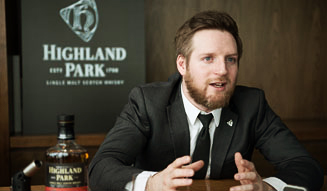
Daryl Haldane, the spokesman for Highland Park, smiles and says, "There are mainly three charms to Highland Park. Firstly, its long-standing, traditional methods that continue to this day. Secondly, this allows us to produce a whisky we can proudly recommend. And thirdly, it's simply delicious."

"The Orkney Islands consist of about 70 islands, large and small, and Kirkwall, where the distillery is located, is at 58°59′ north latitude. Our history is different from mainland Scotland, and we live in a very relaxed and calm town. Also, we have blue eyes, light-colored hair, and fair skin; we are not Scottish but of Scandinavian descent."
Swedes believe that the Highland Park distillery belongs to Scandinavia, thinking it's located not at the northernmost tip of Scotland, but at the "westernmost edge of Sweden."
"Can you imagine a place at 58°59′ north latitude? The first thing you notice when you come to Orkney from Japan is how incredibly windy it is. We have winds exceeding 40 miles per hour for more than 80 days a year. You can always hear the sound of the wind. However, since many people work outdoors, such as in farming, they become accustomed to the harsh climate and develop tough personalities. But even though it's harsh, it's not that cold. It never drops below freezing annually. Even on warm days, it only reaches about 15 degrees Celsius."
What Supports Highland Park's Quality
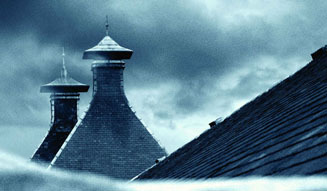
Let us introduce the five key processes that support the quality of Highland Park, crafted in such an environment.
Floor Malting
Highland Park still manually malts 20% of the malt used in production (the process of making malt by agitating barley soaked in water at regular intervals).
Orkney Peat
In Orkney, where trees do not grow, peat is harvested differently than in other parts of Scotland. Highland Park uses peat hand-cut from three distinct layers, which imparts a unique floral smokiness to the malt.
Cool Maturation
The whisky rests in a cool environment, where temperatures rarely exceed 15°C in summer and never drop below freezing in winter. Furthermore, due to the humid climate, the Angel's Share (the portion of whisky lost to evaporation during maturation) is less than in the drier regions of the mainland.
Sherry Casks of Oak
It is believed that up to 70% of a whisky's flavor comes from the cask. Highland Park uses sherry casks made from Spanish and American oak. Although sherry casks are expensive, they play a crucial role in creating a unique richness and layered complexity.
Cask Harmonisation
This is a period of harmonization where, after blending individual whiskies, they are returned to casks. Master Blender Max McFarlane ensures balance during this process, allowing the whiskies to meld together, creating consistency and harmony. Additionally, filtration is possible at temperatures above 0°C, preserving the smooth mouthfeel.
Why Do Whisky Enthusiasts Head to Scotland?
"Many men from Japan also visit Orkney for their Scotch whisky tours. I believe men who appreciate malt whisky often recognize the value of fine things and feel they gain the 'right to drink' by visiting the source. Interestingly, malt whiskies attract different types of men. Those who like 'The Macallan' often seem to prefer well-known brands, but with Highland Park, we tend to attract humble individuals who don't seek the spotlight and truly understand its essence. They are drawn to our story, tradition, and history, finding value in these aspects."
Recently, members of the Scotch Club of Japan (http://scotchclub.org/) visited. "As the distillery is small, it's one of the few places where you can see the entire production process. We encourage everyone to come, see, taste, and buy."
Daryl Haldane
"Highland Park" Global Brand Advocate. Born in 1984, from Scotland. Resides in Edinburgh. Since 2012, as the first Global Brand Advocate for Highland Park, he has been responsible for spreading the roots and enjoyment of "Highland Park" worldwide. He has experience as a Brand Ambassador for a major British liquor manufacturer and possesses advanced knowledge as a mixologist (a specialist who expertly blends ingredients and liqueurs to create cocktails) as well as extensive knowledge of spirits, including whisky.
Rémy Cointreau Japan
Tel. 03-6441-3025
- HIGHLAND PARK | The Charms of a Whisky That Weaves Stories (Part 1)
- HIGHLAND PARK | The Charms of a Whisky That Weaves Stories (Part 2)
- HIGHLAND PARK | The Charms of a Whisky That Weaves Stories (Part 3)