Embodying the Night Special Viewing of Kyoto's World Heritage Site, Kiyomizu-dera Temple | American Express
American Express | Embodying the Night Special Viewing of Kyoto's World Heritage Site, Kiyomizu-dera Temple
A Special Autumn in Kyoto Spent at the World Heritage Site, Kiyomizu-dera Temple
Kiyomizu-dera Temple, a World Heritage site and one of Kyoto's most popular attractions, draws visitors from around the globe. The temple's annual autumn night viewing began on November 11th, but in anticipation, an exclusive night viewing event for American Express card members was held on October 21st.
Text by YAMAMOTO mayumi(honu)
Kiyomizu-dera Temple, the head temple of the Kita Hossō sect located in Higashiyama, is renowned for its "stage" and is an ancient temple registered as a World Heritage site. In recent years, it has become a globally popular spot with a large number of international visitors. This event, held since 2014 and highly acclaimed, is where American Express, for its card members, exclusively rents out the temple grounds after regular hours and offers a variety of special experiences.
Despite the rainy weather that day, many participants were in attendance.
Immerse Yourself in the World of Kamigata Rakugo, Linked to Kiyomizu-dera Temple
Of the 1,000 attendees at the event, 150 began their experience at Entōden Hall. Here, the main attractions awaited: a dharma talk by Chief Priest Mori Seihan and a performance of the Kamigata rakugo story "Hate no Chawan" by Master Katura Beidanchi. The hall was filled with people of all ages from across the country, already buzzing with excitement.
First, a greeting was given by the representative of American Express, celebrating its 100th anniversary in Japan, followed by Chief Priest Mori's dharma talk.
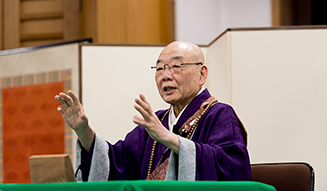
Chief Priest Mori, also known for his calligraphy of the "Kanji of the Year" announced annually, delivered a dharma talk that spanned a variety of topics. Beginning with a story about the Mid-Autumn Festival, he touched upon the religious tolerance of the Japanese people, the suppression of Buddhism and Shintoism during the Meiji era, the temple's ongoing repairs, and the origins of Kiyomizu ware. His talk, delivered in a powerful yet approachable Kyoto dialect, offered profound insights into the human spirit. His engaging storytelling, filled with humor, captivated the audience, who listened intently to his enlightening words.
Next, Master Katura Beidanchi took the stage to perform the much-anticipated "Hate no Chawan." Kiyomizu-dera Temple, founded in 778, has long been a revered site of Kannon worship and is frequently featured in classical literature, kabuki, and traditional rakugo. "Hate no Chawan" is one such story, revived and made a specialty by Master Beidanchi's father, the Living National Treasure Katura Beicho. This performance, deeply connected to Kiyomizu-dera, was a special treat.
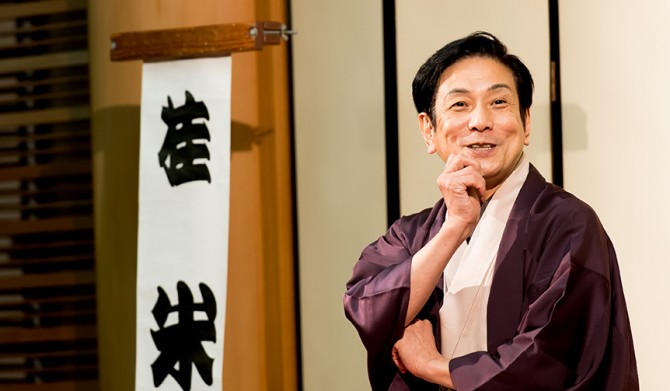
The story of "Hate no Chawan" begins at a teahouse near the Otowa Waterfall at Kiyomizu. An oil merchant from Osaka, resting at the teahouse, notices a renowned Kyoto ceramics dealer examining a teacup with a puzzled expression, remarking "Haten?" (What is this?). Believing it to be a valuable piece, the merchant buys the cup for two ryō from the teahouse and approaches the dealer, hoping to sell it for a higher price. The tale unfolds humorously through Master Beidanchi's refined narration: a seemingly ordinary, inexpensive teacup, through a series of coincidences, gains the endorsement of the Kanpaku (chief advisor to the Emperor) and the Emperor himself, eventually becoming worth a thousand ryō. The masterful portrayal of characters—the Osaka merchant, the wealthy Kyoto merchant, and the court nobles—drew continuous laughter from the audience. The performance concluded with the traditional "Beicho-jime" clap, a signature of the Beicho school.
Following the performance, Mr. Onishi Eigen, an executive official at Kiyomizu-dera Temple, provided an introduction to the temple's highlights before attendees proceeded to the next part of the evening: the special night viewing.
American Express | Embodying the Night Special Viewing of Kyoto's World Heritage Site, Kiyomizu-dera Temple
A Special Autumn in Kyoto Spent at the World Heritage Site, Kiyomizu-dera Temple (Part 2)
Exclusive Access to the Sacred Inner Sanctum
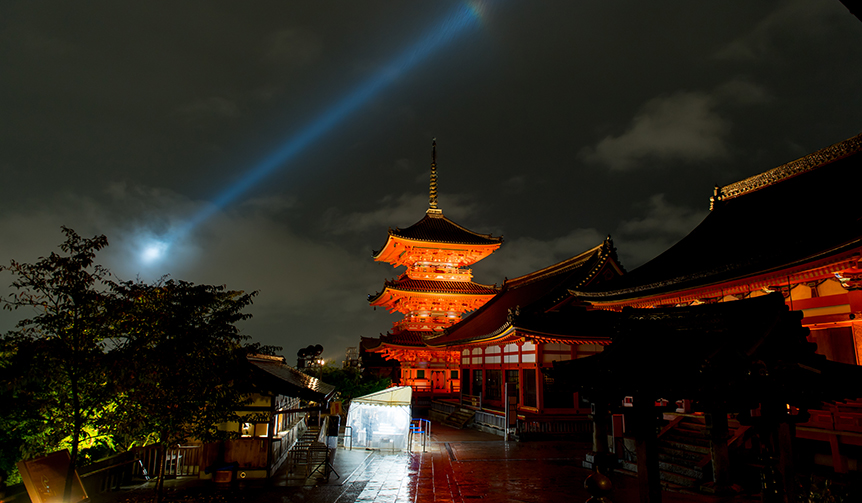
Kiyomizu-dera Temple, situated on the mid-slope of Mount Otowa, boasts a 130,000-square-meter precinct with 15 temple buildings, including National Treasures and Important Cultural Properties. The illuminated structures, such as the Niomon Gate, West Gate, and the three-storied pagoda, appeared ethereal against the rainy night sky. While the stage of the National Treasure Main Hall was covered by a temporary structure for roof repairs, preventing its original appearance from being seen, the hall itself was open for viewing.
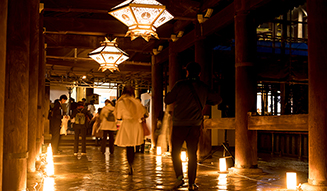
Entering the Main Hall through the Tōromon Gate, guided by the light of lanterns along the corridor, attendees were granted a special viewing of the inner sanctum, an area normally off-limits. This sacred space is rarely entered, even by monks. Within the vermilion-tiered altar, three National Treasure reliquaries stood, surrounded by statues of the Twenty-Eight Attendants and other deities honoring the principal image. The moment of beholding the Buddhist figures in the lamplight was profoundly solemn and moving. The principal image, a hidden Buddha—an eleven-faced, thousand-armed Kannon Bodhisattva statue—is enshrined in a reliquary behind the frontal image and is only revealed once every 33 years.
Enjoying a Luxurious Time Unique to a Private Event
In the Gakusha (music hall) adjacent to the Main Hall and the Amida Hall, the Kyoto Philharmonic Chamber Orchestra performed a string quartet, delighting the guests. Melodies ranging from classical pieces like "Moonlight Serenade" and "When You Wish Upon a Star" to pop songs such as "Air on the G String" blended surprisingly well with the surroundings, creating an elegant atmosphere.
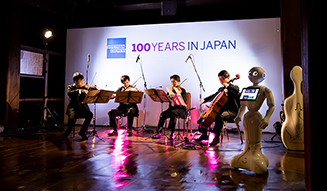
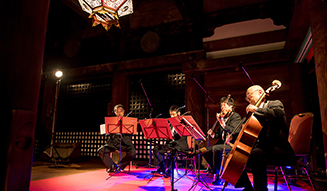
Lingering in the resonance of the music, attendees strolled through the grounds where the trees were beginning to show their autumn colors, and drank from the Otowa Waterfall, featured in the rakugo performance, to fulfill their wishes. Normally, the temple grounds are crowded at this time of year, making it impossible to appreciate the scenery at one's own pace. The ability to do so today was a welcome pleasure. Finally, warm amazake (sweet fermented rice drink) was offered at a teahouse, warming both body and spirit as the viewing concluded. It was a luxurious and enjoyable experience, rarely possible to encounter.
This hospitality-filled event, set against the backdrop of Kiyomizu-dera Temple in autumn, was truly befitting of American Express, and it was easy to understand why it has repeat attendees given its exceptional quality. American Express reportedly holds such events regularly. If you are interested, why not consider experiencing one for yourself?