Art Fair Tokyo 2012 | A Conversation with Collector Seiichi Yoshino: The Era of the Art Collector
ART FAIR TOKYO 2012
An Interview with Collector Seiichi Yoshino
The Era of the Art Collector
From March 30th, Art Fair Tokyo, now in its seventh year, will be held at the Tokyo International Forum in Yurakucho. It's a valuable opportunity to see a wide range of works from carefully selected galleries, including those from overseas. What sets it apart from a typical art exhibition is that most of the works are available for purchase on the spot. On February 19th, ahead of the fair, collector Seiichi Yoshino, who has acquired over 100 pieces ranging from ancient art to contemporary art, appeared for a talk event at "SUNDAY," a cafe in Sangenjaya. He spoke about buying and collecting art, drawing on his own experiences.
Photographs by SAITO SeiichiText by SUGIURA Shu (OPENERS)
Collectors: The Power Brokers of the Art World
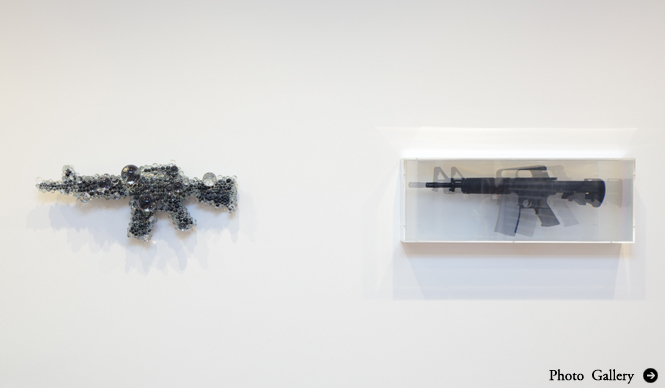
It seems we are currently in the era of the collector in the art world. While museums and international exhibitions like biennials have traditionally dictated trends, the influence of individual collectors can no longer be ignored. In Japan, there are collectors such as psychiatrist Ryutaro Takahashi and Daisuke Miyatsu, who are well-known figures in the art scene. Seiichi Yoshino is a young collector who, alongside running his company, owns over 100 works spanning from ancient to contemporary art. For over a decade, he has been seeking out pieces not only in Japan but also at museums and international exhibitions worldwide. At "SUNDAY," the venue for the talk event, about a dozen pieces were displayed, including Kohei Nawa's glass orb sculpture shaped like a pistol and Taiji Matsue's video installation.
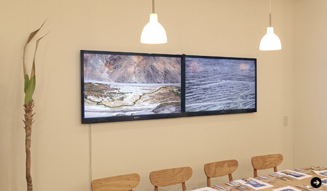
Taiji Matsue's video installation.
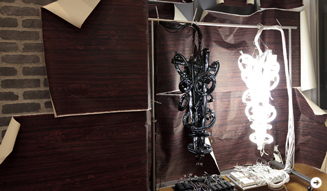
Yuichi Onna's chandelier.
"When curators find works and museums want to purchase them, it takes time due to organizational issues like budgets and procedures. In contrast, individual collectors can act quickly, making decisions swiftly."
Until the 1990s, wealthy individuals who bought art were not always driven by a genuine interest in art itself, but often by investment motives. However, recently, there has been an increase in discerning art enthusiasts who collect works based on their personal taste. Exhibitions featuring collections by Japanese collectors, such as Daisuke Miyatsu's collection exhibition at MOCA Taipei and Tsuneko Tanaka's at the Wakayama Museum of Art, are becoming more common. Yoshino himself has lent works to institutions like Maison Hermès and the Yokohama Museum of Art.
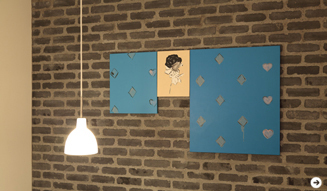
Shimon Minamikawa's painted work.
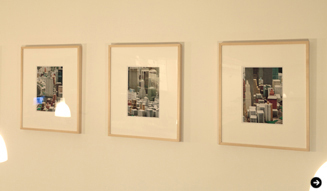
Naoya Hatakeyama's photographic work.
Furthermore, the Centre Pompidou, a French museum focusing on modern and contemporary art, has a community system for collectors. This system allows the museum to purchase and exhibit works using membership fees collected from collectors. Yoshino is also a participant in this program at the Centre Pompidou. Similar systems exist at other institutions, such as Tate Modern in London.
"While I'm still a collector with a relatively small collection, when I'm invited to the homes of famous collectors overseas, I'm often surprised to see renowned pieces that I've only seen in catalogs. In the home of a certain collector in Venice, there was a large work by Takashi Murakami, and their collection was far more substantial than that of many public museums. Because they choose works based on personal taste, the coherence they achieve is fascinating, offering a different perspective from museum-curated exhibitions. The value lies not just in individual pieces, but in the collector's overall sense of curation."
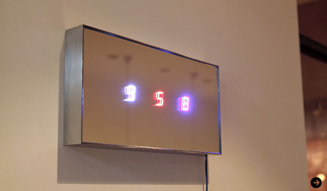
Tatsuo Miyajima's digital counter.
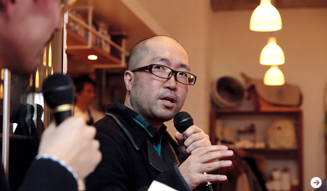
Seiichi Yoshino is also scheduled to provide guidance at Art Fair Tokyo.
In Europe, some collectors open their homes to the public during art fairs to showcase their collections. In Japan today, such opportunities and customs are rare. Yoshino opened the cafe "SUNDAY," the venue for this talk event, last August with the desire to share his collection more freely. "SUNDAY" is, in fact, the cafe he opened.
In Japan, where art is relatively inexpensive compared to the rest of the world, could the art market, which is dominated by the wealthy abroad, be more "democratized"? In this era of blogs and social media, where individual influence has grown significantly, the art world is no exception. Is this the era when art is not just for viewing, but for buying?

Art Fair Tokyo 2012
March 30 (Fri) 11:00-21:00
March 31 (Sat) 11:00-20:00
April 1 (Sun) 10:30-17:00
*Last admission 30 minutes before closing
Tokyo International Forum, Exhibition Hall
3-5-1 Marunouchi, Chiyoda-ku, Tokyo
Tel. 03-5771-4520 (Art Fair Tokyo Executive Committee)