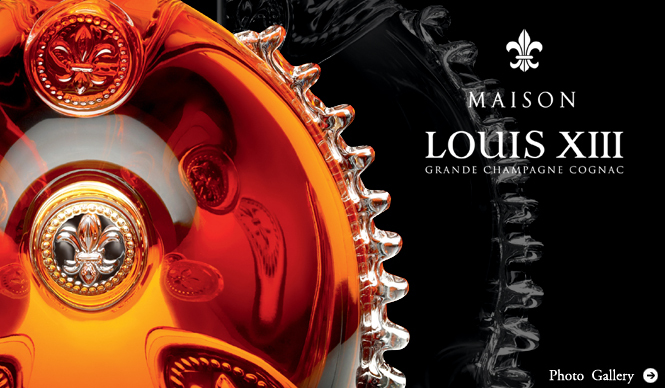
Louis XIII: A Cognac Born of Miraculous Terroir, Matured by Time
LOUIS XIII | LOUIS XIII
A Unique Brandy Born of a Miraculous Land and Nurtured by Time
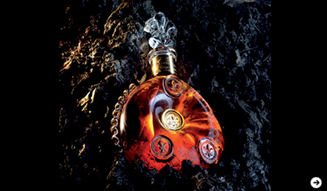
In 1874, Rémy Martin, or rather, a world-leading brandy, appeared. This was Louis XIII, made from eaux-de-vie aged for over half a century in the cellars of the house, already renowned for its Cognac production, and presented in a decanter adorned with lily flower motifs. It was named in honor of the French king who encouraged brandy production in the early 17th century, during whose reign the Rémy Martin family was established.
By Tai Matsuo
Distilled Wine
While the meaning has broadened today, brandy originally referred exclusively to fermented and then distilled grapes.
In the late 17th century, distilled wine from the Cognac region was called "burnt wine," "Vin brule." Dutch merchants translated this literally into Dutch as "Brandewijn" and exported it mainly to England. It was in England that it came to be called "Brandy." Thus, it becomes clear that brandy is a spirit born out of a desire to drink wine more deliciously. Therefore, like wine, terroir is a crucial factor in determining the taste and quality of brandy.
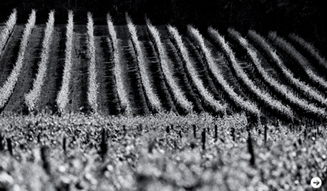
The land that produces the finest brandy is found in the Cognac region, located about 400 km southwest of Paris along the Charente River. Here, clay-limestone soil covers a calcareous subsoil, with limestone content exceeding 60 percent even at the surface level. The montmorillonite clay makes the soil fertile and well-drained, while the porous subsoil draws water up through capillary action, preventing the land from drying out. Consequently, even in dry air, the surface soil remains moist.
To be called "Eau-de-vie-de-vin-de-Cognac," brandy produced in the Cognac region must be made from grapes harvested in one of the six cultivation areas, undergo two single distillations, and be aged for at least two years in French oak barrels. These six districts are Grande Champagne, Petite Champagne, Borderies, Fins Bois, Bons Bois, and Bois Ordinaires.
Among these, Grande Champagne is considered the premier cru. Grapes harvested in Grande Champagne are known for their delicate aroma and rich body, but they require many years to mature. The primary grape variety cultivated is the Saint-Émilion (known as Ugni Blanc in the Cognac region), which yields wine with high acidity and low alcohol content, but results in a highly aromatic brandy.
Why Louis XIII?
Louis XIII is a Cognac. Even if you haven't tasted it, many readers have likely heard its name. What, then, constitutes a high-end brandy? It is a spirit born from grapes selected from a miraculously small plot, fermented into wine, and then, after an unimaginably long aging process, carefully decanted from the finest barrels into an amber liquid. To put it without fear of misunderstanding, it is a spirit that further concentrates the character of the finest grapes and the excellence of a superb wine through distillation.
Louis XIII is produced exclusively from eaux-de-vie made from grapes carefully cultivated in Grande Champagne. Currently, the total area permitted for Cognac production is 1,095,119 hectares, of which only 78,179 hectares are dedicated to grape cultivation, with approximately 95 percent of this allocated to Cognac production. Within this, the Grande Champagne district accounts for 13,159 hectares of grape cultivation. Cognacs meeting the "Grande Champagne" standard, made solely from grapes from this region, represent less than one percent of all Cognac products. Among these, only a select few, from grapes grown in the very best terroirs, can become Louis XIII.
An Art Born Over Two Centuries
An anecdote illustrates that the vineyards of Rémy Martin, which produce Louis XIII, are distinct. In 1738, France experienced a widespread crop failure. Despite King Louis XV ordering the conversion of vineyards to grain fields due to a national shortage of grain, only the vineyards belonging to Rémy Martin were granted permission to expand.
This was undoubtedly because the excellence of the grapes produced from Rémy Martin's vineyards and the superior quality of the resulting spirit were recognized.
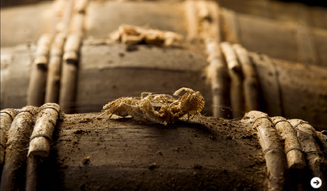
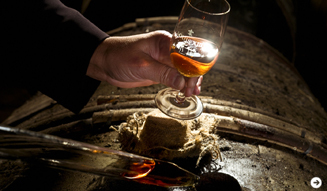
Louis XIII is born from the assemblage (blending) of over 1200 eaux-de-vie, aged for 50 to 100 years or more in barrels made from French Limousin oak trees over 100 years old. It is a remarkably patient endeavor. The decanter before you contains eaux-de-vie from a century ago. Including the age of the oak barrels, Louis XIII requires two centuries of time. This is a magnificent art form, embodying the time and passion of four generations of cellar masters.
When poured into a glass, it presents a surprisingly powerful attack, followed by the delicate aroma of white flowers. Subsequently, spicy notes emerge. It is complex, full-bodied, yet refined, with an endlessly long finish. Despite its high alcohol content of 40%, it flows down the throat as smoothly as silk. Just a single sip will reveal why Louis XIII has garnered such immense acclaim.
Thirteen men who resonate with Louis XIII's uncompromising approach to winemaking will now serve as ambassadors. At the bar "Maduro" in the Grand Hyatt Tokyo in Roppongi, they will use this location as their base to demonstrate stylish ways of enjoying Louis XIII and to share its magnificence. Please look forward to the next chapter.
MADURO
Tel. 03-4333-8783
Hours | 6:00 PM - 2:00 AM (Fri, Sat until 3:00 AM)
Location | GRAND HYATT TOKYO 4F