INTERVIEW | A World-Renowned Chef and a Premier Coffee Maker Share a Philosophy of "Sustainability"
INTERVIEW | Sharing a Philosophy of "Sustainability"
A World-Renowned Chef and a Leading Coffee Maker
Chef Yoshihiro Narisawa Interview (1)
You've likely heard the word "sustainable" recently, a concept advocated globally across all aspects of life, from food and clothing to housing. It signifies "sustainability" with consideration for the future environment and the benefits for the next generation, and has become a crucial keyword for us who have savored "good" and "delicious" things. This time, Chef Narisawa, who resonates with this philosophy of "sustainability," visited a coffee farm in Brazil as part of the "Nespresso AAA Sustainable Quality™ Program."
Text by AKI FUJIIPhotographs by YOSHIHIRO NARISAWA & NESPRESSO
"Coffee is a shared ingredient worldwide," so I wanted to see the production sites with my own eyes.
Chef Yoshihiro Narisawa is a pioneer in presenting dishes related to nature conservation under the theme of "The Fusion of Sustainability and Gastronomy." Through dishes like the "Soil" soup and "Water" salad served at "Restaurant NARISAWA" (hereinafter referred to as NARISAWA), he makes people aware of nature and continuously advocates for environmental issues through his cuisine.
On the other hand, "NESPRESSO," the pioneer of premium portioned coffee, embraces "sustainability" as a program. Launched in 2003, the "AAA Sustainable Quality™ Program" aims to secure high-quality coffee beans for the future and contribute to improving the livelihoods of coffee farmers.
"At NARISAWA, we use almost exclusively Japanese ingredients, importing only cacao, spices (pepper), and coffee as exceptions. Regarding these three ingredients, I've always felt that 'they are produced by people worldwide and shared globally,' so I've wanted to see the safety of the ingredients, the soil, and the faces of the producers with my own eyes."
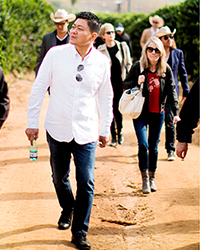
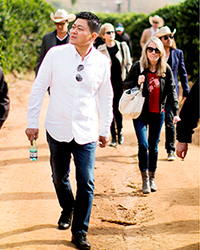
Seeing the faces of the producers means understanding who grows them, in what environment they are cultivated, and how their working conditions are protected.
"After flying to the farm from São Paulo, Brazil, in a small plane, and traveling through areas where nature was untouched, almost like unpaved roads, I arrived to find generational farmers and workers diligently toiling beneath them... My initial impression was, 'Just as I suspected.'"
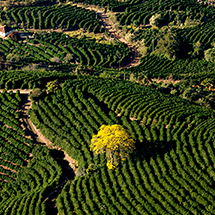
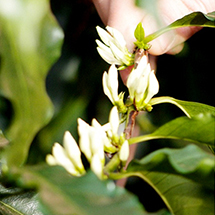
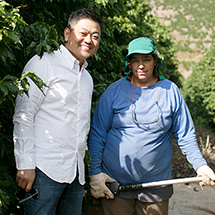
Coffee, which requires a hot climate and abundant rain, is largely grown in rainforests (subtropical regions). This often leads to harsh working conditions, with many migrant workers and a high prevalence of difficult labor environments. I imagined that this was far from the situation in developed countries, where workers' rights are protected under the principle of "equality and fairness" between employers and employees.
"I had the opportunity to try Feijoada, a dish made by the local women by simmering black beans (Brazilian beans) with sausage, and also a simple dish of pan-fried tapioca flour made from locally harvested tapioca. These are typical Brazilian home-style meals. They weren't luxurious, but they were incredibly delicious, and the local people enjoyed this way of eating. They didn't seem to need much money, nor did they feel unhappy by eating the same meal day after day. It's not like the excessive desire in Japan to 'eat Chinese today, go for sushi tomorrow, and try Italian occasionally.'"
In developed countries, people feel a sense of lack if they don't meet the "raised standards" of wearing the same clothes as everyone else, or owning similar bags and shoes.
Observing life on the local farms, Mr. Narisawa strongly felt that the human perception of "fulfillment," or the degree to which one feels happiness, varies greatly depending on the environment.
Therefore, he seriously considered, "What do these coffee farm workers consider 'fortunate'? What needs to be protected for them?"
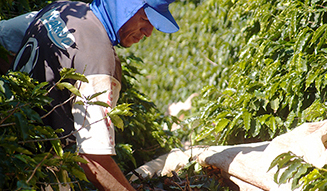
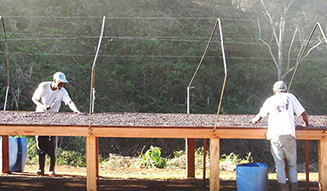
"I felt that it's crucial to ensure basic conditions: being healthy, having work that isn't excessively harsh, being able to take regular days off, having access to nutritious meals, and earning wages sufficient for their needs here."
"While initiatives like the 'Rainforest Alliance' exist, Nespresso's AAA program is particularly well-reasoned. In addition to basic conditions like health checks and working hours, it includes specific guidance for coffee production, such as recommending hats for workers laboring under the hot sun and providing special goggles for protection when beans might fly out during grinding."
INTERVIEW | Sharing a Philosophy of "Sustainability"
A World-Renowned Chef and a Leading Coffee Maker
Chef Yoshihiro Narisawa Interview (2)
Sharing Market Value and Growing Demand to Support Increased Net Profits for Producers
He also mentioned the increasing global demand for coffee year by year. If Chinese and Indian people, who currently prefer tea and black tea, begin to enjoy coffee, the consumption volume will be immense.
"As demand grows, the farms should become more prosperous. However, it's essential that the profits are also distributed to the workers and not just hoarded by the farm owners. In the AAA program, farm owners are provided with information, including the current market price of coffee beans, ensuring proper information sharing."
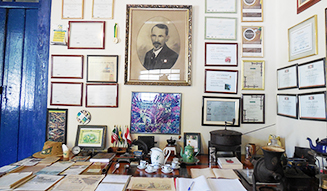
"Furthermore, when issues arise, such as farm diseases or poor harvests, Nespresso sends specialized agronomists to the farms to act as consultants. This is support for productivity. I realized that maintaining a good balance between the environment (farmland and machinery), working conditions, and quality is what leads to 'sustainability.'"
Nespresso Elevates Coffee Production Worldwide
Nespresso's portioned coffee holds a 2% share of the global coffee market. While this might seem small, consider that coffee is ubiquitous – from convenience stores and vending machines to home brewing – and 2% of all coffee worldwide is a significant share.
"If the working conditions of 2 out of 100 people are protected, it influences others to see it as the norm, leading to an overall improvement. I wouldn't have known this without visiting the site. Initially, I had some doubts about the AAA initiative, wondering if it was just a performance. However, witnessing its impact on the ground dispelled those doubts, which was a positive outcome."
Another point that resonated with Chef Narisawa regarding Nespresso's initiatives is that they provide feedback to the producers about consumer reactions and responses after the coffee beans become a product.
In the past, communication was one-way, from producer to consumer. Producers had no way of knowing where their coffee was consumed, when, or by whom, leading to little sense of accomplishment or satisfaction.
"The reason we source meat, fish, and vegetables directly from producers at NARISAWA is that I can understand their hardships and re-appreciate the value of the ingredients. By visiting the farms, I can also convey how their products are prepared and served, and which customers enjoy them. Producers gain a sense of achievement and satisfaction that cannot be bought with money, and it motivates them to continue their hard work. I don't go to Tsukiji (fish market) because I can't have that kind of exchange with producers."
Through this visit, Chef Narisawa realized that Nespresso, as a company, engages in similar exchanges.
"Having seen the actual conditions, it was immediately clear that this is not a recent effort. It's because of the consistent support from Nespresso and the dedication of their professional teams that we can enjoy such high-quality coffee consistently."
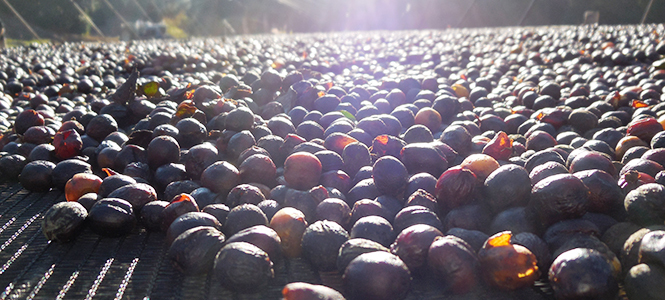
The organic coffee served at NARISAWA is also sourced from a unique farm in Minas Gerais, Brazil, which adheres to complete organic practices, even for chicken feed. I learned this during my visit.
"As organic practices are central to my philosophy, I import green beans via airfreight from 'Café Pele,' Brazil's number one coffee company. However, roasting with binchotan charcoal is extremely difficult, and even brewing a single cup of coffee can result in unstable flavor."
Because Chef Narisawa himself understands the challenges involved in preparing a perfect cup, he deeply appreciates the consistent quality and ease of enjoyment offered by Nespresso. He looks forward to the continued efforts of the AAA program.
Chef Narisawa concluded with the following remarks.
"The farmers we work with were initially considered eccentric for their commitment to organic methods. By continuing to fulfill my role in supporting these farmers, I am reminded of my commitment to consistently provide the high-quality cuisine that our customers expect."
YOSHIHIRO NARISAWA
A chef. Owner and chef of "NARISAWA" in Minami-Aoyama, Tokyo. Born in Tokoname City, Aichi Prefecture, in 1969. After spending eight years under renowned European chefs from the age of 19, he opened "La Napoule" in Odawara, Kanagawa Prefecture, as an owner-chef upon his return to Japan. This small restaurant by the harbor, which attracted many celebrities and gourmands from Tokyo, is still spoken of as a legend. In 2003, he renamed the restaurant "Les Créations de NARISAWA" and relocated to Minami-Aoyama, Tokyo. In 2011, the restaurant was renamed "NARISAWA." His messages, embodying a wish for nature's regeneration and a safe environment, have been acclaimed at culinary conferences worldwide, including in France, Italy, Spain, and Brazil. In 2011, he was named one of "The World's 50 Most Influential Chefs" at Madrid Fusion.
NARISAWA
Opening Hours | Lunch 12:00-13:00 (Last Order) Close 15:00
Dinner 18:30-21:00 (Last Order)
Closed Sundays, irregular holidays
2-6-15 Minami-Aoyama, Minato-ku, Tokyo
Tel. 03-5785-0799
http://www.narisawa-yoshihiro.com/