Fate Turns on Your Will: An Introduction to the Noteworthy Philosophy of Bansho Rigaku | LOUNGE
LOUNGE | The Principles of All Phenomena
Interview with Tetsuro Saito, Proponent of Kyusei Kigaku for a Better Life
In today's society, human behavior and inclinations are analyzed and quantified through digital means. Yet, we also face a pervasive sense of unease about the future, marked by rapid environmental changes and unstable social conditions. Amidst this, Kyusei Kigaku, a system that commands immense trust among prominent athletes and young entrepreneurs, is gaining attention. Known as "The Principles of All Phenomena," this unique form of Kyusei Kigaku was systematized by the late Koyu Sasaki, a master of Kigaku and a Doctor of Philosophy. We delved into his teachings.
Text by TSUZUMI Aoyama Photography by KEN Takayanagi
What are The Principles of All Phenomena?
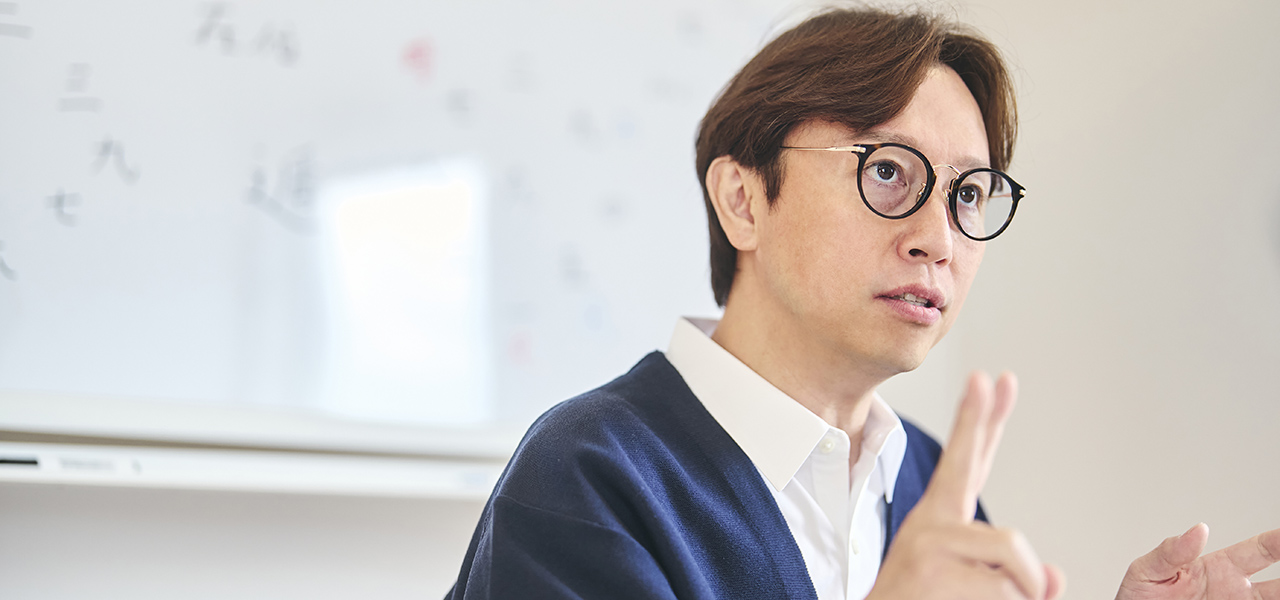
We spoke with Tetsuro Saito, the proponent of The Principles of All Phenomena and grandson of its founder, Koyu Sasaki, who now leads the practice.
"The Principles of All Phenomena is a profoundly positive discipline for cultivating good fortune."
Though raised with teachings of Kigaku and philosophy from childhood, Saito never intended to pursue Kigaku as a lifelong career. A turning point came in his early twenties. While studying media communication in the United States, he tragically lost both parents around the same time. Left alone in the world, it was natural for him to lose his emotional balance. It was then that he recalled the books on The Principles of All Phenomena by Koyu Sasaki, which he had avidly read as a child. The words within offered him solace. From that moment, he became immersed in mastering The Principles of All Phenomena, following his grandfather's teachings.
"My grandfather, after studying and researching Kyusei Kigaku, concluded that when we are born into this world, we are endowed not only with a 'main star' in Kyusei Kigaku but also with a destiny related to direction. He named this 'Kyōshiritsu.' The Principles of All Phenomena uses this 'Kyōshiritsu' along with the 'main star' of Kyusei Kigaku, employing a unique classification method to deeply understand a person's core personality and to help them improve their situation, whatever it may be."

A Pillar of Support for Ryoyu Kobayashi
The Principles of All Phenomena are gaining attention because they yield practical results. Among Saito's students is Ryoyu Kobayashi, who won gold in the men's normal hill and silver in the men's large hill at the 2022 Beijing Olympics. Kobayashi achieved his Olympic gold medal with advice from The Principles of All Phenomena. While the athlete's own efforts were paramount, it's undeniable that the practice may have brought a positive influence to his performance.
Another compelling case involves a business owner. By diligently practicing the recommended auspicious directions, this executive saw a significant improvement in business performance and gained new business opportunities. There's also the example of a man in his thirties who learned how to improve communication with a difficult superior, leading to a better working relationship. A CEO found the system invaluable for educating children and subordinates, as it reveals their inherent strengths and weaknesses. Furthermore, a housewife facing family issues reported an improvement in family relationships after consistently following the auspicious direction practices.
Divination Developed in Ancient China
The I Ching, a well-known form of Chinese divination, is a compilation of divinatory practices dating back to around the 8th century BCE. According to Saito, its roots lie in Yin-Yang philosophy, which posits that the world is composed of opposing forces, Yin and Yang, and that these principles govern the laws of change in all phenomena.
Unlike modern divination, ancient practices were recognized by people as holding significant meaning. They were used in making crucial decisions in areas such as politics and warfare, and thus were valued and developed as systematic fields of study. They were not mere baseless prophecies, cultish beliefs, or matters of faith, but rather tools used to systematically view the world and logically determine future actions.
Over time, various schools of thought emerged and faded, such as the Five Elements theory, which attempts to categorize the world into five components, and the Nine Stars system, which divides things into nine celestial bodies. In modern China, Feng Shui gained widespread popularity.
A New Field of Study Discovered by a Doctor of Philosophy
In Japan, Kigaku became popular during the Taisho and Meiji eras, systematized by Shinjiro Sonoda. Sonoda, who had learned the Nine Stars system from a Buddhist monk, conducted fortune-telling at his practice. He eventually became convinced of the accuracy of the Nine Stars system and named it 'Kigaku,' marking its origin.
"My grandfather lived during that era. He faced many hardships, including contracting polio and losing all his assets in World War II. Yet, like me, he encountered two books during a period of despair. One was a philosophy book, and the other was about Four Pillars of Destiny and the I Ching."
Tetsuro Saito's grandfather, Koyu Sasaki, encountered Kyusei Kigaku, conducted extensive research, and subsequently published The Principles of All Phenomena. He then earned a doctorate in philosophy for his thesis on the subject. While conducting his research, he often lectured to local residents, discussing how they should live their lives.
"This is my speculation, but perhaps as he practiced philosophy, the prevailing Kigaku of the time greatly aided him in clarifying his path forward. Kigaku, in particular, has aspects of physics and mathematics. The combination of a humanities-focused philosophy and a science-oriented Kigaku must have been highly compatible."
Actively Cultivating Good Fortune with The Principles of All Phenomena
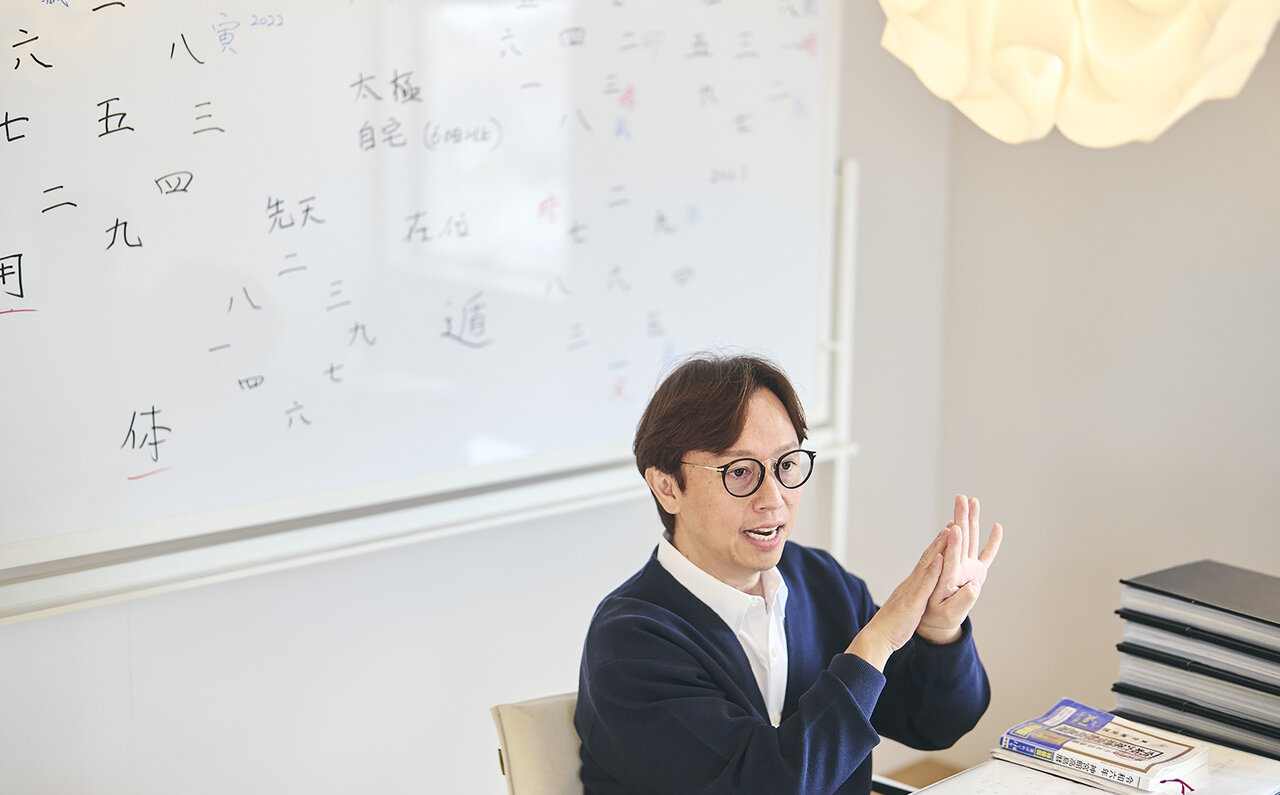
"As I mentioned earlier, my grandfather experienced the despair of his efforts coming to nothing. The positive mindset that helped him rise from the depths of despair, time and again, is the underlying spirit of The Principles of All Phenomena. I believe this is what fundamentally distinguishes it from many other forms of divination, and I myself have been saved by these teachings."
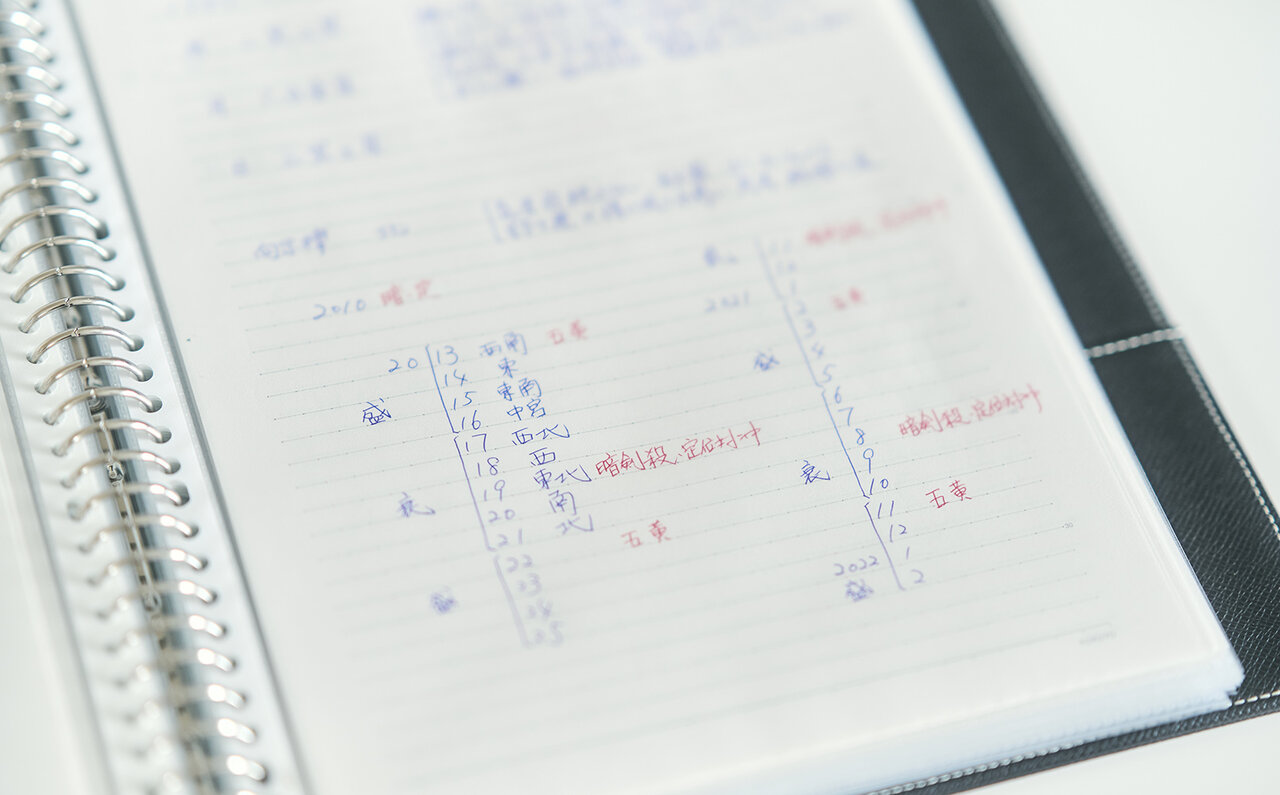
Kyusei Kigaku posits the existence of 'auspicious directions.' Also known as lucky directions, these are paths that lead to good fortune and can change daily.
"The essence of The Principles of All Phenomena lies in interpreting things like auspicious directions and interpersonal compatibility, and actively utilizing them. Even when facing hardship, one should never give up, but rather enhance their quality of life by improving their fortune through auspicious directions."
For instance, choosing a travel destination, timing a move, or deciding where to open an office can all be influenced by the direction and timing, allowing one to improve their fortune. What if you could predict the ebb and flow of luck and avoid negative currents? What if you could proactively steer your destiny toward a better outcome? Wouldn't that bring a sense of relief? Saito suggests this is possible.
Living in a world that feels entirely digitized and optimized can sometimes lead to a sense of resignation. In such times, the idea that one possesses the means to alter their own destiny offers a glimmer of hope. It is likely this very possibility that is drawing attention to The Principles of All Phenomena.
*From the Digital Archives of Kyoto University's Rare Materials: "Chronological Table of Literary History Traced Through Kyoto University's Holdings: I Ching"
Tetsuro Saito
Kigaku Instructor, The Principles of All Phenomena. Grandson of the late Koyu Sasaki, a Kigaku instructor and Doctor of Philosophy. Began receiving instruction in Kigaku and philosophy from Koyu Sasaki in the third grade of elementary school. Moved to the U.S. at age 20 to study media communication. After returning to Japan, worked as an interpreter for politicians and athletes before establishing himself as a Kigaku instructor in 2013. He currently provides Kigaku instruction to a wide range of clients, including politicians, chairpersons of listed companies, celebrities, Olympic athletes, and housewives. As of March 2024, he has instructed 8,583 Kigaku practitioners and conducted 17,000 Kigaku readings.
Kigaku Instructor, The Principles of All Phenomena. Grandson of the late Koyu Sasaki, a Kigaku instructor and Doctor of Philosophy. Began receiving instruction in Kigaku and philosophy from Koyu Sasaki in the third grade of elementary school. Moved to the U.S. at age 20 to study media communication. After returning to Japan, worked as an interpreter for politicians and athletes before establishing himself as a Kigaku instructor in 2013. He currently provides Kigaku instruction to a wide range of clients, including politicians, chairpersons of listed companies, celebrities, Olympic athletes, and housewives. As of March 2024, he has instructed 8,583 Kigaku practitioners and conducted 17,000 Kigaku readings.