Solo Exhibition "Sun and Bones II" Held: An Interview with Kazumi Kurigami
Solo Exhibition 'Sun and Bones II' Held
Kazumi Kurigami: An Interview
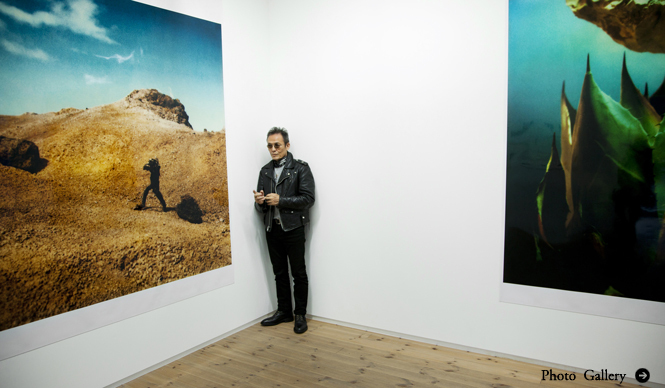
To coincide with the release of Kazumi Kurigami's latest photo collection, 'Sun and Bones II,' a solo exhibition of the same name is being held at Taka Ishii Gallery Photography/Film until November 19. All nine works, including two enlarged to 180 centimeters square, were shot with a Polaroid SX-70 camera. Ahead of this, we asked Kurigami about the release of this new photo collection.
Text by Yuka Kobayashi
Photos by Hiroaki Sagara
The World of the Polaroid SX-70
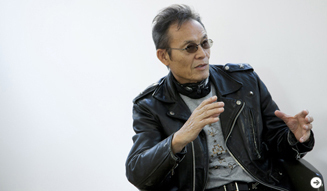
'Sun and Bones' was published in 1984. It has been nearly 30 years since then until this sequel. Why now? 'It wasn't a matter of being fully prepared,' she says. 'Among the things I had been shooting in my daily life, the Polaroid photos taken with the SX-70 were gathered together. When I happened to look back at them, I found many works that were still interesting and conveyed their images even with my current sensibilities. The sense of immediacy that still comes through, the feeling that the images almost rise up before you as you look at them. So, I thought it might be interesting to give them form, based on my own emotions, separate from the movements of the world.'
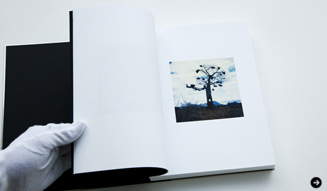
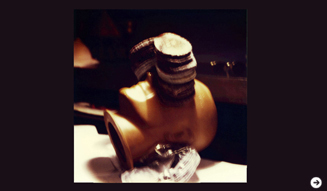
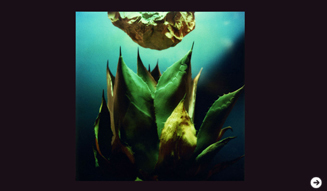
'Sun and Bones II' features 120 selected works from those she has shot as a life's work from 1972 to the present. '"Sun and Bones" was an act of looking at my own sense of time in everyday life. For the previous "Sun and Bones," I compiled works taken with regular cameras and toy cameras, but for this "Sun and Bones II," I limited it to works taken with the SX-70, with the same intention. The SX-70 has a unique artistic personality. Compared to other popular color films of the same era, it gives the impression that it doesn't quite capture things properly. It has a superficial texture; even if the grain is fine, it lacks a certain depth, and in a way, realism is lost. But because of that, there's a sense of fantasy, a floating quality that realism doesn't have. While it's about capturing what inspires my physiology, just like with other cameras, when I use the SX-70, it involves a more intellectual observation.'
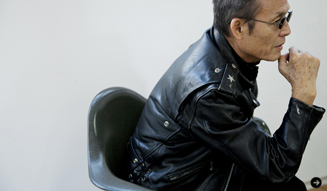
Neither Shadow nor Death: 'Bones,' the Ultimate 'Death'
'And when I look back at the works taken with the SX-70, I feel like I can step back into them. I can converse with that moment. The Polaroids taken with the SX-70 have had time fermenting in their storage boxes, and this time, I confronted that fermented time. Photography is something you chase. It's yourself. You chase what is closest to your own feelings, your own physiology. In my case, that's my view of life and death, and I tend to chase images of 'death,' but it's not 'death' itself. That's why I use the word 'bones' in the title instead of 'death.' Bones are the ultimate death. It's similar to the thrill you feel when you press the shutter. That's why it's not something you just make one book and finish; it makes you want to create more and more. I believe 'Sun and Bones' is the ultimate title, the ultimate theme.'
Solo Exhibition 'Sun and Bones II' Held
Kazumi Kurigami: An Interview
Consciousness of One's Time Within the Universe
'Diary,' published in 2005, was also a collection of works that could be considered a life's work, wasn't it? 'Diary, as the name suggests, is a record. It's not a work specifically aimed at my view of life and death or my sense of time like "Sun and Bones." It's like a photo diary, picking up a set number of shots each month from everyday snapshots. Looking back at it, I could see how far I had traveled for work and on trips each month, and it was interesting to see the trajectory of my movement across the globe. In the "Sun and Bones" series, I was more conscious of my internal clock, thinking about how to be aware of my time within the universe. The works in "Sun and Bones II" are like fragmented time, such as waves rising in a sand dune and then slightly collapsing, like sand.'
'I see things within the time I am alive, so a photographer, in a sense, carves out their own time and the act of pressing the shutter is also about cutting out one's own time. That's why the selection is difficult. However, the process of constructing a story while constantly entering and exiting that world and feeding back is the interesting part of editing. Even when a book is completed, the relief lasts only a moment, and in the next moment, I'm already thinking, 'What should I do for III?' If I were to create a III, I believe I could create something that perfectly matches the concept of 'Sun and Bones' using only the power of moving images. Without that kind of emotion, it doesn't lead to further development.'
The True 'Chic' Embodied in the Binding
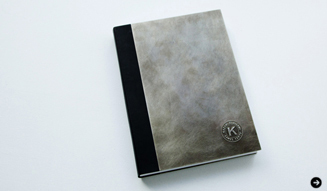
This photo collection uses heavy metal for its binding. What was the intention behind this design? 'I used metal for the cover because the texture of the film has a hard image, and also, frankly, because I wanted to pack away all the works I had accumulated (laughs). I considered using cardboard, like in 'Diary,' but this time, I decided to enclose them with metal. The idea was, 'Wouldn't it be great to just pack all the photos into one book, seal it with metal, wrap it tightly with rope, then secure it with wire, and just stack it in a corner of the room?' After all, photographs are about capturing time. Looking back at them again, and having a different thing born from the interaction between the original time and my present self... that's also photography, but I actually think it would be the coolest to not allow that, to just pack it completely and tie it up with rope.'

Kazumi Kurigami "Sun and Bones II"
Exhibition Period: Until Saturday, November 19
Venue: Taka Ishii Gallery Photography/Film
6-6-9 Roppongi, Minato-ku, Tokyo 2F
Tel. 03-6447-1035
Opening Hours: 11:00 - 19:00
Closed: Sundays, Mondays, and National Holidays
http://www.takaishiigallery.com/