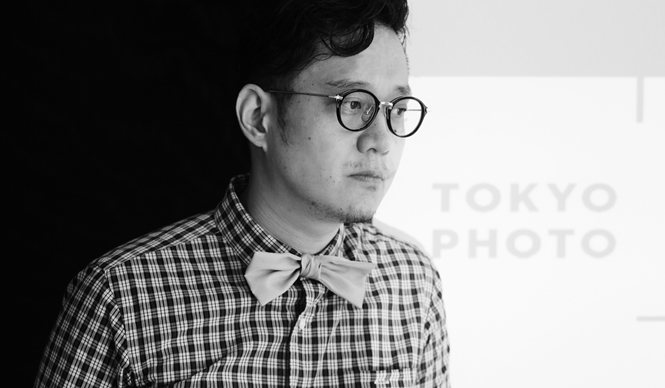
TOKYO PHOTO | Interview with Tomohiro Harada, Representative of Tokyo Photo!
TOKYO PHOTO
What are the highlights of the "TOKYO PHOTO 2013" special exhibitions?
An Interview with Representative Tomohiro Harada!
"TOKYO PHOTO 2013" is set to open at Zojoji Temple in Shiba Park, Minato Ward. In addition to the main exhibition, five special exhibitions will also be held. These include "Views from a Moving Car - Daido Moriyama, Joel Meyerowitz, John Divola," curated by Simon Baker of Tate Modern, and exhibitions dedicated to Japanese and American photographers: "Tribute to Shomei Tomatsu" and "William Klein Photographs - Tokyo." Rounding out the lineup are the group exhibitions "Hasselblad Masters Awards" and "100 Children of the Future in Japan and China." We spoke with Tomohiro Harada, representative of "TOKYO PHOTO," about the highlights of each exhibition.
Text by Winsome Li (OPENERS)
Five Special Exhibitions Symbolizing the Photographic Culture of Each City
—TOKYO PHOTO always holds special exhibitions. How are the themes for these exhibitions decided?
We spend a full year preparing for TOKYO PHOTO. We gather information by visiting art fairs around the world and building various networks. First, there's Frieze Art Fair in London in October, followed by Paris Photo in November, and Art Basel in Hong Kong in May. While searching for ideas at these art fairs, various concepts emerge, which we then carefully evaluate. Of course, some planned exhibitions may be abandoned, and new ideas can arise unexpectedly.
The subjects for the special exhibitions are always those with global influence. This year's five exhibitions feature photographers and curators from Japan, the UK, the US, and China. We decided on these themes while ensuring a balance across different cities, so as not to be limited to just Japan.
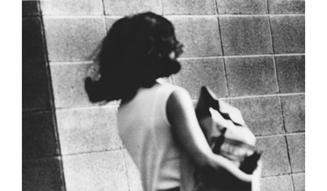
Daido Moriyama, On the Road (Route 16), 1969 ©Daido Moriyama
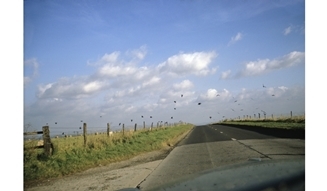
Joel Meyerowitz, Pictures From "a Moving Car, Stonehenge, England,"1966 ©Joel Meyerowitz
—Why was Simon Baker from Tate Modern appointed as curator?
Simon Baker collaborated with us on TOKYO PHOTO two years ago, introducing the British photographer Chris Shaw. Then, in April of this year, I met with Simon Baker in Los Angeles, and we discussed doing another interesting project together. So, he agreed to serve as curator again this year.
—Among William Klein's series, why did you choose the "Tokyo" series?
After Zojoji Temple was decided as the venue for TOKYO PHOTO this year, Akio Nagasawa Gallery, which handles William Klein's works in Japan, contacted us. Of course, Klein's "New York" and "Paris" series are also famous, but we decided that if we were to exhibit at Zojoji Temple, it should be the "Tokyo" series.
—What kind of exhibition is the "Hasselblad Masters Awards"? Could you tell us about any notable artists or works?
Hasselblad is a Swedish camera company that produces large medium-format cameras. It's a brand favored by fashion designer Karl Lagerfeld. This special exhibition will feature about ten award-winning works from each category of the "Hasselblad Masters Awards." Among them, a particularly interesting piece is the photograph by Ken Hermann, which captures a man riding a skateboard.
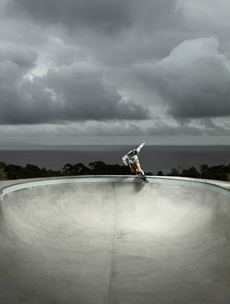
Ken Hermann, Winner of the General Category of the Hasselblad Masters Awards, 2012 Courtesy of HASSELBLAD ©Ken Hermann
—Regarding the tribute exhibition to Shomei Tomatsu, what are your thoughts on Mr. Tomatsu and his work?
His photographs, which have shaped the history of Japanese photography, are direct and highly artistic. I also believe he was a person with a strong sense of social issues. His works on themes such as the atomic bombing of Nagasaki and Okinawa possess the power to convey something through photography. He wasn't a photojournalist; he was a photographer who captured what he loved. In the 1970s, Japan was experiencing rapid economic growth, and various social problems arose. Politics, diplomacy, and the economy impacted people's lives. He conveyed the conditions of the era amidst all this.
—What kind of exhibition is the "100 Children of the Future in Japan and China"?
We will be exhibiting portraits of 50 Japanese and 50 Chinese children, photographed by Japanese and Chinese photographers respectively. We asked the children questions like, "What do you want to be in the future?" or "What would you do if you had money?" The interviews will be displayed alongside the photographs of the subjects. It's fascinating how the entire society can be seen through the children and their photographs. I hope that photography can contribute, even in a small way, to improving relations between China and Japan.
—Are there any other points you would like to highlight?
This year, TOKYO PHOTO is producing original merchandise for the first time. Previously, we only created catalogs, but this time we have specially produced original T-shirts, postcards, and posters featuring motifs from the artworks. These will be available for a limited time only during the four-day event.
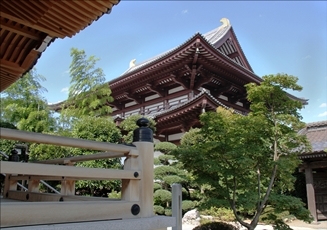
"TOKYO PHOTO 2013"
Dates: Friday, September 27 – Monday, September 30
Hours: 12:00 PM – 7:00 PM
Venue: Zojoji Temple
4-7-35 Shiba Park, Minato Ward, Tokyo
Tickets: General ¥1300, Students ¥1000
*On Friday, September 27 only, students ¥500
