Reika Ito x Ayako Suwa: A Spiritual Conversation (Part 1)
Spiritual Talk Vol. 17 | Ayako Suwa
Reika Ito's Vision of Her Guest
“A Live Artist Guiding Us to the Happiness of Living in the Moment” (Part 1)
In this series, spiritual healer Reika Ito invites creators active in various fields to explore the source of their creativity. Combining her readings of the energy emitted by her guests with multiple astrological techniques, she delves into their past lives connected to this world and their hidden potential. This allows us to uncover the charm of the creators themselves, often obscured by their work.
Photographs by SUZUKI KentaText by TANAKA Junko (OPENERS)
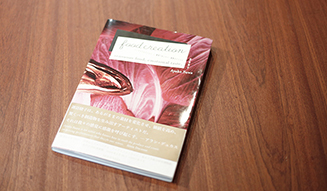
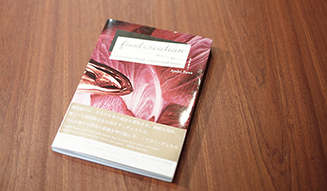
Our 17th guest is food artist Ayako Suwa. Her work explores human instinctual desires, curiosity, and evolution, proposing a new value of food that is neither haute cuisine nor mere sustenance, neither a source of nutrition nor energy. Her signature is "Food Creation," an activity she began in 2006. Under the theme "Delivering the concept to your stomach," she has collaborated with numerous brands, including Christian Dior and Veuve Clicquot. In April of this year, she published her first art book, "Food Creation: Tasting with Senses, Flavors of Emotion" (Seigensha). She is also currently holding a solo exhibition at the 21st Century Museum of Contemporary Art, Kanazawa, until March of next year, continuing her increasingly vigorous activities. What is the source of Suwa's creativity?
Primal Experiences Cultivated in the Nature of the Noto Peninsula
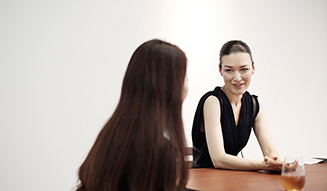
Reika Ito (hereafter, Ito)I read your art book. I found myself gradually drawn into your wonderful world, savoring it slowly.
The keyword "savoring" appears repeatedly. What prompted you to focus on the sense of "savoring"?
Ayako Suwa (hereafter, Suwa)I've been doing something similar to what I do now since I was a child.
ItoWow! You were precocious (laughs).
SuwaIt wasn't exactly the same, but it was close to what I do now. So at first, it wasn't driven by reason, but by a strong sense of intuition...
ItoA feeling that welled up from within?
SuwaYes. As soon as I became aware of myself, I was doing it naturally. I only started thinking about 'Why did I begin doing this?' or searching for the answer later on.
However, I've long felt that food, not just in the act of eating but even in imagining or anticipating flavors without eating, has immense potential as a medium for expression. I am currently active with the desire to explore that potential.
ItoSo, action came first. Intuitive, or perhaps instinctual.
SuwaYes.
ItoDo you still remember the sensations from that time? The feeling of being drawn to the food in front of you, instinctively picking it up or mixing it?
SuwaWhat can I say? What I felt as a child was the wonder of nature. I grew up like a wild child in the nature of the Noto Peninsula in Ishikawa Prefecture, so there was only nature around me. Therefore, I was always close to that sense of wonder.
For example, a flower that looks delicate at first glance, when you look closely, is packed with pollen and is astonishing. The remains of dead insects were scattered here and there. When I saw cicada shells, I was amazed by their beauty and the brilliance of their structure... Inspired by such things, I started playing 'cooking' by combining various elements, initially just for fun.
ItoSo you were 'cooking' with things you found in nature, rather than ingredients. Did you ever taste them?
SuwaBasically, no. But I remember smelling them, and comparing them to ingredients, thinking 'What would this taste like?' and creating them in a way that was like savoring.
ItoSo, those childhood experiences led to your current work in food creation?
SuwaI believe so. Food Creation is an activity that gives form to my lifelong expression of savoring since childhood. Originally, I majored in advertising and design at art university. Because it was advertising, I learned about how to convey messages, concepts, and themes to people in various ways, and how to communicate.
Although advertising can be broadly categorized, there are various methods such as graphic design, video, music, and text. Among these, I began to think about whether I could convey concepts through the experience of eating and savoring food. That's how I started the Food Creation activity with the theme, "Delivering the concept to your stomach."
ItoThat's a very unique concept. Did you come up with that during your university days?
SuwaIt was after graduation. However, I had already begun activities using food as a medium for expression during my student years.
ItoYour Food Creation activities have an artistic aspect, such as exhibiting works in museums and performing experimental performances, as well as an advertising and design aspect, where you convey messages in collaboration with brands. As an artist yourself, do you feel you are creating art, advertising, or design?
SuwaI didn't start with the intention of creating art, design, or advertising. As I pursued what I wanted to do and what I could do, I ended up in this situation, so it's a bit ambiguous (laughs).
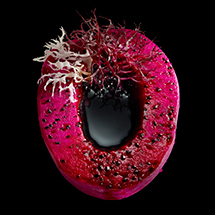
"taste of GUCCI" Photograph by Hiroshi Iwasaki
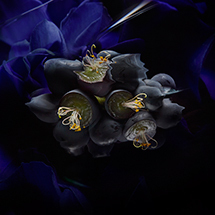
"scent of woman" (with Christian Dior haute couture) / commons&sense ISSUE 45 (Kawade Shobo Shinsha) / 2013 Photograph by Hiroshi Iwasaki
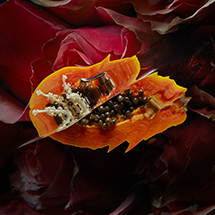
"scent of woman" (with Christian Dior haute couture) / commons&sense ISSUE 45 (Kawade Shobo Shinsha) / 2013 Photograph by Hiroshi Iwasaki
ItoAmbiguous, or perhaps not belonging to a specific field. Perhaps that's why it leads to one unique activity after another. Another phrase that left an impression in your book was "lost senses." You aim to reawaken the five senses, which tend to be lost in modern urban life, through eating and savoring...
SuwaYes. In Food Creation, I develop activities to convey the concepts of collaborating companies, brands, and other individuals through food and savoring. In that sense, it's close to design.
Separately, my personal activities involve giving form to my own messages and concepts. "Reawakening the lost senses" is one of them. When I think about it, what I was doing as a child, using natural things to create flavors according to my senses, was quite primitive.
Nowadays, living in the city, we eat and savor things with a clear understanding of what they are. We know where they were made, what they are, and how they are prepared.
But ancient people must have eaten all sorts of things. They might have picked things from trees, gathered fallen items, or eaten hunted animals. Moreover, the first person to taste something likely did so without knowing what it was, sometimes risking death, savoring and eating it. I believe that our current evolution is a result of concentrating their nerves, sharpening their five senses, and savoring.
Considering that, although we feel we are at the forefront of evolution, perhaps we possess the same senses as ancient people but are not using them or are letting them lie dormant. Through my activities, if people who eat and savor various things can become aware of the dormant senses, desires, and emotions within themselves, it might lead to the next stage of evolution. That's what I think.
Spiritual Talk Vol. 17 | Ayako Suwa
Reika Ito's Vision of Her Guest
“A Live Artist Guiding Us to the Happiness of Living in the Moment” (Part 1)
Creating Invisible "Memories"
ItoYou've been holding the performance "Guerrilla Restaurant" since 2008 as a space for actually eating and savoring. What prompted you to start that?
SuwaIt was the solo exhibition at the 21st Century Museum of Contemporary Art, Kanazawa, held in the same year. Until then, I had never once considered that what I was doing could be exhibited in a museum or considered art. Since my activities were not widely known, when a curator from the museum asked me, "Would you like to have an exhibition?" I thought, "Oh, I can do that too. If so, I'd love to challenge myself."
Since it involved food, I wanted people to actually eat and savor it, but museums generally prohibit eating and drinking (laughs). Even if it wasn't inside the exhibition room, it was forbidden even in the corridors. Even if I said, "This is a work of art" in the exhibition room, it was quite a hurdle to get people to actually eat it. After much persuasion, we were finally able to have people eat and savor it within the exhibition room.
At that time, I created a situation where a restaurant appeared within the exhibition room, and those who wanted to eat could order and have it delivered to the exhibition room to savor. The interesting thing about food is that it's not entirely passive. People don't eat it unless they feel like eating it. Therefore, I generally don't force anyone to eat it; I simply place it in front of them.
Of course, I believe there's also the option not to eat it, and I leave it up to the participants to decide whether they want to eat it, including that choice. I believe food has the power to appeal to human instincts, desires, and curiosity, such as the desire to eat or try something.
Ito I could strongly feel that sense of leaving it to the participant from the past videos I saw. You offer it, but your stance is to let them do as they please. Is it because you yourself enjoy eating in that way that you maintain such a thorough approach of leaving it to the experience?
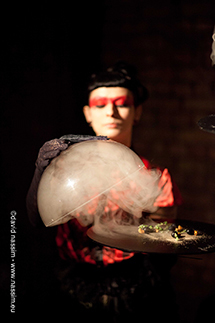
"Guerrilla Restaurant UNDER THE ROOF" / Direktorenhaus, Berlin / 2012 Photograph by David Nassim of www.fizzfoto.eu
SuwaYes. When I visit markets, supermarkets, or restaurants in countries I've never been to before, I encounter ingredients, foods, and dishes I've never seen. I can't help but try them (laughs). The excitement and emotions I feel at those times, and the thoughts that arise within me, are somewhat removed from everyday life, and can even be a source of inspiration. So, I do want to create such situations.
ItoI was impressed by how you created non-everyday spaces for Guerrilla Restaurant, almost like stage sets.
SuwaInitially, I only prepared the food, but eating and savoring is an "experience." So, I began to think that savoring encompasses not just the food itself, but also what kind of plate it's on, what kind of light is shining on it. Who serves it, and whether they say anything about it (laughs). I came to think that the savoring experience includes who the server is and what prompted the diner to come there.
Therefore, by creating a savoring situation that includes not only the food but also the space, time, and story, I believe we can create the ultimate "savoring experience."
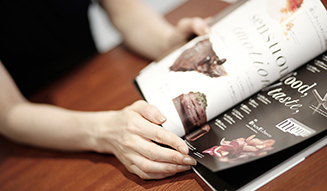
Ito"Savoring" is not just about feeling sweetness or sourness. Your work presents many suggestions for different ways of savoring.
SuwaFood is perishable, so it disappears over time. Even after eating it, it's gone. I myself feel that I am creating not so much a tangible object or space, but rather an intangible "impression" or "memory."
ItoYour art book also provides a detailed explanation of "Flavors of Emotion" featured in Guerrilla Restaurant. Do you believe that one can experience savoring through paintings and photographs as well?
SuwaOf course, actually putting food in your mouth and savoring it provides a wide range of stimuli. Not just taste, but also smell, texture, mouthfeel, aftertaste, and memory. I believe there are many ways to savor. However, even without putting it in your mouth, the act of imagining flavors has great potential. As mentioned in the book, I believe that "the moment you imagine a flavor, it's as good as savoring 50% of it."
When we eat something normally, don't we already prepare our palate for the taste the moment we see the food or a picture of it? And when we actually taste it, we might compare it, thinking, "It was different from what I imagined" or "It was better than I expected." In that sense, I believe we can savor through imagination, even through photographs, without putting anything in our mouths. I want to explore that potential as well.
ItoThe concept of "Flavors of Emotion," where you express human emotions through savoring, is also fascinating. When you conceive of these, do emotions or flavors come to mind first?
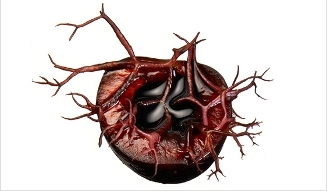
"A Taste of Lingering Regret and Even Rising Anger" Photograph by Hiroshi Iwasaki
SuwaEmotion comes first. But that is purely my subjective experience. I believe that how emotions, flavors, and sensations are perceived varies from person to person; there are 100 ways for 100 people. So, even if I present something as "This is the taste of joy," it won't be exactly the same as my experience. Normally, we savor food as sweet, sour, bitter, or salty, but I propose savoring it in ways other than that.
I believe there is a value in food that is neither haute cuisine nor gourmet, nor a source of nutrition. People tend to instinctively seek such sensations, so their attention doesn't easily turn towards them.
However, there is clearly such value, and I want to pursue it. The "Flavors of Emotion" menu is one aspect of that, designed to shift our unconscious tendency to seek deliciousness or satiety in food. Therefore, you don't have to savor the same emotion as me. Just try savoring it as an emotion.
For example, we don't normally savor this tea by asking, "What emotion does this evoke?" I'm proposing that we try doing that.
ItoThat's wonderful. There are various forms of art, some with a strong "Look at me!" assertion, while others have a comfortable distance, simply existing and saying, "Feel it if you wish." Your activities clearly fall into the latter category.
SuwaYes. Since food itself is such a thing, it naturally leads to that kind of expression.
Spiritual Talk Vol. 17 | Ayako Suwa
Reika Ito's Vision of Her Guest
“A Live Artist Guiding Us to the Happiness of Living in the Moment” (Part 1)
Perhaps a True Witch!?
ItoAre there any reactions from people who have actually experienced "Flavors of Emotion" that have particularly stayed with you?
SuwaThe one that sparks the most interest is "A Taste of Lingering Regret and Even Rising Anger." Perhaps it's the intriguing name, or maybe people are drawn by a morbid curiosity. It might stimulate the curiosity and desires that everyone possesses.
ItoThe visuals are also quite stimulating.
SuwaThank you. The reactions really vary from person to person. In Guerrilla Restaurant, we offer the full course of "Flavors of Emotion," and people say things like, "I liked that one," "I want to eat that again," "I can't forget that one," or "I never want to eat that again" (laughs). The feedback is completely different for each person.
ItoIn your TED presentation in Tokyo last year, you sprayed something into the mouths of participants as a demonstration of "Flavors of Emotion." I remember a man who was sprayed saying, "Hmm," as he savored it.
SuwaThat was "A Taste of Instantaneous Anger." It's truly instantaneous, so the impact is strong, but people seem to want to try it again, and many say, "Again, again!" (laughs).
ItoAs expected, given it's "instantaneous"...
SuwaIn those cases, I tell them, "Only once a day" (laughs).
ItoWatching that, I thought you seemed a bit like a sorceress. And even before our reading today, based on your activities and the information I had, I imagined you might be a real witch (laughs).
Suwa(Laughs)
ItoI imagined a witch from fairy tales, one who might make love potions. But you are completely different. Actually, the day before yesterday, I performed a remote reading for you using astrology based on your birthdate. I've compiled it into a report, which I'll give you later. It contains more general information, such as "this is your disposition, and these are your potential life tendencies," rather than what we'll discuss today.
Right now, in this close proximity, I am perceiving you in a "live" state, fully immersed in your aura. What I perceive is that you have been a creator and an artist throughout many reincarnations, repeating the human experience since you were born on Earth. And what I see most strongly now is your form as a painter.
SuwaIs that so? How interesting!
ItoWhen you said that, I suddenly understood. If we superficially interpret your work, which is based on food, as equating to design and art, one might think you were involved in something related to food in past lives as well.
However, you were actually a painter. What I perceive and feel as characteristic of you from that time is a sensibility that cherishes the beauty of nature – "lovely and beautiful" – and a sensibility that finds beauty in all living things, plants and animals, that are moved by various emotions, think, and act with their bodies.
The way a woman's hair flows in a gentle breeze, the flowers and grasses swaying pleasantly in the wind, animals sleeping soundly there... In essence, a worldview that transcends the three dimensions into the fourth. The desire to capture, hold, deliver, and convey the "momentary beauty" of things beyond the fourth dimension – scent, color, smoke. You seem to have stoically pursued how to depict raw emotions, which cannot be put into words, as they are, and how to express them realistically. In those days, there were no photographs, so it was simply painting.
SuwaA painter!
ItoThen, why did you come to do this kind of work in this life? It's because you convey to people the importance of savoring and feeling "the moment" with their own senses and emotions, by expressing human emotions and food, and things that satisfy curiosity, in accordance with that curiosity.
The concept of a time axis itself exists only in the human world. Animals live in harmony with nature, following the sun. Humans alone have used their intellect to create rhythms in their lives and have developed methods within their lives to balance their internal equilibrium, mental state, and the balance of their sympathetic and parasympathetic nervous systems. In this context, I believe the core of your activities is to convey to us, who are living in the present moment, that "the present moment is important." Because the past and the future are all contained within the present moment.
The underlying principle is the fascinating idea that when we humans, who share the same space, time, and Earth, consume the same thing, we all feel differently. It's the idea that "It's okay for us to be different. Yet, we live together in the same space. Even though we think and feel differently, it's okay."
SuwaMmm-hmm.
ItoThus, you continuously convey a profound and simple truth: the essence of living in the "now." That the wonderful Earth, countries, cities, ourselves, and our loved ones that make up the world are interconnected, and that we live by helping and sustaining each other – this is the beauty of humanity. You are a messenger conveying how to communicate this to all people on Earth, regardless of nationality, who are born and live here as fellow human beings. This is your mission in this life. It's about conveying the ancient Japanese way of thinking and spirit, such as "we are sustained" and "let us be grateful for all things," which our ancestors cherished.
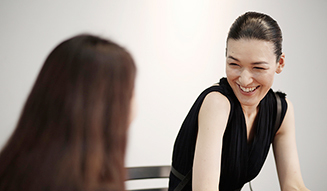
In this era, we can choose how we live. Not long ago, due to factors like family background, many people lived under a sense of oppression, despite it being their own lives. But now, everyone can live as they wish. If you desire it, you can live your life in your own way. You continue to convey this message, asking, "What are you feeling right now?"
As Ayako Suwa also wrote, living is eating. This is because we are clothed in a physical body. We are children residing within it. Therefore, living and eating are truly equivalent. And savoring, feeling. Uniting the mind, head, and body. That is what it means to be sustained. It is a messenger who throws out the grand theme: let us be grateful for that life, cherish ourselves, cherish those around us, and live together.
SuwaThat's about right (laughs).
ItoI apologize if I'm unable to perfectly articulate what I'm perceiving in this "live" state.
SuwaBut that's exactly how it feels. I understand.
ItoIn today's world, where we have everything we need and abundant information, and no inconvenience, it is precisely because of this that we, by living and moving this precious Earth, which was built by our ancestors tens of thousands of years ago, whose faces and names we don't even know, are able to develop and prosper along with the Earth. You have come to Earth from the universe specifically to convey such a grand message. First, we must say, "Welcome, thank you for coming for this purpose" (laughs).
In the first part, we revealed the surprising past life of a painter. In the second part, we will delve deeper into Ayako Suwa's mission in this life.
Ayako Suwa
Artist / Head of Food Creation. Born in Ishikawa Prefecture. After graduating from Kanazawa College of Art, she began her Food Creation activities in 2006. In 2008, she held her first solo exhibition, "Design of Appetite: Tasting Flavors of Emotion," at the 21st Century Museum of Contemporary Art, Kanazawa. To date, she has held the performance "Guerrilla Restaurant" in various locations, including Tokyo, Fukuoka, Singapore, Paris, Hong Kong, Taipei, and Berlin. Her food expressions, themed around human instinctual desires, curiosity, and evolution, propose a new value of food that is neither haute cuisine nor gourmet, neither a source of nutrition nor energy. In April 2014, she published her first art book, "Food Creation: Tasting with Senses, Flavors of Emotion" (Seigensha). She is currently holding an experiential solo exhibition at the 21st Century Museum of Contemporary Art, Kanazawa, celebrating its 10th anniversary."A Taste of Curiosity: A Museum of Curiosity"is ongoing.
http://www.foodcreation.jp
http://www.ayakosuwa.com
"Food Creation: Tasting with Senses, Flavors of Emotion"
Publisher: Seigensha
Specifications: 258 x 185 x 15mm, 160 pages, softcover
Price: ¥2,800 (excluding tax)
http://www.seigensha.com/books/978-4-86152-437-0