
May 7, 2015
Chapter 43: Why "The Cannery Ship" Is Selling—A Direct Link to Today's Society of Inequality
Chapter 43: Why is "The Cannery Ship" Selling So Well?
Directly Linked to Today's Society of Inequality
By Shizuyuki Ima
A Work from 80 Years Ago Shines: How Is This Possible?
Kobayashi Takiji's "The Cannery Ship," which begins with the line, "Hey, we're heading to hell!" is selling well and has become a major topic of conversation. Many mass media outlets are also covering it.
"The Cannery Ship" was published in 1929, about 80 years ago. The author, Kobayashi Takiji, graduated from Otaru Higher Commercial School and became a bank employee (at the former Hokkaido Takushoku Bank). However, he opposed the militaristic and police-state of the time and became a proletarian writer, dedicating his life to conveying the plight of the people. He also joined the labor movement. His life was tragic. In 1933, he was arrested by the Tokko (Special Higher Police), tortured at the Tsukiji Police Station, and killed. This is widely known.
Overlapping with Today's Society of Inequality
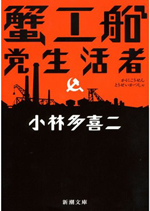
The Cannery Ship / Party Member (Shincho Bunko) by Takiji Kobayashi
Consequently, the content of "The Cannery Ship" is shrouded in darkness. It depicts the process by which workers, transported on a dilapidated ship to fish off Kamchatka in Soviet waters, eventually rise up in struggle against their inhuman living conditions. Why, then, is this dark and poignant work, "The Cannery Ship," continuing to sell so well today?
I asked a young female clerk at a major bookstore in central Tokyo. Her answer was frank: "It's probably because it resembles the current society of inequality. I can empathize with it too." For a long time, Japan has been called a peaceful and prosperous society, but now, employers are clearly stating, 'It's acceptable to make employees work under harsh conditions to increase profits. Layoffs are possible.' This is becoming a reality.
The Government Recognizes the Reality, But...
We have undoubtedly entered an era filled with anxiety. Companies continue to increase non-regular employment. That is why the government has set a numerical target to convert one million young people, including freeters and NEETs, into regular employees over the three years leading up to fiscal year 2010. Furthermore, they are expanding employment support measures for the growing number of "older freeters."
This is a society where one in three people are in unstable, non-regular employment. On top of that, taxes are rising, and medical costs continue to increase. Measures that increase anxiety, such as the abolition of subsidies for annual health check-ups for the elderly, are being implemented. The social situation is such that the number of young people earning less than 2 million yen annually is increasing, making it impossible for them to marry. There is no sign of brightness in the future. While there are winners among large corporations and financial institutions, the majority are losers. To put it more simply, it is a polarization between those who are exploited and those who exploit. This is likely what resonates with many young people, overlapping with "The Cannery Ship." The government and employers must take this seriously and formulate countermeasures before the worst-case scenario occurs.