March 4, 2015
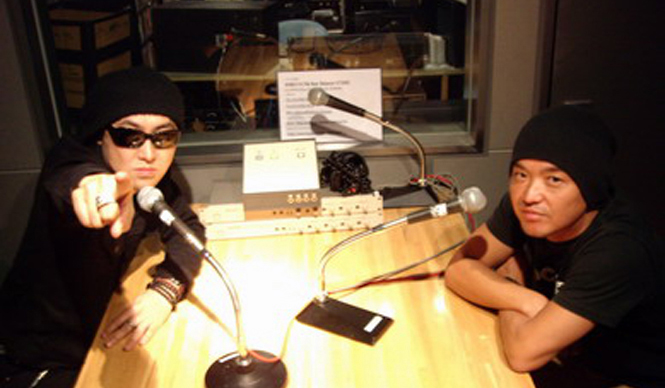
Naoki Kano (GO-GO KING RECORDERS) × SHIBUYA-FM 78.4MHz VOL.1
Naoki Kano (GO-GO KING RECORDERS) x SHIBUYA-FM 78.4MHz VOL.1
A collaboration between SHIBUYA-FM 78.4HM, which continues to broadcast Shibuya's culture, and the web magazine "OPENERS." SHIBUYA-FM producer Yukika Kamiya interviews creators, musicians, and DJs with "Shibuya" as the keyword.
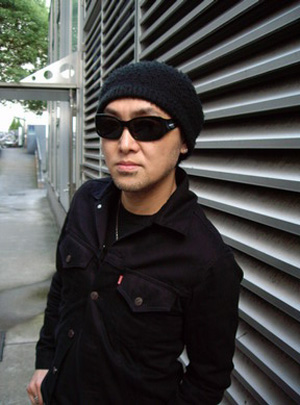
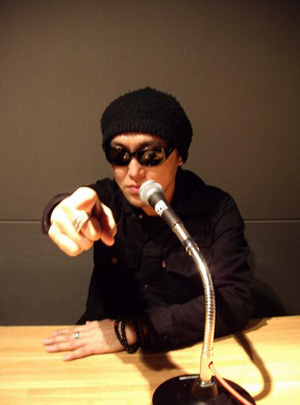
This time, we feature Naoki Kano, the host of SHIBUYA-FM's program "GO-GO KING RECORDERS ROCK'n'ROLL RADIO," the proprietor of the studio "GO-GO KING RECORDERS," and a recording engineer who founded the music label "TOKYO wRECkORDS." He also works under his own unit, Taurus Bonehead.
Summary by Hidefumi Kaneko (This magazine)
Kamiya: Long time no see.
Kano: Yes, long time no see.
Kamiya: Actually, it hasn't been that long, has it? (laughs)
Kano, you host a show on SHIBUYA-FM featuring special rock 'n' roll guests every week. You've established and are running "GO-GO KING RECORDERS Studio," a recording studio converted from a loft in Kawagoe, and you're also the engineer. But you were originally a musician, weren't you? What made you decide to become a recording engineer?
Kano: Ultimately, it's all about "a place to produce music," including the studio, and we've just named it "GO-GO KING RECORDERS Studio." That encompasses being a musician. I wasn't interested in being an engineer at all, and I was clueless about machines and equipment. However, when I compose a song, I already have the finished product in my head, and when I create it myself, I can get close to that vision. Furthermore, as the threads of expression I want to achieve through technique begin to unravel, I acquire the skills. Before I knew it, what I was doing was recording engineering. So, I didn't go to a specialized school, nor did I work my way up as an assistant in a studio.
Kamiya: Did you establish "GO-GO KING RECORDERS Studio" from the very beginning?
Kano: Before that, I mixed hundreds of works for various people. While doing that, I started arranging and mixing, which essentially means producing the album, doesn't it? Then, I realized that if the recorded sound was closer to what I envisioned from the start, I wouldn't have as many difficulties. Before that, I often ran into problems. It wasn't that the recording engineers I worked with were incompetent, but rather that it was easier to get closer to the tone and atmosphere I imagined by placing the microphones myself than by explaining it verbally.
In other words, instead of explaining it with words, I found that by setting up the microphones myself and pressing the record button on the tape recorder, I could get very close to the sound I wanted. So, for me, composing, performing for an audience live, and this process are quite similar.
Kamiya: I see. That's why you built the studio yourself from the ground up. You mentioned you were initially looking for a location in Tokyo, like in Shibaura, right?
Kano: Yes, I was looking. Since I was rooted in Tokyo and started my music career there, I wanted a place within Tokyo. However, I believe it's a great era now where anyone can make music with a computer. But what I aim to do is to create music by recording the exchange of consciousness—or rather, souls—between people. That, in itself, is playing an instrument. Therefore, I need a spacious area to play instruments, with high ceilings and width. When I tried to secure such a space in Shibaura, there were locations available, but it was impractical for me to do it with the agility of an individual. Also, the land prices were high, which meant that the work done in the studio would increasingly become about earning money rather than creating musically creative works.
That said, we make a living from music, so it's not really a danger, but...
Kamiya: That would take priority, wouldn't it?
Kano: That's part of it. About 12 to 13 years ago, when I was producing an album, I would receive money from the record company to create the work, but there were many times when I thought, "If I had just one or two more days in the studio, I could have done this and that."
In other words, while I was cutting into my own fees, I recalculated where the money was going, and it turned out that studio rental was the biggest expense. So, when I decided to have my own studio, I wanted to do it for half the cost. Half the cost simply means I could use the studio twice as much. For that, I needed a size that would allow live instruments to be recorded with good sound, and considering the low cost, doing it within Tokyo would be disproportionate.
Kamiya: I see.
Kano: So, in the end, I had to move to the suburbs.
Kamiya: The location and the space. I felt that terms like loft or garage perfectly describe that space.
Kano: Yes. I think men, in particular, need their own secret base. As children, we retreat to such places to do what we love, or use them as a starting point for something, don't we?
It's like my own secret base, and also a bit like my personal room. It's a place where my musician friends come and we make music together.
Kamiya: Why did you specifically choose an old analog mixing console for the studio?
Kano: The act of listening to music is when one is most receptive. I'm still highly sensitive even past 40. We never forget the feeling we had the moment we discovered a piece of music, do we?
That's where my reality lies. The analog console I have is from a manufacturer called "API," made around 1975-76. That was when I was in junior high and high school, a time when I was discovering a lot of music. It produces the same sound as the records I bought and the music that played on the radio back then. That's my origin, and the sound that ignites me the most comes from there, so it's natural to start with such equipment. It's definitely my instrument.
Actually, the legendary Eikichi Yazawa built a studio called Liberty Studio in Lake Yamanaka in the 70s, and it was featured in the movie "Run & Run." This is exactly the same equipment.
Kamiya: How did you get your hands on it?
Kano: It might be something close to what people call "spiritual" these days; it was probably destiny.
There was an analog console from the same era called "Old Neve," and I really liked it because I could achieve the musical expression I wanted with it. While recording at a studio in Izu called Sound Sky, which housed that console, I encountered this "API."
The original owner was Eikichi Yazawa, and Sound Sky used it afterward. However, when I encountered it, it was no longer being used for recording. The equalizer system on the "API" console was indispensable for creating the drum and bass sounds I wanted.
So, I asked, "If you're not using it, could you let me have it?" (laughs) That's how we met.
(To be continued in VOL.2)
Naoki Kano Profile
Proprietor of GO-GO KING RECORDERS. Born in 1964. From Nagoya. Engineer.
43 years as a punk rock star. Moved to Tokyo at age 22 and debuted with a band.
Became interested in recording at age 25 and has been active primarily in studio work since then.
His show "GO-GO KING RECORDERS ROCK'n'ROLL RADIO" airs on SHIBUYA-FM 78.4MHz every second and fourth Thursday from 9 PM.
http://www002.upp.so-net.ne.jp/go-gokingrecs/