May 7, 2015
Chapter 17: The Household Sector's Influence on the Japanese Economy
Chapter 17: The Household Sector That Dictates Japan's Economy
By Shizuyuki Ima
Managing Household Finances: The Starting Point of the Economy
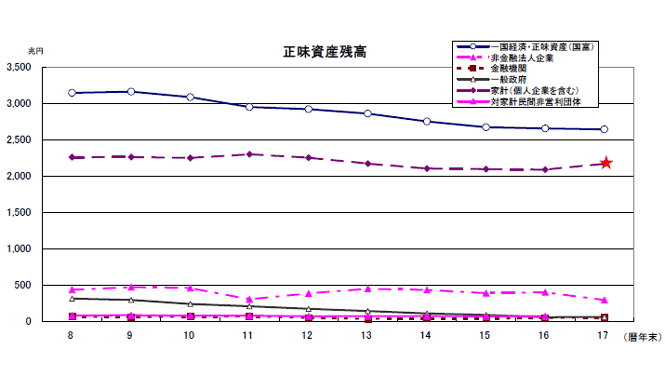
According to a survey by the Cabinet Office, household net worth (pure assets remaining after deducting liabilities from total assets owned) accounted for 82% of the nation's total net worth (national wealth) as of the end of 2005, a record high since the survey began. This amounts to 2,166 trillion yen.
With households holding over 80% of Japan's national wealth, other sectors like corporations and government pale in comparison. Households possess an overwhelming presence. Japan's economic performance is undeniably swayed by whether we spend money on goods and services or not. It is crucial to understand the strength of household finances.
Fundamentally, the economy is the pursuit of a richer life through the continuous cycle of production and consumption. It is deeply personal, involving daily life such as earning income by producing goods and then spending on food, clothing, and shelter.
Yukichi Fukuzawa's Words to Ponder
What's interesting is that the word 'economy' originates from Greek words meaning 'household management' or 'household rules.' This offers a glimpse into the underlying concept of the economy. Our daily lives are, of course, intertwined with society at large. For each individual, managing their own household finances is undeniably the first step and the starting point of the economy.
In the early Meiji era, the thinker and founder of Keio University, Yukichi Fukuzawa, stated, 'Those who lack the spirit of independence cannot deeply care for their country.' He championed individual financial independence as the ideal for civilized people. He sternly pointed out that those who cannot manage their own households have no genuine stake in discussing national affairs.
This is a perspective worth appreciating, and even over a century later, it remains a fresh and unwavering guiding principle.
Above all, we must focus on balancing income and expenditure within our own households and saving any surplus to prepare for unexpected expenses. This principle applies not only to individuals but also to corporate management and government.