
Secrets Behind the Success: Part 8 - Steven Smith, Founder of Steven Smith Teamaker.
Behind the Scenes of Business Leaders
Part 8 | Steven Smith (President, STEVEN SMITH TEAMAKERS)
The "Tea God" Nurtured in Portland (1)
What are the daily lives and thoughts of successful business professionals like? In this series, "Secrets behind the Success," we delve into the private lives of these accomplished individuals through interviews.
Portland, Oregon, has recently gained attention as a hub for lifestyle trends. In this city resides a tea blending specialist who knows the world's teas inside and out, hailed by various media as a "once-in-a-millennium talent." He is Steven Smith, the visionary behind "Tazo Tea," beloved in Starbucks stores worldwide. In 2011, after over 40 years in the tea industry, he launched his long-awaited brand, "STEVEN SMITH TEAMAKER." What led to the unique concept of handling everything from blending to tasting and packaging at their atelier, which also serves as a shop? And what philosophy lies behind it?
Photographs by NAKAMURA Toshikazu (BOIL)
Text by TANAKA Junko (OPENERS)
Sparking a Revolution in the Organic World
—You're credited with "making the American tea market sevenfold in ten years," a remarkable career in the U.S. tea industry. What were you doing before you got into tea production?
In 1971, my partner and I started a store selling organic foods like grains and fruits. We also had a plant shop attached. The store was called "Sunshine Natural Foods." It was the first organic store in Portland. Then, I opened a shop specializing in herbs, called "The Gates of Eden." I must say, I came up with a pretty good name (laughs).
—Was "The Gates of Eden" also an organic store?
Yes. We didn't carry black or green tea, only herbal teas made from petals and leaves. Primarily for medicinal purposes. We intended to wholesale our products to similar establishments down the line. However, it seems we were a bit ahead of our time, as there were no stores like ours back then. So, we closed the shop and decided to focus on making herbal teas. That's how "The Stash Tea Company" (hereafter, Stash) began.

*Stash Tea Company: One of America's largest tea brands, handling teas and herbs from around the world.
—Portland is known for its deeply rooted organic culture. So, your stores were pioneers in that movement, weren't they?
That's right.
—What initially sparked your interest in organic products?
It might surprise you, but I majored in journalism in college. After that, I was drafted into the Vietnam War. When I returned to the U.S., a friend asked me, "We're opening an organic store, want to join?" This was in the 1970s. Young people were breaking free from conventional thinking, and a major revolution was happening worldwide. I wanted to be part of that movement.
—A revolution, in this case, through the world of organic products?
Yes. However, at the time, not everything we sold was strictly organic. This was when natural foods (pesticide-free vegetables) were just starting to appear. They weren't yet available in supermarkets.
—When did you start Stash?
It was in 1972, when I was 23. Much younger than I am now (laughs). Three of us founded the company, but I gradually grew weary of the tea industry and its surrounding issues. I felt a truly fresh and innovative idea was needed to break through the status quo. Something with love, passion, and a commitment to quality. The following 21 years, until 1993, were a period of trial and error.
One such endeavor was the peppermint harvest we began in 1985. We contracted with a farm in Oregon and decided to supply major tea manufacturers like Lipton (a global tea company founded in Scotland) and Celestial Seasonings (a long-established American herbal tea maker). This initiative paid off, and within a few years, we became the second-largest supplier of herbal teas to the restaurant industry in the U.S.
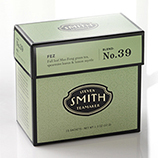
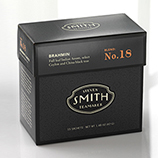
The teas from STEVEN SMITH TEAMAKER are blended by Smith himself at his tea atelier in Portland.
—Stash continued to grow steadily, but in 1993, it was sold to the Japanese food company Yamamotoyama. What led to that decision?
Simply put, I wanted to challenge myself with a completely new approach to tea production. Yamamotoyama had been our business partner for several years before the sale, and we had mutual trust. So, when they proposed buying the company, I decided to go ahead because it was them.
The deal was finalized, and we sold to Yamamotoyama in 1993. Immediately after, I began conceptualizing a new tea brand in my home kitchen, exploring various ideas. The initial name I considered was "Elixir," as I wanted to create teas that were gentle on the body. At that point, the plan was to focus on a manufacturer of liquid teas, such as concentrated black tea or tonic water. This concept later evolved into "Tazo Tea."
*Tazo Tea: A tea brand that manufactures and wholesales black and herbal teas. Founded in 1994 by Smith and two business partners. It is currently a subsidiary of Starbucks.
—What exactly do you mean by liquid tea?
I was experimenting with combining tea with various ingredients. For example, black tea with raspberry juice, green tea with tropical fruits, or hibiscus herbal tea with apple juice. These were concentrated syrups to be diluted with water. They could be mixed with still water, sparkling water, or hot water, but the best ratio was 1:5 syrup to water. Through repeated trials, I ended up with enough syrup to fill a 10,000-gallon container. I thought it would make delicious cocktails if mixed with alcohol, so I started selling it in small portions to bars and restaurants.
The idea behind creating these syrup-like teas was to blend diverse cultures. Elements from Eastern Europe, Japan, China, and Britain were combined in small measures. This became the prototype for Tazo.
—It's wonderful that one can experience different national cultures through tea.
Indeed. The concept likely resonated with the times, as it was met with a significant positive response upon its release. Hailed as teas that bring discovery and surprise, they became a huge hit. Subsequently, we expanded our lineup to include tea bags, frozen teas, and ice pops.
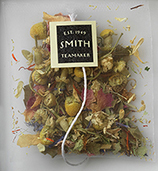
The sachets are made of biodegradable material that returns to the soil after disposal.
—Does the idea of "teas that bring discovery and surprise" carry over to your current brand, STEVEN SMITH TEAMAKER (hereafter, Smith)?
Absolutely. That's precisely what I've been pursuing since I started Tazo. However, after selling Tazo to Starbucks, the things I wanted to do became increasingly difficult to implement. Consequently, I left the company seven years after the sale... Regardless, the liquid teas I first developed at Tazo are still the most popular on the market today.
Behind the Scenes of Business Leaders
Part 8 | Steven Smith (President, STEVEN SMITH TEAMAKERS)
The "Tea God" Nurtured in Portland (2)
Smith's Seven Tools for Tea Production
—You mentioned earlier that you eventually left Tazo. What were you doing after that?
In March 2006, I decided to leave Tazo at the end of that year. I had achieved considerable success in the tea business with both Tazo and Stash, and although it took some time to make the decision, I felt I had had enough of the tea business at that point. However, after moving to Avignon, France, and staying there for about a year, I met people who were creating various small-scale products by hand, such as cheese, wine, and chocolate. This gradually changed my perspective. Inspired by them, I felt the urge to start a business again.
So, I decided to put into practice an idea I had conceived before leaving Tazo: a one-stop service where all aspects of tea production would take place in a single location. All the artisans involved in tea making, from blenders to those who make tea bags, would work there. Like a small factory. When I returned to Portland and decided to actually open the shop, I absolutely wanted to avoid the absurd situation of pretending everything was done there when the factory was elsewhere. That would be too childish. What I wanted was a place where the entire tea-making process was truly completed. That's how Smith began.
—Do you think the inspiration from the artisans you met in France and the concept of a shop that handles all aspects of tea production stemmed from your experience working with large corporations like Starbucks?
Exactly. Talking with artisans who created things with their own hands made me realize the importance of authenticity, something I truly appreciated due to my experience in large corporations. After opening the shop, I truly felt the wonderfulness of being able to control everything ourselves.
—I'd like to ask about your seven tools. I understand you've brought seven actual tools with you today.
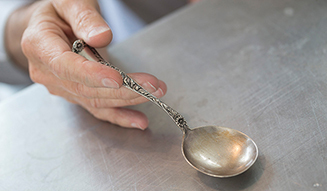
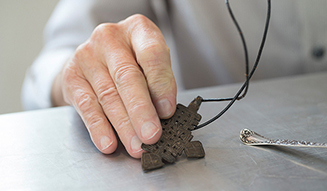
Yes, these are literally my seven tools. They support our creative activities. All the products we currently offer in the shop were created using these tools.
The first is my favorite spoon. It's a mascot that appears on the Smith website and elsewhere (laughs). A well-balanced spoon is essential for tasting tea. I scoop the tea with it, check the color and aroma, and then swallow. When I spit it out, the complex flavors of the tea spread throughout my mouth.
Two essential tools for tasting: this spoon and a traditional teapot. I put hot water in it, add the tea leaves, cover it for a short steep, then place the entire pot into a cup and shake it gently. Using the spoon I just mentioned, multiple people can taste simultaneously. First me, then you, then you.
We taste repeatedly, and everyone shares their impressions of which teas they liked or disliked. For accurate tasting, it's important that the edge of the spoon is thin and sharp. This is a silver spoon made in Britain, not India, but it eventually found its way to South America where it was "excavated." It has a good balance in hand and is currently my favorite.
And this is a Celtic cross pendant found near the tomb of Haile Selassie, the last emperor of the Ethiopian Empire. He was revered as a savior in the Black movement, particularly in Jamaica, and had many fans among reggae musicians like Bob Marley. I don't know the type of metal, but it's quite old.
—Do you actually wear the pendant?
I used to wear it, but not anymore. In the 1970s, it was my "chain necklace" (laughs).
*Chain necklace: A flashy, glittering necklace worn by hip-hop artists to flaunt success and wealth. Slang term: bling-bling.
—(Laughs) This bowl also looks quite old.

I like the fact that it's cracked. I drink tea from it, but I mostly use it for green tea. I like to hold it firmly with both hands when I drink. Tea is a very personal thing, and how people drink it varies greatly. When I drink tea from this bowl, I often start before it's "completely ready." The rule is to wait three minutes for green tea and five minutes for black tea, but you can enjoy tea even before it's "completely ready." It's up to you to judge the timing.
—Enjoying tea is indeed a profound experience.
Yes. And this recipe notebook chronicles my journey with tea. When I experiment with various blends, I stamp the ones I think are "good" or "suitable for the shop" with my favorite stamp. In the past, for blends I was unsure about, I would write notes like "reduce the balance here" and circle the page. But it became difficult to understand, so I switched to a clearer stamp.
—Was this made in Japan? Or China?
China. It contains recipes for products we sell in the shop, as well as ideas that didn't make it to market but were interesting. And the sixth tool, which I use as a paperweight when writing in this recipe notebook, is also my lucky charm. It's a gold paperweight made in Nagaland, India.
—How do you carry it around?
Rather than wearing it, I usually carry it in my pocket. When I'm at home or in the office, I always keep it nearby. I have a few other lucky items, but they are too heavy or too large to bring, so this was the only item that fit in my bag today.
Another item I always carry, rather than a tool, is a photo of my wife. I also carry photos of my son, daughter, and grandchildren, but since we're talking about seven tools, I chose my wife's photo.
Behind the Scenes of Business Leaders
Part 8 | Steven Smith (President, STEVEN SMITH TEAMAKERS)
The "Tea God" Nurtured in Portland (3)
The Moment He Decided to Dedicate His Life to the Tea Business
—Do you have any recommended ways to enjoy tea, perhaps suggesting specific teas for specific times?
First, drink tea every day. Black tea is good for boosting energy or getting motivated. Green tea is recommended when you need to think. Herbal tea is for when you need to concentrate or calm your mind. Among them, "Bungalow" and "Brahmin" are great as wake-up calls. "Meadow" and "Red Nectar" are good as a nightcap before bed. Peppermint aids digestion, so it's recommended before or after meals.
—Could you recommend any favorite cafes in Portland?
The first is, of course, "Smith." Please visit when you come to Portland. For coffee, I recommend "Stumptown Coffee." "Besaw's" is perfect for breakfast or chatting over tea. You can also enjoy Smith's teas there. It's a small city, so everyone has a strong sense of community and visits each other's shops.
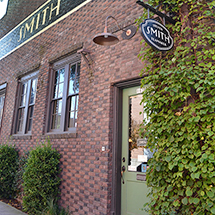
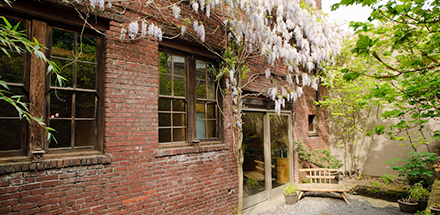
Smith Teamaker
1626 NW Thurman Street Portland, Oregon, OR 97209, United States
Tel. +1-503-719-8752
—Is Portland an essential part of your tea-making process?
Yes. It's a place that inspires me. The food culture is incredibly vibrant, so whenever I go out into the city, new ideas always come to me. It's definitely an indispensable element.
—By the way, what does tea represent to Americans?
In America, tea is considered a daily necessity. Moreover, it's almost always consumed as iced tea, and very few people know the pleasure of hot tea. What we are trying to do at Smith is to elevate the value of tea itself. By introducing people to the deliciousness and fascination of tea, we hope to gradually change the current situation.
—Indeed, these steady efforts have paid off, with the American tea market reportedly expanding sevenfold in the past decade. That's remarkable growth.
Yes. Previously, popular beverages in America were sodas and sugary drinks. However, recently, more people are seeking "alternatives" like black tea, green tea, and herbal tea. I believe this indicates a gradual refinement in American tastes.
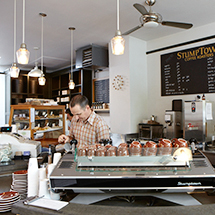
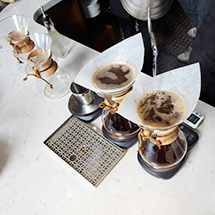
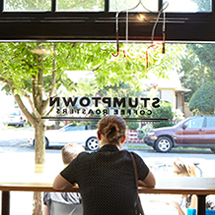
Stumptown Coffee Division
4525 SE Division Street Portland, OR 97206, United States
Tel. +1-503-230-7702
—When did you first encounter tea yourself?
Tea has always been a familiar presence in my life since I can remember. I never even tasted coffee until my early twenties. My grandmother lived right next door, so after school, I would go straight to her house, and we would drink black or green tea together. That was my first encounter with tea. After founding "The Gates of Eden," I started enjoying herbal teas like chamomile, rosehip, and peppermint. Then, in 1995, my life became even more immersed in tea. I opened Portland's first retail store for tea, coffee, and spices.
I had already started "Stash," so it was more like a side business. However, I dedicated a considerable amount of time to this store during the preparation period. I had to study tea, coffee, and spices thoroughly. It was then that I rediscovered the charm of black and green tea. Their rich aroma and flavor. I realized this was a field worth pursuing further. My first original blend was "Jasmine Spice." Jasmine is a very fragrant flower, but when combined with spices like cinnamon and ginger, it transforms into a completely different taste compared to drinking it alone. That was the moment I decided to dedicate my life to the tea business.
—For over 40 years since then, you've dedicated yourself to the tea business. You've mentioned considering retirement, but what drew you back to the world of tea at that time?
Indeed. I've created two tea brands and approached tea production in the best way I knew how at the time. However, if there's one thing I couldn't achieve, it was complete traceability. I believe that regret is what led me back to the world of tea. With Smith, which I founded afterward, I introduced a completely new way of making tea.
*Traceability: The process of ensuring food safety by clarifying the stages from cultivation and breeding to processing, manufacturing, and distribution.
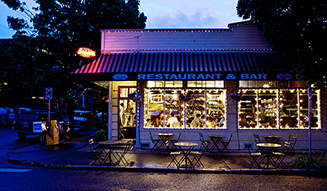
Besaw's
2301 NW Savier Street Portland, OR 97210, United States
Tel. +1-503-228-2619
—It's been three years since you founded Smith. What kind of brand do you hope to develop it into?
I want to continue providing high-quality teas to retailers and restaurants. Furthermore, in the future, I plan to launch promotional campaigns to increase awareness of Smith's products in Tokyo, Paris, New York, San Francisco, London, and Seoul.
Also, one of the initiatives I started during the Tazo era and continue to this day is a charity project with my business partner, Amy Bohn. We support two villages in India, providing them with resources for improving their lives, such as roads, public health, and education, in exchange for tea ingredients. We are now active in countries beyond India, including Guatemala, and this is our 12th year. We have been able to help approximately 50,000 people. I want to continue this activity.
Smith speaks about the allure of tea in a calm tone. Black tea, green tea, herbal tea – the blends created by this master of all three are profound and delicate. They are more than just beverages; they are "works of art." The "Tea God" with over 40 years of experience continues to blend diligently at his Portland atelier, armed with his seven tools.

Steven Smith
The American tea market, valued at $1 billion in 1990, grew to $7 billion in consumption by 2011. Smith is considered one of the key figures behind this growth and the founder of "Tazo Tea," sold at Starbucks stores worldwide. After selling Tazo Tea to Starbucks, he launched a new tea brand, "Stevne Smith Teamaker," in 2011. He meticulously selects tea leaves from producers around the globe, blending them one by one at his tea atelier in Portland.