
December 15, 2014
Toshio Matsuura | Benny Sings, the Magician of the Dutch Pop Music Scene, Appears
Toshio Matsuura | From TOKYO MOON, November 18 Broadcast
The Magician of Dutch Pop Music, Benny Sings, Appears (1)
Sunday nights, a personal time that flows leisurely with sophisticated music, is a moment of bliss for adults. Enhancing such moments further is the radio program 'TOKYO MOON' by DJ Toshio Matsuura.──Every Sunday, from 12 AM on Inter FM 76.1MHz, he broadcasts wonderful music selected from around the world and topics for adults that stimulate intellectual curiosity. Here, we look back at the program that just aired each week. This week, we welcome Benny Sings, who released his best-of album in September and was in Japan for live performances, to the studio for a chat.
Text by MATSUURA Toshio
English Translation Not Included in Broadcast!
Benny Sings, who leverages his rare musical talent to produce for Dutch artists while also active as a singer-songwriter, enjoys immense popularity in Japan. We invited him to the studio during his visit to Japan this autumn to release his best-of album and perform in Tokyo and Osaka, and had an in-depth conversation about his new work and the music that has influenced him.
Please enjoy the interview with its Japanese translation, which was not included in the broadcast.

Benny Sings
『Benny…at Home』
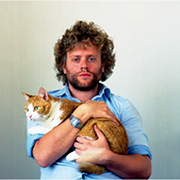
Benny Sings 『Art』
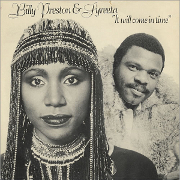
Billy Preston Featuring Syreeta
「It Will Come In Time」
REVIEW|TRACK LIST
01. Benny Sings / Get There (Victor)
02. Benny Sings / Rebuilding The Omega Man (Victor)
03. Benny Sings / Champagne People (Victor)
04. Benny Sings / For Your Love (Victor)
05. Benny Sings / Tonight I'll Know (Victor)
06. Benny Sings / Fake Love (Victor)
07. Benny Sings / Make A Rainbow (Victor)
08. Billy Preston Featuring Syreeta / It Will Come In Time (Motown)
Benny Sings
Born in Dordrecht, Netherlands, in 1977. As a child, he was naturally exposed to music like The Beatles and Stevie Wonder, which his mother played at home. He formed his first band at 15. His interests then expanded to soul music, jazz, hip-hop, and electronica, leading him to start creating music with computers. Around the age of 25, he became engrossed in contemporary composers like Schoenberg and Stockhausen, but eventually felt stuck in his direction and shifted to pursuing pure pop. He then released his first album, 'Champagne People,' in 2003. It generated considerable buzz among critics and led to a flood of offers from various festivals. The following year, he won the Newcomer Award at the Dutch Essent Awards. Subsequently, wanting to create pure pop, he studied the music of Burt Bacharach and others, releasing his second album, 'I Love You Benny Sings Live at the Bimhuis,' in 2005. This album was released worldwide by Sonar Collective, a label run by Jazzanova, and he performed at various festivals across borders. While producing for artists like Wouter Hamel, he has released four original albums as a solo artist. He just released his best-of album this autumn.
Toshio Matsuura | From TOKYO MOON, November 18 Broadcast
The Magician of Dutch Pop Music, Benny Sings, Appears (2)
The Best-Of Album is a Gift to Myself to Take a New Step Forward
──We have Benny Sings with us today as our guest. Welcome to the show.
Hello.
──You mentioned performing live in Tokyo and Osaka. How many times have you visited Japan now?
This is my sixth time.
──I imagine your stays are often short, primarily for live performances. What are your impressions of Japan so far?
I love Japan, so everything I've seen has left a deep impression. The atmosphere of Japan──I really like the sense of ambiance that permeates the air.
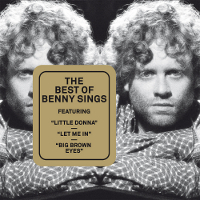
──In September this year, your best-of album, 'The Best of Benny Sings,' was released, featuring selected tracks from your four original albums and songs from your unreleased fifth album. When is the fifth album scheduled for release?
It's hard to say at this moment. I'm in the process of building a new studio, and it depends on how long that takes, but I hope to deliver it within a year.
──It's quite an unusual approach to include songs from an unreleased album on a best-of album. If you had to describe this album in one word, how would you put it?
All four of my previous albums are very dear to me. The process of creating each album was a time for learning many things. After finishing the fourth album, I felt I had completed all the necessary learning processes. So, I decided to release a work that would serve as a culmination of everything I had done up to that point, hence this best-of album. Therefore, if I were to describe it in one word, I consider it 'a gift to myself to take a new step forward.'
I've Been Making the Exact Same Music Since I Was 15
──'Champagne People' in 2003 was your first album, but you started your music activities much earlier. You formed your first band, 'The Love Boat,' in high school. What kind of music did you play in that band?
It was the exact same music I'm making now. Light, funky music. Music that can be expressed with colors like yellow, light blue, or pink. That kind of music.
──And how old were you then?
I was 15.
──Many people at that age play music they might find embarrassing in retrospect, and after various musical experiences, they eventually find their own sound. It's fascinating that you discovered your musical style at such an early stage. Was your parents' influence significant?
Yes, I was influenced by the music my mother listened to at home, and also by the popular music of the time. The rock scene, like grunge. Back then, everyone wore black t-shirts and listened to that kind of music. I wanted to create happy music as an 'antithesis' to that. That's what prompted me to start making music.
──I see. What's interesting about your music is that while aiming for pop, you maintain a high level of quality. In Japan, 'pop music' often carries a different nuance than the Western 'pop.' It feels like it's defined more broadly as music that appeals to a wider audience. What is your definition of pop music?
Defining it is very difficult for me too. There's a current trend where 'pop music is independent,' and indie music sells tens of thousands of copies within a week of release, to the point where labels are confused. But that's not what I'm after. I love the 'pop music' of the past, so there's a difference between what I envision and what pop music is today.
Toshio Matsuura | From TOKYO MOON, November 18 Broadcast
The Magician of Dutch Pop Music, Benny Sings, Appears (3)
Encountering the Label 'DOX Records'
──Your label in the Netherlands, 'DOX Records,' hosts many artists and high-quality music, doesn't it? Artists like Giovanca, Wouter Hamel, We Will Make It Right, Roos Jonker, Charlene, New Cool Collective, School of Architecture, and others. Could you tell us about your relationship with DOX Records, tracing it back to your first encounter?
DOX Records initially was a very small label run solely by Bart Swier, a well-known saxophonist in the Netherlands. Before signing me, they primarily dealt with experimental jazz, so I became the label's first pop musician. We first discussed how to further develop the pop music division at DOX Records. I also reached out to my artist friends, and together as the 'DOX Family,' we've been working to deliver high-quality music to the world.
──I see. Information about the Netherlands that reaches Japan is often limited, so please allow me to ask a bit about the Dutch music scene here. Including your own activities, what kind of movements are happening in the Netherlands right now?
In the mainstream scene, there are many songs sung in Dutch. Among them, popular styles include sweet and slow tunes, powerful rock ballads, and pure rock in the vein of Counting Crows. In the indie scene, louder forms of rock are popular.
Then there's jazz. I myself come from the jazz scene, and in the Netherlands, jazz is perhaps more deeply rooted than in any other country. Dutch jazz musicians often perform in Japan, don't they? Japan also has a vibrant jazz scene, so perhaps that's a common point between Japan and the Netherlands.
Moments When the Bassline Shines Vibrantly
──Your works, Benny, have a very diverse background──Instead of focusing on specific artists, it feels like you absorb various past musical styles and artists, then squeeze them out like a mixer into a single form called a song, which I find very intriguing. How do you begin your songwriting process? Do you start with a theme, or do you develop a melody once it comes to you? Could you tell us about your songwriting approach?
In my case, I start with the music first. Never with the lyrics. I begin by playing the piano or tapping out a beat as my fingers move. Initially, I don't have a specific intention; it starts quite chaotically, letting things unfold naturally. Then, I listen back to what emerges and cut out the usable parts. That's generally my process. It's like when you're making a mask or a face out of clay, you throw it down from the top of the stairs, look at the shape it takes as it rolls, and then refine the details.
──Although the expression differs, your songwriting method is similar to ours as DJs. That's encouraging (laughs). I believe the music scene globally is becoming very complex and challenging. Yet, music continues to be created and emerges spontaneously. As an artist who puts music out there, what do you think is important when creating it?
It's a very difficult aspect, but first, when I create music and listen to it, there's a sense of it fitting perfectly within me. Also, as someone from DOX Records said, when drums, bass, and vocals come together to form a song, there's a moment when the bassline stands out. A moment when it shines vibrantly, and that's crucial for the song. I don't know how to achieve it, but when that situation arises, I know 'this is it.' I believe that moment is what's important.
──I see. Then, I imagine there are several songs that have changed your life. If you had to pick one, what would it be?
It's a song by Billy Preston & Syreeta that I heard when I was three years old. There's a photo of me wearing headphones and listening to that song, and as the photo suggests, it's a song I loved so much I wanted to listen to it all day. All the elements of my current music are in that song. Therefore, that song became the 'seed' for me. Sometimes I listen to it again and intentionally try to return to that feeling. So, I can say this song is an important one in my life.
──Finally, what is music to you?
'Communication.'
(Cooperation: Billboard Live Tokyo)

Toshio Matsuura's 'TOKYO MOON'
Every Sunday 24:00-24:30 ON AIR
Inter FM 76.1MHz
Messages for 'TOKYO MOON' can be sent here
moon@interfm.jp
Inter FM 76.1MHz
www.interfm.co.jp
