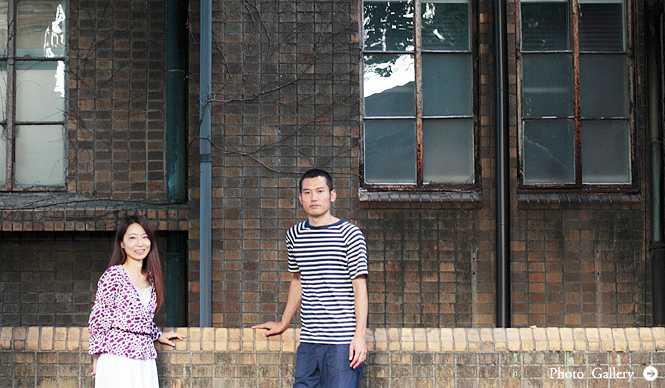
Reika Ito x Yasuhiro Suzuki: A Spiritual Conversation (Part 1)
Spiritual Dialogue Vol.15 | Yasuhiro Suzuki
Portraits of Guests 'Seen' by Reika Ito
A Champion of Justice Connecting Nature, People, and Objects with 'Heart' (Part 1)
Featuring creators active on various stages, spiritual healer Reika Ito deciphers the energy emitted by individuals, combining readings with multiple astrological methods to assess the source of their creative power. She reveals past lives directly connected to the present and hidden potential, delving into the charm of the creators themselves, which often remains hidden behind their work.
Photographs by JAMANDFIX
Text by TANAKA Junko (OPENERS)
Our 15th guest is artist Yasuhiro Suzuki, who achieved fame at the Setouchi Triennale 2010 with his grand project of carving a path through the sea with a giant ship shaped like a zipper. His works, which are not outlandish but rather minimalist, simple, and quietly present, possess a subtle power that gently awakens dormant sensibilities. In this first part, we delve into the origins of his work, starting with his 'flip-book' creations and anecdotes from his childhood when he was overly concerned with objects, exploring the people, things, and experiences that have shaped him into the artist he is today.
Do All Works Trace Back to Flip Books!?
Reika Ito (hereinafter, Ito)Oh, there are so many flip books! (laughs)
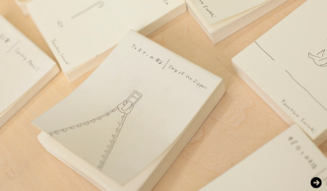
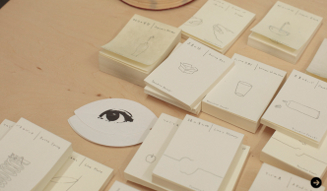
Yasuhiro Suzuki (hereinafter, Suzuki)These are reproductions of flip books I used to draw in my memo pads during university, made for last year's exhibition. They were originally memo pad size (B7), but I've scaled them down to palm size.

ItoSo, have you been making these since university?
SuzukiYes. I've essentially flip-booked everything that interested me.
ItoFascinating! The size and balance are just right. This karuta card size is so charming. And the titles like 'Apple That Falls and Flies,' 'Finger Coffee,' 'Car That Doesn't Collide,' 'Carpet of Consciousness'… all your titles are wonderful.
SuzukiTitles are important. They need to stand on their own, even without me there.
ItoThe titles express the theme, don't they?
SuzukiSome people still say they don't understand, though. Initially, I would flip through the flip books for people myself. Because of that, I probably rank in the top 10 in Japan for flipping flip books (laughs).
ItoI used to draw flip books endlessly when I was in elementary school and flip through them too.
SuzukiMany people made flip books. But they all stopped afterwards. I stopped too. But I rediscovered it in junior high and stopped again. Then again in high school, and stopped again… It was in university that I truly got back into it. I've drawn about a hundred in total.
ItoIt's wonderful to rediscover it as an adult!
SuzukiIn university, I didn't have any other means of output besides these flip books.
ItoIsn't it difficult to draw, changing the picture little by little on each page?
SuzukiI think about ideas as I flip through them. I draw, flip, then draw the next idea that comes to mind… Repeating this process creates unexpected connections between motifs. I became addicted to the world that emerged from this.
ItoYou think about the next step while flipping? That's amazing!
SuzukiIsn't it less interesting if you know what you want to draw from the beginning? It just becomes a task. That's why I think animators have incredible perseverance. Of course, it's their job, but they draw based on a complete plan, right? In my case, I draw without knowing how it will end, and I think that's a big difference.
ItoIndeed, if the story is complete from the start, the rest becomes mere work. It just becomes about perfecting the technique.
SuzukiThe thickness of each book varies, but I do that playfully. I don't have constraints like '24 frames per second' like animators do, which allows me to do this.
Spiritual Dialogue Vol.15 | Yasuhiro Suzuki
Portraits of Guests 'Seen' by Reika Ito
A Champion of Justice Connecting Nature, People, and Objects with 'Heart' (Part 1)
“Secretly, I think, ‘I wish someone would make this idea a reality’” (Suzuki)
Ito(Picking up a flip book) Ah, it has such a wonderful texture. A human touch, perhaps? A sense of depth?
SuzukiA 'texture'? Actually, I'm just drawing with a pen, so there's no particular touch or anything (laughs).
ItoYour handwriting is also charming. The softness of the lines, the thickness is just right. If the pen were any thicker, it would look too pop. Yours looks like something you'd see on a cafe menu.
SuzukiI'm flattered, but doesn't that sound like I'm trying to be cute? (laughs) I'm just writing to make it easy to read. I want as many people as possible to read it. It's interesting because not many people comment on my handwriting. It's more from a graphic designer's perspective, isn't it?
ItoI studied visual design in university. So, my eyes are naturally drawn to that… Girls would definitely love this.
SuzukiReally? I've never thought about it that way. Maybe it's because I was sandwiched between older sisters?
ItoAh, maybe. You truly have a gentle softness. (Looking at 'Apple Taxi,' a book depicting a drawing of an apple taxi) This one is also wonderful.
SuzukiAh, this is the moment the Apple Taxi started its service. It's a taxi company called Apple Taxi, where apples are carried on top.
ItoThe concept is incredibly amusing!
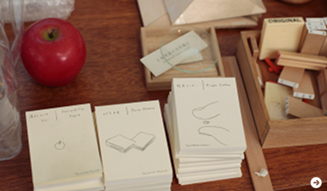
SuzukiThe story is that the Apple Taxi company began when an apple happened to fall onto the car. The apples aren't fixed. So, you need driving skills to prevent the apples from falling. Our selling point is safe driving. Honestly, I secretly think, 'I wish someone would make this idea a reality.'
ItoThat's great. It seems well-suited for video too.
SuzukiA while ago, I filmed myself flipping through a flip book and turned it into a video. When I give talks, I sometimes show that video. It's not quite narration, but I feel it communicates well when I explain it, so I usually talk while showing the video.
ItoThat's interesting! It could easily become a TV commercial for a company.
SuzukiReally? Please do! (laughs)
Ito(laughs) No, really. For example, whereas animation used to be all about CG, now there's a return to works with a simple charm, like the ones you create.
“I want to hold onto what I had as a child” (Suzuki)
SuzukiIndeed, everyone seems to be tired of CG.
ItoThe process of creating CG undoubtedly involves heart, but when it's too perfect, ordinary people can't imagine what lies beyond it.
SuzukiIt feels like it's completely finished, showing everything right up to the point where you want to see more…
ItoExactly. Adding too much can overwhelm people. It's better to subtract. That's why presenting simple things that everyone experiences or does as a child sparks more interest, making people wonder, 'What is this person thinking?' or 'What else is there?'
SuzukiThen my turn has finally come (laughs). In a way, it feels like I'm doing something incredibly ordinary.
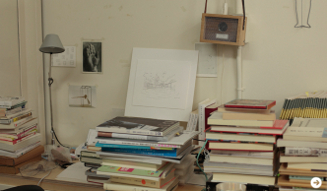
ItoYes, it's very simple. But isn't there profound depth in simplicity? For instance, people in the past, living in an era with few material possessions, created many things from their daily lives. They lived with a sense of gratitude for everything. I feel all of that is contained within your simple works. Like cherishing objects. Even with these flip books, the titles and illustrations are filled with the 'sentiments' that we should cherish as humans.
Today, with advanced technology, astonishing creations are constantly emerging, making us wonder, 'Did humans really make this?' However, in exchange for this evolution towards 'the next step,' the important 'heart' that we must not forget as humans is fading.
SuzukiNow that you mention it, perhaps I have a desire to 'desperately hold onto what I had as a child.' When I want to convey something I find interesting in an easily understandable way, the important things within me naturally emerge. While drawing flip books, I find it fascinating how they emerge naturally. The joy of giving form to ideas and conveying them to others, and the discovery of 'what I was interested in' – these two elements are in perfect balance, and that's how flip books are made. Otherwise, I don't think I could have continued for so long. I get bored easily, you know.
Spiritual Dialogue Vol.15 | Yasuhiro Suzuki
Portraits of Guests 'Seen' by Reika Ito
A Champion of Justice Connecting Nature, People, and Objects with 'Heart' (Part 1)
“When something resonates, I exert explosive power” (Ito)
ItoI understand. It's not that your interests change, but rather that they are fundamentally the same, yet as you begin to pursue a particular question, that question branches out. When a new question arises, like 'How does this work?', you move towards that. Then, as you delve deeper, 'What happened to this?', you move in another direction…
SuzukiHow do you know that!?
Ito(laughs) You pursue things intensely, and once you reach a point of satisfaction, the original answer is already there. So, there's no need to return to the starting point. It's a cycle like that, isn't it?
Suzuki…It's astonishing. You've already described it perfectly, but this collection of works ('Blink and Flap' / Seigensha) is the result of doing this for over 10 years. What was funny was, when I showed it to someone I met for the first time, they said, 'It's interesting,' and seemed intrigued, but then asked, 'By the way, which of these are your works?' (laughs).
Ito(laughs) You wouldn't know how to answer that.
SuzukiI was so surprised. If I had said, 'All of them,' it might have sounded like, 'I made all of them, isn't that amazing?' So, I replied, 'This is my collection of works' (laughs). But it's true that each piece is completely different, and that's a fact. My interests keep shifting, and even after moving on, I find myself thinking about the previous things, but I'm already overwhelmed with the new direction…
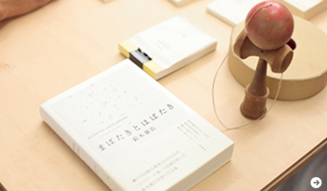
ItoBut I believe that by pursuing things deeply, you find the answers to the initial questions.
SuzukiDo you think so? I don't feel that way yet. Rather, I've moved forward with the expectation that 'if I just keep doing this, I'll surely become capable of something.' It's like in movies, right? 'While I was engrossed in doing something, I unexpectedly became capable of this.' For example, while working a cleaning job, I suddenly became the champion of something in Japan. In that way, by aiming for one thing, you become capable of other things too. Indirect efforts seem to have worked out surprisingly well.
ItoAnd you only pursue things that truly resonate with you, don't you?
SuzukiYes. When I pursue something, it truly resonates with me.
ItoExactly. When something resonates with you, you exert explosive power. That energy is incredibly strong, so you will achieve great success.
SuzukiReally? I might get complacent (laughs).
“If fused well with business, its merits will spread widely” (Ito)

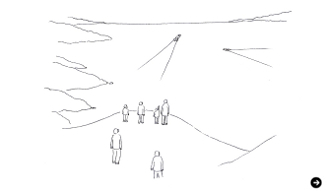
'Zipper Ship' (2010)
Exhibited at Setouchi Triennale 2010
ItoYou are, in a sense, an 'otaku.' You focus on niche interests and pursue your own world. Since your interests are constantly shifting, it might be difficult for people to understand.
SuzukiPerhaps. I believe I've been able to continue my activities thanks to the strong interest from a certain group of people.
ItoYou possess the ability to move between multiple dimensions simultaneously. However, in this world centered on 3D thinking where many people live, companies engaged in marketing and business are adept at conveying things to resonate with the hearts of many. If you can fuse with them, your unique qualities will spread widely.
SuzukiWow! I'm getting goosebumps, though I can't see them.
ItoYou truly have the capabilities of an entrepreneur. Rather than becoming an entrepreneur yourself, you have a high ability to collaborate with business professionals who recognize your ideas and adapt them for a mass market. The keyword here is 'encounter.'
SuzukiIndeed, 'encounter.' Through encounters, I've become more open to pursuing business with my ideas. I used to have strong resistance towards business-related matters.
ItoI think it's better for you to have others arrange things, rather than thinking about the business aspects yourself, allowing them to bring out your best qualities. Among them, there will be people who try to adapt or convey your ideas in ways that differ from your original intent.
SuzukiThat's fine too, as long as it's interesting and beyond my expectations.
ItoAs long as you find it 'interesting,' it's okay. You'll sense that. In any case, you have strong likes and dislikes, so it shows on your face immediately (laughs).
SuzukiMy face really shows it. Apparently, when I lie, my nostrils widen. They twitch (laughs).
Ito(laughs) Yes, you can't lie. You hate anything crooked, don't you? You have good morals and ethics. You hold unwavering beliefs about what's fundamentally important as a person. When something doesn't resonate with that, you get angry, right? And when you get angry, it's quite something.
SuzukiThat's true. I've matured a lot now, though…
ItoYou appear nonchalant, refreshing, and cheerful, but inwardly you are incredibly sensitive and have a very strong ego.
SuzukiEgo?
ItoA strong ego is necessary when setting important goals and persevering. Everything has two sides; if you channel your ego positively, it can manifest as strong willpower or the drive to pursue goodness. Of course, in your youth, controlling your inner self might have been challenging, but it also means you possess immense inner energy.
Your antenna for receiving inspiration, what we call 'the sixth sense,' is also incredibly strong from birth. You have a powerful ability to translate that inspiration into tangible forms in this world. Creators and artists all possess this strong ability, but you were born into this world to be a creator, and you constantly strive to create things that capture people's hearts and bring them joy.
Spiritual Dialogue Vol.15 | Yasuhiro Suzuki
Portraits of Guests 'Seen' by Reika Ito
A Champion of Justice Connecting Nature, People, and Objects with 'Heart' (Part 1)
“Everything is contained in childhood, as the saying goes, ‘What’s learned in the cradle is carried to the grave’” (Ito)
SuzukiI feel that what I'm creating now hasn't changed at all since I became aware of things in kindergarten.
ItoI agree. In childhood, knowledge and distractions aren't as prevalent, so when something catches your eye and your heart leaps, you innocently express it as, 'I want to do that too.' All the hints are there, and people strive to fulfill them every day. This is because the pure expansion of the heart itself is the joy of living.
SuzukiOh!
ItoUnconsciously, we continue to expand that joy, seeking 'more.' That's why everything is contained in childhood.
SuzukiI wonder about myself… The joy and satisfaction I get from creating, that sense of resonance, has remained almost the same. It was that feeling that led me to decide to go to art university in the summer of my third year of high school, even though I was in a science track and was very conflicted.
ItoThe conflict and struggle must have been immense. That indicates a strong sense of conviction.
SuzukiYes, when I think too seriously about things without answers, I become paralyzed. Then, as time ran out and I had to decide my path, I learned about art university. Since I was in a science track and really struggled with math, I knew it wasn't for me. So, when I discovered art university, it felt like finding a refuge.
ItoThe points of conflict often stem from the anxiety of being cornered, which can sound negative…
SuzukiI'm basically always anxious.

ItoIt's a vague anxiety, isn't it? Not like 'I'm anxious because I have this specific problem,' but a general sense of unease. Because you have strong morals and ethics, you often compare yourself to others and think, 'Is this right?' You always observe yourself objectively. So, alongside the feeling of 'Is this okay?', there's also the self-questioning, 'Is it right to do this if it doesn't resonate with me?' I believe that's where the conflict lies, but it's a healthy conflict, so it's fine.
SuzukiIs that so? I receive many opportunities, and creating what comes to mind is certainly enjoyable, but I feel just as anxious. I have to actually turn these ideas into tangible works; just thinking about them isn't enough. They have to be realized. That difficulty makes me nervous. The fear that 'what I conceived might not be realized.' I'm always a bit scared. But that's what drives me.
ItoI see. That's precisely what fuels you.
SuzukiWhen I think, 'I absolutely want to realize this,' it gradually gets closer. It's quite mysterious; looking back, things that seemed impossible to achieve have somehow become feasible, and I wonder, 'Did something change?'
ItoNo, no, you are strong. You have the power to attract and the power to realize. That means you are truly simple and honest with yourself. Disliking crookedness and being unable to lie also applies to yourself.
SuzukiThat's right. I don't want to become complacent.
ItoThat's why when you're unsure, you become strict with yourself, but in return, when you get into something, you can go all out. You also have the power to attract people who agree with you and cooperate, so things always take shape in the end.
“As a child, I was very careful with objects” (Suzuki)
SuzukiEven though I make things, I don't always feel like I'm making them. As a child, I was very careful with objects. I felt bad if I threw things. There was a period when this became excessive, and I kept apologizing to objects.
ItoWhen you start to realize that everything lives with its own role and destiny, you begin to feel that way, don't you? I understand.
SuzukiBut it became too much, and I started to feel distressed. Even sitting on a chair, I'd apologize to it, and resting my elbow on the table, I'd apologize to it. I thought, 'I can't live like this.'
ItoI used to walk around ants to avoid stepping on them. But when I go to a park, there are so many that I can't avoid them all. So, I'd say, 'Okay, let's go~' and let them pass.
SuzukiReally? That's amazing!
ItoAnimals, you see, don't have language or complex thought. In a way, they operate solely on instinct, so you can just communicate with them. That's how I converse with the creatures I share this world with.
SuzukiI see. I think I had forgotten about that.
ItoIn childhood, we all do things like that unconsciously.
SuzukiI was influenced by the educational program 'Soreike! Nontac' that aired on NHK when I was a child, and I believed I could talk to objects. The character had glasses on his forehead, and when he said, 'Dekodeko dekoriin' with his forehead glasses, he could talk to things like utility poles. Then, if he asked, 'Where did Mom go?', the utility pole would answer. I was greatly influenced by that.
ItoThose sentiments are all contained within your works.
SuzukiDo you think so? But I believed that I could talk to objects like that; I didn't think of it as 'just a story.'
ItoWhen you have a pure belief in something, miracles can happen, and you can actually see them. In childhood, with fewer distractions, your belief must have been stronger, so those kinds of childhood stories likely existed more vividly in your daily life.
SuzukiYes. In fact, those things were more prevalent proportionally.
ItoEven as an adult, you are living in a state close to that. A pure heart and the belief in things… I hope you continue to convey these important values to children.
Spiritual Dialogue Vol.15 | Yasuhiro Suzuki
Portraits of Guests 'Seen' by Reika Ito
A Champion of Justice Connecting Nature, People, and Objects with 'Heart' (Part 1)
Art School Years: Rediscovering Childhood Sensibilities
SuzukiYes. People often say, 'For the children too,' but I don't consciously think about children that much myself. In reality, I think adults and children live in quite different worlds. What adults consider a child's feelings is no longer from a child's perspective, but from the adult's own subjective viewpoint. I'm not sure if the feelings and sensibilities of my childhood are truly present within me now. Until around age 20, I lived in what is considered the 'normal' world. But when I entered art school, it was as if I suddenly returned to the state of mind I had in kindergarten. High school was terrible, wasn't it? Full of exams and competition. But the moment I entered art school, I felt like I was back in kindergarten.
ItoThere are standards, of course, but fundamentally it's freedom, isn't it?
SuzukiPerhaps some universities are more systematic, but Tokyo Zokei University, where I studied, wasn't very rigid and was quite free.
I think that was a good thing. The university became like a device that intensely reminded me of my childhood, and my pure childhood feelings and passion accelerated rapidly. That's when flip books like these were born. For me, university life felt like a safe area, a playground where I could freely play, not yet belonging anywhere in society. I explored everything from craft design to space design and fashion design. I wanted to become a craftsman.

ItoYou were a traditional craft artisan in a past life. So, you don't need to do that in this life.
SuzukiOh, really? Now that you mention it, I wanted to be a craftsman, but I get bored after about six months if I keep doing the same thing.
ItoYes, you get bored. You've already mastered it in a past life. Even now, when something resonates and you become engrossed, you want to see it through to the end, thinking, 'I'll do this until I find the answer' – that's probably your craftsman spirit from a past life emerging.
SuzukiMy craftsman spirit appears intensely, but only for a limited time. By experiencing extreme immersion in various fields, I've become able to create different types of works on my own afterwards.
ItoThat's amazing. I'm envious. In my case, I enjoyed everything I tried, but I failed space design spectacularly (laughs).
SuzukiI was also terrible at school assignments. I was completely useless in that regard. Once I finish something, I get bored, but I work like a craftsman until the very first piece. Of course, I 'claim' to be. I made a shoe from a wooden last, and once I felt I had made it like a craftsman, I stopped.
“The past life most influencing my current spiritual vibrations is that of a battlefield doctor” (Ito)
ItoYou've had many past lives, but the one that most clearly influences your current spiritual vibrations is that of a battlefield doctor. I believe your restlessness stems from that. In a life-or-death situation on the battlefield, you were desperately trying to save as many lives as possible.
SuzukiOh!
In an era with limited medical supplies, and without the targeted treatments we have today, creativity was essential. 'How can I save this soldier bleeding before me with the least pain and suffering?' You were desperate. The 'vague, broad anxiety that you always have about yourself' is related to that past life where a wrong step could mean death. You wanted to delve deeper, thinking, 'Should I have done this differently then?', but with patients constantly arriving, there was no time to hesitate. You researched medicinal herbs and thought, 'This can be applied,' or 'This can be substituted,' responding with innovative ideas and emergency measures, not bound by existing knowledge. At that time, you were acting desperately, without overthinking. So, why were you born in Japan in this era and active as a creator…?Suzuki
Wow, that's a bit scary. But I want to hear it. Please continue.Ito
(laughs) Fortunately, Japan is not a battlefield now. You were born in the generation after the Great War, so you haven't experienced war firsthand. So, should you just live in a state of 'peace-induced complacency'? No, your mission in this life is to convey what is truly important for humanity in an enjoyable, interesting, and engaging way. Therefore, you cannot be confined to a single profession. You are someone who realizes what interests you, what questions you have, and what resonates with you, through various means. You are not bound by existing concepts or fixed ideas, and you can move freely across all dimensions. That is what creates your unique worldview. You will continue to create new methods and means. Your work is your hobby. You are someone whose work becomes what they pursue with interest. That's why you do so many different things.Suzuki
Me?Ito
ItoYes, to convey to the world that all approximately 7 billion people on Earth, along with the plants and animals in nature, are all one. That is the task given to you.
SuzukiI see.
ItoYou are someone who continues to communicate that to the world in a more understandable form. In that sense, you also have the role of a spiritual medium.
SuzukiAh, I see.
ItoThis applies to all creators, but your expressive power to translate your unique worldview into tangible forms is extraordinarily remarkable.
SuzukiWhen it becomes a physical object, it suddenly communicates to people.
ItoExactly. That's why I believe creators and artists are 'representatives' of us humans, acting as messengers from the universe. They live to convey important messages to Earth. In your case, you already have many drawers (skills/ideas), but you continuously update them, so you need to release them more and more.
SuzukiYes. When I first started as an artist, I was invited to exhibitions as 'the artist who creates these kinds of works,' but gradually I've become able to present anything.
ItoThat's right. You are conveying the same message as when you were a battlefield doctor, but in the opposite direction, for today's era.
SuzukiIt's like making an incision, isn't it? A while ago, I was invited to participate in a project called 'Paper Fantasy' for the magazine 'So-en,' where various creators made works using paper. Everyone else made hats or shoes, but I created a zipper-shaped paper knife. It had a blade that could cut just one sheet of paper, and I used it to cut roll paper. Roll paper tends to curve, right? When you straighten it and then cut, it curls up and then unfurls with a 'pop.'
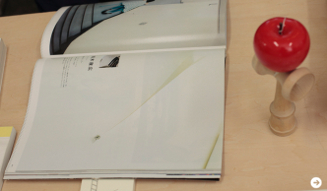
Suzuki's work featured in the 'Paper Fantasy' project for 'So-en' magazine. It's a zipper-shaped paper knife for cutting roll paper.
It was a fashion-themed project, but I felt that introducing a new approach to materials symbolized the beginning of fashion. Also, if this were used as a scalpel to touch the human body, it would become a zipper that opens the body. It's super scary (laughs). Hearing you talk about possibly using a scalpel in a past life made it very interesting.
ItoYes, it's directly connected. You have a strong sense of mission. I believe something from your past life drives you.
In this first part, we revealed your surprising past life as a battlefield doctor. In the second part, we will further explore your fated encounter with your 'life companion,' the Kendama, the source of your inspiration, and your mission in this life!
Yasuhiro Suzuki
Born in Hamamatsu City, Shizuoka Prefecture in 1979. Graduated from Tokyo University of the Arts in 2001. In 2001, his video installation 'Perspective of Playground Equipment' using the 'Globe Jungle' rotating playground equipment, presented on NHK's Digital Stadium, won the grand prize for the year. His participation in 'Ars Electronica Festival,' a media art festival held in Linz, Austria, led to invitations to numerous exhibitions and art festivals both domestically and internationally. In 2002, his work 'inter-reflection of chairs' won the Grand Prize at the Philip Morris Art Award. He then served as a project assistant at the University of Tokyo's Research Center for Advanced Science and Technology, Iwaii Laboratory (from 2006, associate professor at Hirose/Tanikawa Laboratory), and began his activities based at the institute. Currently, he is an associate professor at the Nakano Laboratory. His 2003 work 'Leaves of Blinking' has been exhibited at Spiral Garden and continues to be displayed in many public spaces as well as museums. In 2009, he was the art director for the installation 'Port of Air' held at Haneda Airport, and his work 'Constellation of Departure' received the Good Design Award. In 2010, he exhibited 'Zipper Ship' at the Setouchi Triennale 2010, which garnered significant attention. In 2011, centered around his solo exhibition at the Hamamatsu Museum of Art, he exhibited 'Zipper Ship' at Lake Hamana and undertook projects in shopping streets and city halls, receiving the Hamamatsu City Award for Promotion of Education and Culture 'Artist of Hamamatsu.' He published his first art book, 'Blink and Flap' (Seigensha).
www.mabataki.com/