June 22, 2015
Secrets behind the Success | Series Vol. 2: Naoyuki Honda, CEO of Leverage Consulting
Behind the Scenes of Business Professionals
Part 2 | Naoyuki Honda (CEO, Leverage Consulting)
A Proposal for the Nomad Lifestyle (1)
What are the daily lives and mindsets of successful business professionals like? In our "Secrets behind the Success" series, we delve into the private lives of these accomplished individuals, rarely seen by the public.
Photographs by NAKAMURA Toshikazu (BOIL)Interview & Text by TANAKA Junko (OPENERS)
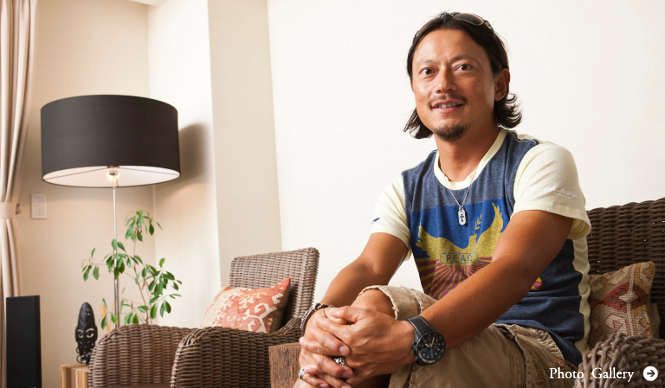
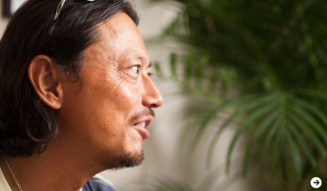
Our guest for the second installment is Naoyuki Honda, CEO of Leverage Consulting. After working for foreign-affiliated companies like Citibank, he played a key role in the J-QASDAQ listing of Backs Group. Currently, he operates businesses based in Japan and the United States, investing in venture companies in both countries. Concurrently, he offers advice on leverage management (※), aiming to "achieve significant results with minimal effort." His Leverage series, which explains his unique management know-how, has resulted in 38 books with over 2 million copies sold. Furthermore, with a motto of "work = play," he also serves as a lecturer at a wine school and leads the triathlon team "Team Alapa," primarily composed of business leaders. We explore the private life of Honda, a "nomad" businessman who fluidly manages multiple businesses from bases in Tokyo and Hawaii.
※Leverage Management: Building a business structure for corporate growth by efficiently utilizing external knowledge, experience, labor, capital, and networks, while further strengthening core competencies, establishing systems, and leveraging automation. This involves providing advice for corporate growth.
To live without constraints, you must take full responsibility yourself.
—While you now lead a "nomadic life," traveling the world and managing multiple businesses, you originally worked for a single company. In your book ("Nomad Life: What You Need to Do to Live and Work Freely Wherever You Want" / 2012 / Asahi Shimbun Publishing), you define "nomad" as "the sense that 'business can be done anywhere.' It's the image of starting various businesses in places you visit or in connection with your destinations." What prompted your transition from being an employee to a nomad?
The term came later, but the desire to live without being bound by things has been with me since I was a student. Of course, it's impossible to live without constraints while working for a company, so I've been experimenting and trying various things to move towards that freedom.
—I believe many people who are currently employed harbor aspirations for such a lifestyle but find it difficult to take action. What's the first step towards getting closer to the next stage?
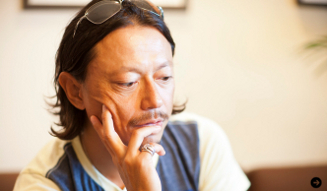
I think people fall into one of two categories: they believe they can't do it, or they try to do it in a situation where it's impossible. To live without constraints, you must take full responsibility yourself, and you need the strength to do so. Your mindset is also crucial; doing things haphazardly won't work. It's true that some people give up because they think they can't, while others give up even though they could. The worst thing is to start without any preparation. For myself, I spent about 15 years preparing from my student days before taking action.
—So, was it the desire to live in Hawaii that came first, and you prepared accordingly?
In my case, it was the desire to live on an island, not specifically Hawaii. When I was a child, my father was temporarily stationed in Okinawa. When I visited, the ocean was incredibly beautiful, the sky was clear and blue, the people were relaxed, and the food was delicious. It was a kind of baptism. I didn't think deeply about it then, but the experience of "islands are nice" probably stayed with me as a core memory. Seeking such a place, I stayed in Fiji for a month during my third year of university. It was a place with a beautiful ocean, perfect for diving. However, I didn't feel it was the right place to live. The following year, I stayed in Hawaii for a month, and that's when I thought, "This is it!" It was an intuitive feeling. From then on, I started thinking about how to live in Hawaii. That was when I was 21.
Being where you want, when you want, and doing what you want enriches your lifestyle.
—You've now realized that and have bases in both Hawaii and Tokyo. Is having bases in both locations important to you?
Many people think, "One solid home is enough." However, the space a family uses is limited. For me, rather than owning one magnificent house, it's better to have bases in places I like that accommodate my lifestyle, work, and various other aspects. This means it's not purely about Hawaii or purely about Japan. It's about living while moving.—Being where you want, when you want, and doing what you want, I believe, enriches one's lifestyle.
—Have there been any changes in your lifestyle or work since you started living in two locations?
Yes. "Living while moving" requires you to select and narrow down your work. There are many things you can't do. For example, always being in one place or employing many people. It was necessary to shed those aspects. In other words, it was a process of "selection and concentration." Thanks to that, a lot of waste has been eliminated. I can now focus on what truly makes me comfortable and happy. Furthermore, people and cultures differ by location, allowing me to reset myself with each move. Moving between various places acts as a mental stretch. It enhances creativity and benefits both my business and my life.
—Did you anticipate these effects when you started?
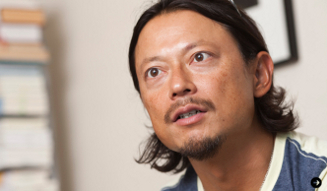
No, I didn't anticipate anything before starting. There was no one around me living that kind of life, so it was truly a trial-and-error process. There weren't even any helpful books. I began serious preparations in 2004 and spent about three years carefully getting ready.
—Were there any "seniors" in this path?
Not one specific person, but when I studied abroad in the US, there were quite a few people living that kind of life. They would live in Colorado during the summer and move to Phoenix for the winter. That's when I realized it was possible to live without being tied to a single base. Seeing ordinary people living such lives, not just retirees or the wealthy, made me think that having multiple bases would allow me to be comfortable at all times and lead a more fulfilling lifestyle, rather than buying a luxurious house in Manhattan and living extravagantly.
—I see. However, having multiple bases is still not common in Japan, so many people likely imagine it involves significant costs.
Surprisingly, it can actually be more cost-effective. Of course, there are many things you can't do. But it's about what you choose. Trying to have everything prevents you from taking a step forward and leads to unhappiness. What's needed is the ability to choose what you truly want to do and what you seek. It certainly requires courage, as you don't know what the future holds. However, if you want to live a nomadic life, it's worth trying. Nowadays, you can live and work anywhere. When I started preparing, the environment wasn't nearly as conducive. There was no iPhone, not even a mobile phone, and I couldn't have imagined technology advancing this far. It took me nearly 20 years, but I believe it's possible to achieve it in a shorter period now.
Behind the Scenes of Business Professionals
Part 2 | Naoyuki Honda (CEO, Leverage Consulting)
A Proposal for the Nomad Lifestyle (2)
The ability to choose what suits your style is essential.
—Are there any life mentors who have had a significant influence on you?
There are many people I could call life mentors, but no single "one person." I believe everyone is wonderful in their own way, so there's no need to narrow it down to just one. I also can't imagine doing just one type of work. I find it interesting how different businesses interact and blend together.
—Do you have any favorite quotes or mottos?
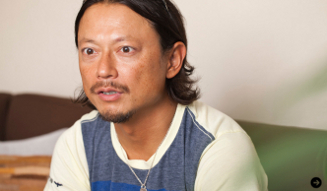
I titled my new book (released in June) "Less Is More," and it's the phrase that resonates most with me right now. "Less Is More" is a philosophy that suggests a state of having fewer things leads to abundance, and that by having less, we become happier. It was originally a term coined by Ludwig Mies van der Rohe (※), a German architect, referring to minimalist, simple architecture. In that sense, the iPhone is also "Less Is More." Compared to a "flip phone," it has superior functionality yet lacks buttons and is simple to use without a manual. I believe the era is moving in that direction, both for products and ways of thinking.
※Ludwig Mies van der Rohe (1886-1969): A German-born architect, one of the pioneers of the modernist architectural style. He advocated for high-rise buildings made of steel and glass. After serving as the last director of the Bauhaus, he emigrated to the United States. (Source: Digital Daijisen)
—Does the concept of "Less Is More" align with your approach to leverage management?
The original concept of leverage is about "Doing More With Less" – achieving greater results with less effort in terms of action. This has evolved over time, and now it resonates with me not just in terms of action, but encompassing everything, including possessions, hence "Less Is More."
—The phrase "Less Is More" seems to symbolize your way of working and living. What journey led you to the idea that "less leads to abundance and happiness"?
I've always believed that experiences and environment are more important than possessions. Living more organically, so to speak; acquiring many things doesn't lead to happiness. This belief has only strengthened over the years. Living a highly ostentatious life in Hawaii would be uncool. On the other hand, some people want to wear luxury brands and live in New York. What's essential is the ability to choose what suits your style – your aesthetic sense.
There was a time when everyone pursued and bought the same things, saying, "On the count of three." There was a fixed image: if you earned 10 million yen a year, you'd drive this car and live in this kind of place. That was traditional marketing, but it no longer fits. There are many options now. If you aim for goals based on old values of happiness, many people will end up unhappy. It's crucial to think carefully about what you need and make choices. I believe this is a time when such considerations are important.

—So, the old ways are no longer effective?
The surrounding environment has changed significantly, so doing things the same way is pointless. The economy is no longer growing; it's not the continuous upward trend of the past. Business has evolved rapidly with the internet and mobile technology, allowing for efficient operations. There have also been physical changes, such as reduced distances and more affordable international calls. When I was studying abroad, a month's phone bill could be 100,000 yen. Now, you can make calls for free using a mobile phone or computer. With the advent of LCCs (Low-Cost Carriers), traveling abroad is as easy as taking a bus. Therefore, I don't think we need to be bound by past ways of thinking. The environment has changed dramatically.
I want to keep my mind flexible at all times.
—Indeed. In today's world, if you want to have bases in two locations or transition to a nomadic life, you can probably do it immediately. But what drove you towards that path when the surrounding environment wasn't yet conducive?
The desire to do so (laughs). However, 20 years ago, I never imagined that so many things would become possible. I had saved some money and thought I'd open an izakaya in Hawaii around the age of 50 (laughs). But it happened more than 10 years earlier, thanks to the improved environment.
—Is that so? It's quite different from your current image (laughs).
As technology advances and the environment changes, the possibilities of what I can do and the directions I want to go have expanded. If you're too fixed in your ideas, it becomes difficult to move. For example, if I had decided, "I'll save money and open an izakaya at 50," I wouldn't be where I am today. Even if you're determined to do a specific job, that job might disappear, or you might encounter a new and more interesting one. That's why I believe living flexibly is important.
I want to keep my mind flexible at all times. Once it becomes rigid, I think you stop progressing. That's why I actively give lectures at universities now – to talk with students who have a solid core. While it seems like I'm teaching them, I'm actually learning from them. They were born into a world where "materialism" was already ending, so their thinking is a step ahead. They're called "herbivore" or "lacking desire" by some, but they are naturally "Less Is More" generation, fitting the times. Having seen their parents and other adults working hard to acquire many possessions yet not appearing happy, this impression is ingrained in them. However, they are meticulous about the things they need or are particular about. Those who dismiss them as "useless" or "lacking desire" are missing out.
Behind the Scenes of Business Professionals
Part 2 | Naoyuki Honda (CEO, Leverage Consulting)
A Proposal for the Nomad Lifestyle (3)
By moving my body, new ideas keep coming.
—You mentioned wanting to keep your mind flexible. Are there other things you do to achieve that?
Through sports like triathlons and surfing, I strive towards something with like-minded friends who have no vested interests. It's hard to find such opportunities as an adult, isn't it? Money and business tend to get involved. Also, as we get older, we tend to take on fewer challenging things. We become proficient at most things, and the opportunities to challenge ourselves at the very limit diminish. Sports allow us to experience these things daily, and by moving our bodies, new ideas keep coming, enhancing creativity.
—Did you start triathlon in Hawaii? What is its greatest appeal?
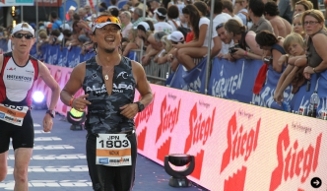
Yes. To be precise, it's a sport I resumed in Hawaii. I tried it once at age 25 and then stopped, but upon turning 40, I decided to "do it properly again" and started. Triathlon is a combined sport consisting of three disciplines: swimming, cycling, and running, so you have to think strategically. Creativity is required there too. In a marathon, a fast runner has a clear advantage, but with three disciplines, there's a possibility for someone who isn't exceptionally fast to win.
—That seems to resonate with your way of working.
I've always disliked doing just one thing and enjoyed doing multiple things simultaneously. In college, I always juggled about three part-time jobs instead of just one. Back then, I didn't think deeply about the reasons; I simply found it more enjoyable. When you're pursuing multiple things concurrently, you can apply what you learned in one to another. Looking back, I think it was a good opportunity to learn those skills that form the basis of my current work.
There's beauty in pursuing one thing deeply, but I believe there isn't just one path. In my case, I was told at school that I "couldn't concentrate on one thing" (laughs). If I had accepted that and tried to change, I would surely be living a boring life now. However, I can say this now, in an era where diverse personalities are increasingly accepted. If this were the 1980s, I would have been told, "What are you talking about?" It was an era where living uniformly was paramount. I think it's a wonderful time now.
It works because there's a premise of engaging in what you love.
—In your book "Nomad Life," the phrase "blurring the lines between play and work" left a strong impression. What specifically does "blurring the lines" mean?
It depends on the profession, so there are jobs where it seems "difficult." First and foremost, company selection is crucial for employees, and business selection for entrepreneurs. Nowadays, there are companies where "work = play" even for employees. Patagonia is a prime example. The company culture embraces the idea that "the waves were good today, so feel free to go surfing." They deeply cherish the story of their founder, Yvon Chouinard, who came up with ideas while climbing mountains, leading to remarkable products. They enjoy using the products they create themselves and then deliver what they genuinely believe is "truly good" to customers. This is precisely play as work, and work as play – there are no boundaries.
Companies like Patagonia are increasing rapidly. In Japan, Start Today is one such example. Everyone working there loves fashion passionately. While it might seem inefficient at first glance, they handle everything in-house. Furthermore, CEO Yusaku Maezawa publicly states that "working 6 hours a day is fine." Although they operate in ways completely different from conventional business logic, it works because everyone is engaged in something they love.
—For you, are work and play equal?
They are equal, or rather, there's no distinction. That's why I'm always having fun. Conversely, I've decided not to do things that aren't like that. I do things that don't make money at all, and among the things I've decided not to do, there are many that would be more profitable if I did them. Ultimately, it's about what you prioritize. However, pursuing immediate financial gain rarely leads to good outcomes. In the long run, things that don't make money might eventually become businesses, or they might not.
I think internet businesses are similar. For example, Google is just a search engine and doesn't charge for it. If they charged per search, users wouldn't increase. Facebook is also like that; they provide what users want to use for free, even if it costs them an enormous amount of money. This makes it fun for both the creator and the user. Things that are done enjoyably and continuously can, before you know it, become a business.—I believe this is an era where lifestyle itself becomes content.
Behind the Scenes of Business Professionals
Part 2 | Naoyuki Honda (CEO, Leverage Consulting)
A Proposal for the Nomad Lifestyle (4)
I intend to keep moving even more from now on.
—You mentioned "lifestyle itself becomes content." At this point, I'd like to delve deeper into your personal lifestyle. First, could you tell us about your favorite restaurants in Hawaii and Tokyo, your current bases?
In Hawaii, there's a restaurant called "Side Street Inn" that I absolutely adore. It's a place where locals gather, and from the outside, it looks quite intimidating and hard to enter (laughs), but the food is exceptional. I always order the "Kauai Golden Ale," a local Hawaiian beer, along with the pork chops, kimchi fried rice, and garlic soy beans, which are like edamame seasoned with garlic. It originally started as a sports bar but became famous for its delicious food.
Side Street Inn Hopaka Street
1225 Hopaka St. Honolulu, HI 96814
Tel. 808-591-0253
Hours | 2:00 PM - 2:00 AM
http://sidestreetinn.com/
—And your favorite restaurant in Tokyo?
My favorite in Tokyo is "Sushi Saito." I love eating, and I try various things as I travel the world, but when it comes to sushi, there's nowhere that compares to the level in Japan. When I return to Japan, I want to go to my favorite sushi restaurant. I've been frequenting Sushi Saito since shortly after it opened, and it's a restaurant I cherish deeply. Now that it's famous and has received three Michelin stars, it's become difficult to get a reservation. Honestly, I wish it hadn't received any stars (laughs). But it's the result of the young chef Saito's hard work, so in that sense, it's wonderful.
—It sounds like you have a very strong attachment to that restaurant.
Yes. Incidentally, it's a restaurant with only seven seats. I believe that having too many seats is detrimental for a sushi restaurant. It's "Less Is More" here too. What I like about his restaurant is that with seven seats, he can manage it perfectly and keep an eye on everything. If he were to increase it to ten seats, business might improve, but the quality would inevitably dilute. From a business perspective, increasing to twenty seats would likely boost revenue. However, the people who truly love the restaurant would drift away.
I think it's wonderful that Saito-san maintains the seven-seat capacity. No matter how good the food is, rude service is unacceptable, isn't it? I think sushi restaurants used to be like that. There was an atmosphere where customers felt they had to apologize. I believe that's wrong. Even if you're served delicious food, if you're eating with tension, wondering if you'll make a mistake, you won't be mentally satisfied, and your sense of taste will diminish. Saito-san is completely different from the "traditional sushi master"; he has a wonderful personality.
—So, it's not just the taste, but the master's personality that draws customers in.
Exactly. Of course, he treats first-time visitors equally. I dislike the idea of prioritizing regulars and neglecting newcomers. In my case, even though I've been going for many years, it's become difficult to get a seat because the number of customers has increased (laughs). Even if I say, "Please make some room," there are only seven seats, so it's always fair. That's why I think it's a "truly wonderful restaurant." It's a cherished place for which I sincerely wish success. Although, I've been turned away repeatedly lately (laughs).
Sushi Saito
1-9-15 Akasaka, Minato-ku, Tokyo, Bicycle Kaikan 1F
Tel. 03-3589-4412
Hours | 12:00 PM - 2:00 PM
5:00 PM - 11:00 PM
Closed Sundays and public holidays
—Your passion for wine has led you to offer wine courses. Is there a particular wine that, just by remembering it, brings a smile to your face?
In 1990, Georges Roumier's "Mijounee" (magnum bottle). It was a profoundly moving and wonderful wine.
—Where did you drink it?
About eight years ago, a wine teacher, who is both my friend and mentor, brought it to a wine tasting gathering. The moment I tasted it, I was overwhelmed with emotion... it's a moment I still can't forget.
—Besides Japan and Hawaii, you likely stay in hotels often. Have you had any particularly memorable hotel breakfasts?
The breakfast at "Château de la Chèvre d'Or" in Èze, on the French Riviera, was exceptional. The reason this breakfast was so wonderful was, above all, the outstanding location. Èze is a town perched on the tip of a mountain, built with walls to defend against external enemies, making it difficult to enter from the outside; it's known as a "falcon's nest village." The townscape from that era remains intact. As the hotel is built on such a cliff, the ocean view is magnificent, and the morning breeze is incredibly pleasant.
—You must have other favorite places around the world.
In terms of food, the most impressive city was San Sebastián, in the northern Basque Country of Spain. It's a city of about 170,000 people, yet it boasts three Michelin three-star restaurants, two two-star restaurants, and two one-star restaurants – a true "gastronomic city." The Basque region is known for its delicious cuisine, but San Sebastián stands out as exceptionally wonderful. While the Michelin-starred restaurants here are, of course, superb, the area famous for its pintxos bars (tapas bars) is also renowned. Every bar offers delicious food. I went bar-hopping for four places in one night, and repeated this for two consecutive days – it was incredible. I highly recommend it to anyone who loves food.
—What was the most impressive restaurant you discovered last year?
I visited Scandinavia for an interview and discovered a restaurant in Stockholm called "Frantzen/Lindeberg." Restaurant Magazine publishes an annual ranking of "The World's 50 Best Restaurants," and this establishment rapidly climbed from outside the list to 20th place this year. It was truly an astonishing restaurant, one that would make you want to travel to Stockholm just to dine there.
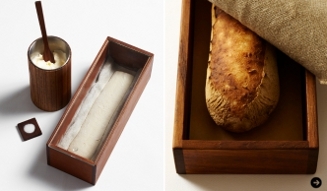
It's a relatively casual restaurant for a two-star establishment, and as is typical of Nordic cuisine, the dishes are very simple, yet they incorporate surprising elements for the guests. For example, ingredients for bread appear, and then, as they ferment, the bread is baked right before your eyes. The trend is shifting from molecular gastronomy, where things are manipulated to the point of being unrecognizable, towards dishes that highlight the ingredients. Vegetables are incredibly delicious in Scandinavia, so a basket containing about 40 types of vegetables is presented, and it's absolutely exquisite. Currently, Nordic cuisine is ranking highly in these lists.
Frantzen/Lindeberg
Lilla Nygatan 21, 111 28 Stockholm, Sweden
Tel. +46 (0)8 20 85 80
Hours | 6:00 PM - 1:00 AM
Closed Sundays and Mondays
http://www.frantzen-lindeberg.com/
—You truly are a gourmand! Including such culinary experiences, what are you investing the most time and money in your life right now?
Travel, I suppose. Moving, traveling. This includes training and races. Since I love eating, food is also included. I believe we are entering an era where travel will be integrated into our lifestyles, rather than just being about shopping or sightseeing. What struck me when I visited Scandinavia was that the people there said they highly value travel over possessions. Among food, clothing, and shelter, they prioritize shelter, then travel, then food, and lastly clothing. It's like Shelter, Travel, Food, Clothing. I think the era is moving in that direction.
—So, could you tell us about your future plans?
Yes, I intend to keep moving even more from now on. To go to more places. For the past five years or so, I've spent about two months a year in locations other than Hawaii and Tokyo, but I plan to increase this proportion and visit more places, including those I haven't been to yet.
—Do you already have plans for "where you want to go next"?
From July to September, I plan to travel around Southern Europe, including Greece, to investigate "why it went bankrupt." I also want to visit Russia.
In the past, hardworking business professionals and nature-loving "outdoorsmen" were discussed in separate contexts. However, seeing Mr. Honda, who has sincerely pursued his own desires of "how he wants to be" and blurred the lines between play and work, one cannot help but feel that the dichotomy of "businessman = outdoorsman" is a thing of the past. He achieves business success while loving nature and living his daily life amidst it. Mr. Honda can be considered one of the new generation of successful individuals with such values. His "way of life," glimpsed through his books where he writes, "I hope that by sharing what I do, it can be of some positive influence," will undoubtedly continue to inspire us.
Naoyuki Honda
President and CEO of Leverage Consulting. Graduated from the Faculty of Commerce, Department of Business Administration, Meiji University. Completed MBA at Thunderbird School of Global Management. After working for foreign-affiliated companies such as Citibank, he joined Backs Group, where he served as Managing Director and led the company to its J-QASDAQ listing. Currently, in addition to investing in venture companies in Japan and the US, he provides advice on leverage management to achieve significant results with minimal effort. He maintains bases in Tokyo and Hawaii, living a dual life spending half the year in Hawaii. His books, including the Leverage series explaining his unique management know-how and "Honda-style Survival Career Techniques" (2009, Gentosha), have sold over 2 million copies cumulatively. He is also an adjunct lecturer at Sophia University. With a motto of "work = play," he lectures at a wine school and leads the triathlon team "Team Alapa," primarily composed of business leaders.