January 7, 2015
INTERVIEW | Hiroto Totaka, Skytree Lighting Designer (Part 1)
INTERVIEW | Lighting Designer Hirohito Totsune
Illuminating Skytree (Part 1)
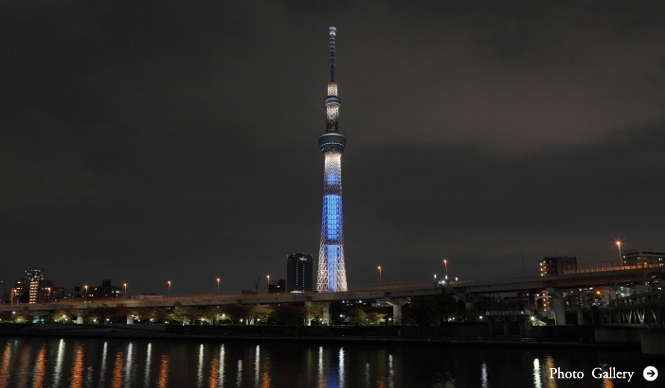
On Tuesday, May 22nd, a new symbol will be born in the Tokyo skyline. Tokyo Skytree (hereinafter, Skytree), a tower boasting a height of 634 meters, the tallest in the world. While the beauty of the structure itself is undeniable, what we will likely see most is its 'night face,' glimpsed when we look up as we hurry home at the end of the day. The weighty responsibility of designing this face from scratch was given to young lighting designer Hirohito Totsune. What are Totsune's aspirations for Skytree, having been born and spent most of his life in Tokyo?──.
Photographs (portraits) by JAMANDFIXPhotographs (Tokyo Sky Tree, Tokyo Hotel) by PanasonicInterview & Text by JUNKO TANAKA (OPENERS)
Inspiration from Belgium and Mt. Fuji!?
The expression of light differs from city to city. What made the biggest impact on Hirohito Totsune was the 'sense of depth in the light' he saw in Brussels, Belgium, where he lived from the 5th grade of elementary school to the 2nd year of junior high.
"I felt a great sense of depth in the cityscape, with distant views and the illumination of certain symbolic churches. The city as a whole was darker than in Japan, but for example, small roads were lit, and the effective use of light made the darkness in between feel pleasant. I had those experiences as a child. At the time, I had no idea I would work in lighting, but I intuitively felt that 'light is somehow wonderful.'
How did Tokyo appear to Totsune after these experiences and his return to Japan?
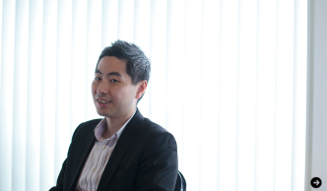
"Tokyo has so many high-rise buildings, so despite being called a large city, I don't feel much expansiveness in the cityscape. Even looking at the night lights, it's basically either uniformly bright or unpleasantly dark, extremely one or the other. When it comes to bright lights, there are only 'lights to attract customers,' aren't there? Izakayas, pachinko parlors, you name it. Then, suddenly, it shifts to functional streetlights or vending machine fluorescents. That felt very lonely. I used to wonder, 'Why is there no cityscape in such a large city?'"
Skytree, the 'tall one' born in the downtown area of Tokyo, can be seen from various places in the city. However, as Totsune mentioned, this is a city of high-rise buildings, making it difficult to grasp its full form. Totsune's image when designing the lighting was precisely the sight of Skytree peeking out from between these buildings.
"When I imagined how Skytree would look, I thought there would be many encounters where it would suddenly appear, floating between buildings. Of course, there would be differences in proximity and distance. At that moment, rather than illuminating it all with a strong contrast of light and shadow, like saying 'I'm here!' (laughs), I wanted it to have a more Japanese, emotional feel, like the moon gently floating in the sky."
What inspired Totsune? It was the presence of Mt. Fuji, standing as if quietly watching over the city of Tokyo from afar.
"When I was thinking about the design, I had to research Edo properly, so I delved into many documents. I found that people in Edo loved Mt. Fuji. It appears in many woodblock prints. And that Mt. Fuji is depicted as floating. Although it's not as visible as it used to be, don't we still get excited when we see Mt. Fuji sometimes? 'Ah, I see it!' At that moment, I had an idea about its presence as a lucky charm. I thought, if Skytree could be seen as a 'nighttime Mt. Fuji,' it would be symbolic and Japanese, like the original landscape of Edo."
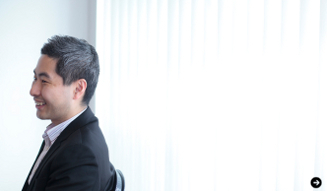
"Mt. Fuji is by no means close from Tokyo. It feels like it's watching over us from a distance. I thought Skytree would also be a presence that watches over us in this modern landscape. It has that floating quality. When those two images overlapped, I realized that by making the top white and illuminating it from above, we could create a sense of it floating with a widening base. That's where I started the design. If we were to 'light it up,' the light from below would be strong and fade as it goes up. I wanted to reverse that, to illuminate it so it fades as it goes down. It's a very unusual approach, but I wanted to try it with Skytree."
The tower, floating with its peak illuminated white like Mt. Fuji capped with snow. Totsune developed his ideas with such a clear image. The work seemed to proceed smoothly. However, the unique 'shape' of Skytree, unlike any other in the world, caused Totsune, a certified first-class architect, to hesitate.
INTERVIEW | Lighting Designer Hirohito Totsune
Illuminating Skytree (Part 1)
Born, it turned out to be 'Twins'!
"Skytree's upper section is based on a circle, but it changes into a triangle as it goes down to the lower sections. Triangles, unlike squares, have a strong sense of direction. This means that depending on the viewing direction, Skytree can appear to have a bulging belly or to be curved inward. This is the architectural concept of 'sori' (concave curve) and 'mukuri' (convex curve), which I found very interesting. I wanted to somehow express these characteristics with light."
(*1) Sori = A line or surface that is concave and curved upwards.
(*2) Mukuri = The opposite of sori, a line or surface that is convex and curved upwards.
This, so to speak, is about the exterior of Skytree. The 'problem' was that its structural beauty extended to the interior as well.
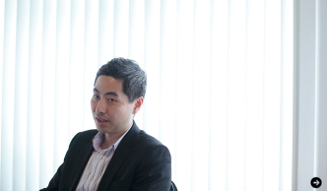
"In the center, there's a pillar called the 'shinbashira' (central pillar), piercing through like a skewer in yakitori. This is a highly earthquake-resistant structure inherited from the days of five-story pagodas. I liked the beauty of that structure too. I thought it would be nice to show the 'shinbashira' through the transparency. I also wanted to beautifully display the 'sori' and 'mukuri' shapes, transitioning from triangle to circle. But these two aspects couldn't be achieved simultaneously. Trying to 'show the inside and show the outside' resulted in something indecisive, just a sloppily lit appearance. So, I began to waver, wondering which aspect to prioritize."
A critical dilemma, not unlike 'To be, or not to be,' but rather 'Should it be the exterior, or the interior?' How did Totsune confront this indecision?
"Around the same time, as I was developing the concept, I wanted to cherish the keywords 'Tokyo' and 'Edo.' While there are many cities like Osaka, Fukuoka, and Sapporo, I wanted to create a recognition and beauty that could only exist in Tokyo. If it were taken to Osaka, it might not fit. Similarly, things built in Osaka today don't quite fit in Tokyo, do they? I believe that's how it should be. Therefore, the keywords 'Tokyo-ness' and 'Edo-ness' became my anchor."
What exactly are 'Tokyo-ness' and 'Edo-ness'? As Totsune continued his research, he rediscovered the charm of Edo-era culture.
"As I researched, what became clear was the human element. Edo culture is, after all, representative of townspeople's culture. That 'humanity' is what creates Tokyo's character. It's a city with a large population from all over the country, so it doesn't have a strong unique identity; rather, it's an interplay of human energy. People gather from all over the country, creating a kind of 'every man for himself' battle. That lively atmosphere, where people elevate each other, creates Tokyo's character. At the same time, it's a source of trends. Even in the Edo period, there were things like fashion magazines depicting beautiful women and kabuki actors. From that time on, Tokyo has had the characteristic of being a center for sophisticated beauty."
Totsune named the chic style of Edo residents and their aesthetic sensibilities 'Iki' and 'Miyabi,' respectively, and incorporated them into his lighting designs.
"In my mind, it wasn't one design anymore, but rather, it turned out to be 'twins' (laughs). I didn't initially intend for two designs, but fortunately, two emerged, and I've come to accept it. Come to think of it, having two designs has its advantages. People naturally think about the differences themselves. This means they observe more closely. I believe it's a great opportunity for more people to appreciate the good aspects of light."
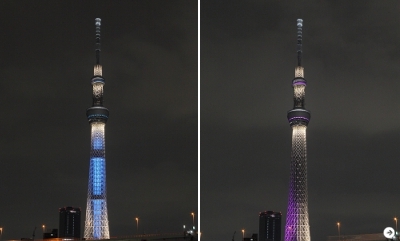
'Iki' (left photo) illuminates the central part in blue, while 'Miyabi' illuminates the outer steel frame in purple.
These two designs, born from this process, are scheduled to alternate daily, delighting our eyes. 'Iki' illuminates the central part of Skytree in blue, and 'Miyabi' illuminates the outer steel frame in purple. Totsune's desire to 'show the inside and show the outside' has become a reality.
'Iki' is a light blue, but with a touch of green added. It's a refreshing blue with a hint of green. 'Miyabi,' which we call 'Edo Purple,' is a beautiful purple light that couldn't be achieved before. It's not a vulgar purple; we aimed for a color that would be liked by both men and women. Pink is easy to create, but it can sometimes look gaudy or overly cute. Bluish purples have also been created for a long time. But we were able to create a purple in between, not pinkish and not bluish, with that kind of balance – something that couldn't be made before."
These delicate colors are possible because of LEDs, which allow for the free creation of colors, much like paint. Yes, Skytree is an 'all-LED' tower, using only LED fixtures. Through this Japanese-originated lighting technology, they have succeeded in creating new light unimaginable with conventional methods.
──To be continued in INTERVIEW | Lighting Designer Hirohito Totsune (Part 2)
Hirohito Totsune
Born in 1975. From Tokyo. Graduated from the Department of Architecture, Faculty of Engineering, The University of Tokyo. Drawn to lighting design, he transitioned from architect to lighting designer. Joined Lighting Planners Associates in 1997. Established Sirius Lighting Office in 2005. Selected as the lighting designer for Tokyo Skytree in 2007. Major works include the Chapel 'Lucemare' at Hotel Nikko Tokyo and 'Mid-Autumn Moon Viewing and Light Play' at Hamarikyu Gardens. He is a young lighting designer currently garnering significant attention for his designs that incorporate Japanese aesthetics.