Munemi | Makeup Artist Mattein Discusses His Career and Hometown (3)
TOP Make up Artist Interview in NYC
Munemi meets Matin(3)
What are Afghan Hands' Next Plans?
Matin is the founder of Afghan Hands, a non-profit educational organization for Afghan widows. He wants to do what he can for his homeland and for the widows and their families left behind. Afghan Hands' dreams continue to expand.
Interview & Text by Munemi
We Wanted Afghan Widows to Feel They Were Earning Their Own Income
MunemiHow did you meet those women you have been working with?
MunemiHow did you meet those women you have been working with?
MatinI went with a plan to do something with widows. I didn’t know what.
My friend, the wonderful artist Shahzia Sikander, and her mother helped me shop in Pakistan. I packed shawls and sewing supplies into two large suitcases and took them to Kabul.
And in the end, I met everyone I was supposed to meet. I truly believed something would happen, so I knew it would be okay.
MatinI went with a plan to do something with widows. I didn’t know what. I brought shawls and sawing materials in suitcases, my friend, Shahzia Sikander who is an amazing artist and her mother helped me shop in Pakistan and we packed two huge suitcases and went to Kabul with it. And I ended up meeting with all the right people. I trusted that something is going to happen and it's going to be fine.
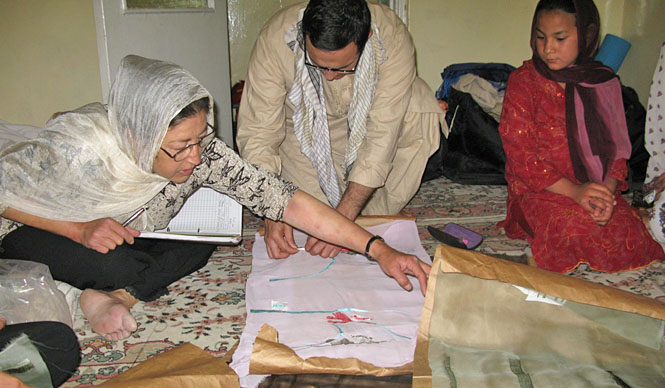
Someone knew this incredible woman who now runs Afghan Hands, her name is Noor Jaan Hashimi. Less than an hour after I met her she told me, “So you want to meet widows? Let’s go find widows.” She went to houses in a nearby village and asked which houses had widows.
We found five widows and started with them. By the time I left the country, there were 35 women, and it quickly grew to 50. We worked with that group for a while, but eventually it kept expanding, and now there are 200 participants in the project.
Someone knew this incredible woman who now runs Afghan Hands, her name is Noor Jaan Hashimi. Less than an hour after I met her she told me “ So you want to meet widows? Let’s go find widows.” She just went to houses in near by village and ask which houses have widows. We found widows, 5 women and we started with them and when I left the country we had 35 women. And it soon grew to 50 then we worked with them for a long time and eventually it kept growing and now we have 200 participants in out project.
MunemiHow does this project actually support them?
MunemiHow does it actually work to help these women?
MatinFundamentally, I didn't go to Afghanistan to start a charity. I've seen what giving money to people for free does...
It destroys their self-esteem and hurts their hearts and pride. So I wanted to create a project that wouldn't profit me, but would help widows regain their lost self-esteem and dignity.
MatinThe whole process of me going to Afghanistan was not to bring a charity of some sort. Because I have seen what that when you hand money to someone for free, I see what it has done, it destroyed people’s self-esteem, kind of breaks their heart and breaks their pride. I wanted to bring a project that was not profiting me, but it would help the widows regain their self-respect and self-esteem.
So, what I did was set a condition: they had to pass monthly tests to receive their tuition. Otherwise, they'd just take the tuition money and doze off in class.
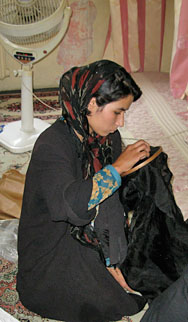
Next, they had to work. So I gave them embroidery work. It didn't matter to me whether these beautiful scarves sold or not. I just wanted them to work. I wanted them to feel they were earning their own income. Embroidery is very focused and demanding work. So I told them, 'I'll pay you as much as a man with a high school diploma earns, but you have to sew properly.' And they started embroidering and began earning as much as men do. What changed was that their families gradually started to respect them.
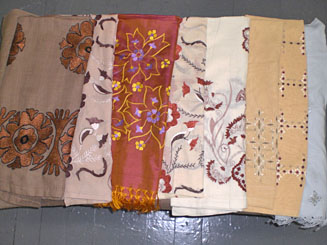
In Afghanistan, when a husband dies, the woman becomes dependent on his family. The family justifies supporting themselves and the widow and her children by making her a servant to the in-laws.
In Afghanistan, when husband dies they became liability, the family have to feed themselves and the widow and her children. In order to justify their existence, these women become servants to their in law families.
So what I did was I gave stipend for their school under the condition that they have to pass their monthly tests. Otherwise, they would just go to school and sleep and get the money. Second thing was that they have to work. So I put them into embroidery. And I didn’t really care that if these beautiful and gorgeous products sold or not. So me, I wanted them to work. I wanted them feel like they are earning their money. And Embroidery is a very hard work, very intense. I told them I will pay you as much as a man with a high school degree would make in a month, but you have to start sawing. And they started doing embroidery and they would make as much money as a man make. And slowly their families started respect them. What happens to widows in Afghanistan is when husband dies they became liability, the family have to feed themselves and the widow and her children. In order to justify their existence, these women become servants to their in law families.
Instead of being dependent, they started bringing significant income to the family. Their fathers-in-law began to see them as assets. The family started respecting them and treating them better. Their posture, their demeanor, their appearance—everything changed completely. They became like different people. They were no longer so broken.
So now, instead of being liability, they bring as much money or more to the family so the father in law see them an asset so the family respect them more and the family treat them better. And these women their posture, their language, the way they look, it completely changed. They look like different people. Because they are not so broken anymore. So that was the thing, I didn’t want to make a charity that go in and help the poor people and make myself feel better. I wanted to teach them a way to earn money, a way to get honor at home.
Another important thing for me was for them to go out to work, even if it was just a few steps away.
I rented rooms in different neighborhoods because transportation is impossible in Afghanistan. I didn't have the money to build a large center, so instead, I created several small centers. I rented $50 rooms in different locations, where groups of 10 widows would gather. I hired local teachers to instruct them. They would learn and work there. I wanted them to leave their homes.
Another thing that it was very important to me is they go to work outside, I don’t care if they go only two steps away. I rented a room in different neighborhoods, poor neighborhood, because transportation is impossible in Afghanistan. I didn’t have money to make a big center. So instead of making the center, I made small centers. I paid $50 for a room in different neighborhoods and 10 women come in and stay there and I hire a teacher from a local school to teach them, so they learn there and work there. I wanted them get out of home.
Many charities send materials to their homes and pick them up the following week, paying them a small amount.
That approach doesn't teach them the concept of going to work. I told them, 'No, that's not right. You need to wake up in the morning, at least look in the mirror, put on a nice scarf, and get ready to go to work like people in other countries do.'
That, for me, was crucial for their mental well-being. I knew it would have some psychological impact, but I didn't know how significant it would be. The effect was immense.
For example, observing one woman from the first or second day, and then after two or three years of the project, she's unrecognizable. Her posture and appearance have changed; she stands tall and smiles.
It's truly wonderful to see what earning one's own income can bring to people through this project.
A lot of charities send materials to their homes and come back next week to pick it up and pay them pennies. With that way, they never learn how to go out to a job. But for me, no, you want to get out and in the morning at least see a mirror and put clean scarf on your head, let them get ready themselves to go to work like women or men in other countries do. So it was very important psychological aspect of it. And I knew that it would change their psychology a little bit but I didn’t know what kind of affect would happen. It was huge, amazing. When you see a woman from day one, and two, three years into the project, seriously, you won’t recognize them. Their posture and look has changed, their chests are puffed up and they are laughing. It’s just amazing to see as the project go and to learn what earning money could do to people.
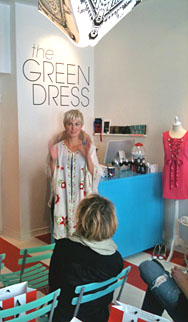
We Want to Show Films and Teach About the Outside World and Its Possibilities
MunemiWhat are Afghan Hands' next plans?
MunemiWhat’s your next plan with Afghan Hands?
MatinOne of my major goals is, assuming security in Afghanistan continues to improve, my dream is for groups of ten women to participate in different projects and choose their own careers from among them.
MatinOne of the main objectives what I have and hoping is that security in Afghanistan gets better and better and, my dream is each group of ten women have different projects to choose a career to do between them.
They could run a clothing store; we would set up the shop and teach them how to make beautiful clothes. They could keep the money they earn. But conversely, if they don't do good work, they won't earn, so high-quality work would be required.
I'd like to do nail salons too. Another group could run a beauty salon, offering hair and makeup for weddings. Another group could do waxing, perhaps for eyebrows and the body. Professional photography and videography for weddings don't exist yet; all the professionals are men, and since men and women are segregated, only men get their photos taken. These are very efficient ways for them to earn money.
They could also run a bakery. With Afghan Hands' involvement, these groups of ten women would earn their own income. These should be entirely feasible projects.
They could have a tailor shop, we could set up a store for them and teach them property how to make beautiful clothes, and whatever earning they could make they keep. If they are not good, they don’t earn so they have to perform. And I would do a manicure, pedicure shop. Another group, another group of beauty salon. It would be makeup and hair for weddings too. And another group for waxing, probably, eyebrows and body. Photography and video for weddings is something that does not exists, all the professionals are men but the men and women are separated and only men get their photos taken. So theses are very productive way them to make money. Bakery is another thing too. These all projects I want to do is small businesses that Afghan Hands involved in running by these group of 10 women make money for themselves. These are very doable projects.
MunemiIf you had the power, what would you do?
MunemiWhat would you do if you could change something in Afghanistan, if you had a power?
MatinIf I had the power, I would build many schools everywhere. And modern structures and buildings in various places. Seriously, that's what I would do.
I would educate people and then show them, on large screens, what is happening in the outside world. I'd want to teach them about the possibilities. That's what I'd like to do.
MatinIf I had a power, I would build a lot of schools everywhere. And modern structures everywhere. Seriously, that’s what I would do, get people educated, and I would show movies on big screens about the rest of the world. Teach them what possibilities could be. That’s what would do.
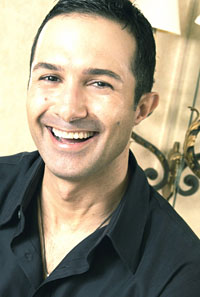
Profile
Matin
Originally from Afghanistan.
In addition to being a popular makeup artist, he is the founder of Afghan Hands (a non-profit educational organization for Afghan widows). His work has been widely featured on CNN's 'Anderson Cooper 360' and in magazines such as Elle, Life and Style, Vogue Nippon, Lucky, and People.
As a makeup artist, his clients include 'A-list' celebrities such as Meryl Streep, Angelina Jolie, Julianne Moore, Gwyneth Paltrow, and Claire Danes, as well as singers Dido, Mandy Moore, and Jessica Simpson. He is also the Chief Cosmetic Science Expert for Neutrogena.
Afghan Hands
http://www.afghanhands.org/
* Scarves seen on the website can also be ordered from Japan.
Profile
Matin is originally from Afghanistan. He is one of the most sought after fashion and celebrity make-up artists working today. His work has been published on the international and domestic covers and pages of Vogue, Elle, InStyle, Glamour, Cosmopolitan, Marie Claire, and Vanity Fair.
Meryl Streep, Angelina Jolie, Julianne Moore, Gwyneth Paltrow, and Claire Danes, pop stars Dido, Mandy Moore, and Jessica Simpson -- all are among his clients. He is also the chief cosmetics science expert for Neutrogena.
Matin is the founder of Afghan Hands Inc., a nonprofit educational organization dedicated to helping Afghan widows.
CNN's Anderson Cooper 360 profiled the Afghan Hands project, and press coverage includes Elle, Life and Style, Vogue Nippon, Lucky and People.