
Nanae Ubukata: Eighth Installment, "Tea Time"
Part 8: "Tea Time"
Photos and text by Nanae Ubukata
For me, tea is something to be enjoyed with friends and family in my everyday surroundings, or a moment of respite amidst a busy day. The origin of this is tea with my grandmother.
When I was a child and visited my grandmother's house, we often went for walks together. We'd walk hand-in-hand along the country paths near her home. My grandmother loved plants; she would point out the seasonal flowers and grasses blooming everywhere, telling me their names. If those plants bore edible fruit, we'd try them, or if mugwort was growing, she'd say, 'Shall we make kusamochi?' and pick the young shoots. It was an exciting time, like a treasure hunt.
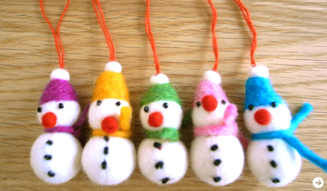
A snowman charm my grandmother gave me.
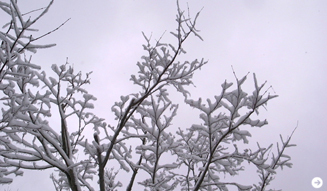
A riverside scene.
Our walking route always included a stop at the riverbank. As the riverside scenery came into view, the sound of clear water rushed into my ears, and I squinted against the wind blowing from upstream, taking a deep breath. I was too scared to go near the river alone, but with my grandmother, it was fine. By the water's edge, we picked up pretty stones and played skipping stones. I wasn't very good at it; my stones would skip once and then plop. They wouldn't jump. As I was getting bored, stones skipping repeatedly across the water's surface zipped past my vision. I turned to see my grandmother standing there, looking rather pleased. On the way back from the river, she quietly told me the trick was to use flat stones and throw them skimming across the water.
Back at my grandmother's house after our leisurely walk, there was an old grandfather clock. I loved listening to the ticking of its pendulum. After returning from our walk, I'd have tea while listening to that sound. A happy warmth would slowly spread through my body. It was the mysterious power of tea. The fatigue from just moments before seemed to vanish. Sweets, tea, conversation. Tick-tock, tick-tock. Time flew by. When I said, 'I'm so full,' my grandmother would smile, looking very happy. Seeing her expression, I felt filled not just in my stomach, but in my heart too.
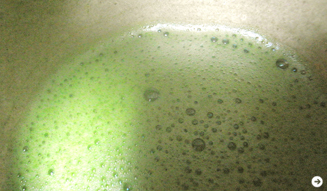
A bowl of tea.
Tea──Connecting Rikyu and Today──This is a story about the Way of Tea by Soya Sen, descendant of the Mushanokoji Sen family and a successor to Sen no Rikyu. Why do we turn the tea bowl? Why is the tea room small? What are the differences between the three Sen families? This book answers such questions clearly. It covers everything related to the Way of Tea, including its history, tea utensils, and tea ceremonies.
The author, Sen, doesn't perform the formal tea preparation every day; sometimes he says it's just 'pouring hot water from the electric kettle in the kitchen into the tea bowl and quickly whisking it with the tea whisk.' He explains that anyone can enjoy 'dokufuku' (tea prepared for oneself) if they wish, even without knowing the details of the ceremony.
I used to admire the world of tea ceremony but felt it was somewhat inaccessible, a world unrelated to me, and I kept my distance. However, reading this book made me appreciate the world of tea and genuinely want to try preparing tea myself.
A moment of relaxation for everyone──Tea is truly wonderful.
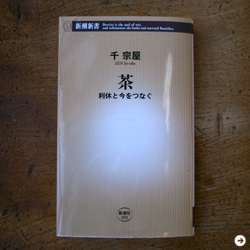
Tea──Connecting Rikyu and Today──
Author: Soya Sen
Publisher: Shinchosha
Price: 777 yen
It's a shame to dismiss tea as merely 'something to learn etiquette for' or 'part of a bride's training.' The true Way of Tea is a comprehensive art of living culture that engages all senses: sight, hearing, touch, taste, and smell. Why did the warlords of the Sengoku period become so passionate about tea? Why did Sen no Rikyu incur the wrath of Toyotomi Hideyoshi? Why must the tea bowl be turned? This book presents a new perspective on the Way of Tea, narrated by a young, unconventional tea master from the Mushanokoji Sen family, a descendant of Rikyu, exploring the bloody history, the logic of the rituals, and the enjoyment of the utensils.