Levi’s® Vintage Clothing: On-Site Report from LA on the Revival of "Orange Tab"
Levi’s® Vintage Clothing
On-Site Report: Levi's® Orange Tab Launch Event in LA!
The "Orange Tab" Returns! (Part 1)
On August 17th, a launch party for the "Orange Tab" was held in Topanga Canyon, west of Los Angeles, California. Levi's® Orange Tab was a line for young people that appeared in the 1960s and 70s. In Fall/Winter 2013, the Orange Tab is revived by Levi's® Vintage Clothing. We bring you an interview with the mastermind behind it, Creative Director Miles Johnson, and coverage of the party. On assignment was Rintaro Tanaka, a leading authority on vintage culture.Rintaro Tanaka
Photographs by Masao InoueText by Rintarou Tanaka
The "Orange Tab" Launch: A Look at Its Background
Since the 2010s, the world seems to have begun changing even more dramatically. Among these changes, the rise of the iPhone generation in their 20s as a core part of society is significant, leading many companies to shift their marketing strategies to focus on gaining "empathy" from them.
"Levi’s® Vintage Clothing is reviving the Orange Tab from the 1970s!"—This news could be seen as a new wave in vintage fashion revival aimed at the iPhone generation. This is because the children of the young people who wore Orange Tabs in the 1970s (the Baby Boomers) have now come of age and are beginning to play a central role in the fashion market. It's likely that those born after the 1980s have a strong understanding of vintage, influenced not only by the internet but also significantly by their parents.
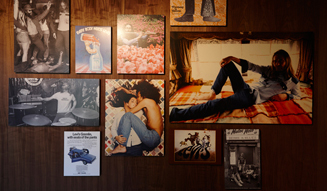
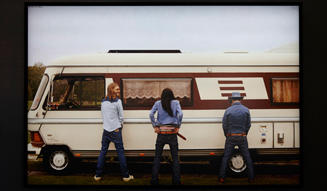
Why is the "King of Denim," Levi's®, at this particular moment, drawing inspiration from America of 40 years ago, around 1972, to launch a new movement? The full story was revealed to the press on August 16th. The venue was an old house built in the 1920s on the Hollywood Hills, known as "Haus" (which Levi's® uses as a showroom). We immediately spoke with Miles Johnson, the Creative Director involved in this "Orange Tab Revival!" project.
"The 'Made in USA' label was a major achievement."
—First, although "Levi's® Vintage Clothing" is a project of Levi's® headquarters in San Francisco, its main office is in Amsterdam, Netherlands. Furthermore, you are British. The global denim industry seems to have become incredibly interconnected since the 21st century.
Miles Johnson (MJ)"Indeed, in the European fashion industry, more people are working for brands in other countries these days. Amsterdam, for example, has become a major hub for the European denim business over the past decade, thanks to the success of brands like G-Star. In my case, I work in Amsterdam on weekdays and fly back to my hometown in a rural area of central England on Friday evenings. It's less than an hour's flight, so it's not a long distance. Many Europeans like myself have this kind of lifestyle within the industry."
—Information about the vibrant and distinct denim fashion scene in Europe reaches Japan increasingly. Does the European perception of vintage and Levi's® differ from ours in Japan?
MJ"No, I don't think the passion differs much from that of enthusiastic denim fans in Japan. Young people in Europe are also drawn to 'Made in USA' (laughs). You, with your love for vintage, must understand that feeling well."
—In the UK, after World War II, used Levi's® 501®XX were sold as relief goods from America, establishing Levi's® as a presence there earlier than in other countries outside the US.
MJ"For example, when I was a child, I wore my father's hand-me-down Levi's®, the Red Tab '501XX®'! But back then, I didn't really like the '501®' because it was my father's old pair. Later, when I moved to London, I frequented a famous vintage clothing store called 'Flipper.' That's where I started learning about vintage. I often saw the Orange Tab jeans, which are now being revived. Back then, most of them were deadstock and sold cheaply (laughs). Post-new wave bands from the mid-to-late 1980s, like The Cure (a British rock band formed in 1978), often wore the super-slim Orange Tab jeans."
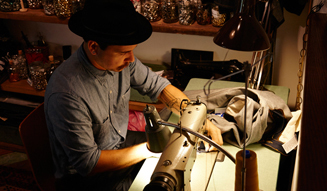
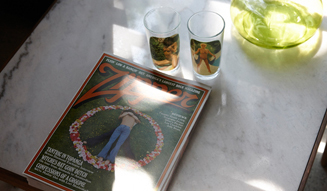
—Why has "Levi's® Vintage Clothing" decided to revive the Orange Tab at this particular time?
MJ"The Orange Tab disappeared in the 1980s and has been absent from the market for nearly 30 years. This means that young people today don't know about the Orange Tab! However, when you observe their lifestyles, they seem to naturally embrace 1970s culture. So, I feel that the current vibe among young people is quite similar to the 1970s when the Orange Tab was popular.
This led to discussions within our team about whether it was time for a revival. The fact that the iPhone generation in their 20s is becoming a core demographic in the fashion market is also a significant factor. Their body types are quite slim, aren't they? I feel the trend is shifting towards more casual denim fashion, like that popular in 1970s California, rather than deep indigo blue denim. And that's precisely what the Orange Tab line represents."
—Their parents were part of the hippie generation, so hippie values and lifestyles are likely deeply ingrained in their upbringing. However, among the five new jean models (three for men, two for women), the "606" super-slim fit seemed to be favored by the staff. In our shared memory, Orange Tabs evoke images of California hippies and Western style, with a lighter blue wash.
MJ"Indeed, our image of the Orange Tab was often men's bootcuts and women's bell-bottoms found in vintage stores. However, historically, the super-slim fit was released a few years before the bell-bottoms. In the 1960s, a trend of wearing slightly slimmer 501® jeans, a more traditional style, was popular among college students. When the Orange Tab was introduced in the 1960s, the release of the super-slim fit was likely a continuation of that trend. The year 1972, which serves as the concept for this campaign, was precisely when the Orange Tab had permeated the mainstream and bell-bottoms and bootcuts were selling the most."
—was a model often overlooked even by vintage enthusiasts. However, when rolled up, it surprisingly fits perfectly with current styling.
MJ"Super-slim jeans have become a staple among young people in recent years. The "606" super-slim fit is particularly perfect for styling with the hem rolled up. Personally, working on this project has allowed me to discover many unexpected aspects and charms of the Orange Tab. Levi's® is a brand with a long history, so there are likely many interesting items we've overlooked."
—And all the revived Orange Tabs are "Made in USA"!
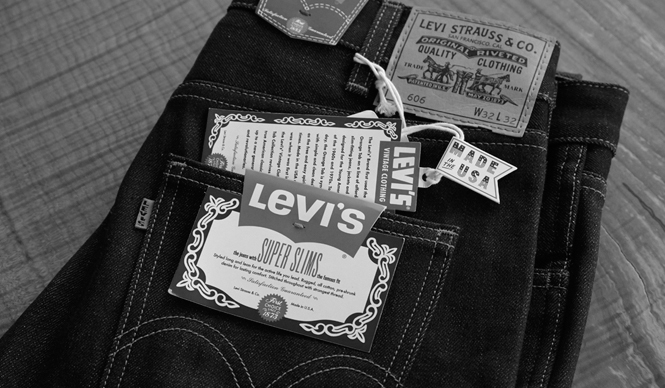
MJ"We used domestic denim from Cone Mills for the fabric. As for the sewing factories, due to years of deindustrialization in the US, there are many things that cannot be produced in America due to technical or cost limitations. However, the Orange Tab from the 1970s was originally designed to reduce costs by simplifying the production process compared to the traditional Red Tab, setting a lower price point for young people. This was called the 'Line 7' sewing line back then. For instance, rivets found on items like the '501®' are omitted on Orange Tab items. Therefore, we found that it was possible to produce them in American sewing factories for this revival. Being able to bring back the Orange Tab with a 'Made in USA' label was a significant achievement."
—Finally, in preparing for this revival, you must have searched through a lot of old materials. Who was the rock musician who best embodied the Orange Tab in the 1970s?
MJ"That would have to be Bruce Springsteen. He's often pictured in vintage '501®XX' for the 'Born in the U.S.A.' album cover. However, if you look at early stage photos from the 1970s, he's often wearing Levi's® with the Orange Tab. I highly recommend carefully checking old photographs. You'll surely discover the unexpected appeal of the Orange Tab in the process."
Levi’s® Vintage Clothing
www.levisvintageclothing.com
Levi’s® XX
Tel. 03-6418-5501
Levi’s® Vintage Clothing
On-Site Report: Levi's® Orange Tab Launch Event in LA!
The "Orange Tab" Returns! (Part 2)
Photographs by Masao InoueText by Rintarou Tanaka
A Mini-Woodstock in Topanga Canyon!?
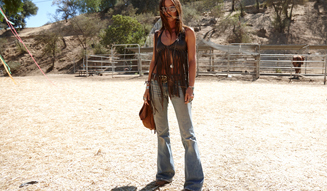
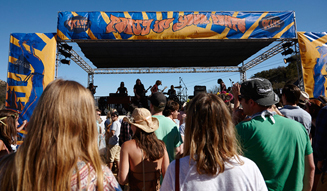
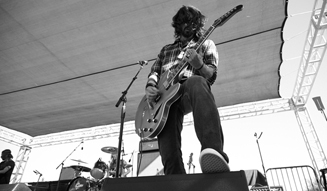
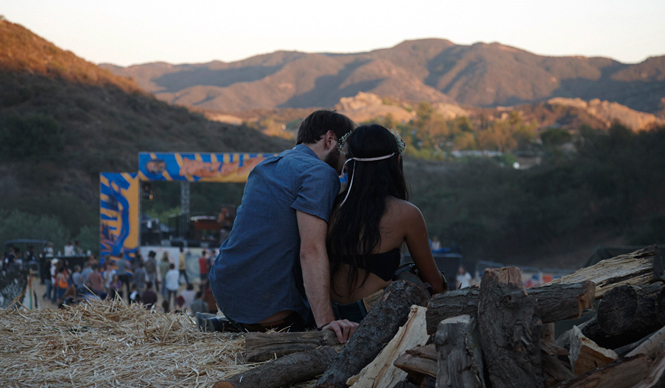
The next day, August 17th, we moved from Hollywood to Topanga Canyon via minibus. After the paved road ended and a short walk down a gravel path, a 40-acre ranch surrounded by a valley appeared! This was the venue for the secret party, and a band was already playing on a stage set up in the center.
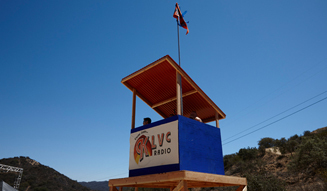

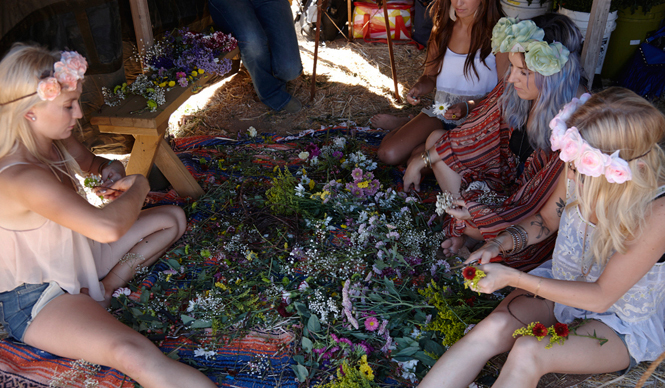
Topanga Canyon, nestled between Santa Monica and Malibu beaches, has become known as an affluent residential area in recent years. However, in the 1970s, it was a "Mecca for hippies in Southern California" with numerous communes. Even today, some of that atmosphere remains, and I was impressed by the meticulous research and dedication of the Levi's® team in faithfully recreating the secret parties that were common in California around 1972.
We immediately spoke with Joshua Katz, the Marketing Director who planned the promotion for this party, "Party In Your Pants."
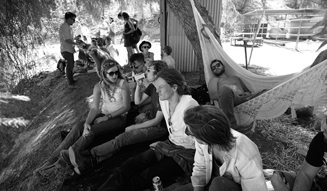
—This event is quite elaborate.
Joshua Katz (JK)"It's a good parody, isn't it?! (laughs)"
—Such a large-scale promotion must have taken a long time to prepare.
JK"About half a year. Sponsors like Fender and Jack Daniel's were secured smoothly, so we managed to prepare everything in a relatively short time."

—You're from Orange County, and before Levi's®, you worked for a famous beach brand, correct?
JK"That was a long time ago, but when I was young, I was fortunate to have great mentors like Bob McKnight from Quiksilver. I experienced the entire long process of success firsthand, from a small beach brand going public. After that, I moved to Levi's®. I seem to be better suited for larger companies, and at Levi's®, my network expands globally. I even get to travel to Tokyo!"
—Indeed, this party has a scale that only Levi's® could achieve. Between us, it must have cost quite a bit!
JK"(Laughs). In recent years, with the spread of the internet and mobile phones, fashion brand promotion strategies have been changing significantly. This means that for the same promotional budget, there should be more initiatives like this 'Party In Your Pants,' which foster culture together with fans. In fact, considering the overall scale of Levi's®, this project isn't particularly large. For example, next month, we're planning a cross-continental promotion for the Red Tab line, chartering a train from New York to San Francisco. That will be on a much larger scale."
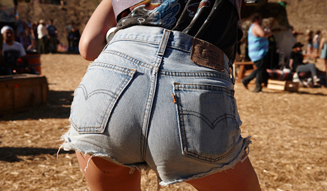
—The "Levi's® Vintage Clothing" brand seems to approach fashion from a cultural perspective while emphasizing history. Moreover, it appears to be more conscious of the broader youth market...
JK"That's probably because Levi's® is a large company. Even when doing niche activities, there's an expectation to consider the mass market. This allows us to approach things from a slightly different angle than other denim brands. The promotion for the Orange Tab is a perfect example of this. This is the kind of fun that only Levi's® can deliver."
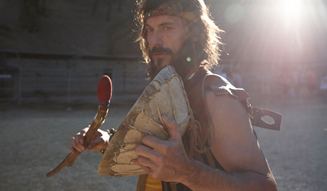
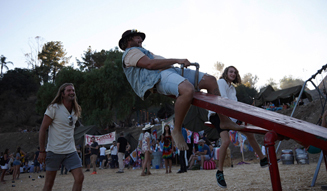
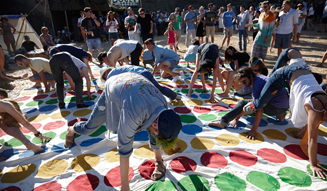

Around 5 PM, as the sun began to set, over 800 Levi's® fans dressed in 1970s fashion gathered, reaching the peak of excitement. The sun set, painting Topanga Canyon red, and the entire venue felt as if we had truly time-traveled to America in 1972.
Reflecting on the two days, I was deeply moved by the meticulous efforts of the international team from America, Europe, and Japan on this massive project. While it was indeed a campaign that "only Levi's® could pull off," such a well-coordinated event has been rare in recent years. I look forward to seeing the "vintage movement" they initiate continue to spread among young people worldwide.
Levi’s® Vintage Clothing
www.levisvintageclothing.com
Levi’s® XX
Tel. 03-6418-5501