Yoshitaka Amano's first full-scale 3D sculpture, "NEPTROS," from Gallery by Amplifier is here | MEDICOM TOY
MEDICOM TOY
Gallery by Amplifier NEPTROS
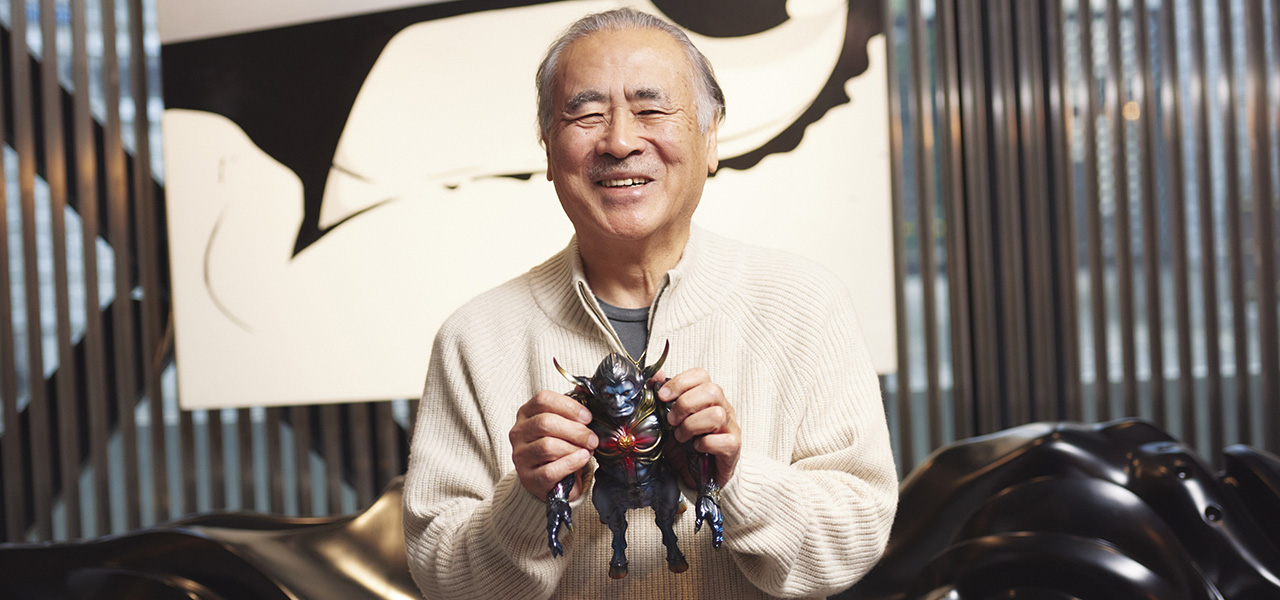
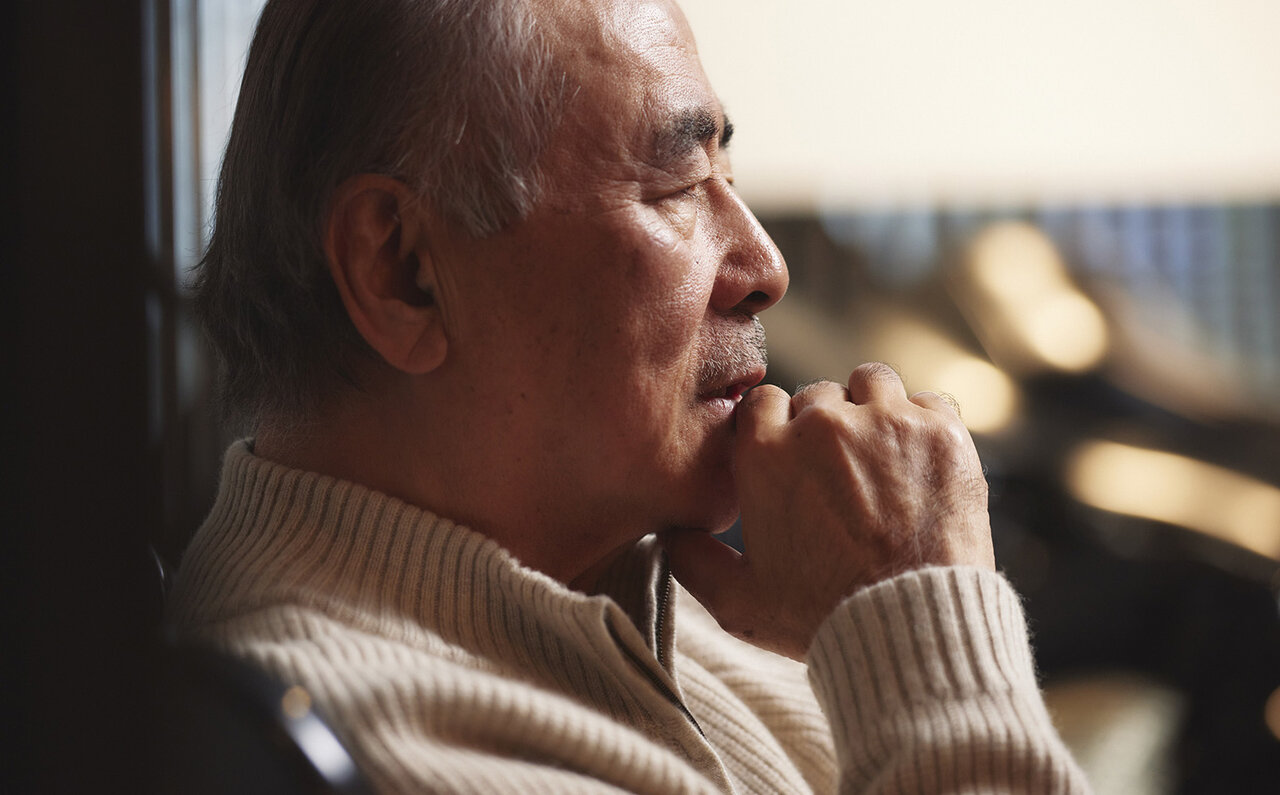
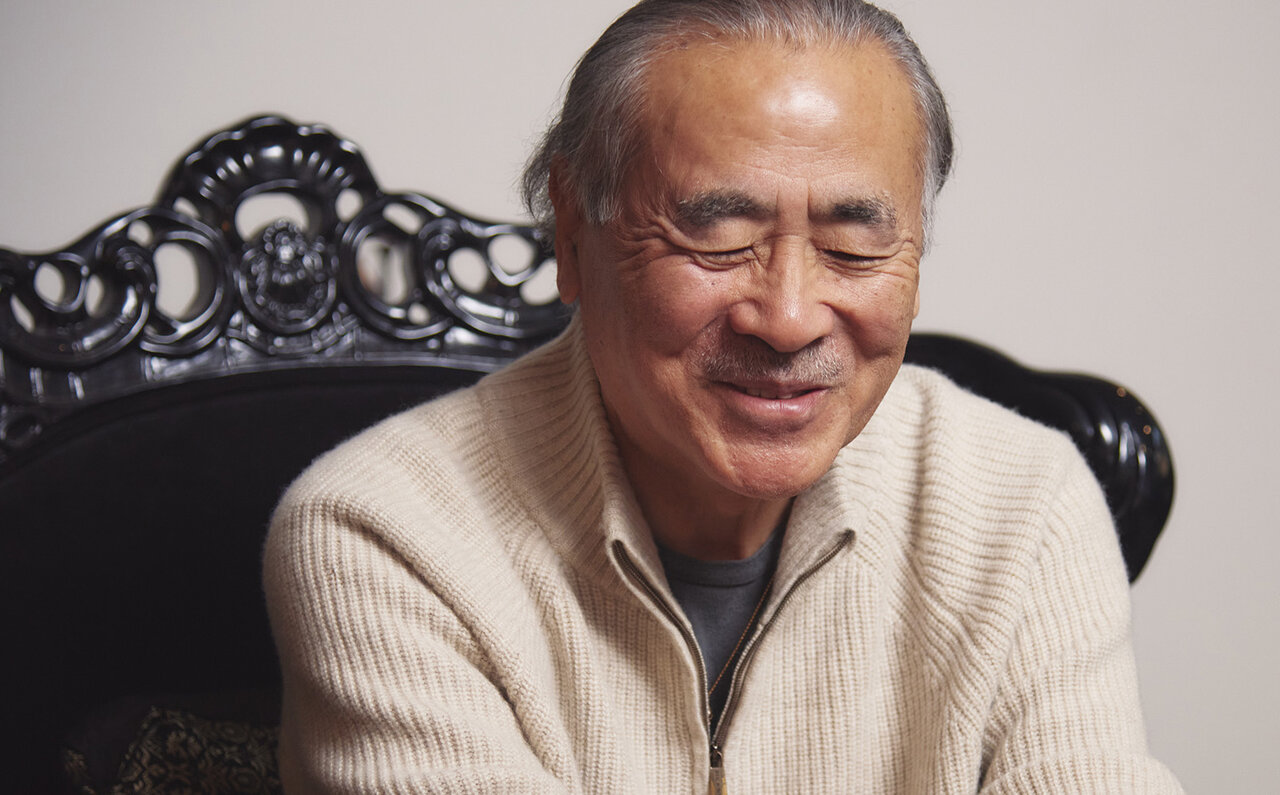
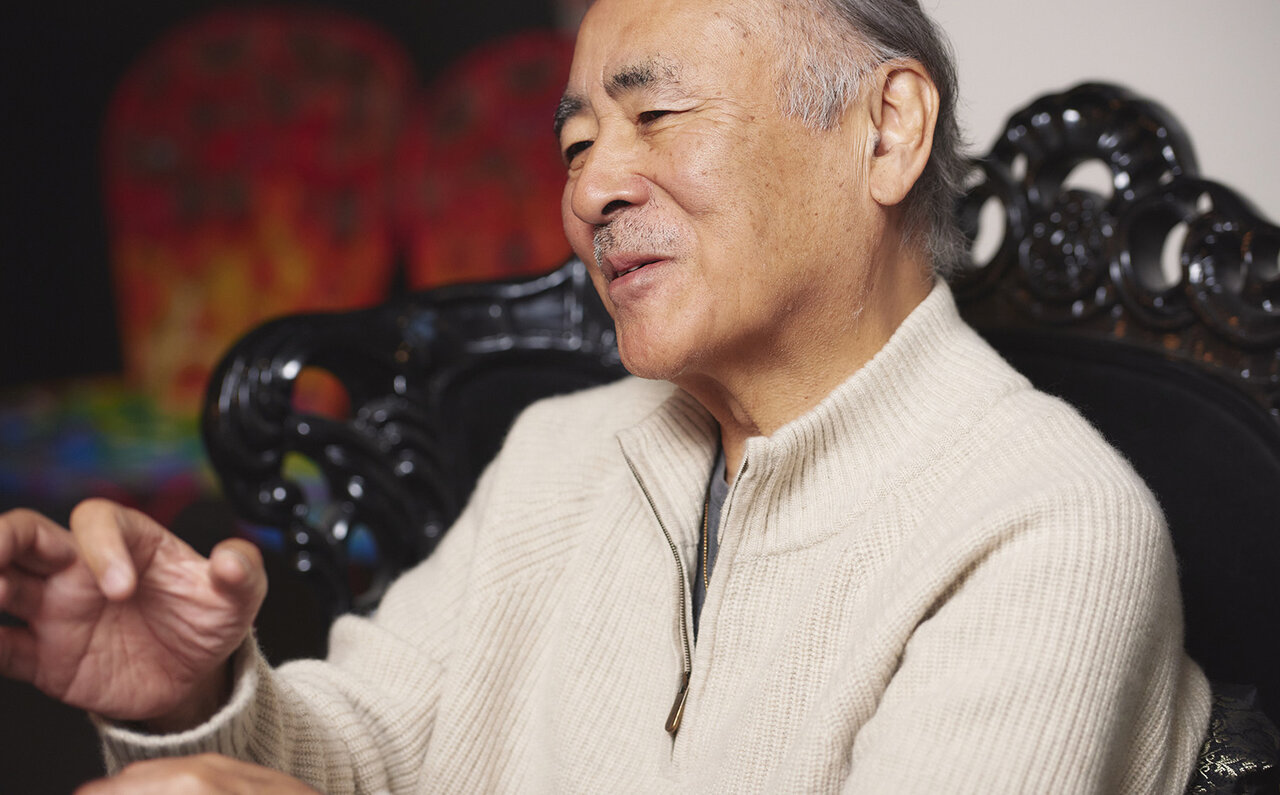
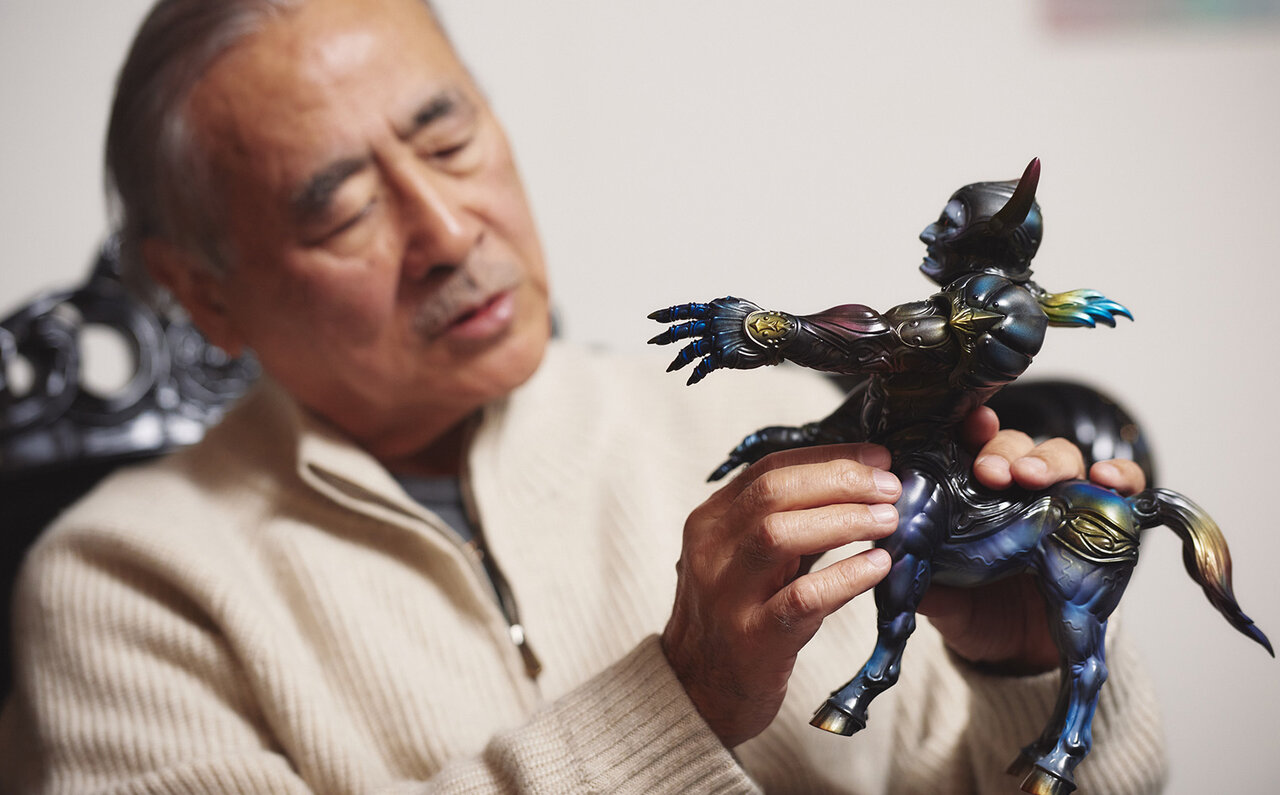
It has been decided that "NEPTROS," a character by Yoshitaka Amano, one of Japan's leading artists, will be brought to life in sofubi (soft vinyl) and released by Gallery by Amplifier. To commemorate the release, we sat down with him to hear about the background of the character's creation and the origins of his artistic endeavors throughout his long career.
Text by SHINNO Kunihiko | Edit by TOMIYAMA Eizaburo
A Miraculous 3D Project by Yoshitaka Amano x RINNOSUKEⓇ x PIED PIPER Begins!
— The sofubi figure "NEPTROS" being released this time is a three-dimensional representation from Yoshitaka Amano's 2012 art book, "DEVALOKA." Could you first tell us about the concept behind "DEVALOKA" itself?
Amano"DEVALOKA" means "the place where gods dwell" in Latin. I first named it "DEVALOKA" when I wanted to depict such a world for a solo exhibition in a Berlin gallery in 2008, and I continue to draw works on the theme of DEVALOKA. With the themes of "Big Bang" and "Creation," it feels like everything I've drawn so far, including anime and games, is included.
Yoshitaka Amano
Painter, character designer, and book designer. Born in Shizuoka City in 1952. Joined Tatsunoko Production, an animation studio, in 1967. Under the name Yoshitaka Amano, he worked on character designs for anime such as "Time Bokan." After going independent, he began a wide range of creative activities, including book cover illustrations. He was responsible for character design, visual concept design, and image illustrations for the game software "Final Fantasy." From around 2000, he also focused on fine art production and continues to be active worldwide, holding numerous solo exhibitions both in Japan and abroad. Nominated for the Hugo Award in 2000. Received the Eisner Award in the same year.
— Your career began in 1967 when you joined the animation production company Tatsunoko Production (now Tatsunoko Pro) at the age of 15.
AmanoAt that time, anime as a genre was something new. It seemed interesting because it was a fascinating world. Now it's something people all over the world watch as a matter of course, but back then, TV series were not that common.
The staff at Tatsunoko, led by founder Tatsuo Yoshida, were influenced by American comics and pursued realism above all else. I think I inherited that. The camera work was experimental, and they were quick to use computer graphics in titles. It felt like an anime made by people who loved visuals. The scriptwriters and directors were all young, so the atmosphere of the times was reflected in both the visuals and the stories. Children might not have understood some parts, but I think it was the first production to express a worldview that hadn't existed before.
What was interesting when I went to Italy for an event was that Japanese animation flooded into Italy around 1978, and Tatsunoko's "The Genie Family," "Casshan," and "Gatchaman" were apparently broadcast there. So, I was surprised to hear that everyone knew Tatsunoko's anime. When I actually saw the footage there, The Genie Family was speaking Italian (laughs). It seems it was a pioneer in making animation international. The fact that it's still in everyone's memory today suggests it has endured over time. It's something I'm grateful for.
— After going independent, you moved into the world of illustration and received numerous awards, including the Seiun Award (an award with the longest history in Japan for SF and related genres, established in 1970).
AmanoAround the age of 30, I wanted people to see my work directly, so I started doing illustrations from scratch, approaching publishers myself. As a result, I found myself making a living by illustrating stories in genres completely different from my time at Tatsunoko. My book cover work included overseas fantasy works such as "Vampire Hunter D" and "The Elric Saga."
— In visual works, the 1985 OVA "Angel's Egg" (original concept, director, and script by Mamoru Oshii, character design by Yoshitaka Amano) was a groundbreaking work that garnered attention.
AmanoIt was too avant-garde at the time and wasn't a hit, but it was very meaningful because Mamoru Oshii pursued what he truly wanted to do with his original work. I don't think it could have been released without the cooperation of many people. It has been highly acclaimed overseas, and a 4K remastered version (scanned from the original 35mm film negative and remastered using the latest technology under the supervision of director Mamoru Oshii himself) is scheduled for release in 2025, marking its 40th anniversary.
— In the 1980s, fantasy was not as established in Japan as it is now, and it feels like your works helped to spread its popularity.
AmanoIn the West, fantasy was one of the genres within SF. A world of imagination, you could say. Drawing such things was an enjoyable task for me. In that vein, I took on the character design for the game "Final Fantasy" in 1987. I think it evolved through various stages within the fantasy genre and then moved into different fields.
For me, fantasy was the first thing I wanted to draw in the world of art. For example, no one has ever actually seen a dragon, right? So, what would my own dragon be like? I think the joy of imagining and creating is unique to drawing. Because it's a fictional world, you can freely conceive ideas. Among these, "mythology" became my greatest motif. There are various myths in the world, aren't there? Celtic mythology, Greek mythology, and so on. Some of these remain as ruins, but in reality, no one has ever seen them. So, I wanted to depict myths in my art.
AmanoNot just fictional worlds, but for example, Japanese New Year or portable shrines might be seen as myths by people overseas. To us, they are just a natural part of everyday life. Christmas, and various other events, might actually be myths. There's an interesting saying: "A dream is something seen alone, but a myth is something seen by a group." Indeed, festivals are only possible because many people participate, aren't they? In that sense, myths and reality are surprisingly intertwined. It makes you feel like we might actually be living within a myth.
Furthermore, they appear strange when viewed from other regions. This is also fantasy. To Japanese people, Greek and Norse mythology are seen as fantasy, but to people overseas, samurai become fantasy. So, perhaps fantasy refers to things outside one's own cultural sphere, things that are not understood.
— I see. I hadn't considered that perspective.
AmanoI recently visited Sicily, and it turns out it was originally part of Greece, not Italy. So, there are ruins of Zeus's temple from Greek mythology, and the face of the Gorgon Medusa, a creature from Greek mythology, is depicted in Sicily's symbol, the "Trinacria."
Trinacria means "three-legged" in Greek, and because Sicily is triangular in shape, it serves as the guardian deity of the land. It was sold as a souvenir everywhere. To the people of that region, it's a commonplace symbol, but to us who are unfamiliar with it, the idea of "Medusa?" is striking. Medusa is known as a terrifying being whose hair is snakes and who turns those who look at her to stone. However, if you research Greek mythology, you'll find a story where she was originally a great beauty who was transformed into that form. Fantasy is about how perceptions differ depending on the place.
— You have created many original characters, such as imaginary creatures and figures from mythology.
AmanoFor example, monsters from novels or games. My job is to create characters that are unlike anything else. It was the same when I was working in anime, but I always take inspiration from something and incorporate it into my own creation. I think that's the job of a character designer. Many people have drawn dragons, but what would my own dragon be like—that's what's interesting. I want to draw things that are cool and beautiful. So, how can I achieve that? That's the starting point, and the reasons come later. Surprisingly, at first, I don't always know the worldview I want to convey. Of course, something has to trigger it, but as I draw, it gradually expands, and things that go in unexpected directions often turn out to be the most interesting.
Sofubi "DEVALOKA" Series Planned Through Part 5
— Could you tell us about the name "NEPTROS," the character who has been made into a sofubi figure this time?
AmanoWhen I created the illustration for "DEVALOKA," I hadn't given it a specific name. So, Rentaro Hirakawa, the representative of Gallery by Amplifier who proposed this project, gave it its name. He apparently agonized over it, saying, "This is a big responsibility," but it's a very cool, rock-inspired name. When I asked if there was a band with that name, he replied, "I researched thoroughly to make sure it wasn't taken, so it's fine!" (laughs). Having a name gives it a sense of independence.
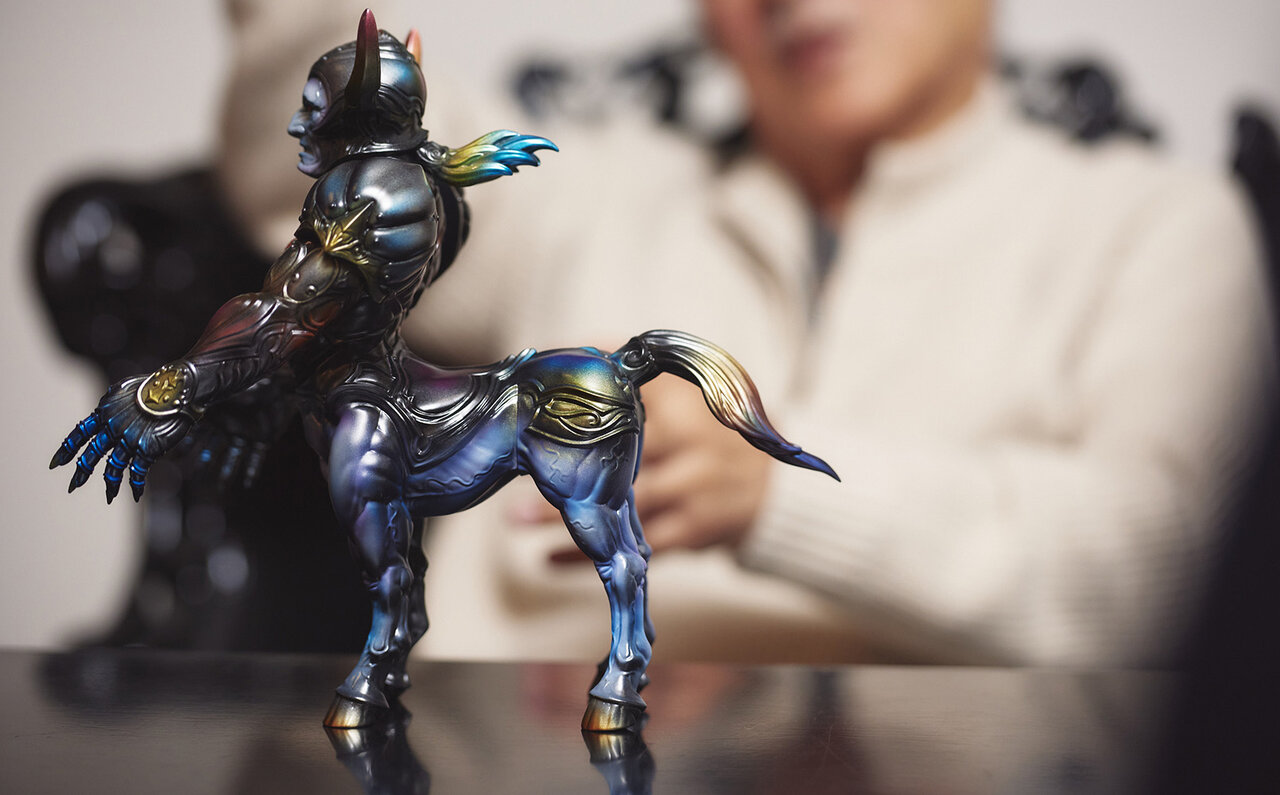
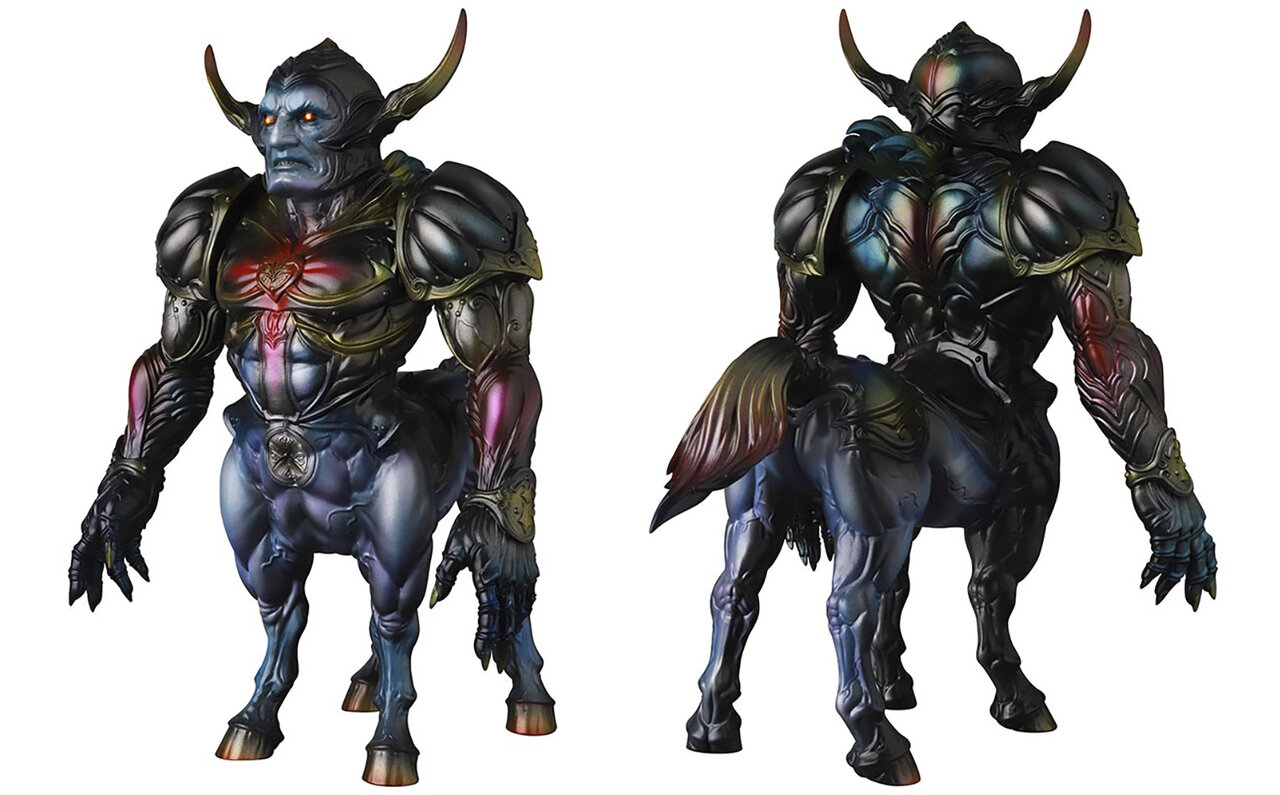
— The image is of the sea god "Neptune" from Roman mythology for the upper body, and the centaur, a half-human, half-beast creature from Greek mythology, for the lower body.
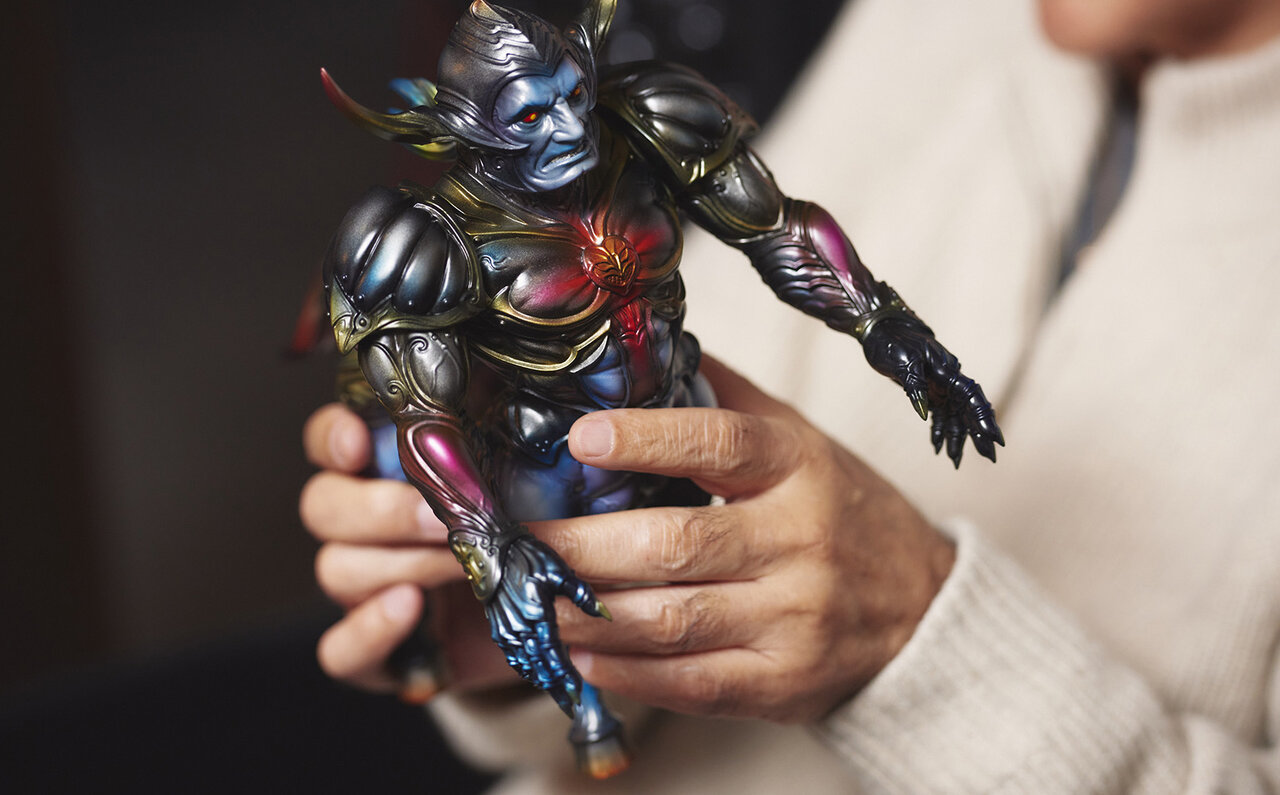
Amano"DEVALOKA" is a collection of various mythological elements and things I've drawn for games and novels, so it contains many different elements. There's Western-style armor, and a touch of Japanese aesthetic as well.
— Your works have been made into three-dimensional figures before, but this is perhaps the first time for a full-scale sofubi figure, isn't it?
AmanoThat's right. I think balance is one of the characteristics of the sofubi category. The head and limbs are realistic, but they are also deformed and enlarged. That's the most important and difficult part.
Looking at the finished product, the balance is very interesting. Specifically, the way the tail and mane flow in the same direction gives the impression of wind. It's something you might not notice, but if the balance is slightly off, you'd think, "Something's not right." The fact that it doesn't feel off is very natural, and I thought it was masterfully done. I was also very particular about those aspects, drawing many sketches, but I imagine volume and other elements are extremely difficult to achieve in three dimensions.
Then there's the realism of the musculature. The way the muscles and armor are harmoniously integrated is well-executed. The expression, where the armor seems to be fused with the body rather than just worn over it, is also something unique to sofubi. The material texture is varied through the coloring, effectively utilizing the characteristics of the sofubi material itself.
— RINNOSUKEⓇ, who created the prototype, is apparently a big fan of your work.
AmanoI can certainly feel that. It's fascinating how they've achieved the maximum possible within the constraints of sofubi, which are different from other materials, and at the same time, that's what gives this sofubi its unique character. I believe that level of deformation and balance is truly difficult. It wouldn't be possible without someone with a great sense. I don't think this level of detail could be condensed without someone who truly understands it.
Ultimately, I believe that the silhouette is what defines a character. Mickey Mouse is recognizable even from a distance, isn't he? In other words, the overall balance, not the fine details, is the character's defining feature. Therefore, the balance is paramount for sofubi as well. The challenge is how to express individuality within that balance.
— The color design by PIED PIPER also features exquisite color choices.
AmanoThe red on the chest is great. It's very rock 'n' roll (laughs). With sofubi, if you divide the colors too finely, it becomes ordinary, so I think the subtle balance is key. The coloring that makes the eyes seem to glow slightly is also excellent. It makes the material look different, doesn't it?
— Since this is the first sofubi figure from "DEVALOKA," does this mean the series will be expanded?
AmanoYes, plans are already underway for up to the fifth installment. As more figures are added, I imagine a "DEVALOKA" sofubi collection will emerge here.
What I find interesting about art is works like the one I saw at a museum in New York: a mountain of small candies that visitors were allowed to take and eat (Felix Gonzalez-Torres, "Untitled (Portrait of Ross in L.A.)," 1991). That piece becomes art through the sheer quantity of identical items.
Similarly, if hundreds or thousands of these sofubi figures were lined up, perhaps that space could transform into a different world. Didn't Andy Warhol's silk-screen reproductions of Campbell's soup cans become Pop Art? In the same way, by existing in large numbers, these figures might take on new meaning. Thinking about that is exciting.
— We look forward to future developments. Finally, could you tell us about your plans for 2025?
AmanoI am currently working on a feature-length animated film called "ZAN" (based on the original art book "DEVA ZAN" released in 2010, it's a grand action fantasy about the protagonist ZAN, who lived a life of battle as a samurai in late Edo period Japan, traveling through time and space to fight various enemies. The film is scheduled for release in 2026 or later). It's gradually taking shape, so I hope you'll look forward to it.
Personally, in addition to commissioned work, I continue to create new "DEVALOKA" pieces. These works will be released in various forms starting in 2025, so please keep an eye out for them.
Gallery by Amplifier NEPTROSPrototype Production | RINNOSUKEⓇ
Color Design | PIED PIPER
Size | Approx. 270mm in height
Purchase Method | Lottery sale period: December 24, 2024 (Tue) 0:00 - January 10, 2025 (Fri) 23:59
MCT TOKYOvia lottery sale
Release Date | Scheduled for January 2025 shipping
Price | 132,000 yen (tax included) / Includes Yoshitaka Amano's handwritten signed guarantee card
*The photo shows a sample under supervision. The actual product may differ slightly.
Inquiries
MEDICOM TOY User Support
Tel. 03-3460-7555