The Joys of Vintage Audio (Part 2)
A Word with JUPITER AUDIO
The Joys of Vintage Audio (Part 2)
In the second installment of our special feature, we speak with Hideharu Kato, representative of Jupiter Audio, about the allure of vintage audio, focusing on sound and equipment design.
Text and Interview by Koji KatoPhotos by Yoshio Kato
Audio: Sound and as Interior Design
These machines weren't built by engineers focused on technicalities, but by people who simply loved music. Today's CD players require optical engineers and knowledge of optics to create. But analog audio, I believe, was born from musical sensibility rather than advanced technology.
—What kind of manufacturers are there?
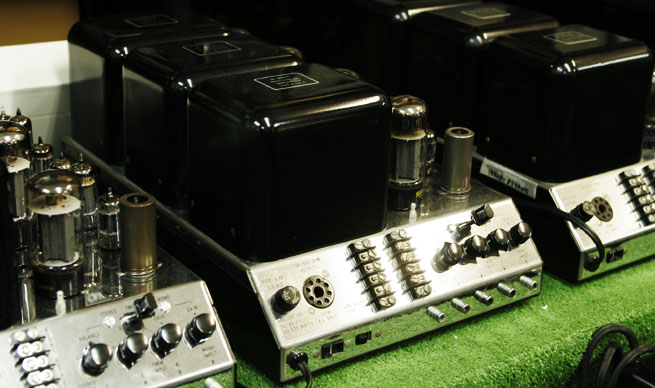
The most famous amplifier is McIntosh from America. Frank H. McIntosh, Gordon Gow, and engineer Sidney Corderman defined an era. Then there's Marantz, founded in 1951, a collaboration between Saul Bernard Marantz and engineer Sidney Smith. For turntables, there's Garrard, with its characteristically British, solid and robust construction. Equipment made over 30 years ago that can last another 30 is unparalleled. And then there's Thorens from Switzerland, which produces a gentle sound. For speakers, perhaps Tannoy, and JBL, founded in 1946.
—Is there any particular music that suits listening with vintage audio?
Genre is not a limitation. For example, listening to today's rock music on audio from this era brings out an incredibly rich flavor. On modern equipment, vocals and instruments can blend together. But with audio from this period, they separate to a certain extent. The delicious parts of the sound really come forward with older equipment. So, whether it's rock, popular songs, or classical, anything works.
—Are there differences in sound between vacuum tubes and transistors?
The sense of three-dimensionality and depth in the sound is completely different. Vacuum tubes bring out the true texture of live instruments. For instance, rock musicians often favor Marshall tube amplifiers because transistors can't project sound with the same cohesive power as tubes.
—How about vintage audio as interior decor?
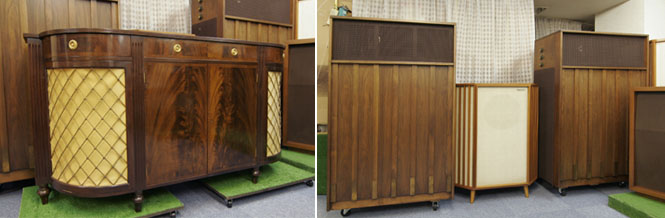
Naturally, they possess a wonderful atmosphere. I believe these designs emerged precisely because they were conceived not just as electrical appliances, but as integral parts of interior spaces.
—Audio from that era was often integrated into furniture and interior design.
I feel that much of today's audio, often categorized as home appliances, lacks the character of a distinct object.
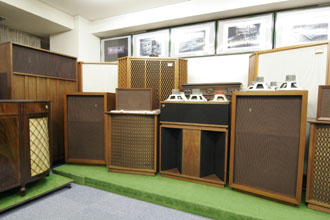
Recommended coordination for vintage audio...
Next timeJupiter Audio Vol. 3Stay tuned!
Next timeJupiter Audio Vol. 3Stay tuned!
JUPITER AUDIO
Address: 1-7-1 Izumi-cho, Kanda, Chiyoda-ku, Tokyo 101-0024, Ougi Bldg. 1F/B1
Hours: 12:00 - 20:00
Closed: Wednesdays, 2nd Thursdays
Contact: Tel. +81-3-3865-1295 (Main)