Interview with Shinichiro Minagawa, Chairman and CEO of B's INTERNATIONAL
MEDICOM TOY
B's INTERNATIONAL
Interview with Shinichiro Minagawa, Chairman and CEO
B's INTERNATIONAL, the company behind fashion brands like "XLARGE" and "X-girl," vintage furniture sales, and collaborations with artists, anime, and games, continues to transmit culture through various approaches. We interviewed Shinichiro Minagawa, the chairman who has been at the forefront of street culture since the early 1990s, introducing numerous brands to Japan, via email to discuss his journey and future endeavors.
Text by SHINNO Kunihiko | Edit by KAWASE Takuro
—Congratulations on your 30th anniversary, a little early. First, how are you feeling?
I have two feelings: that it went by in a flash, and that so much has happened. And I feel gratitude towards everyone who has been involved.
—It's said that the impetus for founding the company was handling Cowichan sweaters commissioned by a Canadian company.
Since childhood, I intended to inherit the family business, which included a kimono shop and a women's clothing store founded by my grandfather, so I attended a commercial high school and majored in business administration at university. As my future was set, I decided to learn sales first and joined Oshman's Japan. However, at the age of 24, my uncle, who was the president of the family business, told me that it would end with his generation and that I should pursue my own interests.
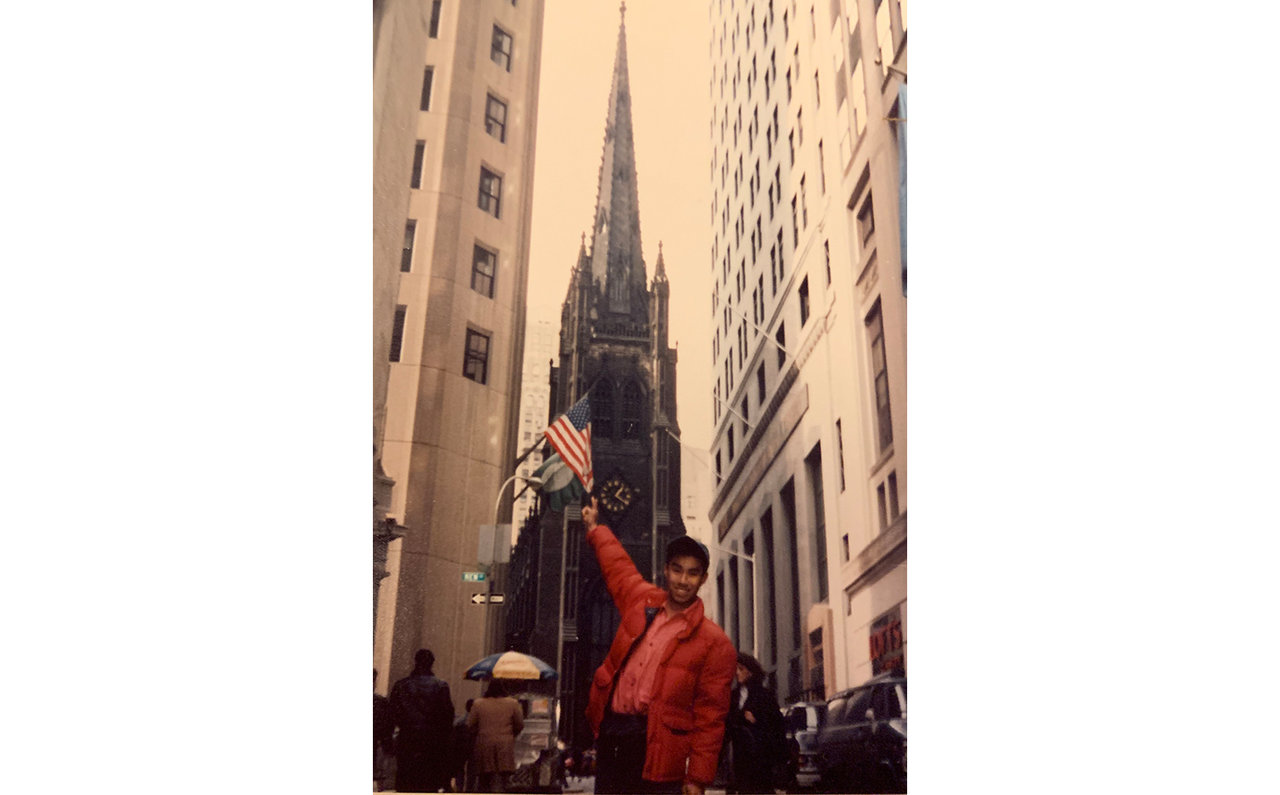
Through part-time jobs since high school, I had the confidence that I could do things better than others, so I decided to find a job I could do and become independent. I felt that America, where I had traveled twice as a student, was full of business opportunities, so I decided to go there to build connections for that purpose.
However, a visa is required to go to America. What I found was a one-year working holiday visa for Canada. I went to Vancouver on the west coast of Canada and worked at two places simultaneously: "Tokyo-do," a souvenir shop catering to Japanese tourists, and a duty-free shop called "Olders."
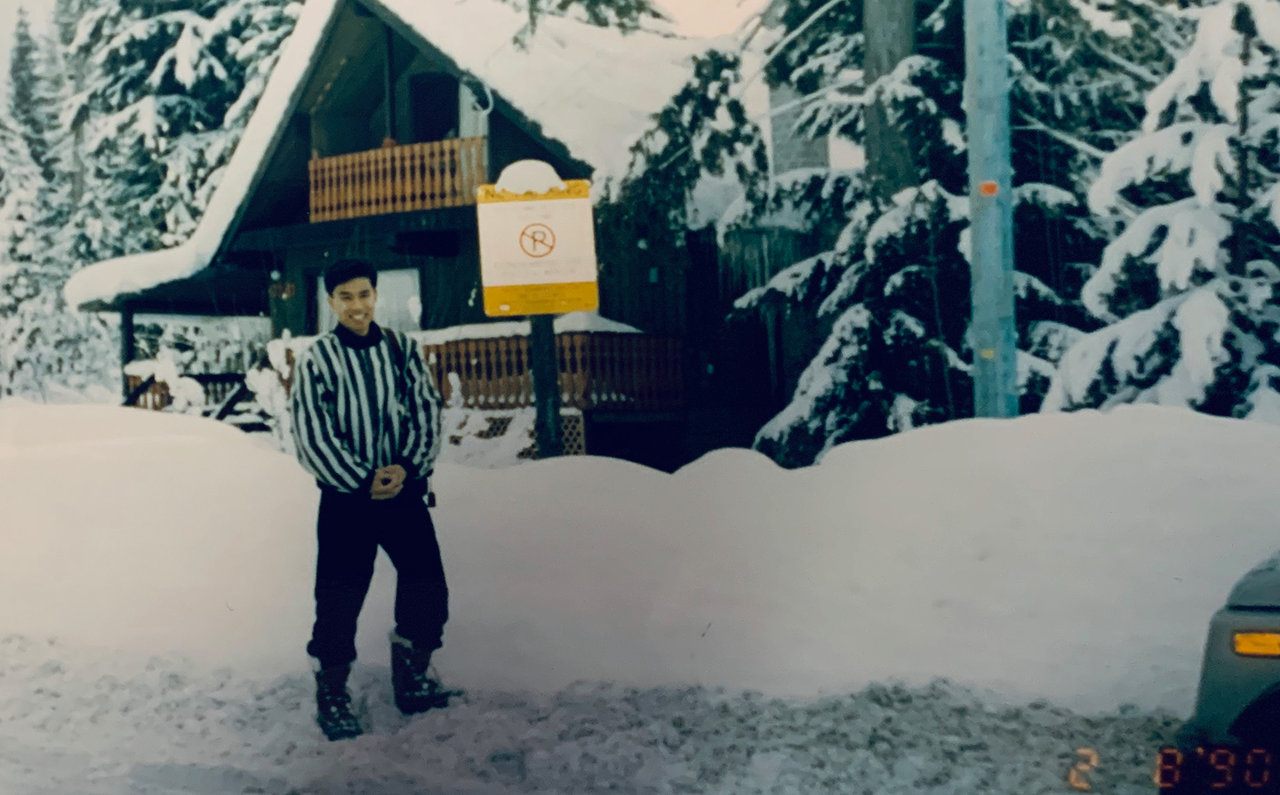
At Tokyo-do and the duty-free shop, I handled Cowichan sweaters from two different manufacturers at each, allowing me to master sales pitches for all four types of sweaters, claiming each was "the best." On my days off, I would pretend to be a tourist, visit other souvenir shops selling sweaters from different manufacturers, observe their customer service, and learn their sales tactics. By understanding the strengths and weaknesses of almost all the sweaters sold in Vancouver, I increased both customer satisfaction and purchase rates. My reliability at work grew, and at Tokyo-do, I was entrusted with buying. After quitting the duty-free shop to focus solely on Tokyo-do, I was also appointed branch manager for the ski resort "Whistler."
After returning to Japan, I worked multiple part-time jobs to save money for my independence. Then, a senior from my company days introduced me to an American casual specialty trading company in Harajuku. I told them I wanted to study there before becoming independent and was hired as an employee. Soon, when I went out for sales, I'd hear, "Don't you have any Cowichan sweaters at your company?" And while I was answering the phone, I'd hear from clients, "Can't you source Cowichan sweaters through your company?"
At that time, Canadian Cowichan sweaters were a huge craze in Japan. Although my company didn't carry them, they were the very products I had handled in Canada. So, I called the president of Tokyo-do and the president of another souvenir shop in Vancouver who had taken me under their wing. Both said, "Come to Vancouver." When I said, "I want to do it, but I don't have the money," they proposed a consignment arrangement: "We'll send them to you. Just pay us after you sell them."
The Cowichan sweaters that arrived were all authentic Canadian-made products. For me, who had been selling them daily in Canada, selling them in Japan, where they were booming, was incredibly easy. I paid them promptly and placed additional orders. Then, I prepared the registration documents myself, submitted them to the Legal Affairs Bureau, and incorporated the company. The Cowichan sweaters, which were intended to fund my independence, became my first handled products.
—Could you also tell us the origin of the company name, B's INTERNATIONAL?
Perhaps because I was born into a merchant family, I've had a strong interest in making profits since I was a child. In high school, I worked various part-time jobs, and I found it incredibly enjoyable to see my labor turn into money. On my part-time job and job application resumes, I wrote "working" in the hobbies section. I somewhat self-deprecatingly thought, "I'm like a worker bee." But I reasoned that since I was flying towards my future goals, it wasn't in vain.
I had the image of using "worker bee" as the company name since my time in Canada. After returning to Japan, I bought a "Slang English-Japanese Dictionary" at a bookstore and thought about the name. The dictionary stated that a worker bee is a "BEE," and BEE also means "hard worker," and by extension, due to the similar sound to "HONEY" and "MONEY," it came to mean "one who collects money." I thought, "Wow, this is perfect for me." Since BEE and B have the same pronunciation, I decided to use just B, and named it B's INTERNATIONAL, signifying a company that brings desirable items from America.
—It is said that in America, you traveled to various cities to purchase brand-name items from RALPH LAUREN and L.L.Bean, among others.
Purchasing is physically very demanding, but the thrill of treasure hunting is the greatest joy since the company's founding. At that time, there was a significant price difference between overseas brands sold in Japanese retail stores and their prices abroad. Around the same time, "factory outlet malls" were rapidly appearing in commercial facilities located one to two hours away from major American cities. The boom in Japanese American casual fashion and the rise of American outlet malls propelled me forward.
Initially, I thought a one-week business trip every three months would suffice, but the items I bought sold so quickly that the trips became almost monthly. I ended up spending half the month shopping in America.
Upon arriving in San Francisco from Narita, I would rent a car and start my purchasing at the directly managed stores next to the factories of THE NORTH FACE and SIERRA DESIGNS in the suburbs. At the street-level BANANA REPUBLIC store downtown, I'd buy animal-print T-shirts and other items, then head to Nippon Express near the airport to ship my purchases to my apartment in Japan. Immediately, I'd return the car and fly to Boston on the East Coast on the evening flight.
Arriving in Boston at 11 PM, I'd rent a car and drive for two hours towards a town called Freeport in Massachusetts. There, at the 24-hour L.L.Bean flagship store, I'd purchase about four to five cardboard boxes of items, including Champion special order sweatshirts requested by clients. Then, I'd park my car in front of the L.L.Bean outlet store a few minutes away and nap until its 8 AM opening. After opening, I'd check for any defects and toss items I thought would sell into a shopping cart, then move to the RALPH LAUREN outlet that opened at 9 AM. After that, while drinking energy drinks to stay awake, I'd continue driving and shopping until night.
I would repeat this for 10 days. The schedule was killer. But since I had created the schedule myself and it was my own company, I could do it enjoyably. It was so much fun that I'm still continuing to buy vintage furniture even now.
—In December 1992, you signed a general agency agreement with XLARGE USA and opened the first Japanese store, "XLARGE STORE," in Harajuku. In May 1995, you opened the first Japanese store, "X-girl Harajuku," also in Harajuku.
There are three stages in my relationship with XLARGE. The general agency agreement, the partnership agreement for their global strategy, and the brand acquisition agreement.
Before a business trip to express my interest in becoming the general agent for XLARGE, I received a proposal from a senior manager of a Harajuku-based retailer, who was a client at the time, to jointly manage a store in Harajuku. I then re-proposed this to the founders of XLARGE, who wanted to have a store in Tokyo. This was a major turning point. I invited the founders to Tokyo, showed them the location, and we reached an agreement. Simultaneously with the decision to open XLARGE TOKYO, I became the general agent for Japan.
After that, XLARGE approached me again, saying they were launching a brand called X-girl with some friends and asked if I would be their agent as well. When I received a proposal to open a store in Laforet Harajuku, I became serious about developing the X-girl brand. The proposal from Laforet Harajuku came about because a musician friend from my student days, Toshimi Watanabe (TOKYO No1 Soul set), who had a boutique in Laforet Harajuku, introduced me. He was a benefactor who occasionally gave me advice on the fashion business during the early stages.
Three years after signing the general agency agreement, XLARGE presented me with a global strategy proposal and asked me to participate in their investment, entrusting me with Japan. A few years later, Adam Silverman, one of the founders, approached me asking if I would buy his shares as he wanted to focus on ceramics. I agreed. Then, in 2008, I bought out the other partners and made XLARGE our brand.
For X-girl, Kim Gordon expressed a desire to focus on music production, so my company divided the clothing production with XLARGE (before the acquisition), who were co-shareholders and business partners. They handled the design, and we handled the production. A year later, we purchased the brand. X-girl was very well-received by our clients due to its fit tailored for Japanese people, with orders from Beams accounting for half of our total production.
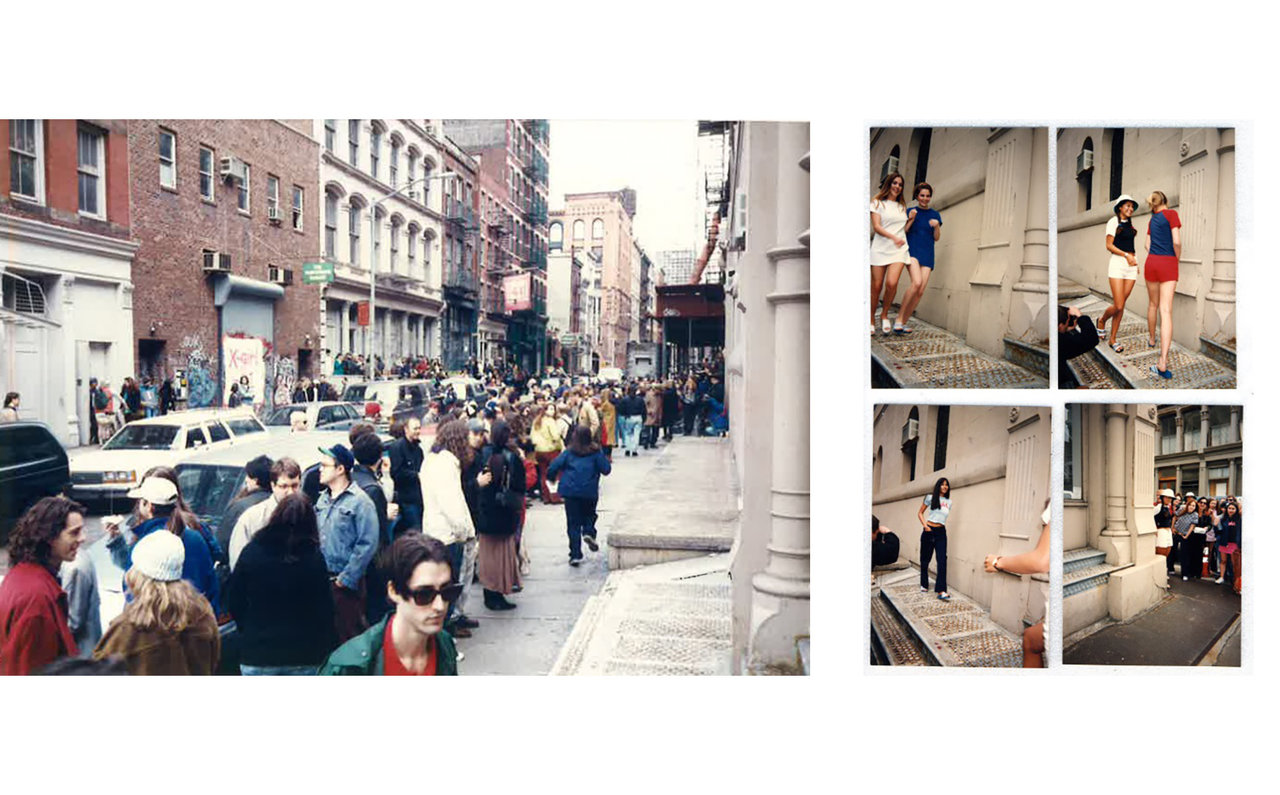
I later heard that we were the top purchasers among Beams' suppliers at the time, which surprised me. Even more surprising was the queue at the opening of HEP FIVE in Umeda, Osaka, so long that it caused complaints from the facility management. I was there to manage the crowd when Beams' president, Mr. Shitar, told me, "I lined up and bought one for my daughter that day too." I had heard that Beams had prohibited employee sales due to low stock, but the fact that the president himself lined up! If he had just said a word, I would have certainly made arrangements, but I felt I should emulate Mr. Shitar's fairness, which did not allow for such exceptions.
—You have released various collaboration items, including BE@RBRICK, with MEDICOM TOY. Could you share some memorable experiences from your relationship, such as your private interactions with President Akashi and Vice President Suga, and memorable collaboration products?
My relationship with MEDICOM TOY, which began 18 years ago, was handled by staff attuned to culture, and I would only see the finished products later. Due to staff retirements and changes in personnel, our close relationship with MEDICOM TOY had begun to wane. However, a collaboration with Hajime Sorayama, affiliated with NANZUKA Gallery, served as a catalyst. Now, meetings are proceeding more frequently than ever, with participation in MEDICOM TOY exhibitions and the release of several collaborations annually.
President Akashi and Vice President Suga have joined me for BBQs at my home and we meet at events hosted by NANZUKA Gallery. President Akashi is always calm and speaks elegantly. I am always impressed by how he, a successful businessman, shows no signs of arrogance. It's very easy to be arrogant. President Akashi's humility and intellectual demeanor are very elegant. I learn a lot from him.
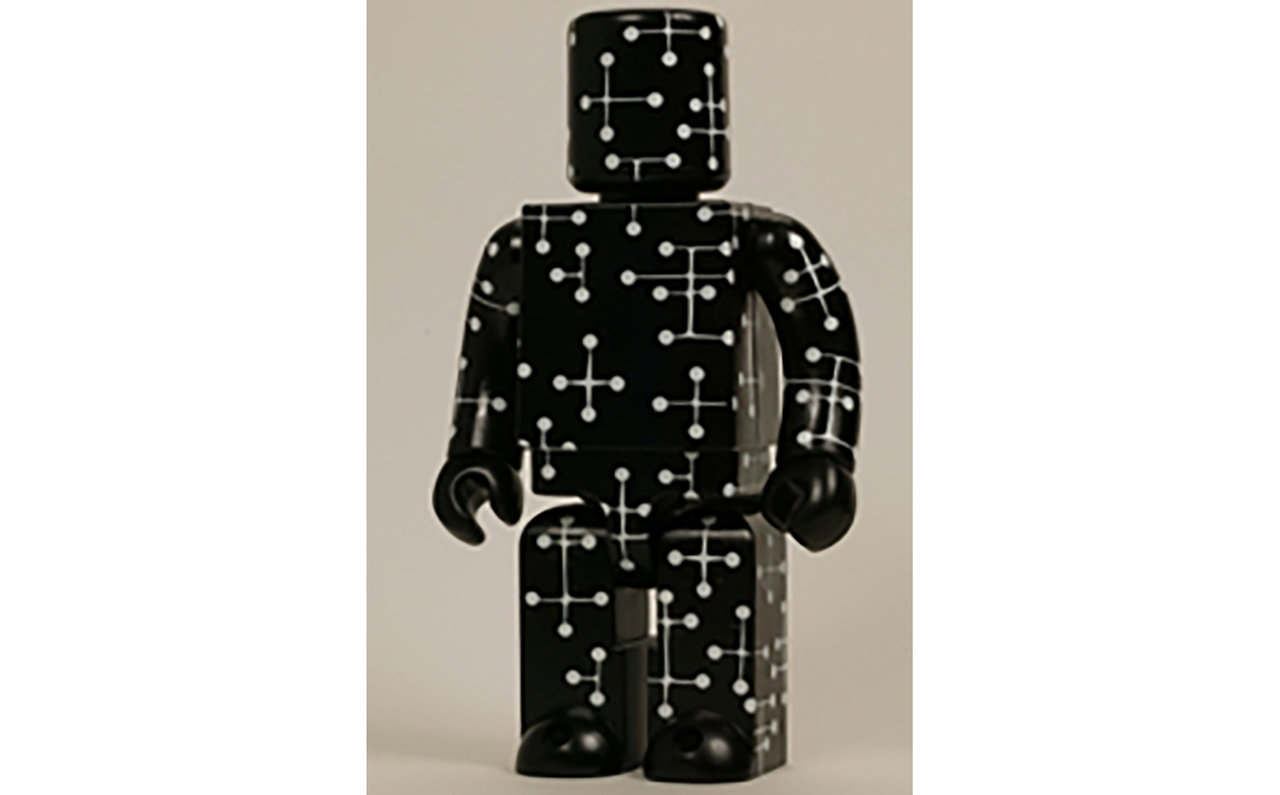
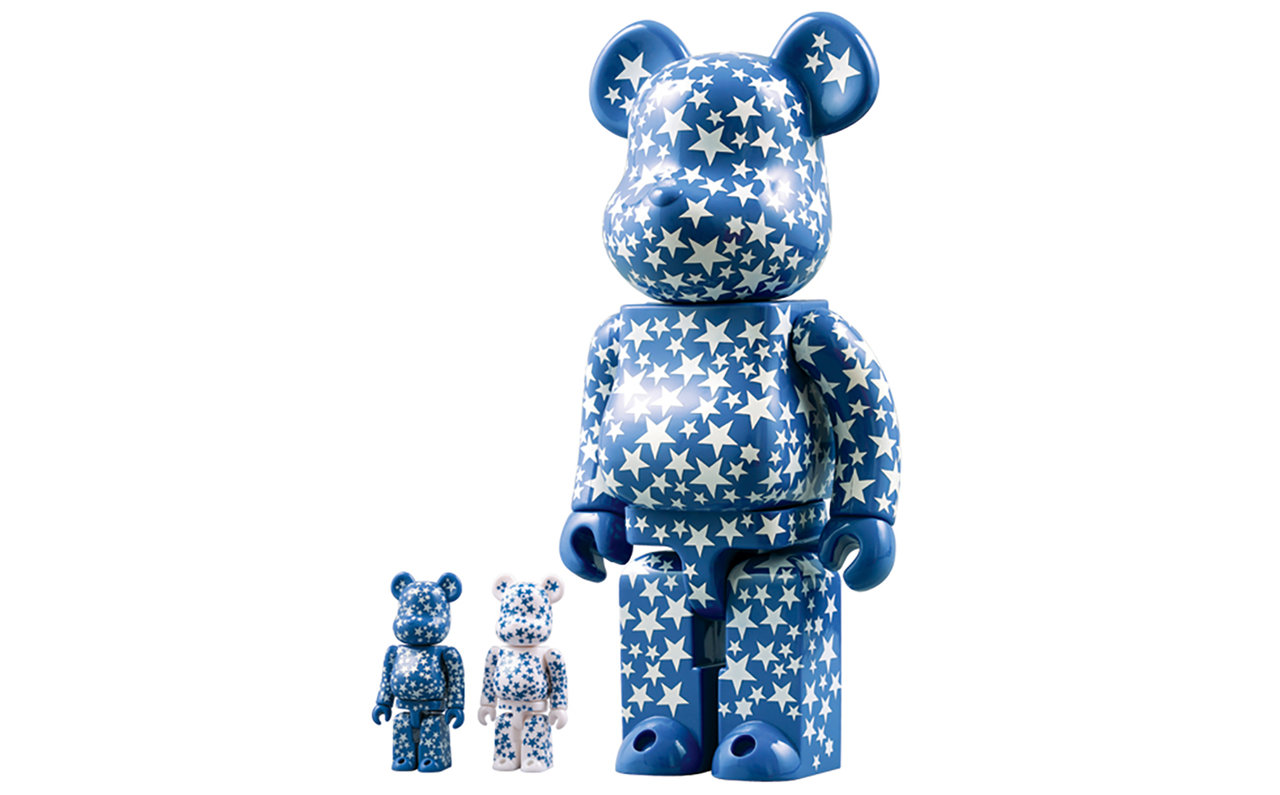
The name of our modern furniture shop is Mid-Century MODERN, but it was previously called STITCH. I was surprised to see the "Eames 400% KUBRICK" released in 2005 and the "Alexander Girard STARS BE@RBRICK" from 2007 exhibited at an auction of modernism collections in Chicago, where I was participating in furniture buying last year. Items not sold overseas were in the hands of American modernism furniture collectors, and handled by a world-class auction house!
I knew that MEDICOM TOY was supported not only by toy collectors worldwide but also by contemporary art collectors who acquire high-priced art. However, realizing that their reach extends beyond that, I was even more impressed. The other day, while tidying up my house, I found an unopened collaboration Bearbrick. I plan to bring it forward when I rearrange my collection.
Eames 400% KUBRICK (STITCH MODEL) Released May 2005
©️ 1947,2004 Eames Office LLC
KUBRICK TM & ©️ 2000-2020 MEDICOM TOY CORPORATION. All rights reserved.
AG STARS BE@RBRICK 100% / 400% Released November 2007
©️ Alexander Girard
BE@RBRICK TM & ©️ 2001-2020 MEDICOM TOY CORPORATION. All rights reserved.
—In September 2017, you became Chairman and CEO. How has your mindset and the company's development changed since taking on this role?
When I founded the company at age 25, my intention was to create a company that brought anything that seemed appealing in America to Japan. However, before I knew it, it had become a company specializing in young fashion. I felt a sense of dissonance when I realized I was getting older than the target demographic, yet still thinking, "This is cool." So, I decided to hand over the presidency to a successor as soon as possible.
As someone influenced by American culture, I admired the examples of successful Americans retiring early. My goal was to declare my retirement while still at the peak of my career, hearing people say, "Why are you quitting? You're in your prime!" To achieve this, I consciously focused on delegating from an early stage. However, the company grew more than I anticipated, and over 20 years passed without this realization. For a company with annual sales of tens of millions of yen and about 20 staff members, succession might be manageable depending on the successor's motivation. But with annual sales of 7 billion yen and 250 employees, the level of responsibility is different, so I couldn't select someone without considering their business skills and suitability as a manager.
I have not pursued expansion in scale. The current number of stores and sales volume are a result of "natural growth." I believe many business owners in the same industry must have thought, "They have such great content, why aren't they opening more stores?" However, I have been committed to "managing within my means." I don't know if that was the right approach. If I had invested more aggressively, perhaps sales would have reached over 100 billion yen, or perhaps I would have stumbled and gone bankrupt.
Yusaku Nishikata, the current president, will undoubtedly take on various challenges suited to the times, leveraging his experience in trading companies. I will not interfere, only offering comments when he seeks advice. I will make proposals and requests regarding management, but I will not give instructions or orders, leaving the steering to him. I have no intention of exercising undue influence as a founding chairman. Although I hold executive authority and am the largest shareholder with voting rights, legally able to make decisions alone, I am essentially reserving that power and leaving it to President Nishikata.
President Nishikata will likely engage with overseas markets by leveraging his bilingualism, experience working in America, and extensive international travel. To that end, we have already hired several trilingual staff members. I am confident that our brands are globally competitive, so I support and endorse his direction. Sales have already doubled since the change in presidency. Honestly, the results are different when a capable person is at the helm (laughs).
—In recent years, XLARGE and X-girl have been involved in highly acclaimed collaborations with unprecedented partners, such as the classic sci-fi film "Alien," and popular anime like "Dragon Ball Z" and "Evangelion." Could you tell us about these projects?
More than 20 years ago, it was called "special order." Our company, slightly ahead of competitors and with a bit more frequency, collaborated with various companies, releasing highly anticipated items that were well-received. When the term changed to "collaboration" and we began working more with licensing companies rather than brands or manufacturers, I viewed it negatively, thinking, "Why pay licensing fees to others when we have content that other companies envy?" However, now, I highly appreciate it because each brand is realizing collaborations that are so impressive that they are praised even by those outside the brand's fanbase, not just simple tie-ins.
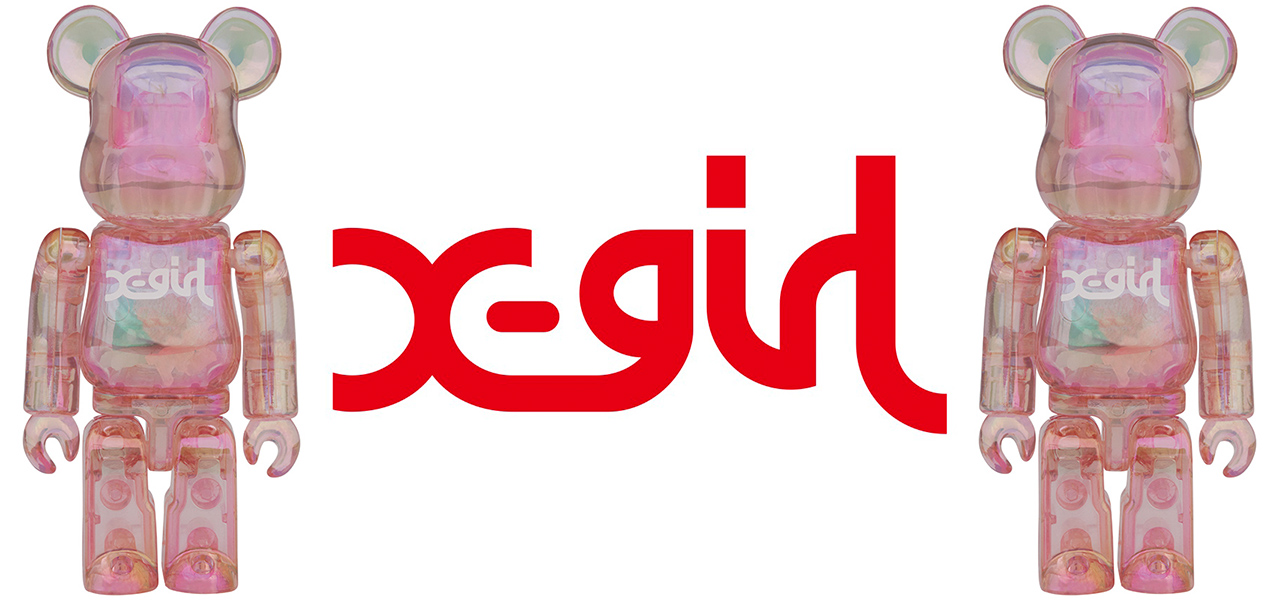
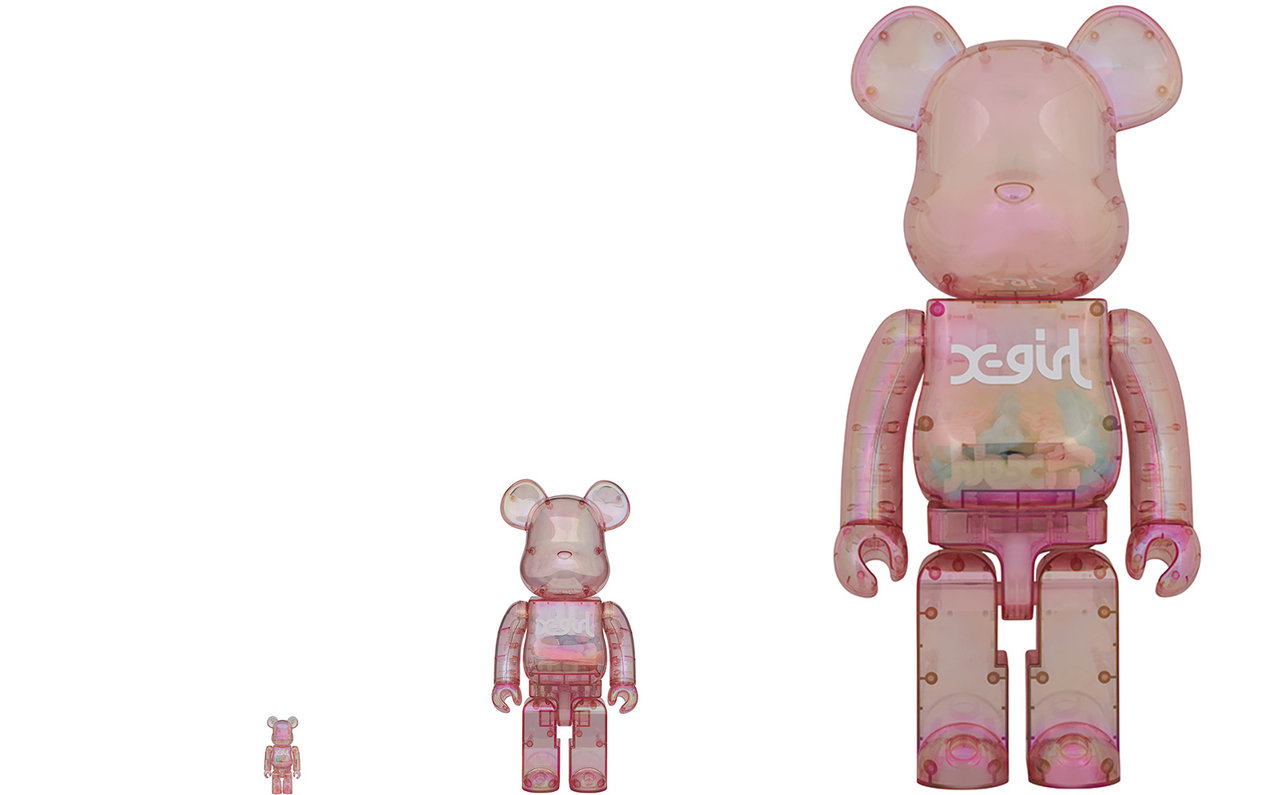
I am not involved at all in projects related to anime, manga, or movies; the respective brands handle them all the way to release. Sometimes, I only learn about these collaborations when I sign the contract or after they are released. My involvement is limited to collaborations with world-renowned artists; all other projects are handled by the brand teams. The BE@RBRICK X-girl 2020 100% & 400% / 1000% was also advanced by the X-girl team members.
BE@RBRICK X-girl 2020 100% & 400% / 1000%
Size | Approx. 70mm / 280mm / 700mm each in height
Price | [100% & 400%] ¥15,000 (excl. tax) / [1000%] ¥58,000 (excl. tax)
Release Date | Scheduled for release in May 2020
Retailers | MEDICOM TOY direct stores and online store, X-girl official online store, and other select retailers
*Photos are of a sample under supervision. Actual product may differ slightly.
BE@RBRICK TM & ©️ 2001-2020 MEDICOM TOY CORPORATION. All rights reserved.
Around the same time, I was in negotiations with MEDICOM TOY for a different project, but I was hardly informed about the X-girl collaboration. When the art collaboration I was handling fell through, I saw the X-girl prototype. Seeing how well it turned out, I felt both happy and regretful. I need to come up with an idea that won't lose next time!
I have witnessed graphic artists from overseas, whom I've known since the company's early days, evolve their careers, becoming street artists and eventually fine artists. I simply observed their work as a friend, but I naturally absorbed knowledge about street art. The direction of my personal collection, unrelated to work, also began to change. The fact that we opened an art gallery in Daikanyama, met artists like Takashi Murakami and Yoshitomo Nara, and gallerist Tomio Koyama through work, gradually led me to become more involved in art.
This began to link with my work through the collaboration with Yayoi Kusama in 2017, and now, as part of the "Art Business Development Department," finding art-related collaboration partners is one of my current responsibilities. I myself have progressed somewhat from 20 years ago, and I am now enjoying that position (laughs).
—As you celebrate your 30th anniversary, what are your personal aspirations for the future?
I am pleased to be in a position where I can clearly see my life's goal of "early retirement" within reach at this 30th-anniversary milestone. Since I've always operated without emphasizing the company name, the general public is not familiar with our company name. As I don't see a business advantage in it, I believe there's no need for the company to do anything special just because it's an anniversary.
XLARGE also celebrates its 30th anniversary in 2021. While company and brand anniversaries might be deeply meaningful to us, they are irrelevant to customers and business partners. Although企画 (plans) with a sense of "gratitude" are acceptable, I have always argued internally that plans that are merely branded as anniversaries without offering anything new are nonsensical. I am both looking forward to and a little apprehensive about seeing how much the staff understands this and what proposals they will come up with.
—Currently, the COVID-19 situation is impacting the fashion industry. What are your thoughts on this, Chairman Minagawa?
Perhaps it's my intuition from having been in the business for a long time, but I sensed this would be a major event. My proposal to President Nishikata to implement remote work and store closures came earlier than the government's actions. Currently, all our directly managed stores are closed, and I believe this situation could last for over three months. To ensure that neither our staff nor our customers become victims or perpetrators, we will fulfill our corporate social responsibility to the best of our ability to help bring the pandemic to an end quickly. Rather than contemplating what comes after the pandemic, I believe the priority now is to take actions that will ensure the continuation of the company and its brands.
Following the store closures, our e-commerce sales have significantly exceeded our budget. I am very pleased, as it is proof that our brands are supported by many people. I hope this situation will serve as a catalyst to end the fashion industry's long-standing practice of overly advanced seasonal schedules, and the cycle of sales and disposal due to overproduction beyond actual sales capacity. Even if the industry doesn't move in that direction, I have requested President Nishikata that we be one of the pioneers in that shift.
—Finally, with "#STAYHOME" being called for worldwide, could you share what you are doing at home to spend your time enjoyably?
I live less than a five-minute walk from the office, so while being available to respond if staff call me, I spend my days organizing the collections I've gathered over many years at home. I've dabbled in various things since my 20s, but my nature is that "the fun is in the search and purchase," so nothing has been properly organized.
The collections that continue to this day are art. I've been struggling to organize the documentation of when, from whom, and for how much I bought each painting, something I've been meaning to do for over 10 years! As I start organizing, I rediscover pieces I'd forgotten I bought, or find that the prices of works by currently popular artists were laughably low. It's like a treasure hunt at home, and I'm enjoying it.
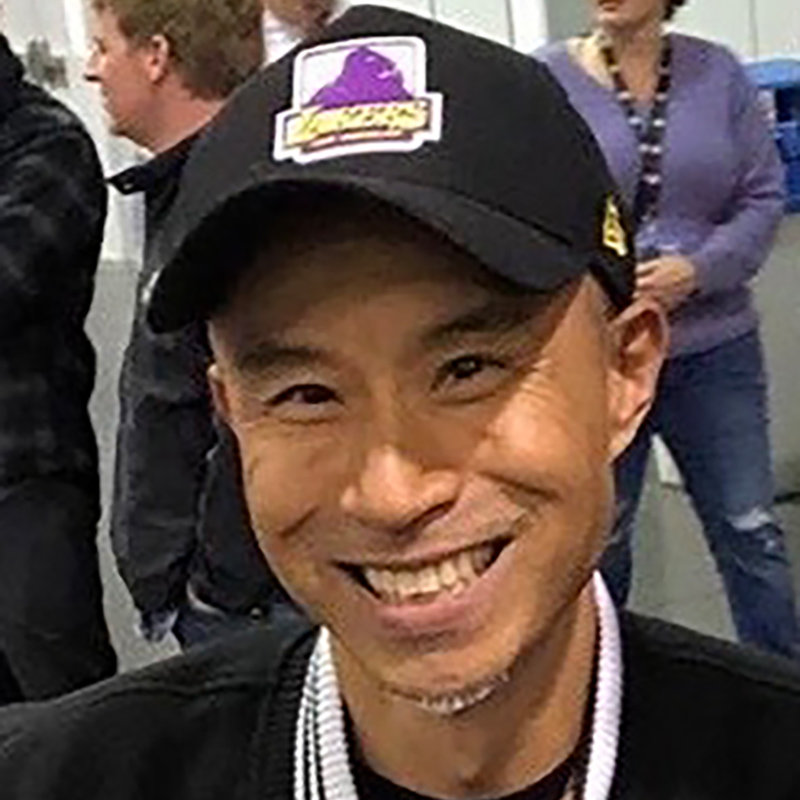
Shinichiro Minagawa
Born in Niigata Prefecture in 1964. Resides in Tokyo. Founder of B's INTERNATIONAL, which develops brands such as XLARGE, X-girl, MILKFED., SILAS, and Styles. After serving as the general agent for street brands, he acquired these brands and is pushing for global expansion. Numerous collaborations born from his close relationships with world-renowned artists like Hajime Sorayama and D*Face, and ERIC HAZE, are drawing attention not only from the fashion industry but also from the art world.