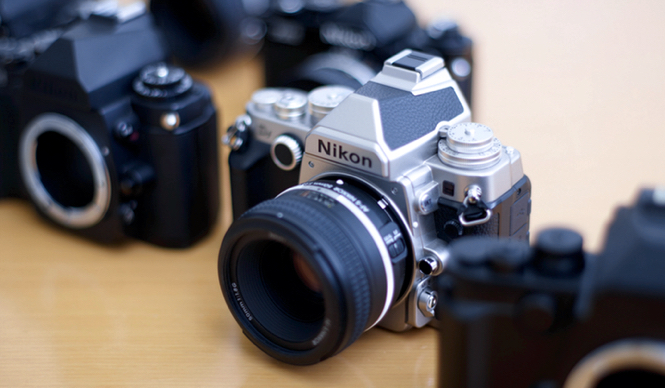
Feature: Cameras That Bring Joy to Ownership – The Essence of Classic Design in Digital Cameras
Nikon's "Df" and "Nikon 1 J5": A Conversation with the Development Team
The Essence of Classic Design Inherited by Digital Cameras (Part 1)
Digital cameras that blend classical designs reminiscent of past film cameras with authentic shooting performance are being released one after another by various manufacturers. What intentions lie behind digital cameras that adopt mechanical, analog designs while incorporating the latest technology?
Photographs by JAMANDFIX
The Significance of Digital Cameras with Classical Operation Systems
To understand the trend, one must speak with the top manufacturers. This time, we had the opportunity to speak with Nikon, one of the world's leading manufacturers in the digital still camera domain.
First, we aim to explore the essence and origins of classical design through a conversation with Tetsuro Goto and Yasuaki Miura from Goto Laboratory, Video Business Division at Nikon, who were in charge of developing the "Df," a model that embodies the classic design of past film cameras.
During the discussion, we invited Rei Wakita, Professor at the Faculty of Environment and Information Studies, Keio University, whose research includes product design and graphics through user interfaces, to share her impressions of the "Df" from a user's perspective.
—The Joy of Dial Operation
Goto Laboratory is led by Tetsuro Goto, who was involved in the development of professional flagship models, from the "F series" of film cameras to the "D3 series" during the early digital transition. The "Df" was announced in 2013, with this laboratory at its core.
Rei Wakita (hereinafter, Wakita), Keio UniversityI found the "Df" to be genuinely interesting when I held it. For instance, even the "Nikon" logo, reminiscent of older models, seems to appeal to those who have been familiar with cameras for a long time. How did its development come about?
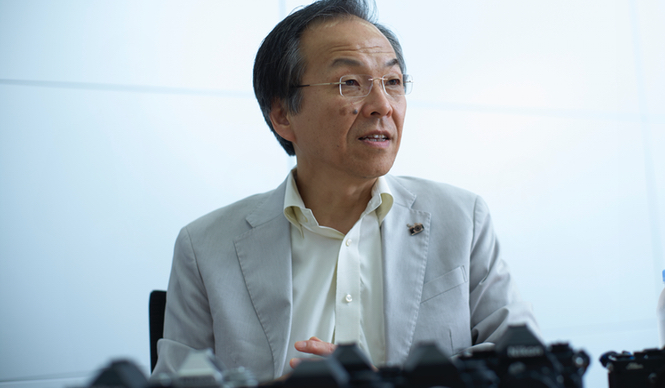 Tetsuro Goto, Head of Goto Laboratory, Video Business Division, Nikon

Rei Wakita, Professor at the Faculty of Environment and Information Studies, Keio University, who joined the discussion
Nikon: Tetsuro Goto (hereinafter, Goto)Current digital cameras operate via LCD screens and electronic buttons, a truly digital method. While they offer convenient and rapid operation, if you hide the logo, you can't tell which camera it is. When we wanted to create a camera that wouldn't get lost among others, one that would convey Nikon's unique value, we decided on a classic design with dial operation, reminiscent of older cameras. That was our starting point.
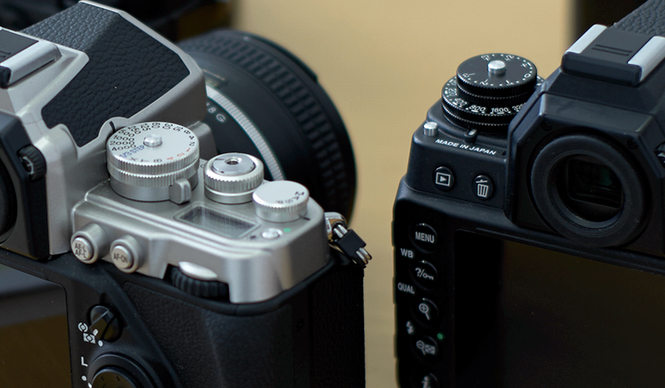
Each dial, milled from metal, offers a precise and satisfying click, conveying a sense of joy in operation.
WakitaToday's compact digital cameras and smartphones cram all menus onto a single glass surface. Often, you have to navigate through deep hierarchies to find the desired function.
I found it appealing that the "Df" allows direct operation via dials and buttons. Was the use of dials not only to evoke a classic feel, but also intended to solve the operational challenges of modern digital cameras?
Nikon: Yasuaki Miura (hereinafter, Miura)There are pros and cons to using analog versus digital operation systems. However, when planning the "Df," we had the sentiment that 'a camera is a precision instrument, even if it's digital.' The dial operation system is a symbol of precision engineering, and it also has the advantage of allowing you to see the shutter speed and exposure settings at a glance. It also allows for the enjoyment of contemplating the shooting scene while holding the camera and touching the dials.
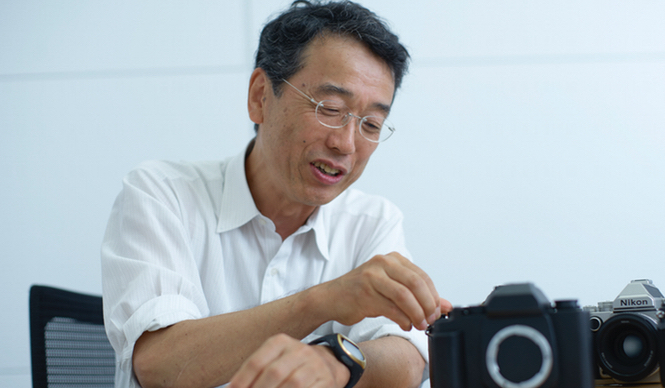
Yasuaki Miura, Chief Researcher at Goto Laboratory, Video Business Division, Nikon, who was in charge of "Df" development
GotoWe didn't have such an ambitious intention as solving the operational issues you mentioned. Using dials means some things become impossible, and we omitted features like video recording, Wi-Fi, and GPS.
On the other hand, it might spark curiosity in some users about 'what is shutter speed?' and the process of operating the camera and taking photos. However, we wanted to create a digital camera that allows users to immerse themselves in photography.
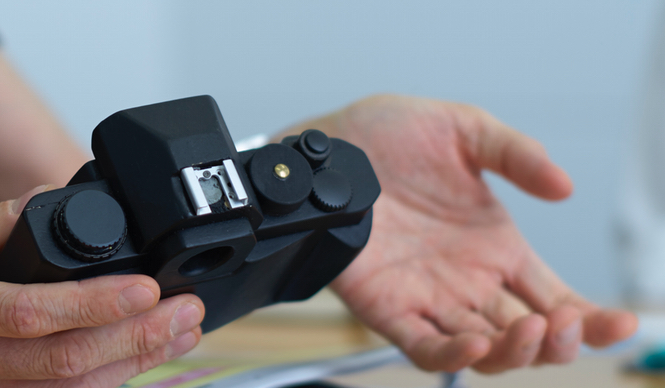
A mock-up of the "Df," pursuing the essential form for shooting and stripping away the unnecessary.
WakitaSo, you focused only on the functions essential for shooting and what a camera fundamentally needs. Perhaps people who have only ever taken photos with smartphones might be taken aback, but I felt drawn to confront this surprise.
It felt like being presented with a challenge: 'How can I master this?' It might be akin to the desire to expertly control a sports car, like a Lotus Seven, if we're talking about automobiles.
—Reverence for and Return to Legendary Models of the Past
GotoHowever, there were times when it was difficult to gain approval for it as a product. Goto Laboratory was established in 2009, and a mock-up was completed by the spring of the following year. But around 2011, there were many significant societal events, and there wasn't the capacity to commercialize models outside the mainstream.
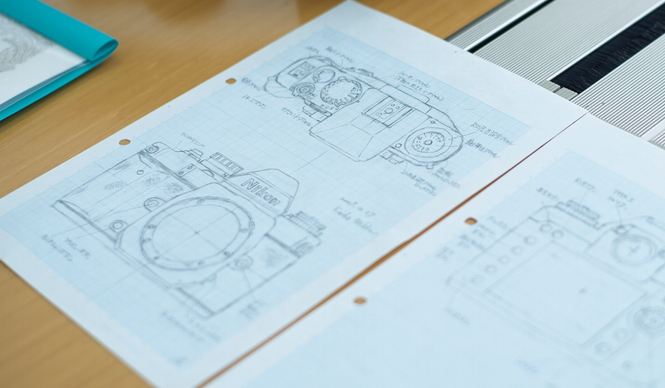
A meticulously sketched original design for the "Df," imbued with homage to past film cameras.
During that time, Fujifilm's "X series" and Olympus's "OM-D series," which had similar concepts to the "Df," were released, and I felt we had been beaten to the punch.
However, we became convinced that the pursuit of designs with operation systems reminiscent of past film cameras, designs that stand out from the crowd, and classical styles symbolizing the unique identity of each camera manufacturer would become a new trend for digital cameras in the future.
MiuraIt started with me sketching alone and creating mock-ups. On the other hand, there were also many aspects where we had the freedom to work. For example, we incorporated elements like buttons and dials inspired by the legendary F2 and F3, the "Nikon" logo, and the battery compartment cover modeled after the opening knob on the bottom. We also scattered homages to previous Nikon products.
WakitaSo, you remixed previous Nikon designs?
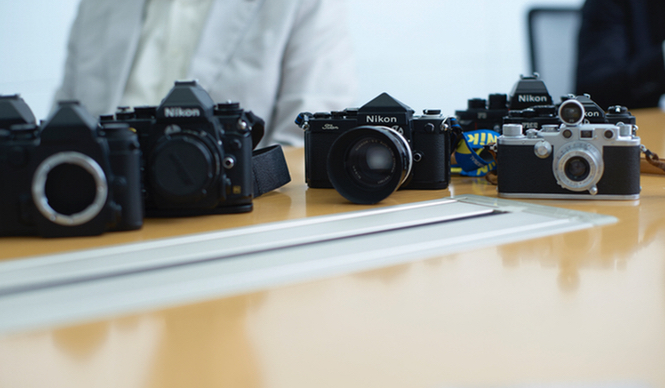
Nikon's past flagship models, such as the "F series," and other film cameras served as numerous motifs for the "Df."
MiuraThere are still fans of old Nikons who are hesitant about digital cameras. We also hope that the "Df" will allow them to feel a connection to their old cameras and take the plunge into digital. Indeed, there is the tactile pleasure of operation, the fundamental joy of using a tool, and by engaging with it deeply, one can discover new insights.
I felt that we wanted a wider range of people, including younger generations, to use it. I believe the "Df" is a tool that allows one to confront the desire to take great photos by fulfilling it through the joy of improving one's skills.
Nikon's "Df" and "Nikon 1 J5": A Conversation with the Development Team
The Essence of Classic Design Inherited by Digital Cameras (Part 2)
With a Satisfying Shooting Feel and a Sense of Quality
The "Nikon 1" series, a lens-interchangeable advanced camera, is designed for digital camera beginners, making it easy to shoot and capture beautiful photos. While previous models were designed with a philosophy of "simple and minimal," the latest "Nikon 1 J5" marks a departure from that direction.
From here, we invite Tomoya Masuda and Tatsuya Kobayashi from Nikon's Video Business Division, who were in charge of developing the "Nikon 1 J5," to discuss the background of its development and the intentions of the designers behind the "J5's" seemingly "classic" design.
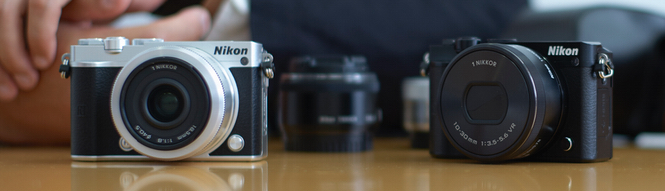
Nikon's latest lens-interchangeable advanced camera, the "Nikon 1 J5," features a high-quality finish.
While not as overtly "classic" as the "Df," the new model, which aims for improved quality and shooting feel, can be seen as part of the "classic design" trend with its grip, buttons, and protruding mechanical dials.
—Balancing Ease of Use and Enjoyment
WakitaMy first impression of the "Nikon 1 J5" was the joy of taking photos that exceeded my expectations. It's easy to handle and reliably captures what I want to shoot without frustration.
Nikon: Tomoya Masuda (hereinafter, Masuda)The "Nikon 1 J5" boasts the world's fastest shooting time lag among lens-interchangeable digital cameras from the moment the shutter button is pressed. At the time of development, we were tasked with improving performance and operability while maintaining the compact and lightweight characteristics of a lens-interchangeable advanced camera.
Nikon: Tatsuya Kobayashi (hereinafter, Kobayashi)A key feature and specific advancement of the "J5" is the enhancement of functions to increase shooting freedom. The adoption of a tiltable LCD monitor and mechanical dials are examples of this.
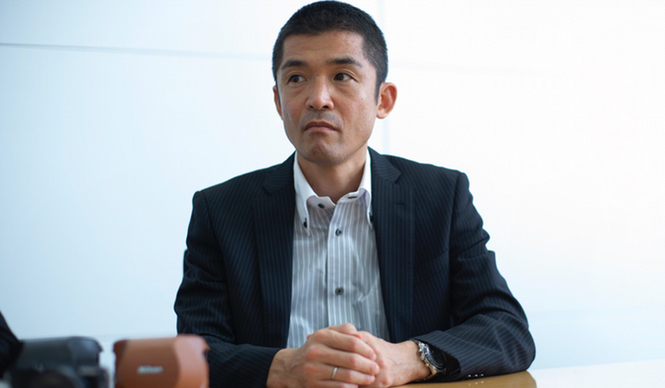
Tomoya Masuda, First Marketing Department, Video Business Division, Nikon

Tatsuya Kobayashi, Design Department, Video Business Division, Nikon
WakitaI thought the balance between the mechanical dials, the touch panel, and the allocation of functions was superb. Considering the character of the "J5," while some users might find enjoyment in dial operation, others might find it difficult.
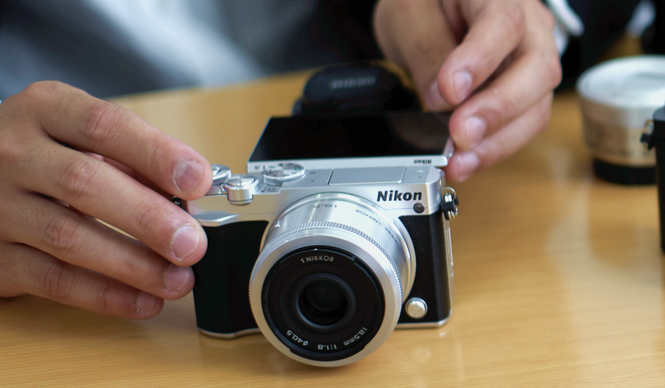
The design of the "Nikon 1 J5" emphasizes the texture of its analog operation system, such as the dials.
However, for some, navigating through multiple screens to access functions solely via the monitor panel can also be frustrating.
KobayashiBy placing the mode dial on the top of the body and the function button on the front, we believe we've enabled the photographer's intentions to be reflected more promptly and directly. Of course, there is also a full auto mode, and touch operation via the LCD monitor is possible.
—An Appearance That Evokes Emotion
WakitaBeyond the dials, I sense a different approach in the design as well. There are elements and accents scattered throughout, enhancing the sense of quality in the areas you look at and touch, elevating the mood.
KobayashiWe aimed for an appearance that conveys craftsmanship, such as the texture of milled metal and the leather texture on the grip. We believe the sense of quality comes from the balance of meticulously crafted details, rather than making every part flashy.
WakitaWhen I borrowed it and took a picture of my dog, I was truly impressed by the beautiful photo. I was also moved by the lenses themselves. The zoom lens tracked moving subjects effectively. Changing lenses made me feel like a different world opened up beyond what I could see.
Using a bright prime lens, it's easy to achieve photos with a pleasing bokeh, which can be a hurdle for many. Distant landscapes are captured sharply with the zoom. Changing lenses brings new discoveries, which is enjoyable.
KobayashiIt's gratifying to hear you say it's enjoyable. The sensor and image processing engine have also evolved, and the noise reduction performance in low light has improved.
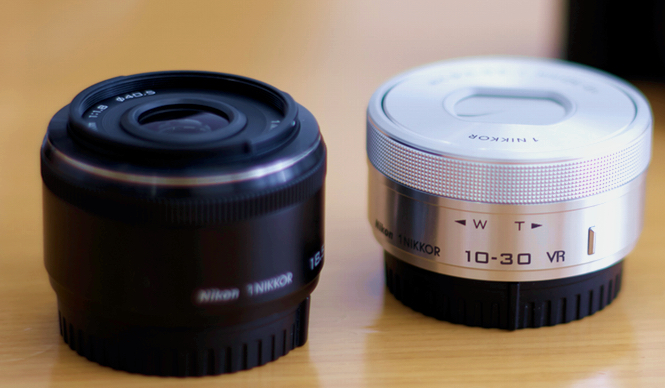 The "J5" double lens kit includes two lenses, expanding the joy of photography.
WakitaI believe the joy and emotion of taking photos require "surprise" and "resonance." Surprise comes from taking beautiful pictures, and resonance comes from the exterior design and quality that befit its performance. Because the "J5" possesses both, I feel, 'This really is a great camera.'
—The Significance of Classic Design in Today's Digital Cameras
KobayashiThe "Nikon 1" series was based on a "simple and minimal" design concept. In addition, for the "J5," we added analog operation parts like dials to accommodate various shooting styles.
Our theme was the coexistence of luxury and operability, rather than just classic design. We created mock-ups, repeatedly changed the leather finishes, and made adjustments through touch.
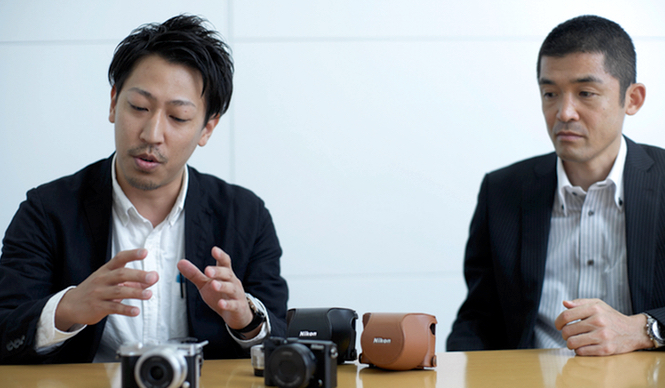
We believed that the tangible sense of quality would naturally lead to a desire to try different lenses or take various kinds of photos.
WakitaSo, it's a product that offers both ease of use and a sense of attachment. The "J5" is intuitive and enjoyable even for first-time digital camera users, making them want to keep it for a long time.
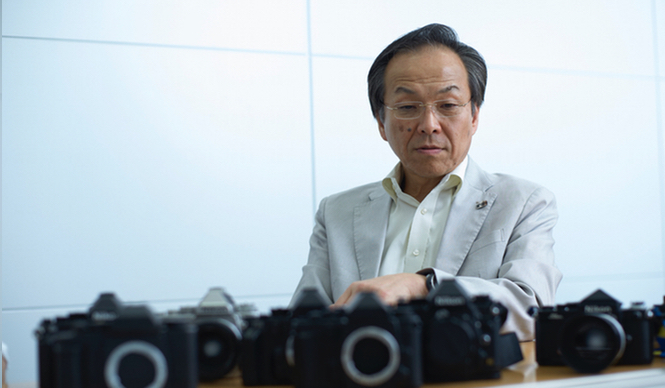
GotoIn the case of the "Df," there might be an element of challenging the user. Manufacturers offer a wide variety of digital SLR cameras with diverse functionalities and performance levels.
Therefore, it makes sense to have a model like the "Df" among the variations, one that pursues the "joy of ownership" and the "pleasure of mastery."
WakitaNot just cameras, but many recent products tend to be flashy or emphasize performance by packing in new features. However, through "classic design," exemplified by the dial operation of the "Nikon 1 J5," it conveys the joy of photography to many people easily. And the "Df" seems to help us rediscover the act of photography itself, something that modern cameras are gradually losing.
Nikon Customer Support Center Navi-Dial
Tel. 0570-02-8000
www.nikon-image.com/