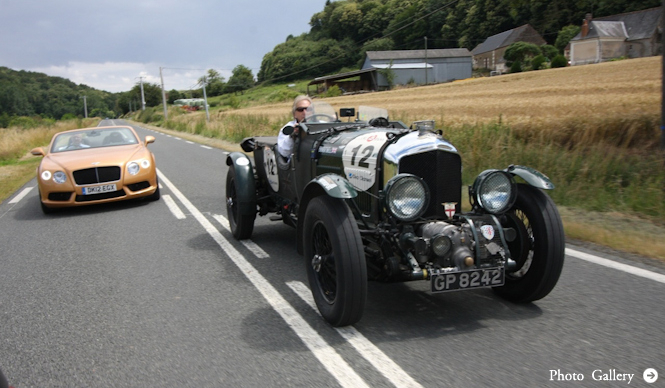
Masafumi Suzuki on Britain: A Man's World, A Man's Car
What is the British Motorcar?|What is a British Car?
Fumihiko Suzuki on Britain
A Man's World, A Man's Car
What makes a British car British? One answer is masculinity. And what is British masculinity? For our special feature on British cars, OPENERS sought the opinions of three specialists. The last is Fumihiko Suzuki, editor-in-chief of "GQ." He speaks about the world of British men.
Text by Fumihiko Suzuki (OPENERS)
What is a British Car?
When we say "British car," it's a car from Britain, but should we define it as a car made by British people? The British automotive industry, which had many players in the 1970s, has gradually consolidated. Today, the only purely British cars, meaning those with British capital and British production, are perhaps just Morgan.

Jaguar XJ
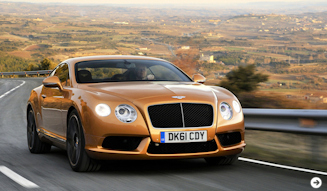
Bentley CONTINENTAL GT V8
For example, Rolls-Royce is owned by BMW, Bentley by Audi, and Jaguar, along with Land Rover, by India's Tata. Aston Martin is owned by Kuwaiti investors. Aston Martin's CEO and chief engineer are German.
While Germans are involved in most of these, the British way of thinking, or rather the British approach to automobiles, still has a significant influence. Foreigners and foreign capital are involved, along with British people, yet there seems to be a common understanding, or at least an appearance of one, in modern British cars.──I believe that cars are being built while referencing the historically formed automotive identity of Britain, or more narrowly, of each brand.
For instance, Toyota once acquired Lotus and supplied its own engines and components, including suspension. While there might have been lessons learned in terms of production systems, I can hardly imagine that Lotus, in creating new cars, referenced the historically formed automotive identity and characteristic taste of Toyota.
I think this is partly because Japanese culture is difficult to understand, but British culture is also difficult.
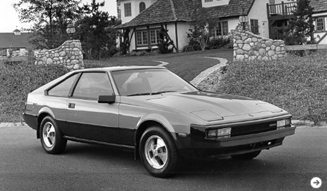
What is the British Motorcar?|What is a British Car?
Fumihiko Suzuki on Britain
A Man's World, A Man's Car (Part 2)
Regarding Sports Cars
I believe Britain was the first country to consciously create what we now call sports cars. Aston Martin was founded in 1913. Lionel Martin, a participant in hill climb races at Aston Clinton, built his own car to compete. He eventually founded Aston Martin. Apparently, after winning, orders poured in with the sentiment that "if we get him to build us a car, we can win," leading to the creation of the Aston Martin brand.
While similar things might have happened worldwide, and perhaps even with Alfa Romeo, the culture of competition was simply very strong in Britain.
The use of tools for competition began almost immediately after the automobile emerged. Britain, it seems, has created most team and individual sports, with the exception of horse racing, which the French are credited with originating. I believe a spirit of competition is fundamental to Britain.
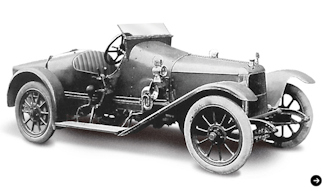
British Society: A Man's World
In British public schools, where the sons of gentlemen are educated, there is a strong emphasis on masculinity. Oscar Wilde, the novelist, was ostracized by aristocratic society and met a rather tragic end for seducing men. Isn't this due to the strong adherence to masculinity in British society?
In other words, men must be strong and capable in sports. While sports may have originated as a pastime for aristocrats, only they had the leisure for it. Those who worked in the fields daily, even on a day off, wouldn't play tennis; they would simply rest.
Sports, in this sense, were originally a highly aristocratic pursuit. Since aristocrats did not engage in labor, they developed bodies not for work, but for other purposes, which also included preparation for war. As sports were inherently aristocratic, sports cars also had to start as aristocratic items. However, automobiles could not become widespread until the emergence of the upper working class, or the middle class.
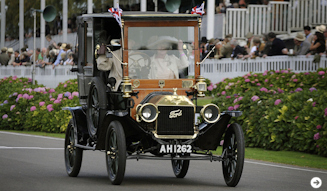
Ford Model T
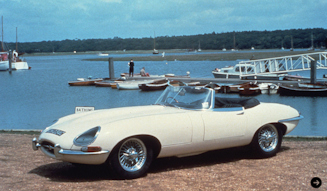
Jaguar E-Type
Henry Ford was the first to do this on an industrial scale. More or less, this influence spread to Europe and Britain, and even before the war, cars for the general public began to be produced in this sense. At that time, the British public lived in a world dominated by aristocratic values, so they thought like the aristocrats. This led to the creation of brands like "MG" for young people with less disposable income.
Jaguar, starting from sidecars, created cars that were more stylish than Bentley, but at a fraction of the price, perhaps one-third or one-quarter. They began producing sports cars in this vein.
Ride Comfort Was Not a Priority
Rolls-Royce is a bit different. The "Silver Ghost" was produced in 1907. Its engine was so perfect and quiet that you wouldn't notice it even when standing next to it. It was named "Ghost" because it was like a phantom.
Since then, all Rolls-Royce models have been named after ethereal beings like "Phantom" and "Ghost," continuing to this day. This represents a world of ultimate refinement, ultimate comfort, and ultimate isolation from the outside.
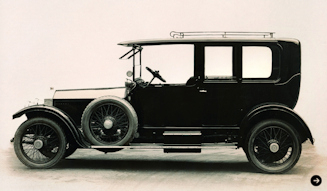
However, sports cars were quite the opposite, emphasizing contact with the outside world. British sports cars, such as the large Bentleys, often competed fiercely with Bugattis built by Ettore Bugatti in races like Le Mans. There's a famous quote from Bugatti describing Bentley as the "fastest truck in the world," which might have been a comment on its sheer size.
But at the same time, the ride comfort was often very much like a truck's, with little consideration given to it. I suspect Jaguar was the first to offer a sports car with good ride comfort, though this is just my conjecture. The lack of concern for ride comfort seems to stem from a mindset where it's not considered a masculine trait. This idea appears to be deeply ingrained in Britain.
According to the British, their roads are bad. In fact, especially in the north, there are significant elevation changes, and the pavement is rudimentary, with bumps and cracks everywhere, making the roads uneven. This makes it easy to lose road holding. Furthermore, being sports cars, the suspension is stiff, and generally, the ride comfort is not very good. However, I don't think these issues are actively perceived as weaknesses by the British in the same way they might be by people from other countries.
What is the British Motorcar?|What is a British Car?
Fumihiko Suzuki on Britain
A Man's World, A Man's Car (Part 3)
A Sports Jacket: Tight and Stiff
Even when seeking elegance in sportswear, British attire is far from comfortable, in my opinion.
Unlike an Armani jacket that drapes smoothly over the body and allows for unrestricted movement, it's very tight, the fabric is stiff, and it's unwearable when new. You'd have to wear it while bathing, sleeping, or have a servant help you put it on, and only after it's broken in a bit...──...and even then, there's an aesthetic consideration that it would look unseemly otherwise. I believe this is a very masculine way of thinking.
In other words, they don't favor smooth, shiny satin. Rather, they might see such things as lacking in reality? The idea that a real man wouldn't dress like that, that they aren't dolls.
I believe the British have a strong attachment to reality. They don't favor idealized pure forms. For example, a picture-perfect beauty or a handsome man wouldn't be popular in Britain at all.
The Gallagher brothers from Oasis came from rather rough backgrounds. The Beatles, too, had quite a story. Mick Jagger, having a somewhat affluent background, might even be seen negatively, perhaps unable to shake off an image that isn't "manly" enough.
Even for aristocrats, if they can't hunt, box, or drive a savage car like an Aston Martin...──...or be the first to go to war, they aren't respected. Looking at the attire and manners of British gentlemen, they are impeccably gentle towards women, or at least their outward demeanor is. Yet, they wear tweed or corduroy, which are essentially work clothes. Italians have taken what the British created and refined it, both in clothing and cars. In cars, Abarth lightened them the most, followed by Lotus.
Perhaps Colin Chapman, the founder of Lotus Cars, introduced an Italian sensibility to Britain? Chapman's genius lay in his freedom from past conventions. For example, the mid-engine layout. This kind of originality is also seen in Alec Issigonis, the designer of the MINI, who created a compact front-wheel-drive car by stacking the gearbox and engine. Such an idea is brilliant, but even the MINI wasn't known for its comfortable ride.
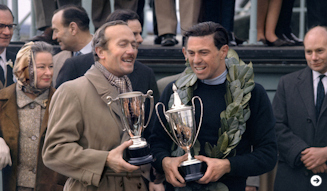
Colin Chapman

Alec Issigonis
I Like British Cars the Best
I like British cars. The best. I didn't start driving them because I understood the British worldview. I think my first car was a Morgan.
There's no inherent reason why Morgan continues to be made as it is. Perhaps it's due to a lack of investment, but at some point, they could have shown more ambition and expanded the factory...──...or at least built a stamping plant. Or they could have used the Italian approach of hand-forming tubular or space frames. However, they've consistently used wooden frames. Wood does offer natural flex and unique advantages, but normally, people don't consider this when they're focused on progress.
The creation of automobiles was driven by a certain progressive spirit, wasn't it? But they didn't consider continuous advancement from there. The shape remained largely the same, and if not for legal regulations, it probably wouldn't have changed at all. Yet, there's a company like that, whose products have a two or three-year waiting list. That's quite strange.
If it were a typical Japanese company, with such a backlog of orders, they would establish a system to increase production capacity and wouldn't make customers wait two or three years. Morgan never considered that. They seemed content with being able to build the Morgan car and ensuring the happiness of the people in places like Blackpool.
If there weren't people thinking that way, eventually, most cars would end up being quite similar. I think this reflects a certain practical nature of the British. They don't seem to harbor grand, dream-like strategies.
The pursuit of glory as a self-made success is itself considered uncool, or rather, there's a psychological tendency, the inverse of aspiration, that suggests there's no point in seeking such things. It's a kind of aversion to vanity.

What is the British Motorcar?|What is a British Car?
Fumihiko Suzuki on Britain
A Man's World, A Man's Car (Part 4)
Over to You, John
I bought a Morgan because I thought it looked cool. I liked its shape, and I thought it was cool that it didn't have a proper roof, leaked in the rain, had a rough ride, was hot in the summer, and cold in the winter. Normally, people want the opposite, right? But I found that appealing. It's not exactly rebellion, but I think a small act of defiance is characteristic of a British gentleman.
I believe Britain has a uniquely stoic concept of masculinity. From childhood, boys are raised in a world exclusively for men. From the outset, they must function as individuals, not as the protected sons of someone. This is how boarding schools operate. Everyone is the son of someone with a certain background – a Duke, a Lord, a Viscount – but they interact from childhood as John, William, or James.
In such a male-dominated society, they share values about what men find "good" – for example, adventure, or anything that boys are naturally interested in and continue to be interested in as adults. I feel there's a tolerance for such masculinity.
Therefore, like the samurai who maintain their dignity even when poor, there's a belief that showing interest in overly refined things, even in cooking, is unmanly. They don't want to move beyond the stage of roasting a game animal on a spit over a fire, carving it up. I think there's a strong tendency to stay close to the origin.
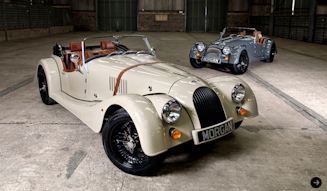
Morgan Plus4
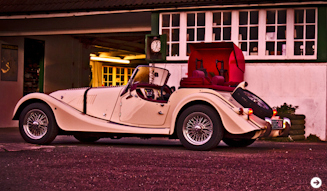
Morgan Plus4
Men: Strong and Old-Fashioned
Returning to cars, the same applies to the interiors of luxury cars. They reflect the British preference for rooms, specifically masculine rooms. What constitutes a masculine room? It's one that doesn't smell of perfume, doesn't use colors that women prefer, and tends to favor strong expressions. Think wood and leather. Wood and leather, being natural materials, are gentle, but there's no concept of modern living like in French cars.
Modern living, in terms of color, is white. That's why blinds and curtains are white. But that's not the case in Britain. Blinds would be made of wood, and curtains might be burgundy or resemble stage curtains.
So, it evokes the atmosphere of a library. Books with red leather covers that have never been opened, or brown leather-bound books – that kind of world. The seats are like library chairs, upholstered in perforated leather.
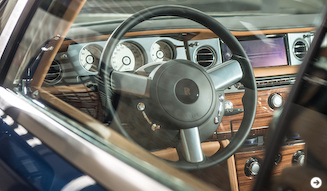
Plastic might be present, but I believe the masculine consciousness is that only things that clearly look like plastic should be there. It was the same with the MINI. Shiny, smooth, freshly showered – that's not acceptable. An interior that looks like it just came from the dry cleaners or is brand new is not masculine. It's as if "I've lived here for 200 years." A 25-year-old who is actually 150 years old is preferred. That's a very distinctive characteristic, isn't it?
Masafumi SUZUKI
Born in Tokyo in 1949. After serving as editor-in-chief of "NAVI" and "ENGINE," he became editor-in-chief of "GQ" in January 2012 and remains active. He has owned numerous British cars, including Morgan, Jaguar, Range Rover, Mini, MG, and Bentley. His recent publication is "Suzuki-san no Seikatsu to Iken" (Suzuki's Life and Opinions) from Shinchosha.