
British Cars and Conviviality by Fumio Ogawa
What is the British Motorcar?|What is a British Car?
By OGAWA Fumio
British Cars and Conviviality
The French word “Convivialité,” now often used to describe the coziness of a restaurant, is an old term with Latin roots: “Con” means “together,” and “vivialité” means “living.” This is OGAWA Fumio’s salute to British cars that are close to our lives and welcome their occupants.
Text by OGAWA Fumio
My Two Morgans
I have owned two British cars so far. Both were Morgans. Their basic design dates back to a two-seater sports car from 1936. They had no side windows, and the narrow cockpit forced a driving posture where I had to stick my elbows out past the doors to hold the steering wheel. On rainy days, you’d get quite wet without rain gear.
I bought a Morgan because it was extreme. Light, nimble open-top sports cars were once a British forte, and among them, the Morgan, with its style and simple form lacking side windows, was a car that conveyed a certain philosophy in its stripped-down essence. That’s what drew me in.
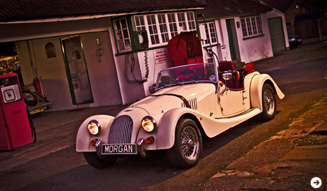

A Morgan is not an absolutely fast car. Its suspension has insufficient travel, causing the rear wheels to lift on corners of the metropolitan expressway. The brakes also lack servo assistance, requiring considerable force to stop, and maneuvering the steering wheel during parking was strenuous.
However, it’s a car you can’t help but love. It doesn’t glide over the road like modern cars, but if they are perfect circles milled by precision machinery, this is like a circle roughly carved by hand. There are times when the way it moves forward, catching at times, offers a unique pleasure. That distinctive acceleration feels good to human senses. At least, it did to me.
There’s a sense of unity in driving it with all your effort, and you learn that speed is sometimes measured by feeling, not just numbers. I suppose that’s the philosophy behind Morgan’s car manufacturing. It had an atmosphere not often found in cars from other countries. That was appealing.
What is the British Motorcar?|What is a British Car?
By OGAWA Fumio
British Cars and Conviviality (2)
A Flavor Only Small-Scale Specialty Brands Can Deliver
The world of British cars is vast. Even setting aside the Morgans I mentioned earlier, in terms of old-world character, there are Rolls-Royce and Bentley. At the cutting edge is McLaren. In between are Aston Martin, Jaguar, and Land Rover/Range Rover. Each possesses a distinct character.
The character of each British brand is like a common “flavor” across their lineup. The interior ambiance, ride comfort, steering response, and engine feel all integrate to create an ineffable individuality.
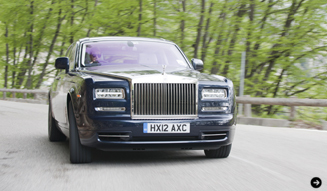
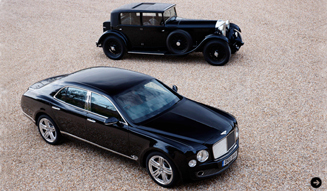
Perhaps because many of these brands are owned by foreign companies (Rolls-Royce by Germany’s BMW, Bentley by Volkswagen), they emphasize their characteristics clearly. For manufacturers with diverse lineups, creating individuality is not easy (Japanese manufacturers are a prime example). In this regard, perhaps it’s easier for Britain, with its many small-scale specialty brands.
Morgan owners likely understood this. A sophisticated chassis delivering sharp handling and a comfortable ride, an efficient drivetrain, effective air conditioning, and excellent sound insulation… pursuing refinement solely for its own sake might not beat German or Japanese rivals, and could even lead to a loss of individuality and market value. In that respect, the Morgan possessed a rare character unlike any other car. It chose a path where being called a living fossil could be taken as a compliment. This clear-cut decision is what makes British cars British.
What is the British Motorcar?|What is a British Car?
By OGAWA Fumio
British Cars and Conviviality (3)
Excellence Needs No Justification
When we speak of Britishness, there are two concepts. One is tangible things like traditional attire, lifestyle, food, and cars. The other is abstract concepts like tradition versus rebellion.
Britain has produced innovative works in music and fashion. The most famous example is undoubtedly The Beatles.
Just the other day, I was listening to the 1966 album “Revolver” on an in-flight radio broadcast and was once again struck by the beat and guitar solo of the opening track, “Taxman.” This was especially so as I had just heard Hibari Misora’s “Kanashii Sake” (a hit song from the same year). Setting aside the fact that both are excellent songs in different genres, it was a good opportunity to reflect on the impact of the new music created by these four young British men, which astonished the world at the time.
An American offered an interesting critique of Britain: “In fields like basic scientific research, we cannot beat Britain. At British universities, if a distinguished professor walks around campus in his underwear, female students might exclaim, ‘Wow! It’s Professor X!’ with hearts in their eyes. But in America, even the most brilliant scholar is expected to attend parties with his wife and tell jokes over cocktails. Failure to do so means they won’t be recognized. This stifles competitiveness.”
In short, they don’t over-analyze excellence. They don’t reject the new. They nurture what is good. Perhaps that is another aspect of Britishness.
British cars are no exception.
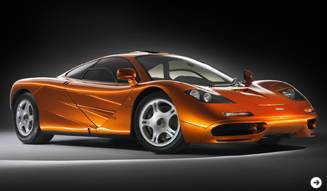
A good example would be the road cars designed by Gordon Murray, who engineered many excellent F1 machines, including the McLaren that gave Ayrton Senna the Drivers’ Championship in 1988 (such as the car named “McLaren F1”), and the sports cars from TVR during the era led by Peter Wheeler, a marketing genius owner (in the 1990s). Both their engineering and styling were truly innovative.
And when they appeared, the market welcomed them with open arms.
What is the British Motorcar?|What is a British Car?
By OGAWA Fumio
British Cars and Conviviality (4)
For a Car to Remain a Car
In France, the word “convivialité” is used to evaluate restaurants, meaning something like “coziness” or “pleasant atmosphere.” A similar concept, difficult to translate directly into Japanese, might exist in British cars. I feel this way because I recently saw a previous-generation Jaguar XJ being prepared for delivery at a used car dealership and was deeply captivated by it.
The XJ’s door was open, and I caught sight of its seats with thick cushions and the dashboard wrapped in curved leather. I wanted to immerse myself in that world. I wanted to experience that substantial ride quality on a daily basis.──It made me feel that way. There is a “world” I want to enter.
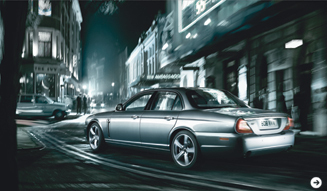
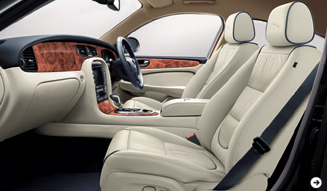
Unique charm was once found in French, Italian, Swedish, and American cars. German cars constantly pursue product perfection, which is comfortable in a sense, but it’s hard to feel a distinct worldview from the interior. It’s simply “well-made.” However, as a general trend in automobiles, since the 1990s, cars from various countries have rapidly lost their unique characteristics, becoming average – like the cafeterias of business hotels. The conviviality of a fine restaurant seems to have been lost.
Whether the era will return when British cars surprise us with innovative ideas, like in music and fashion. Just as Italian design, which dominated the world until the 1970s, couldn't keep up with advancements in electronic technology and yielded to American design, as environmental technology and alternative energy become the main themes for cars,Toyota and BMW Jointly Develop Fuel Cell Technologythe challenge for British cars lies in how far they can push their product superiority while relying on their old-world charm.
If the element of hobby is stripped away from automobiles, they become mere means of transportation. Although the attractive British cars are all expensive, I want to send my encouragement to British cars, so that they may continue to be cars. Cherishing my memories of the Morgan, that is how I feel.
OGAWA Fumio
A journalist covering lifestyles centered around automobiles. After serving as editor-in-chief of an automotive magazine, he became a freelancer. He currently drives a “moderately” old car, but classic cars remain an eternal aspiration, especially British ones. He has long wanted to drive an Austin Seven.